success
The road to success is always under construction; share your equations for success — and learn some new ones.
10 Small Habits That Changed My Life in 30 Days
I used to think aking big changes in life required dramatic action—like moving to a new city, switching careers, or completely reinventing myself. But I learned that real transformation doesn’t always come from massive leaps. Sometimes, it’s the smallest steps that create the biggest difference. A month ago, I challenged myself to focus on small daily habits. Nothing extreme. Nothing overwhelming. Just small actions I could stick with consistently. To my surprise, those little choices added up, and in 30 days, I felt like a different person. Here are the 10 small habits that changed my life in just one month. --- 1. Waking Up Earlier I started waking up just 30 minutes earlier than usual. At first, it felt impossible. But those quiet minutes in the morning became the calmest part of my day. Instead of rushing, I had time to breathe, plan, and begin with intention. That small shift made the whole day feel more organized. --- 2. Writing a Daily To-Do List For years, I relied on memory to manage tasks. Unsurprisingly, I forgot things and felt scattered. I began writing a simple to-do list every morning—just the top three things I needed to get done. This one habit made me more focused, less stressed, and surprisingly more productive. --- 3. Drinking More Water It sounds almost too simple, but increasing my water intake changed my energy. Instead of reaching for coffee every few hours, I replaced some of those cups with water. My headaches decreased, my skin looked better, and I felt less sluggish throughout the day. --- 4. Moving for 15 Minutes I didn’t join a gym or start an intense program. Instead, I committed to 15 minutes of movement daily—walking, stretching, or light exercise at home. It wasn’t about burning calories. It was about showing up for myself. Over time, that small burst of activity boosted my mood and energy. --- 5. Reading for 20 Minutes Scrolling on my phone had become a default habit. Replacing even a fraction of that time with reading was refreshing. I picked up books I had been putting off, and 20 minutes each day added up to finishing an entire book in just a few weeks. My focus improved, and my mind felt sharper. --- 6. Practicing Gratitude Every evening, I wrote down three things I was grateful for. At first, it felt repetitive—“family, food, health.” But the more I practiced, the deeper it became. I began noticing small details: the smile of a stranger, a call from a friend, a quiet walk. Gratitude shifted my perspective and made me feel more content with what I already had. --- 7. Limiting Social Media I didn’t delete my accounts, but I set boundaries. I gave myself specific times to check social media and avoided aimless scrolling. This freed up hours I didn’t realize I was losing. More importantly, I felt less distracted and less caught up in comparison. --- 8. Journaling My Thoughts I started keeping a journal—not a fancy one, just a notebook where I could pour out my thoughts. Some days it was a single sentence, other days a full page. Writing helped me clear mental clutter and reflect on what mattered most. It became a form of self-therapy. --- 9. Preparing Tomorrow, Tonight Instead of waiting until morning to get ready, I began preparing small things the night before—laying out clothes, packing a bag, or writing my next day’s priorities. This simple habit reduced stress and gave me a sense of control before the day even began. --- 10. Saying No More Often This was the hardest habit of all. I realized how often I said yes to things out of guilt or fear of disappointing others. For 30 days, I challenged myself to say no when something didn’t align with my priorities. Surprisingly, people respected my boundaries more than I expected. Saying no gave me more time and energy for what truly mattered. --- Final Reflection Looking back, none of these habits were complicated. They didn’t cost money, and they didn’t require dramatic sacrifice. But together, they reshaped my routines, improved my focus, and gave me a sense of balance I hadn’t felt in a long time. The biggest lesson I learned is this: change doesn’t have to be overwhelming. Tiny habits, practiced daily, can transform your life in ways you might not expect. If you’re hoping to make a positive change, don’t wait for the “perfect moment” or a big opportunity. Start small. Pick one habit, stick with it for a few weeks, and see where it takes you. Sometimes, the smallest steps lead to the biggest shifts.
By Akhtar aliabout a year ago in Motivation
Eminem: The Untold Human Story of Marshall Mathers and His Rise From Struggle to Legend
Introduction Eminem is more than a rapper. He is a storyteller, a poet, a survivor. Born Marshall Bruce Mathers III in Detroit, he grew up in poverty, surrounded by hardship, rejection, and ridicule. Against all odds, he transformed pain into poetry, anger into art, and trauma into timeless music. His lyrics became lifelines for millions who saw their own struggles reflected in his raw honesty.
By Frank Massey about a year ago in Motivation
“The Night That Changed My Life Forever
There are moments in life when everything feels broken. When your dreams look too far, your struggles too heavy, and your future… too dark. For me, that moment came one night when I was sitting alone in a small, dimly lit room with nothing but the sound of my own heartbeat. No money, no job, no clear direction. Just an endless storm inside my head whispering— “You’re a failure.” But that night didn’t end the way I thought it would. Instead, it became the beginning of the life I live today. --- The Breaking Point I had spent months chasing opportunities, only to face rejection after rejection. Friends moved ahead, some already building their careers, while I felt stuck in quicksand. The pressure was crushing. I remember staring at the ceiling, asking myself— “What’s the point of trying anymore?” It was the lowest I had ever been. --- The Unexpected Realization And then, something strange happened. In that silence, I asked myself one final question: 👉 “If my life feels meaningless right now, then why not rebuild it into something meaningful?” That thought hit me like lightning. What if failure wasn’t the end? What if failure was the foundation to start again, stronger? For the first time in months, I felt a spark inside me. --- The First Small Step The very next morning, I decided to do one thing differently. Not everything—just one thing. I woke up earlier than usual. I made a list of tiny goals. And I promised myself: “No matter how small, I will finish them.” That day, I felt like I had climbed a mountain. Because sometimes, change doesn’t start with huge victories. It starts with the decision to stand up one more time, even when you’re tired. --- The Lessons That Changed Everything That night taught me three things I carry with me every single day: 1. Failure is not the opposite of success—it’s the path to it. Every rejection was shaping me for the moment I’d finally get it right. 2. Discipline beats motivation. Motivation fades. But habits? They build the person you become. 3. Pain is fuel. Instead of running from it, I learned to use my pain as energy to keep moving. --- From Rock Bottom to Rebuilding Fast forward, and life looks very different now. I still face challenges, yes. But I no longer see them as walls blocking me—I see them as steps guiding me higher. I built a career. I found confidence I never thought I could have. And most importantly, I discovered a version of myself that only struggle could have revealed. All because of that one night… the night I almost gave up. --- Why I’m Sharing This With You Maybe you’re reading this right now because life feels too heavy. Maybe you’re stuck in your own version of that dark room. If that’s you, I want you to remember this: 👉 You don’t need to fix everything today. 👉 You don’t need to see the entire path. 👉 You just need to take one small step. Because that’s how change begins. Quietly, humbly, but powerfully. And one day, you’ll look back at your darkest night and say— “That was the moment my life truly began.” --- Final Thought Every story of greatness starts with a chapter of struggle. Don’t be ashamed of yours. Own it. Because your rock bottom today could be the reason someone else finds hope tomorrow. The night that almost broke me… became the night that built me. And maybe, just maybe, tonight could be that night for you.
By Shahab Khanabout a year ago in Motivation
Carolina Guerreno: Driving Financial Growth with Purpose and Vision
In an era where industries are constantly evolving, leadership demands more than traditional expertise. Today’s leaders are expected to guide with vision, adaptability, and empathy. Carolina Guerreno embodies this modern approach to leadership, standing out as a financial expert who balances technical knowledge with a deep commitment to empowerment.
By Carolina Guerrenoabout a year ago in Motivation
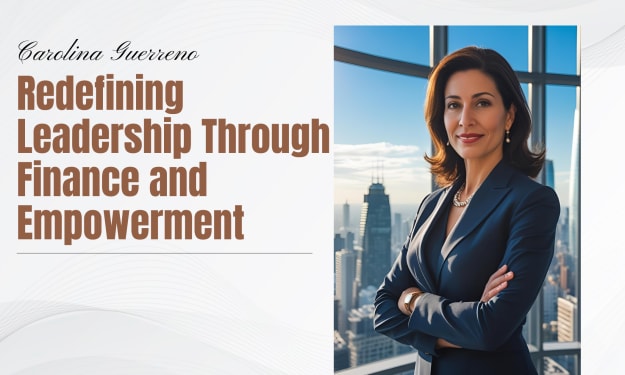
Carolina Guerreno: Redefining Leadership Through Finance and Empowerment
In today’s fast-changing business world, leaders are no longer defined solely by financial performance or career milestones. True leadership now extends to vision, empowerment, and the ability to create meaningful impact. Few individuals embody this shift as effectively as Carolina Guerreno, whose career in finance has evolved into a platform for inspiration and empowerment.
By Carolina Guerrenoabout a year ago in Motivation
“The Silent Battle: Why Mental Health Matters More Than Ever”
Mental health. Two simple words, yet for millions of people around the world, they carry the weight of silence, shame, and struggle. We often talk about physical health—exercise, diet, fitness—but when it comes to mental health, most of us look away, whisper, or pretend nothing is wrong. But here’s the truth: your mind is the engine of your life. If your mental health suffers, everything else—your work, your relationships, your dreams—begins to collapse. --- The Hidden Epidemic According to the World Health Organization, nearly 1 in 4 people will experience a mental health issue at some point in their lives. Depression and anxiety have become as common as colds, yet unlike colds, they don’t always go away with rest or medicine. The biggest tragedy? Most people don’t even talk about it. They keep smiling on the outside while silently drowning inside. Social media adds fuel to this fire, where everyone shows their “perfect life” but hides their pain. --- Why We Stay Silent Why do we avoid conversations about mental health? Because society still treats it as a weakness. We are told: “Be strong, don’t complain.” “It’s all in your head.” “Just snap out of it.” But mental illness is not weakness. Anxiety, depression, burnout—these are not signs of failure, they are signs of being human. Just like a broken bone needs healing, a stressed or anxious mind needs care. --- My Turning Point I remember a time when I was buried under stress. I pushed myself harder, thinking I could “outwork” my anxiety. But it only grew worse. Sleepless nights, racing thoughts, constant pressure—it felt endless. One evening, I admitted to myself: “I can’t fight this alone.” That admission didn’t make me weaker—it made me stronger. Because it was the first step toward healing. --- Small Steps That Saved Me Mental health is not about giant changes—it’s about small, consistent steps. Here are a few practices that changed my life: 1. Talking About It – I opened up to a friend I trusted. Just speaking out lifted half the burden. 2. Daily Movement – Even a 20-minute walk in fresh air made my thoughts calmer. 3. Mindful Breaks – I learned to pause, breathe deeply, and disconnect from endless screens. 4. Gratitude Journaling – Writing three small things I was thankful for every night shifted my perspective. 5. Professional Help – When I realized I needed guidance, I wasn’t afraid to reach out to a counselor. That one decision changed everything. --- Why Mental Health = Real Strength We admire people who lift heavy weights in the gym. But real strength is lifting yourself out of bed when your mind says, “Stay down.” Mental health doesn’t mean being happy all the time. It means having the tools to navigate sadness, stress, and uncertainty without losing yourself. It means treating your brain with the same care as your body. --- Breaking the Stigma Together Imagine a world where talking about mental health is as normal as talking about a headache. A world where asking for help is seen as bravery, not weakness. That world begins with us—by choosing empathy over judgment, listening instead of dismissing, and encouraging instead of shaming. --- Final Message If you are reading this and silently struggling, let me tell you: you are not alone. Your pain is valid. Your struggle is real. And your healing is possible. Start small. Talk to someone. Breathe. Take one step today. Because mental health is not just about surviving—it’s about living fully. And you deserve a life where your mind feels free, strong, and at peace.
By Nihal Khan hashmiabout a year ago in Motivation
“The Day I Chose Not to Give Up: How One Decision Changed My Life Forever”
There are moments in life when everything feels heavy—when the weight of failure, disappointment, and hopelessness sits on your shoulders like a mountain. I found myself in one of those moments a few years ago, standing at the edge of quitting everything I had worked for. My dreams felt too far away, my bank account was nearly empty, and my heart was filled with doubt. I had been trying for months—applying for jobs, pitching small business ideas, and even working on personal projects that never seemed to take off. Each time I failed, it felt like the world was laughing at me. But then came the day that changed everything. --- The Breaking Point It was early morning, and I was sitting in front of a mirror, staring at the reflection of a tired, broken version of myself. Dark circles under my eyes told the story of sleepless nights. My shoulders slumped forward, carrying not just physical exhaustion but the emotional burden of countless failures. For a few minutes, I whispered to myself: "Maybe it’s time to stop trying. Maybe this isn’t meant for me." The thought of quitting almost felt like relief. No more pressure, no more sleepless nights, no more carrying the weight of dreams that seemed impossible. But then—just as I was about to accept defeat—another thought surfaced. A small, quiet voice inside me said: "If you give up now, you’ll never know how close you were to success." That sentence struck me like lightning. What if I was only one step away from a breakthrough? What if this pain was simply the last test before the reward? In that moment, I made a promise to myself: I will not give up. Not today. Not ever. --- Choosing to Fight Back The decision wasn’t easy. It didn’t come with fireworks or applause. But it was powerful. It was the choice to rise, even with shaky legs. Instead of thinking about the hundred things I had failed at, I focused on the one thing I could still do—try again. I broke down my goals into small, manageable steps. I told myself: Don’t think about the mountain, just take the next step. Don’t think about tomorrow’s problems, focus on today’s effort. And that’s how my journey of persistence began. --- The Power of Small Steps At first, progress was slow—painfully slow. But each small step started to build momentum. I replaced negative thoughts with positive affirmations, even when I didn’t fully believe them. I dedicated one hour a day to learning new skills that could help me in the future. I stopped comparing myself to others and focused only on my own progress. Each day wasn’t perfect. Some days I stumbled, some days I felt like I was moving backward. But unlike before, I didn’t let failure push me into quitting. I stood back up every single time. --- What I Learned About Failure One of the biggest lessons I learned during this time was that failure is not the opposite of success—it’s part of success. Every time I failed, I was actually moving forward. Why? Because each failure taught me something new. Failure taught me resilience. Failure taught me creativity. Failure taught me patience. Without failure, I wouldn’t have developed the strength to handle success when it finally came. --- The Turning Point Months passed, and something unexpected happened. The small steps I was taking began to compound. The project I had nearly abandoned started gaining attention. A few people began noticing my work and supporting it. Opportunities I never imagined began to open. And slowly, I started to see the results of all those sleepless nights and quiet efforts. The same people who once doubted me began to ask me for advice. The same struggles that almost broke me became the very experiences that inspired others. And all of it—every bit of progress—came from one simple choice: not giving up. --- The Emotional Transformation But here’s something even more powerful than external success: my inner transformation. I was no longer the same person who looked in the mirror ready to quit. I had become stronger, more patient, and more confident. I realized that the real victory was not just achieving goals—it was becoming the kind of person who refuses to quit no matter what. That’s when I truly understood: Persistence changes people before it changes situations. --- Lessons for Anyone Who Feels Like Quitting If you’re reading this and standing at your own breaking point, let me share what I learned: 1. Your story isn’t over yet. What feels like an ending might actually be the beginning of a new chapter. 2. Success takes time. Sometimes, it’s not that you’re doing the wrong thing—it’s that you haven’t given it enough time. 3. One decision can change everything. The decision not to quit can transform your entire future. --- The Day I Look Back On Even today, when I face new challenges, I think back to that one day—the day I could have quit but chose not to. That decision has shaped everything in my life since then. I often wonder: What if I had quit? I would have never discovered the strength inside me. I would have never seen the opportunities waiting just beyond the horizon. And that’s the lesson I carry forward: The difference between failure and success is often just one more try. --- Final Words Life will test you. It will knock you down, break your spirit, and push you to your limits. But remember this: the hardest battles come before the greatest victories. Don’t give up on yourself. Don’t let temporary pain decide your permanent story. Your breakthrough might be closer than you think. The day you choose not to give up could be the day that changes your entire life—just like it changed mine. --- ✨ Moral of the Story: Success belongs not to the strongest or smartest, but to those who simply refuse to quit.
By Umar Farooqabout a year ago in Motivation
If I Wanted to Become a Millionaire by 2026, This Is What I’d Do
When Marcus sat in his small apartment on a rainy evening in 2023, he stared at the blank page of his notebook. His rent had just increased again, his job felt stagnant, and for the first time, he wondered if the life he was living was truly the life he wanted. As he listened to raindrops hit the window, a daring thought entered his mind: What if I could become a millionaire by 2026?
By MIGrowthabout a year ago in Motivation
How I Made My First $500 from Writing Online
A beginner’s journey to earning the first $500 through online writing When I first decided to try writing online, I didn’t have a clear plan. I had always enjoyed putting words on paper, but I wasn’t sure if anyone would pay me for it. Still, the idea of making money through writing was exciting enough to push me forward. The journey wasn’t instant, and it certainly wasn’t effortless. But after trial, error, and persistence, I earned my first $500. It may not sound like much compared to seasoned freelancers, but for me, it was proof that writing could be more than just a hobby—it could be an income source. Here’s how it happened. --- Starting Small: My First Paid Piece My very first paid writing job came through a freelancing platform. I set up a simple profile, added a short description, and offered basic writing services. At first, I doubted anyone would notice me among thousands of other freelancers. Then one day, a client ordered a short article for $10. I poured hours into it, far more than what I was being paid for, but when the client left a positive review, it opened the door to more opportunities. That first $10 gave me the confidence I needed to keep going. --- Building Momentum with Freelance Work After that, I kept applying for small writing gigs. Some paid $15, others $20. I wasn’t earning much per project, but each one added to my portfolio and gave me practice. The important thing was consistency. I treated every assignment like it mattered, even the low-paying ones. Within a few weeks, I had completed enough projects that I was no longer invisible on the platform. Clients began messaging me directly instead of me chasing every job. --- Exploring Other Avenues: Writing Platforms While freelancing was good practice, I also wanted to see if I could earn from writing stories and articles under my own name. That’s when I discovered writing platforms like Vocal. I started publishing personal essays and practical guides. The first pieces didn’t get much attention, but slowly, reads began to add up. Some stories even earned small tips from readers. It wasn’t hundreds of dollars, but it showed me that sharing my own voice could also be rewarding. --- Combining Income Streams One thing I quickly realized is that making money from writing online isn’t about relying on a single source. I began dividing my time between: Freelance assignments (steady, client-based work) Publishing my own stories (long-term growth and visibility) Experimenting with content sites that offered revenue sharing Each on its own wasn’t enough to reach $500 quickly. But together, they added up. By the end of the second month, I had crossed that milestone. --- The Challenges Along the Way It wasn’t easy. There were weeks when I doubted whether I was good enough. I sometimes spent hours writing articles that earned very little. Some clients were difficult, and rejection was common. But those struggles taught me discipline. Writing for different clients helped me adapt my style, meet deadlines, and accept constructive criticism. Publishing on platforms taught me patience—results often take time, but consistency eventually pays off. --- The First $500 When I looked back and realized I had earned $500 total, it didn’t feel like just money. It felt like validation—that my words had value, that people were willing to exchange payment for something I created. That first $500 wasn’t just income; it was momentum. It encouraged me to aim higher, improve my skills, and treat writing more seriously. --- Lessons I Learned Looking back, a few lessons stand out from my journey to that first $500: 1. Start small, but start. Waiting for the “perfect” opportunity will hold you back. Even a $10 article can lead to bigger things. 2. Consistency matters more than talent. You don’t have to be the best writer to succeed—you just have to keep showing up. 3. Diversify your efforts. Don’t rely on one platform. Explore freelancing, publishing, and other income streams. 4. Value feedback. Every client review and reader comment is an opportunity to grow. 5. Celebrate milestones. $500 may not be a fortune, but it’s proof that writing online works. --- Final Reflection Earning my first $500 from writing online changed how I see myself. I went from doubting whether anyone would care about my words to realizing that writing could genuinely support me. The journey wasn’t glamorous. It was built on late nights, small wins, and lessons from failure. But that’s what made it meaningful. If you’re just starting out, remember this: the first payment might feel small, but it’s the doorway to something much bigger. And sometimes, that first $500 is all the proof you need that your words matter.
By Akhtar aliabout a year ago in Motivation
Jeff Bezos and the Blueprint of Success"
When people think of innovation, leadership, and the modern business landscape, one name consistently stands out—Jeff Bezos. The founder of Amazon has become a symbol of ambition, determination, and relentless pursuit of excellence. His story is not just about wealth but about vision, risk-taking, and the discipline to build something that reshaped the world of commerce. Jeffrey Preston Bezos was born in Albuquerque, New Mexico, in 1964. From a young age, Bezos showed a deep curiosity about how things worked. He was the type of child who dismantled toys and gadgets just to see how they functioned. This natural inclination toward problem-solving, combined with his academic excellence, laid the foundation for his future. After graduating from Princeton University with degrees in electrical engineering and computer science, Bezos embarked on a career on Wall Street, working in investment banking and hedge funds. By all accounts, he was already on track for a successful and lucrative career in finance. But Jeff Bezos had something many others in his position lacked: a vision for the future. In the mid-1990s, while working at D.E. Shaw, Bezos came across a startling statistic—the internet was growing at 2,300% per year. While others viewed this as an interesting fact, Bezos saw a golden opportunity. He began brainstorming what kind of business could thrive in such a rapidly expanding digital space. Books became the obvious choice; they had universal demand, a huge catalog, and were relatively easy to ship. In 1994, with the support of his then-wife MacKenzie Scott, Bezos left his comfortable Wall Street job. He packed up his car, drove to Seattle, and started working on his new venture out of a garage. That venture was Amazon.com. At the time, the idea of buying books online seemed risky, even absurd. The internet itself was still in its infancy. But Bezos was undeterred. His philosophy was simple: focus on the customer relentlessly and work backward from their needs. The early days of Amazon were challenging. Bezos faced skepticism from investors, logistical hurdles, and stiff competition from established bookstores. Yet, his persistence paid off. Within the first month of launching in 1995, Amazon had already sold books to customers in all 50 U.S. states and 45 different countries. His famous "Day 1" mindset—treating every day like the first day of a startup—kept the company agile, innovative, and customer-obsessed. As Amazon grew, so did Bezos’s ambitions. The company expanded beyond books, moving into music, electronics, clothing, and eventually almost every imaginable product category. The introduction of services like Amazon Prime revolutionized customer expectations by offering fast shipping and exclusive benefits. Kindle redefined the way people read books, while AWS (Amazon Web Services) became a backbone of the internet, powering countless businesses and apps. Bezos’s success, however, was not without criticism. Many questioned Amazon’s aggressive tactics, its impact on small businesses, and its treatment of employees. Yet, even his critics acknowledged the brilliance of his long-term thinking. Bezos often told shareholders that he was not focused on short-term profits but on building enduring value. This philosophy helped Amazon weather financial storms, adapt to market shifts, and consistently innovate. By the time Bezos stepped down as CEO in 2021, Amazon had grown into one of the most valuable companies in the world, worth over a trillion dollars. His personal fortune had also made him one of the richest individuals on Earth. But beyond the wealth and the empire, what stands out is Bezos’s mindset. His story is proof that success does not come from avoiding risks but from embracing them with vision, preparation, and persistence. Jeff Bezos once said, “I knew that if I failed, I wouldn’t regret that. But I knew the one thing I might regret is not trying.” That willingness to try, to take the leap when others hesitated, is what defined his journey. Today, his legacy continues not only through Amazon but also through his space exploration company, Blue Origin, which aims to make space travel more accessible. The story of Jeff Bezos is more than just a business success—it is a lesson in innovation, resilience, and the power of thinking big. From a garage in Seattle to a global empire, his path shows that with vision and relentless execution, even the boldest dreams can become realty.
By Kashif Khanabout a year ago in Motivation