success
The road to success is always under construction; share your equations for success — and learn some new ones.
7 Common Mistakes Beginners Make in Side Hustles and How to Avoid Them. AI-Generated.
You wake up early, excited about that side hustle idea buzzing in your head. Between your day job and family duties, you squeeze in hours to build something extra. But soon, doubts creep in—progress stalls, costs add up, and exhaustion hits hard.
By Akmal54about a year ago in Motivation
AI Side Hustles 2025: Earn Money Online Using Just Your Phone. AI-Generated.
The world of freelancing is changing fast. You don’t need a fancy laptop, a professional setup, or years of experience anymore. In 2025, all you need is your smartphone and a few powerful AI tools to start earning real money online. 📱💰 From writing and design to voiceovers and videos, AI is opening up hundreds of new opportunities — especially for beginners who just want to get started. Here are 10 AI side hustles you can start today, using only your phone.
By Najeem Ullahabout a year ago in Motivation
The Village Doctor
The Village Doctor BY: Masarrat Kalanchvi Dr. Sidra threw her appointment letter on the table in frustration. “I can’t go work in a village hospital! Never!” Her mother, Shireen Begum, frowned. “You worked so hard to become a doctor, passed all the government exams and interviews — and now they’ve appointed you to some small village hospital!” Sidra’s father, Ahmad Khan, sighed. “It’s all right, Sidra. Don’t go. I’ll find you a position in a big city hospital. Why should my daughter suffer in a remote village?” Shireen Begum nodded approvingly. “Exactly. You grew up in the city — in comfort, luxury, and ease. You can’t live in a place where there’s dust, no electricity, and no decent water.” During this entire discussion, Sidra’s grandfather sat silently in a corner, lost in deep thought. Finally, Ahmad Khan asked, “Father, what are you thinking?” The old man looked up. “Sidra will go to the village.” The words shocked everyone. “Grandfather!” Sidra stood up. “You know I’ve never spent even one day in a village. How could I possibly live there?” “Because the people there need you, my child,” the old man replied calmly. “Someone else can go, Dada. Other girls will take that job — girls who need the salary.” He shook his head. “No, Sidra. That village needs you. Not someone forced to go, but someone willing to stay. Those who go unwillingly, they leave at the first opportunity.” Shireen Begum raised her hands dramatically. “Just listen to Father! He wants Sidra not only to go to that village but also to stay there permanently!” Ahmad Khan added, “Please, Father, don’t force her. Let her decide for herself.” The old man nodded. “Yes. Sidra will decide. And whatever she decides, we’ll all accept.” That night, Sidra sat awake by her window, listening to a lone bird crying on the tree outside. Her grandfather entered quietly, carrying a glass of milk. “You’re still awake, my child?” “Yes, Dada. I couldn’t sleep. I keep hearing this bird. Its voice sounds so sad.” The old man smiled gently. “Perhaps it’s lost its flock. When birds lose their companions, they can’t sleep. They sing out in the night, calling for them.” “Do you think it will ever find them again?” Sidra asked softly. “Yes,” he said. “Someday its cry will reach them, and they’ll come for it. You see, Sidra, sometimes people, too, are separated from their roots — from the land they belong to. But the earth calls them back. Every grain of soil has a claim on its children.” The next morning, Sidra agreed to visit her grandfather’s village — just for one day. “But promise me, Dada,” she said, smiling. “You won’t ever ask me to work there.” He laughed and took her hand. “I promise.” --- When Sidra told her parents, her mother was horrified. “Never! You’re not going to that filthy place — where the roads are covered in dung, flies buzz everywhere, and there’s not even clean water!” But Ahmad Khan said calmly, “Let her go. She’ll see what it’s really like and come back by evening.” The dusty road to the village was lined with fields of green wheat and mustard flowers swaying in the breeze. Children bathed in the canal, women filled pitchers at the well, and farmers worked the soil under the wide blue sky. It was beautiful — but Sidra found no attraction in it. “Yes, Father was right,” she thought. “I’ll be back before nightfall.” Then she saw a signboard with the name of the very same village written on it — the one mentioned in her appointment letter. “Dada! Stop the car!” she cried. “I’m not going there! You tricked me!” The old man smiled gently. “This is Baba Noor Din’s village, my child.” Sidra’s voice trembled. “You said we were visiting him — not this place!” “We are,” he said softly. “But first, we must stop somewhere else.” He parked the car near the village graveyard. “Come, Sidra.” Puzzled, she followed him to a simple grave. They recited Fatiha together. “Whose grave is this, Dada?” she asked quietly. He looked at her tenderly. “A woman from this village. She died giving birth. There was no lady doctor here to save her. She was being carried to the city hospital, but she died on the way.” Sidra’s heart sank. “That’s so tragic. What happened to her baby?” “She lived,” he replied. “A relative from the city adopted her, raised her with love, and made her a doctor.” Sidra looked up, confused. “Do you… know that girl?” The old man’s eyes filled with tears. “Yes, my child. That girl is you. This is your mother’s grave.” Sidra froze. The world around her blurred. She fell to her knees, her arms spread over the grave, and wept as though her soul was tearing apart. Her grandfather placed a trembling hand on her head. “Now you know the truth, Sidra. This village is your home. Your mother’s soul rests here — and her unfinished work is waiting for you.” --- Later, they went to Baba Noor Din’s house. The old man embraced Sidra warmly. “So this is my daughter — now a doctor! Praise be to God!” The villagers brought fresh butter, lassi, and corn bread for them. Sidra tasted the food — it was simple but full of warmth. Just then, an old woman came running. “Baba Noor Din! My daughter-in-law is very sick. There’s no lady doctor in the hospital again. We’ll have to take her to the city tomorrow.” Sidra stood up immediately. “Dada, I need to go back to the city — now.” He frowned. “So soon?” “Yes,” she said with calm determination. “To pack my things. I’m coming back tonight. That woman’s daughter-in-law will be my first patient.” Tears of pride filled the old man’s eyes. “I knew you would return to your roots, my child.” --- When Sidra reached home, her parents looked relieved. “See?” her father laughed. “I told you — the morning’s wanderer always returns by evening.” But Sidra looked different — her eyes shone with new purpose. “Father,” she said firmly, “I’m going back — to serve where my mother’s life was lost. No more women should die on the road to the city. Not if I can help it.” Her mother’s lips trembled. She saw not just her daughter, but the reflection of her late friend — the same face, the same eyes. With tears in her voice, she said, “Go, my child. We are proud of you.” Sidra bowed her head and whispered, “Thank you, Mother… Thank you, Father.” And as she left for the village, the morning sun broke through the clouds — lighting the path that would change countless lives forever.
By Ubaid about a year ago in Motivation
Rise Beyond Limits: Unlocking the Power of Self-Belief
Every great achievement in history began as an idea in someone’s mind — fragile, uncertain, but nurtured by belief. The truth is, we all carry within us the seeds of greatness 🌱. What separates dreamers from achievers is not luck, talent, or background; it’s the unshakable belief that “I can.”
By Irfan Aliabout a year ago in Motivation
The Sword of Duty
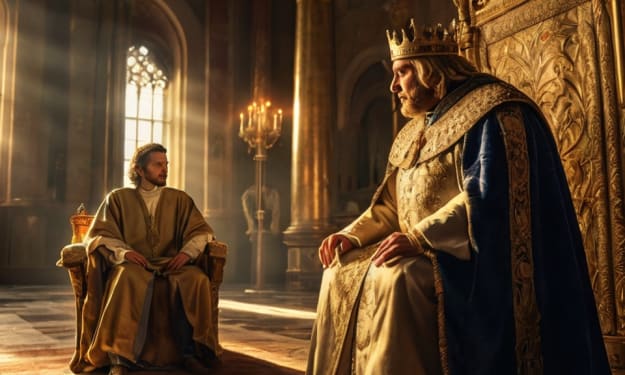
The Sword of Duty BY:Khan Once upon a time in Italy, there lived a king who ruled over a vast kingdom. Although he was powerful and wealthy, his people did not like him much. They thought he was proud and distant. Still, there were some who never missed a chance to praise him—especially one of his ministers, a master flatterer. This minister spent his days and nights singing false praises of the king’s wisdom, justice, and kindness. Whenever he got the chance, he would say, “Your Majesty’s rule is the best in the world! People are blessed to live under your just and noble leadership.” The king, however, had a rule. He had ordered all his ministers to keep him informed about the true condition of his subjects—who was happy, who was suffering, and what people really thought of their king. “Tell me the truth,” the king would say. “Only then can I serve my people well.” But whenever the king asked, the flattering minister would respond instantly, “Your Majesty, everyone in your kingdom lives in comfort and peace. Who could ever be unhappy under your rule?” The other ministers remained silent, but this one always filled the court with empty words of praise. Over time, the king began to grow suspicious. He wondered, Perhaps this minister is not being honest. Maybe he hides the truth from me with his flattery. The king realized that if he continued to believe such lies, he might remain ignorant of his people’s real suffering. So, one day, the king decided to test the minister. At first, he tried to teach him gently. “My friend,” said the king, “there is no kingdom in the world where everyone is happy with their ruler. And no king is perfect—sometimes even a just ruler can make mistakes that hurt someone. You must always tell me the truth about my people, even if it displeases me.” But the minister, blinded by his habit of flattery, continued to shower the king with false compliments. Finally, the king said, “Since you are so loyal and faithful, I want to reward you. Tomorrow, I will make you king for one day. You will sit on my throne and rule the kingdom as you wish.” The minister could hardly believe his ears. His eyes sparkled with joy. “A day of kingship!” he thought. “What a great reward!” The next morning, the royal court was filled with noblemen, ministers, and important guests. The real king placed his own crown on the minister’s head and seated him on the grand golden throne. “Today,” the king announced, “I am no longer your ruler. This man is your king for one day.” The hall echoed with cheers. Musicians played, servants brought rich food and drink, and the one-day king began giving orders proudly. He felt like the most powerful man in the world. But then, something strange happened. As the minister looked up, his face suddenly turned pale. His body trembled with fear. Above the throne, hanging directly over his head, was a sharp, gleaming sword. It dangled by a single, thin thread—so fine it looked like a strand of hair. The real king, sitting quietly nearby, noticed his fear and smiled slightly. The minister could not take his eyes off the sword. The thought of it falling made his heart pound. What if the thread broke? What if the sword dropped on him? He tried to sit straight and calm, but his hands shook, and his voice faltered whenever he spoke. Finally, unable to bear it any longer, he turned to the real king and said in a trembling voice, “Your Majesty, please remove this sword from above my head!” The king replied calmly, “That is not possible. This sword is known as The Sword of Duty. It always hangs above the head of every ruler. As long as a king remains honest and just, this sword protects him. But the moment he neglects his duty or rules unfairly, it falls—and destroys him.” The minister’s heart sank. All his dreams of enjoying his short reign vanished. Moments ago, he had planned to pass orders that would benefit his family and friends, to grant them wealth and power. But now, he was frozen in fear. What if any of my decisions are unjust? he thought. What if the sword falls? Seeing his distress, the real king said gently, “Now do you understand what it means to be a king? The throne may look comfortable, but it carries a burden heavier than gold. Every decision affects thousands of lives. Every injustice brings danger closer. The crown is not a toy—it is a responsibility.” The minister bowed his head in shame. “Forgive me, Your Majesty,” he said. “I never understood the weight of a ruler’s duty. I thought being king meant comfort and luxury, but now I see it is a life of constant watchfulness and responsibility.” The king nodded. “Flatterers do not serve their rulers or their people. By hiding the truth, they place the king under this sword. Only honesty can keep the kingdom—and the ruler—safe.” Deeply humbled, the minister removed the crown and placed it back on the king’s head. He promised never to lie or flatter again. From that day on, he became one of the most honest and loyal advisors in the court. And so, the king’s lesson was complete: A throne is not a seat of comfort, but a seat of duty—and above every ruler’s head, there always hangs the Sword of Responsibility. Moral: Honesty is the true service to a leader. Flattery blinds both the ruler and the flatterer, but truth keeps the kingdom strong.
By Khan about a year ago in Motivation
Why the Elites Fear Creativity
Every empire in history has feared one thing above all else — not war, not rebellion, but imagination. Every generation has its creators, the people who look at a broken system and say, “We can do better.” They don’t wait for permission. They grab what’s around them and build something new. They fix, remix, and reimagine the world while others stay locked in patterns of obedience.
By DJ for Changeabout a year ago in Motivation
When the Sun Came Back
There was a time when I forgot what sunlight felt like—not the warmth on my skin, but the kind that lived inside me. It was the year everything seemed to fall apart. My job had ended abruptly after a round of unexpected layoffs. My closest friend moved across the country. And the silence of my apartment—once a comfort—became unbearable.
By Khuzaifa aliabout a year ago in Motivation
The Story of Roger Federer
The Elegant Maestro: The Timeless Journey of Roger Federer In the theater of tennis, where every stroke is a duel between precision and power, a few rare players rise above the competition and transform the sport into something closer to poetry. Roger Federer is one of those few. To millions around the world, he was more than an athlete; he was the artist who painted on a green canvas, the maestro who turned rallies into symphonies. His journey from a playful Swiss boy with a racket that was almost too big for him to hold, to the man who left the game with 20 Grand Slam titles and countless hearts won, is a story of talent, resilience, humility, and grace.
By Frank Massey about a year ago in Motivation
🦊 The Fox Mindset: What This Clever Animal Can Teach You About Life
Intro (Hook) In the wild, power doesn’t always belong to the biggest or the strongest. Sometimes, survival depends on silence — and strategy. The fox is one of nature’s most misunderstood creatures. In Europe and America, it’s often labeled as “sly” or “tricky.” But the truth is deeper: the fox is not evil — it’s intelligent. It knows when to act, when to wait, and when to disappear. It survives not through power, but through patience, adaptability, and grace. In today’s loud, competitive world, we humans could learn a lot from this quiet genius of nature. --- 1. Stay Calm — Even When the World Is Loud The fox doesn’t chase every noise in the forest. It listens, observes, and waits. Even when danger is near, it remains still — because panic wastes energy, and silence reveals truth. In life, chaos surrounds us — constant notifications, opinions, pressure to “hustle.” But wisdom means staying calm when everyone else is losing control. ☑️ Lesson from the fox: Don’t react to every sound. Pause. Breathe. Act when it matters. --- 2. Be Smart, Not Just Strong A lion might rule the jungle, but a fox rules survival. It can outsmart traps, predict patterns, and find food even in winter. In the human world, intelligence often wins over strength. You don’t need to be the loudest or the toughest — just the most observant. A fox studies its environment and uses it to its advantage. ☑️ Lesson: Strategy and intelligence will open doors that brute force never can. --- 3. Adapt or Fade Away Foxes live everywhere — from snowy mountains in Norway to busy cities like London and New York. They eat what they find, move when needed, and rest when the time is right. That’s the power of adaptation. Many people fear change, but the fox embraces it. When winter comes, it grows a thicker coat. When food is scarce, it changes its diet. ☑️ Lesson: Don’t fight change — use it to evolve. Adaptation isn’t weakness; it’s survival. --- 4. Know When to Hunt, When to Hide Every fox knows that timing is everything. It hunts mostly at night when the world is quiet. It knows when to attack — and when to disappear into the shadows. In life, this means knowing your timing: When to take opportunities, when to rest, and when to walk away. Not every fight deserves your energy. ☑️ Lesson: Life is chess, not boxing. Win through timing, not force. --- 5. Move in Silence — Let Results Make the Noise The fox is never dramatic. It doesn’t roar. It doesn’t brag. It walks silently and strikes efficiently. In our modern world, people post plans before they even begin — “New project coming soon,” “Big things ahead.” The fox would never do that. It lets results speak. ☑️ Lesson: Move quietly. Build in silence. Success is the loudest sound in the end. --- 6. Protect Your Energy — Not Every Battle Is Yours Foxes don’t waste energy on meaningless fights. If danger is too strong, they retreat, not out of fear, but wisdom. Humans often do the opposite — arguing online, competing for validation, chasing distractions. The fox reminds us: peace is power. Use your energy only where it matters. ☑️ Lesson: Protect your peace like a fox guards its den. --- Conclusion The fox may look small, but its wisdom is huge. It survives in silence, wins through patience, and thrives by adapting. In a world where everyone shouts, the fox listens. Where everyone rushes, the fox observes. Maybe that’s the real key to living smart — not just working harder, but thinking wiser. Be calm like the fox. Be sharp like the fox. And when the world gets loud, remember — your silence can be your greatest power. 🦊
By Shahab Khanabout a year ago in Motivation
“The Secrets of the Lower City: The Untold Heroes”
Story: The Lower City seemed ordinary at first glance, but beneath its narrow streets lay secrets long forgotten. Its residents lived their lives unaware that a hidden world existed behind the walls of their homes and the floors of underground passages. Amira, a curious and determined 19-year-old girl, had always been fascinated by books and mysteries. She lived with her mother and younger sister, and life had always been predictable—until the day she heard whispers about an ancient book with extraordinary powers. This book was said to reveal the hidden truths of the city, even showing glimpses of the near and distant future. However, it was guarded by a strict and mysterious elder named Hassan, who never allowed an ordinary person to read it. Many had tried before and faced grave dangers. Driven by curiosity, Amira decided to meet the elder. To her surprise, Hassan said: “Amira, I have been waiting for someone like you. But you must understand—the power of this book is double-edged. It can illuminate the truth, but it can also bring great danger.” Her heart raced, but Amira accepted the challenge. Her journey was thrilling and terrifying. She began exploring the city’s hidden corners—ancient underground floors, forgotten libraries, and forbidden places no one dared enter. Amira encountered the city’s forgotten residents, who shared tales long buried. She discovered that the Lower City held hidden conspiracies, deceit, and secret networks, all controlled by those in power trying to protect their authority. One day, Amira realized that the book could reveal potential disasters if the city’s secrets were misused. She saw glimpses of corruption in business and politics, acts that could destroy ordinary lives if left unchecked. Fear did not stop her. Using her intelligence, courage, and the book’s guidance, Amira devised a plan to reveal the truth to the people. She presented hidden evidence, reached out to trusted allies, and worked tirelessly to change the city’s fate. Weeks of effort brought visible results. People began to recognize the truth, some taking action to improve their lives. The Lower City gradually became more open, its citizens learning to trust each other. The long-hidden secrets were revealed, and the city’s untold heroes finally received recognition. In the end, Amira realized that courage did not come from the book’s power alone. True bravery lay in those willing to do what is right. She became a remembered hero in her community, a shining example that honesty and courage can overcome deception and secrecy. A Note: The Lower City is not as it seems. Its hidden secrets remind us that anyone seeking the truth can become a hero—even in the face of danger and fear.
By Hudaabout a year ago in Motivation