success
The road to success is always under construction; share your equations for success — and learn some new ones.
The Guiding Shade: Why Respecting Our Fathers is Essential
A father is often compared to a shade of a tree under which his children find protection, comfort, and peace. Just as a tree shields us from the burning rays of the sun, a father shields his family from the hardships of life. His efforts may sometimes go unnoticed, yet every sacrifice he makes is for the betterment of his children. To respect a father is not only a moral duty but also a form of gratitude for the countless ways he contributes to our lives.
By Daily Motivationabout a year ago in Motivation
What Loving a Broken Person Taught Me About Myself
Introduction We often go into relationships hoping to fix, heal, or save the person we love. I used to believe that if I gave enough love, patience, and understanding, I could help someone put their broken pieces back together. But what I didn’t realize at the time was that in trying to heal someone else, I would end up confronting the broken parts of myself. Loving a broken person didn’t just change the way I saw them—it changed the way I saw me. --- The Allure of Wanting to “Save” Someone When I first met them, I could sense their pain. It was in the way they hesitated before trusting, in the walls they built around their heart, and in the silence they carried like a shadow. Something inside me wanted to be the one to fix it. I thought if I just loved hard enough, I could fill the cracks and erase their hurt. There’s a strange kind of pride that comes with believing you can rescue someone from their own darkness. But loving someone who is broken is not about saving them—it’s about learning what love really means when it isn’t simple. --- Patience Has Limits At first, I poured myself into the relationship with patience. I listened to their fears. I stayed up late when they needed reassurance. I forgave things that hurt me because I thought their wounds explained their actions. But as time went on, I realized patience without boundaries can become self-neglect. In trying to hold them together, I was letting myself fall apart. Loving a broken person taught me that while patience is powerful, it has to be balanced with self-respect. Love should not mean abandoning yourself. --- Love Alone Isn’t Enough This was the hardest lesson. I wanted to believe that love could fix everything. That if I just gave more of myself, they would heal, and things would be better. But love is not a magic cure. Brokenness doesn’t disappear just because someone cares for you. Healing requires personal effort, not just external affection. What I learned is that you cannot carry someone through their healing journey—they have to walk that path themselves. And no matter how much you love, it won’t be enough if they aren’t ready to love themselves. --- I Saw My Own Reflection in Their Pain The more I tried to help them, the more I realized how much of myself I had been ignoring. Their fears mirrored my own insecurities. Their walls reminded me of the ones I had built long before. Loving them forced me to look at my own broken pieces. I had to admit that I wasn’t just a healer—I was also someone in need of healing. In that sense, they became a mirror. And though it was painful, it was also the beginning of my own growth. --- Boundaries Are an Act of Love For a long time, I thought setting boundaries meant I didn’t care enough. I believed that saying “no” or pulling back was selfish. But I eventually learned that boundaries are not walls—they are healthy lines that protect both people. Without them, resentment grows, and love starts to feel like sacrifice instead of choice. By setting boundaries, I realized I wasn’t just protecting myself—I was also giving them the space to take responsibility for their healing. That, in itself, was an act of love. --- Strength Comes From Letting Go Perhaps the hardest part of loving a broken person is realizing that sometimes, love means letting go. It doesn’t mean you stop caring. It means you recognize that staying might cause more harm than good. It means you value your own well-being enough to walk away when love turns into constant pain. Letting go taught me that my worth isn’t defined by how much I can endure, but by how much I can honor myself. --- The Lessons I Carry Forward Looking back, here’s what I learned about myself from loving someone who was broken: 1. I am not a savior. I can love deeply, but healing has to come from within. 2. My patience has value. It should never come at the cost of my own peace. 3. Boundaries are necessary. They are not selfish—they are healthy. 4. Love must be mutual. It can’t just flow one way and still survive. 5. Walking away is strength. Sometimes, it’s the most loving choice you can make. --- Final Thoughts Loving a broken person wasn’t easy. It left me with scars and questions, but it also gave me clarity. It forced me to see myself in ways I had been avoiding. In the end, the most important thing I learned is this: love is powerful, but it is not about fixing—it’s about growing. And sometimes, the greatest growth happens not in the person you tried to save, but in yourself. Loving a broken person didn’t heal them. But it did teach me how to heal myself.
By Akhtar aliabout a year ago in Motivation
Time Management Techniques That Naushad Parpia Uses To Lower Stress
According to Naushad Parpia, organized time use allows individuals to maintain focus and calmness. Proper planning creates structure, helps prioritize tasks, and prevents overwhelming pressure constantly. Managing time intentionally supports mental clarity, better decision-making, and emotional balance daily. When tasks are tracked effectively, individuals gain control, confidence, and efficiency consistently over time. Structured schedules reduce last-minute rushes, allowing space for reflection and strategic thinking. Combining discipline with flexibility ensures smoother workflows and minimizes unnecessary stress continuously. Understanding the link between time management and stress reduction empowers both personal and professional growth.
By Naushad Parpiaabout a year ago in Motivation
Coastal Debt’s Approach to Transparent and Ethical MCA Debt Relief Solutions
Managing MCA debt can be a complex and stressful experience for entrepreneurs, especially when financial obligations start to outpace revenue. Coastal Debt Resolve, based in Fort Lauderdale, Florida, has built its reputation on offering transparent and ethical debt solutions, helping business owners navigate financial hardships without compromising their values or future. Through honest practices, client-focused strategies, and a commitment to integrity, Coastal Debt Resolve ensures that businesses not only find relief but also regain confidence in their financial management.
By John Michabout a year ago in Motivation
How to Earn Your First $10K Online
The buzzing of the fluorescent lights in his tiny room was the only sound Alex could hear. At 22, he was stuck in the same loop every day: wake up, drag himself to a job that paid barely enough for rent, come home exhausted, and scroll endlessly on his phone watching other people living the life he dreamed about.
By MIGrowthabout a year ago in Motivation
The Mistake That Almost Cost Me the Love of My Life
Introduction We all make mistakes in relationships. Some are small—like forgetting a date or saying something careless. Others are bigger, the kind that leave scars and test the very foundation of love. I made one of those mistakes. And for a while, I thought it had cost me the love of my life. But through that painful experience, I learned lessons about honesty, forgiveness, and the effort it takes to make a relationship truly last. --- When Things Were Perfect In the beginning, everything felt effortless. We laughed until our stomachs hurt, stayed up late dreaming about the future, and supported each other through life’s challenges. I genuinely believed I had found the person I wanted to spend the rest of my life with. But comfort can sometimes lead to carelessness. I began to take what we had for granted, assuming that love was strong enough to survive anything. I didn’t realize how fragile even the deepest love can be when it’s not nurtured every day. --- The Mistake My mistake wasn’t a single dramatic betrayal—it was something more subtle, but just as damaging. I stopped showing up the way I used to. I got lazy with communication. I brushed off small arguments instead of addressing them. I became distracted with work, friends, and my own stress, and I stopped prioritizing our relationship. The love was still there, but my actions didn’t always reflect it. And love without effort eventually starts to feel empty. One night, after yet another conversation where I was half-listening and glued to my phone, my partner looked at me and said: > “I don’t feel like you really see me anymore.” That sentence hit me like a punch in the chest. --- The Consequences I had always thought that as long as I loved them, they would “know.” But what I hadn’t realized was that love isn’t just a feeling—it’s a choice, expressed in daily actions. My mistake had made them feel invisible, undervalued, and alone—even while standing right next to me. And for the first time, I saw the possibility that I could lose them. We nearly broke up that night. The trust we had built felt shaken, not because of infidelity or betrayal, but because of neglect. --- The Wake-Up Call In the days that followed, I thought deeply about what had gone wrong. The truth was simple but painful: I had taken love for granted. Love isn’t a permanent guarantee. It requires care, attention, and intentional effort. By neglecting the little things—listening, being present, showing gratitude—I had created distance between us without even realizing it. I knew if I didn’t change, I really would lose them. --- The Work of Repairing Love Winning back their trust wasn’t easy. Apologizing was just the first step—I had to prove through consistent action that I was willing to do better. I started putting away distractions when we talked. I made time for us, even on busy days. I expressed gratitude out loud, instead of assuming they already knew how much I cared. Most importantly, I listened—not just to their words, but to their feelings behind them. Slowly, things began to heal. It wasn’t overnight, but step by step, we rebuilt what I had almost broken. --- What I Learned Looking back, I see that my mistake wasn’t about one moment—it was about forgetting that love is a verb, not just a noun. It’s not enough to feel love; you have to show it, every day. Here’s what I carry with me now: Never stop choosing your partner. Even in the comfort of long-term love, effort matters. Small actions add up. A hug, a kind word, undivided attention—these tiny choices build trust and closeness. Love can survive mistakes. If both people are willing to work through the pain, love can come out stronger on the other side. --- Final Thoughts The mistake I made nearly cost me the love of my life. But instead of ending us, it became the turning point that reminded me never to take love for granted. Relationships aren’t destroyed only by big betrayals—they can crumble from neglect just as easily. But with honesty, humility, and effort, they can also be rebuilt. I’m grateful every day that we didn’t give up on each other. That mistake changed me—and it taught me that the greatest way to honor love is to never stop showing up for it.
By Akhtar aliabout a year ago in Motivation
The Strength of Flexibility
In a small coastal village in Japan, where the ocean crashes fiercely against the rocks during storms, there stands a forest of slender bamboo. While mighty oak trees have fallen to typhoons over the years, the bamboo still sways and stands.
By Khuzaifa aliabout a year ago in Motivation
Most Men Are Faking Confidence
Most men are performing a version of themselves that’s slowly killing them. They’ve mastered the art of appearing confident, composed, in control — but inside, they’re anxious, angry, or numb. Not because they’re broken. Not because they’re weak. But because no one ever taught them how to love themselves.
By Randolphe Tanoguemabout a year ago in Motivation
The Life-Changing 5-Second Anxiety Cure You’ve Never Heard Of”. AI-Generated.
Anxiety has a way of sneaking in when you least expect it. For me, it wasn’t just a little nervousness before a big meeting—it was a constant background noise in my mind. Heart racing for no reason. Overthinking every conversation. Sleepless nights replaying imaginary disasters that never happened. If you’ve ever felt trapped in your own head, you know exactly what I mean. For years, I searched for a “cure.” Meditation apps, long workouts, herbal teas, journaling—some helped a little, but nothing ever worked instantly. And then, one random afternoon, I stumbled upon a 5-second trick that shocked me with how quickly it pulled me out of my anxiety spiral. I was sitting in my car, hands shaking, trying to gather the courage to walk into an interview. My brain was on fire with all the “what ifs.” What if I embarrass myself? What if they don’t like me? What if I completely freeze? Then I remembered something I’d read online about disrupting anxious thoughts. The idea was simple: count backward from 5—out loud if possible—and then take action before your brain has time to drag you back into panic. It sounded almost too easy. But in that desperate moment, I decided to try. 5... 4... 3... 2... 1. I opened the car door before my mind could argue. My heart was still pounding, but suddenly, I wasn’t stuck anymore. It felt like I’d hijacked my brain, cutting off the anxiety mid-sentence. That was the first time I realized how powerful this trick was. Why It Works in Just 5 Seconds Here’s what I’ve learned since: anxiety thrives on hesitation. The longer you sit and think, the deeper you sink into worry. But when you count down from 5, you interrupt that thought loop. It forces your brain to shift gears—from spiraling into panic to focusing on the next action. It’s not magic. It’s neuroscience. Counting down activates the prefrontal cortex, the rational part of your brain that takes over from the emotional panic center. In other words, you stop letting your fears drive and put yourself back in control. And the best part? It only takes five seconds. How I Use It in Real Life Morning dread: Instead of lying in bed overthinking, I count down and immediately put my feet on the floor. Social anxiety: When I’m about to send a scary text or join a group, I count down and hit send before doubt creeps in. Panic moments: When my heart races out of nowhere, I count down and take a slow breath. Just that tiny pause shifts the energy. Each time, it’s like pressing a reset button. The anxiety doesn’t get to run the whole show—it loses its grip. What Changed in My Life The results have been bigger than I ever imagined. I stopped canceling plans out of fear. I nailed that interview. I began sleeping better, not because my problems vanished, but because I finally had a tool to face them instead of being consumed by them. And here’s the surprising part: the more I used the 5-second trick, the less I needed it. It’s like training a muscle. The more often you interrupt anxious thoughts, the less power they have over you. Try It Now If you’re reading this and your mind is racing about something—big or small—try it right now. Think of that thing you’re avoiding. Count down: 5... 4... 3... 2... 1. And then take one tiny step forward. Send the message. Get out of bed. Close the laptop. Step outside. You’ll feel it: that little jolt of momentum that tells your brain, “I’m in charge, not my anxiety.” A Final Reminder Anxiety is real, and I know firsthand how heavy it can feel. I’m not claiming one simple trick will erase it forever. But sometimes, we don’t need a complicated solution—we just need a way to break the cycle in the moment. For me, that way is five seconds. A tiny window of time that reminds me I’m stronger than my fears. And maybe, just maybe, it can do the same for you. So next time anxiety knocks, don’t let it talk you into staying stuck. Just count down. Take the step. Change your state. Because sometimes, five seconds is all it takes to change your life.
By Nomix about a year ago in Motivation
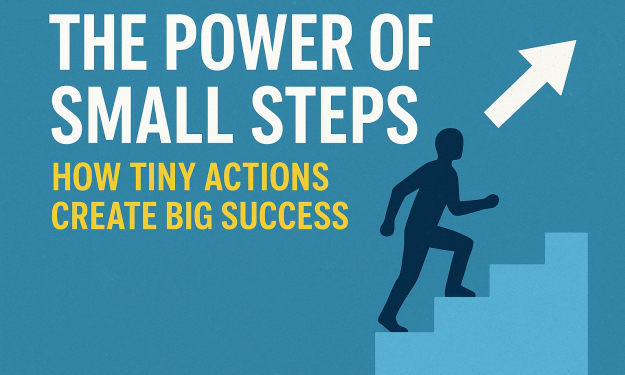
How tiny actions create big success
The Power of Small Steps: How Tiny Actions Create Big Success When we think about success, our minds often picture big achievements—winning awards, launching a million-dollar business, or reaching the top of a career ladder. But here’s the truth: most success stories don’t begin with giant leaps. They begin with small, almost unnoticeable steps that slowly compound over time. Think of it like planting a seed. You don’t see a tree overnight, but with consistent care, that seed eventually grows into something strong, valuable, and unshakable. In the same way, the small choices you make every day shape your future far more than one big breakthrough moment.
By DREAM 2 SUCCESSabout a year ago in Motivation