social media
Motivation in the modern age of social media; keep your social media feed positive by following inspirational influencers.
Hope in the darkness
The village of Noorpur, ironically named “The City of Light,” had been plunged into darkness for weeks. It was winter, and the nights grew colder and longer. With no electricity, the streets were silent, homes were dim, and schools stood still. People had grown weary, their hearts heavy with frustration and helplessness. But among the many hopeless faces, there was one young boy whose eyes still sparkled with determination — Azaan. He was only twelve, but his heart carried a wisdom far beyond his age. His father was a laborer, and his mother stitched clothes at home. They didn’t have much, but Azaan possessed something rare — a treasure of hope. Every night, after the village fell asleep, Azaan would light a small candle, sit outside by the dusty road, and read his old school books. Then, he would place that same candle on a stone near the street corner. People would pass by and chuckle, “What difference will one candle make, Azaan?” But he would simply smile and reply, “A spark is enough to challenge the darkness.” This became his nightly routine — a lone boy and a flickering flame in the heart of darkness. Some thought he was foolish, others admired his spirit, but no one truly understood the depth of his resolve. One cold evening, a car broke down near the village. The man inside was Engineer Faheem, an electrical engineer working on power projects in nearby towns. With no other option, he walked toward Noorpur in search of help. As he entered the village, he immediately noticed the deep, eerie darkness surrounding him. But then, in the distance, he saw a soft, glowing light. As he moved closer, he found a young boy sitting quietly by the roadside, reading under the warm light of a candle. Engineer Faheem was surprised. He walked up and asked, “What are you doing here alone, son?” With a calm smile, Azaan replied, “I’m fighting the darkness, uncle. This candle is my sword, and hope is my shield.” Faheem was touched by the boy’s words and spent some time talking with him. He asked about the village, its problems, and the people. That night, Faheem didn’t just walk away with a story — he walked away with a mission. A few days later, just as the villagers had begun to forget about the stranger, a convoy of vehicles rolled into Noorpur. Trucks brought wires, poles, and solar panels. Workers unloaded equipment, and the entire village gathered in awe. Engineer Faheem had returned. He had spoken to his organization and arranged for solar systems to be installed in the village. Streetlights were set up. Homes received small solar units. The local school was given enough power to run lights and fans. The villagers were overjoyed. Light returned to Noorpur, not just in the form of electricity but also in the hearts of its people. Standing among them, Azaan watched in silent happiness. The same people who had once laughed at his candle now looked at him with respect and pride. One of the elders came forward and said, “You were right, Azaan. One flame can light the way.” From that day on, Azaan became a local hero. A small signboard was placed at the village entrance that read: > “Welcome to Noorpur — the village where a boy’s candle defeated the darkness.” Children now study in lit classrooms, elders sit under the glowing streetlights, and people no longer fear the night. But more importantly, they now believe that hope is stronger than despair. Engineer Faheem visits the village often. He shares Azaan’s story in schools and colleges, telling people that great change doesn’t always come from big plans. Sometimes, all it takes is one person with a clear heart and a burning belief. --- Moral of the Story: No matter how deep the darkness is, a single spark of hope can light the way. When everyone gives up, the one who believes becomes the reason for change.
By Noorsaeed 2 years ago in Motivation
This 15-Minute Morning Habit Made Me Smarter, Happier & Richer – Start It Tomorrow
Every once in a while, something small changes your life in a big way. For me, it wasn’t winning the lottery or meeting a billionaire mentor. It wasn’t some fancy course or expensive productivity app.
By fahad2 years ago in Motivation
Social Media vs Real Life: Are We Losing Ourselves?
Introduction: We scroll, we post, we like, and we repeat. In today's world, it's almost impossible to imagine life without social media. It connects us, informs us, and even entertains us. But somewhere along the way, many of us started to confuse the screen with reality. The question is no longer “What’s happening?” — it’s “What should I post next?” So, are we still living our real lives — or just curating them for others to see?
By Hazrat Bilal2 years ago in Motivation
The Greedy Fox
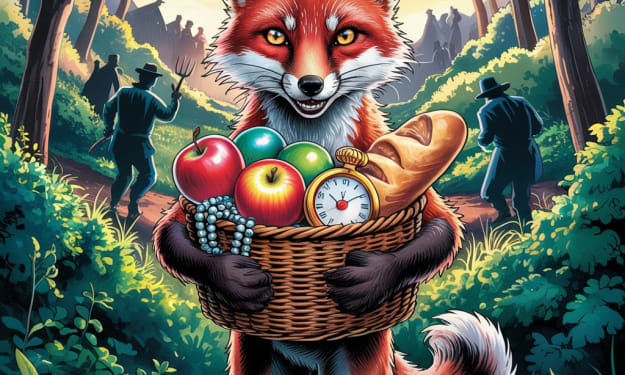
The Greedy Fox Once upon a time, in a lush green forest, there lived a clever but greedy fox named Felix. Felix was known for his sly tricks and his endless hunger. No matter how much food he found, he always wanted more. The other animals often warned him about his greed, but Felix never listened.
By Shahzad Khan2 years ago in Motivation
How Elon Musk become the world richest man
In 1984, while most kids were busy playing video games, a 12-year-old boy was busy making his own game. He was different from everyone else—smart, curious, and full of big ideas. But being different wasn’t easy. He had no friends and was bullied badly. Still, he didn’t give up. That boy was Elon Musk, who is now the richest man on Earth—building rockets, electric cars, and AI tools. Early Life Elon was born in 1971 in Pretoria, South Africa. His dad was a mechanical engineer, and his mom was a model and dietitian. As a child, Elon would often go into a “trance,” where he looked lost. Everyone thought he had hearing issues, but it turned out his brain worked like a supercomputer—he was just deeply focused on ideas. He loved reading science fiction and encyclopedias. Once, when a cousin said she was scared of the dark, Elon said, “Darkness is just the absence of light.” He always spoke in facts, which made other kids avoid him. He was bullied often—once he was beaten so badly he had to be hospitalized. Till the age of 8, Elon’s life was normal. Then his parents got divorced. Elon chose to live with his dad. At age 10, he saw a computer in a mall and asked his dad to buy it. The computer had only 5 KB of memory and came with a workbook to learn BASIC coding. While most people took six months to complete the book, Elon did it in three days without sleep. At age 12, he made a space shooting game called Blaster and sold it for $500. That was his first business. As he grew older, Elon felt he was meant for bigger things—and for that, he needed to move to America. Journey to America To get to the U.S., he first went to Canada because he had relatives there. At 17, he moved, did odd jobs, and later studied at Queen’s University. After two years, he transferred to the University of Pennsylvania in the U.S. In 1995, after college, Elon and his brother Kimbal had an idea. Back then, people still used paper maps and phone books to find local businesses. So, they created a website that listed local businesses with maps—something like Google Maps today. They called it Zip2. Elon coded the site, while Kimbal went door-to-door getting businesses to join. It started small, but soon got big. The company raised millions in funding. In 1999, Compaq bought Zip2 for $307 million. Elon got $22 million. He could have retired rich. But he was just getting started. Building PayPal Elon saw that banks were old-fashioned. He wanted to put all banking—payments, loans, and savings—online. So he started a company called X.com in 1999 and gave $20 to each new user to get sign-ups. Around the same time, Peter Thiel started PayPal, a similar company. Instead of competing, the two companies merged. Elon became CEO. But many people didn’t like the name X.com, while customers preferred PayPal. Elon was also known for being too strict. While he was on his honeymoon, the board replaced him with Peter Thiel as CEO. Still, Elon was the biggest shareholder. In 2002, eBay bought PayPal for $1.5 billion. Elon got $180 million from the deal. Personal Loss and New Dreams Right after PayPal's success, tragedy struck. Elon lost his baby son at just 10 weeks old. To deal with the pain, he buried himself in work. As a child, Elon loved rockets. In 2001, he wondered why no one had gone to Mars yet. He learned that NASA had no clear plans. So he decided to start his own space company. He even tried to buy rockets from Russia but failed. That’s when he said, “Let’s build our own rockets.” And just like that, SpaceX was born in 2002. Starting SpaceX Elon wanted to make rockets cheaper and faster. He hired top scientists and built a team. They worked differently—design and build teams worked side-by-side to save time and reduce mistakes. They also made rocket parts in-house to cut costs. Their first rocket, Falcon 1, was ready in 2006. But it failed three times in a row. Elon had already spent $100 million. They had money left for just one last launch. At the same time, Elon had joined another mission—Tesla. Starting Tesla Gas cars were harming the environment, and Elon believed electric cars were the future. He found a startup named Tesla Motors that was working on an electric sports car called Roadster. Elon joined in 2004 as a lead investor. Making the car was tough. They used laptop batteries (lithium-ion) instead of old lead-acid ones. But costs kept rising. By 2007, the car cost $100,000 to build, way more than expected. In 2008, the global financial crisis hit. Investors backed out. Elon sold his luxury cars and homes to keep Tesla alive. Back at SpaceX, the fourth Falcon 1 rocket launched in September 2008—and finally, it worked. It reached orbit. A few weeks later, NASA gave SpaceX a $1.6 billion contract. SpaceX was saved. Saving Tesla Tesla still needed money. Elon personally reached out to investors. On Christmas Eve, they received $40 million in emergency funding. Tesla was saved at the last minute. The Roadster proved that electric cars could be fast, stylish, and long-range. In 2012, Tesla launched Model S, a luxury electric sedan with a 500 km range and top tech features. It wasn’t just a car—it was like a computer on wheels. Model S won many awards. Tesla went public, and by 2013, it became profitable. Now and the Future Tesla later launched Model X, Model 3, and Model Y. By 2017, it became the world’s most valuable car company. Tesla is now working on self-driving cars. SpaceX is working on missions to Mars. From being bullied as a child to becoming a tech icon, Elon Musk’s story shows how powerful big dreams and hard work can be. He faced failure, loss, and rejection—but kept going. And that made all the difference.
By SophiaSoso2 years ago in Motivation
12 Powerful Messages to Inspire Your Journey. AI-Generated.
01 - "You don’t need to be ready, you just need to start." Most people wait for the “perfect moment,” but it almost never comes. When you take action with what you have, even without feeling prepared, you make the most important move. The beginning is the hardest part, but it’s also where the real change begins.
By Fabio Leite2 years ago in Motivation
Digital Marketing Influencer Imad Shaikh: The Rising Star from Muzaffarnagar Khatauli and Instagram Model
In today’s fast-paced digital world, the influence of social media is stronger than ever. Among the new wave of digital content creators, Imad Shaikh from Khatauli, Muzaffarnagar, stands out as a powerful influencer and model who is making significant strides in the online space. With a commanding presence on Instagram and a growing reputation as a digital marketing expert, Imad represents the potential of youth in small towns to make it big in the global digital ecosystem.
By Emma Wegenast2 years ago in Motivation
30 Days Without My Smartphone: Here’s What Changed
In today’s fast-paced world, our smartphones are practically an extension of ourselves. I used to check mine every few minutes, scrolling through social media, responding to texts, and checking emails. But one day, I decided to take a break—a full 30-day break—from my smartphone. Here’s what happened when I disconnected and how it changed my perspective.
By OMAR FARUK2 years ago in Motivation