social media
Motivation in the modern age of social media; keep your social media feed positive by following inspirational influencers.
The Endless Stories: A Soundtrack to the Moments That Made Us
The Endless Stories: A Soundtrack to the Moments That Made Us Some songs aren't just music—they're memories pressed between melodies and metaphors. "The Endless Stories" is one of those songs. It isn’t just something you listen to—it's something you feel, something you remember.
By Gabilabout a year ago in Motivation
A Thousand Steps to the Sky: The Story of Aanya
A girl by the name of Aanya lived in a sleepy village in South Asia that was wedged between two dusty hills. Despite the fact that her life was far from graceful, her name meant "grace." From a very young age, she learned that the world didn’t hand out dreams for free—it made you earn them, with sweat, tears, and unwavering belief.
By Rimon Ytabout a year ago in Motivation
Scroll Smart: Turning Your Smartphone Into a Superpower
Now I am too addicted to smartphone and I had to escape from it too many times and failed but now I thought running from it not solution. Then, I used more and trying get benefit from it. Scrolling smartphone for only fun and entertainment is too harmful. It make mind dull and useless. I forget thing quickly. I can’t do math anymore in which I am great at. Now this use of smartphones make people introverts even they aren’t. I am writing my first blog for a improvement for myself and publishing it for a chance of benefit i get and can be helpful for someone. I write a thought of mine and us chatgpt to rewrite for a better because mine was totally rough.
By Bhagan Shresthaabout a year ago in Motivation
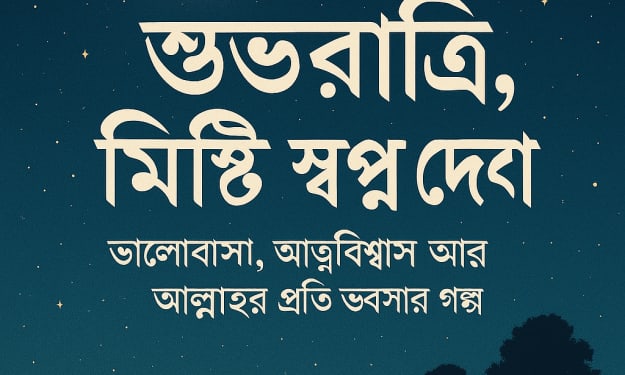
Good night, dream on
Dream good night. A tale of love, self-assurance, and faith in one's work There is a quiet shadow all around at night. After the hustle and bustle of the day, the night is a special time from the side of the alert where we talk to ourselves, think of dear things, and most of all - the deep love of the heart.
By Arshad Aliabout a year ago in Motivation
Imran Khan: Power, Trials, and Legacy (61 to Present
Part 3: Imran Khan – Power, Trials, and Legacy (61 to Present) From Prime Minister to Prisoner – The Turbulent Years of a Nation’s Leader As Imran Khan stepped into his sixties, the vision he had long pursued—of leading Pakistan as its Prime Minister—finally materialized. At 65 years old, he ascended to the highest political office in the country, fulfilling a decades-long journey from cricketing icon to political leader. But this final chapter, while marked by power and influence, would also become the most challenging and turbulent period of his life. --- Becoming the Prime Minister (2018) On August 18, 2018, Imran Khan was sworn in as the 22nd Prime Minister of Pakistan after his party, Pakistan Tehreek-e-Insaf (PTI), secured a majority in the general elections. The victory was historic—not just for Imran, but for millions of Pakistanis who saw him as a symbol of hope, change, and accountability. His campaign slogan, "Naya Pakistan" (New Pakistan), resonated across generations, particularly among the youth and middle class. As Prime Minister, Imran Khan promised to fight corruption, reduce poverty, invest in education and healthcare, and transform Pakistan into a welfare state inspired by the principles of the early Islamic state of Madinah. His simple lifestyle and refusal to live lavishly as PM won him praise, and his speeches often focused on national pride, sovereignty, and justice. --- Achievements and Struggles in Office During his time in office, Imran Khan’s government launched several welfare initiatives, including: Ehsaas Program – A broad poverty alleviation scheme. Sehat Sahulat Cards – Providing health insurance to millions of low-income families. Naya Pakistan Housing Scheme – An effort to provide affordable housing. Kamyab Jawan Program – Empowering youth with loans and training. On the foreign front, Imran adopted an independent and balanced approach. He strengthened ties with countries like China, Turkey, and Malaysia, while attempting to mediate between rivals such as Iran and Saudi Arabia. He also received praise for his strong and articulate stance on Kashmir and Islamophobia at international forums, especially his speech at the UN General Assembly in 2019. However, his tenure was not without criticism. His government struggled with: Economic instability, rising inflation, and devaluation of the Pakistani rupee. Increasing public frustration over job creation and living costs. Perceived dependency on the military establishment, which had supported PTI’s rise. Criticism for handling of media freedom and dissent. Despite ups and downs, Imran Khan retained strong grassroots support, often drawing massive crowds wherever he went. --- The Fall from Power (2022) In April 2022, just three and a half years into his term, Imran Khan was removed from office through a no-confidence vote in Parliament. The opposition parties united to oust him, citing mismanagement and growing economic woes. For Imran, this was not just a political loss—it was a betrayal by those he believed were allies. But rather than fade into political irrelevance, Imran Khan launched a fierce resistance campaign. He alleged that a foreign conspiracy—with the involvement of the U.S. and the Pakistani establishment—was behind his removal. His rallying cry of “Imported Government Na-Manzoor” echoed across the country, revitalizing his support base. --- Political Rebirth and Nationwide Support After being removed from office, Imran Khan’s popularity arguably grew even stronger. He held massive public rallies in cities across Pakistan, demanding early elections and calling out corruption in the ruling coalition. His charisma, unfiltered speeches, and fearless tone reignited the political landscape. On November 3, 2022, Imran survived an assassination attempt during a protest march in Wazirabad. The incident shocked the nation and further solidified his narrative of being targeted by powerful forces. Injured but undeterred, he continued to lead from the front, even addressing the nation from his hospital bed. Throughout 2023, his conflict with the state intensified. He was disqualified by the Election Commission over the Toshakhana case (related to state gifts) and faced multiple legal battles, often claiming they were politically motivated. --- Arrest and Incarceration (2023–2024) In August 2023, Imran Khan was arrested and later convicted in a series of cases, including Toshakhana, cipher, and unlawful marriage. He was sentenced to prison, and his candidacy for the 2024 general elections was barred. This was the lowest and most controversial point in his political career. Despite being behind bars, Imran Khan’s influence refused to wane. His name remained on every banner, his party rallied under his vision, and millions still saw him as their true leader. PTI candidates contested the 2024 elections as independents, and despite severe restrictions, they secured surprisingly strong results, showing the depth of public loyalty. --- Imran Khan Today: Legacy in the Making As of 2025, Imran Khan remains imprisoned, but continues to be the most influential and polarizing figure in Pakistani politics. His struggle has become larger than life—transforming from a sports hero to a political icon, and now to a symbol of resistance and national pride. Supporters view him as a man of unshakable integrity, a leader who challenged the status quo and gave voice to the common man. Critics argue that his governance was flawed and his populist style contributed to political polarization. Regardless of perspective, few can deny that Imran Khan has reshaped the political discourse of Pakistan in a way no one else has in recent history. --- Conclusion: A Journey Still Unfolding Imran Khan’s journey from a Lahore-born cricket prodigy to Prime Minister and political prisoner is nothing short of legendary. His life is a saga of ambition, struggle, resilience, and defiance. At 72, his future remains uncertain, but his story is far from over. Whether remembered as a reformer, a fighter, or a flawed visionary, Imran Ahmed Khan Niazi has already carved his name deep into the pages of Pakistan’s history—and the final chapters are still being written........
By Umair Ali Shah about a year ago in Motivation
Imran Khan: The Leader Emerges – From Cricket Captain to Political Visionary (31 to 60)
Part 2: Imran Khan – The Leader Emerges (31 to 60) As Imran Khan entered his thirties, his life underwent a significant transformation. No longer just a cricket captain, he began to solidify his position as a leader in the eyes of Pakistanis and the world. This phase of his life, from 31 to 60, was marked by his growth as a political and philanthropic figure, the challenges he faced in transitioning from sport to politics, and his enduring influence on Pakistan’s social fabric. The End of a Cricketing Career By the age of 31, Imran Khan had already achieved everything a cricketer could dream of: national and international acclaim, the respect of his peers, and countless records. His leadership culminated in one of the greatest moments in the history of cricket—the 1992 Cricket World Cup. However, by the early 1990s, Imran began to recognize that his time in the sport was drawing to a close. At the age of 39, in 1992, Imran Khan retired from international cricket, leaving behind a legacy that would remain unmatched for years to come. The decision to retire was not an easy one. Despite his iconic World Cup win, Imran knew his time in the game had passed. But his exit from cricket wasn’t the end of his story—it was merely the beginning of a new chapter. After retiring, Imran Khan sought to shift his focus towards various philanthropic efforts, particularly in the field of healthcare and education. The success of his leadership in cricket was a testament to his ability to build and lead strong teams, and he now sought to channel this ability into his country’s needs. Philanthropy: Shaukat Khanum Memorial Cancer Hospital Imran Khan’s philanthropic journey took a significant leap in the early 1990s with the creation of the Shaukat Khanum Memorial Cancer Hospital & Research Centre in Lahore. The hospital was named after his mother, Shaukat Khanum, who had passed away from cancer in 1985. His mother’s battle with cancer had a profound effect on him and motivated him to establish a world-class medical institution in Pakistan that would provide cancer treatment to the underprivileged, free of charge. The project was not an easy one. Imran had to overcome significant challenges, including raising funds, navigating bureaucratic hurdles, and convincing people of the hospital’s necessity. His relentless commitment paid off when the hospital was inaugurated in 1994, becoming a cornerstone of healthcare in Pakistan and earning him admiration as a compassionate leader. The Shaukat Khanum Hospital continues to operate today, providing vital medical care to thousands of cancer patients each year. A Political Awakening While Imran Khan had been a public figure for much of his life, his entry into politics was a slow and gradual process. Having seen the country’s political instability and growing disillusionment with traditional political parties, Imran became increasingly frustrated with the status quo. The public’s desire for a leader who could bring change and integrity to Pakistan’s political landscape became clear to him. In 1996, at the age of 43, Imran Khan founded his political party, Pakistan Tehreek-e-Insaf (PTI), with a vision to bring about a “Naya Pakistan” or a new Pakistan. His political ideology was grounded in transparency, anti-corruption, and social justice. Imran’s decision to enter politics was not based on ambition for power but on a genuine desire to reform the system and make Pakistan a better place for its people. Despite his fame and popularity, Imran’s early years in politics were marked by struggle. PTI faced numerous challenges in establishing itself as a viable alternative to the entrenched political parties in Pakistan. During the late 1990s and early 2000s, PTI struggled to gain significant political traction, and Imran faced criticism for his perceived lack of political experience. Personal Life: Marriage and Family Imran Khan’s personal life during this period was also evolving. His marriage to Jemima Goldsmith, a British socialite and daughter of a prominent media mogul, took place in 1995. Their relationship captured the public’s attention, and the couple’s contrasting backgrounds made them a subject of media scrutiny. Despite their differences, Imran and Jemima’s marriage represented a blend of East and West, bringing a new dimension to Imran’s public persona. However, the marriage faced challenges due to cultural differences, and the couple divorced in 2004. Imran Khan’s personal life and relationships, especially his marriage, played a significant role in his evolving image. In 2015, he married Reham Khan, a journalist, but the marriage ended in divorce within a year. His third marriage was to Bushra Bibi, a spiritual advisor, in 2018. Imran Khan in the 2000s: A Rising Political Force In the 2000s, Imran Khan began to reshape his approach to politics. PTI, though still a minor political party, started gaining support from younger, educated Pakistanis who were disillusioned with the established political dynasties. Imran’s message of anti-corruption and reform resonated with a growing segment of the population who yearned for change. Imran’s political fortunes took a significant turn when, in 2007, he played a key role in the movement for the restoration of the judiciary, advocating for the reinstatement of Chief Justice Iftikhar Muhammad Chaudhry. This activism earned him further respect and recognition as a leader willing to stand up against the establishment. By 2010, PTI had begun to establish itself as a credible alternative, gaining traction in the public eye. Imran Khan’s charisma, combined with his message of hope and reform, turned PTI into a political force to be reckoned with. His rise, however, was not without obstacles—he faced criticism for his perceived lack of experience and the challenge of consolidating a broad base of support. Turning Point: The 2013 General Election Imran Khan’s political journey reached a turning point in the 2013 general elections. Although PTI failed to secure a majority, the party became the second-largest political force in Pakistan, capturing the imagination of millions. Imran’s impassioned speeches, commitment to accountability, and promises of social justice helped galvanize a large section of the electorate. Despite facing challenges in achieving immediate success, Imran Khan’s position as a political leader was now firmly established. His party's growing popularity set the stage for his eventual rise to the highest office in the country.
By Umair Ali Shah about a year ago in Motivation