interview
Interviews to keep you inspired from motivational speakers that will help you conquer fears and achieve goals, now!
From Silent Shadows to Finding His Voice
Jay was never the loudest voice in the room. As a kid, he often wished he could just disappear. Growing up in a busy household with three siblings, he always felt overshadowed. His parents loved him, but Jay was the shy one — the kid who avoided eye contact, rarely spoke up, even when he wanted to. School was a struggle. Classrooms felt like pressure cookers. When the teacher’s eyes landed on him, his heart would race so fast it felt like it might burst. Words got stuck in his throat. Sometimes he stammered; other times, he stayed silent. He became a pro at hiding behind his notebooks or slipping into the back row. Social events weren’t any easier. Birthday parties, family gatherings, or hanging out with classmates — Jay just watched from the sidelines, too scared to join in. He was convinced whatever he said wouldn’t be interesting, or worse, people would laugh at him. But it wasn’t just fear of judgment. Inside his mind was a storm of racing thoughts and “what ifs” — a constant voice telling him he wasn’t good enough. At home, his silence was often misunderstood. His parents worried — was he sad or angry? His siblings called him “quiet Jay,” sometimes affectionately, sometimes frustrated. Jay didn’t know how to explain what he felt. So he retreated deeper into himself. One memory stuck with him — a fifth-grade presentation about his favorite book. When it was his turn, his palms sweated, voice caught in his throat, and his words barely reached a whisper. The class grew uncomfortable. The teacher gave a kind smile, but Jay felt crushed. That moment became a symbol of his silent struggle. He wanted to be heard. He wanted to be seen. But fear was stronger. For years, Jay carried this invisible weight — a prisoner of his own mind, longing to break free. Then came his sister’s wedding — a night meant for celebration. But for Jay, it was a test he wasn’t sure he could pass. Months earlier, his sister had asked him to give a toast. She wanted her big brother to share a few words from the heart. Jay hesitated, terrified of the spotlight, but he loved her deeply and didn’t want to disappoint. So he agreed, promising himself he’d prepare. He practiced in front of the mirror for days. His voice shook, but the words felt right. He hoped when the moment came, he could push through the fear. At the reception, with all eyes on him, Jay’s heart pounded like thunder. The room shrank. Faces blurred. He opened his mouth — Nothing. Panic took over. His throat tightened. The words he had memorized vanished. He froze. Sweat slicked his palms. The silence pressed down like a heavy weight. He wanted to disappear. His sister gave a small, encouraging smile, but it wasn’t enough to break the spell. Finally, Jay whispered a few barely audible words, mumbling through the toast. His cheeks burned with shame. The polite applause felt distant. Inside, Jay felt shattered. That night, replaying the moment over and over, the embarrassment gnawed at him. But beneath it was a quiet spark — a realization. He didn’t want to live like this anymore. He wanted to find his voice. The next morning, Jay woke up weighed down by the silence of the night before. But somewhere in the sadness, a flicker of hope burned. He decided to speak — even if it was just one word at a time. The next day, he forced himself to say “hello” to the barista at his local coffee shop. Heart pounding, palms sweaty, he whispered, “Good morning.” The barista smiled warmly, “Good morning! What can I get for you?” That small exchange cracked the wall Jay had built around himself. Emboldened, he sought other tiny chances to speak — saying thanks, asking questions, making small talk. His voice was shaky, barely audible sometimes, but he did it anyway. At night, he poured his thoughts into a journal — safe, private. He filled pages with frustrations, hopes, and dreams he never spoke aloud. Weeks later, Jay searched for “anxiety therapist near me.” The thought scared him. What if he was judged? What if he couldn’t explain how he felt? But staying silent was worse. He made the appointment. At his first session, Jay sat nervously, hands clenched, eyes darting. The therapist, Dr. Martin, listened patiently. “I feel trapped,” Jay said quietly. “Like my voice is stuck inside me, and no one hears it.” “You’re not alone,” Dr. Martin said gently. “Many struggle to find their voice. The good news — you can learn to speak. First to yourself, then to others.” Over weeks, Jay learned breathing exercises, grounding techniques, and how to challenge negative thoughts. Dr. Martin encouraged self-compassion — to be patient with himself when progress felt slow. There were setbacks. Days Jay retreated back into silence. But he reminded himself healing wasn’t linear. Every small step counted. Slowly, the walls crumbled. Jay joined a support group for people with anxiety. At first, he listened quietly. Then one day, he shared a few words. Later, a few more. His voice grew stronger. So did his confidence. One afternoon, Jay reflected on how far he’d come. The boy who once trembled at a simple “hello” was now speaking in front of strangers. It wasn’t perfect. It wasn’t easy. But it was progress. Jay realized breaking silence is about courage — not perfection. > “Courage doesn’t always roar. Sometimes courage is the quiet voice at the end of the day saying, ‘I will try again tomorrow.’” — Mary Anne Radmacher Months passed. Jay grew braver, speaking up whenever he could. But the biggest challenge awaited: a company event where he was invited to share his journey with anxiety. When his manager asked him to speak, Jay’s heart skipped. Hundreds of coworkers and clients would be there. The idea of the spotlight made his chest tighten. “Are you sure?” his best friend Mia asked over coffee. Jay nodded, swallowing fear. “If I don’t share my story, who will?” Weeks of preparation followed — drafting, practicing, battling self-doubt. Some mornings he felt excited. Other days, panic threatened to silence him. He kept going to therapy and leaned on Mia’s support. She listened without judgment, reminding him how far he’d come. On event day, backstage, Jay’s heart thundered. Hands trembled as he held his notes. “What if I freeze?” whispered a voice in his head. He breathed deep, recalling Dr. Martin’s words: “Your voice matters, Jay. Speak your truth.” Then he stepped to the podium. The spotlight blinded him briefly. Faces blurred. But Mia’s smile was in his mind. He started shaky, voice cracking, sharing his early struggles — the fear, the silence, the moments he wanted to disappear. He told them about the wedding toast that broke him, the small victories of saying “hello,” the courage it took to ask for help. He didn’t hide the hard parts — setbacks, tears, the lingering anxiety whispering doubts. But he shared hope. He spoke of growth, resilience, and the power of breaking silence. When he finished, the room was quiet — then erupted in applause. Tears welled in Jay’s eyes as he stepped down. For the first time, he felt seen. Heard. Free. Afterward, coworkers came up with hugs, thanks, and their own stories. Jay realized he wasn’t alone. His story sparked connection. That night, lying in bed, Jay felt a new peace. Fear would always be part of him, but it no longer controlled him. He had found his voice — and with it, reclaimed his life.
By Arshad khanabout a year ago in Motivation
Why 92% Of People Fail To Achieve Their Goals And What To Do Instead
You've been sold a lie about goals. Every January, you dutifully write down what you want to achieve. You attach deadlines, create vision boards, maybe even share them publicly for accountability. By February, most are forgotten. By December, you wonder where the year went.
By Muhammad Sabeelabout a year ago in Motivation
The Boy Who Chased the Mountain
In a quiet valley surrounded by towering peaks, nestled deep in the heart of northern Pakistan, there was a village so small it didn’t appear on most maps. Life there was slow, simple, and hard. Among the villagers lived a boy named Rahim, the youngest of five children, born to a family of wheat farmers. Most children in the village dreamed of buying a motorbike or finding work in the city. But Rahim was different. His dream was bigger, wilder, and stranger to others—he wanted to become a mountaineer. It all started when he was just ten years old. A foreign climber visited the village with a group of trekkers. They spoke of glaciers, heights, storms, and survival. The man gifted Rahim a postcard of K2, Pakistan’s highest peak. The postcard became Rahim’s treasure. "One day," Rahim whispered to the mountain in the postcard, "I will stand on top of you." The villagers laughed when he said he wanted to climb mountains. His cousins called him “dreamer boy.” His uncle warned him that dreams don’t fill stomachs. But Rahim never argued. He just smiled—and kept the postcard under his pillow. The Weight of Reality Rahim’s childhood didn’t last long. When he was 13, his father suffered a serious stroke. As the only son still living at home, Rahim took on his father's duties. He worked long hours in the fields, fetched water, and looked after the animals. School became a luxury he couldn’t afford. But no matter how tired his body was, his heart still whispered to the mountains. Late at night, when the village slept, Rahim would climb the nearby hills under the moonlight. He would fill a sack with rocks and carry it like a backpack, training himself. He didn’t have proper shoes, so he tied rags around his feet. No ropes, no mentors, no gym—just desire. Rahim found old mountaineering magazines in the school library, torn and dusty. He read them by candlelight. He sketched out climbing routes and studied gear he couldn’t afford. Whenever someone asked him what he wanted to be when he grew up, he would say, "A climber who makes the world notice our village."
By Zain ul abidin about a year ago in Motivation
How to Handle Difficult Restaurant Guests: 5 Rules Every Chef Should Know
This story comes from my experience as an Executive Chef across more than ten countries — and from moments that tested not only my cooking but also my ability to stay calm and lead under pressure.
By Cristian Marinoabout a year ago in Motivation
The Last Chair in the Room"
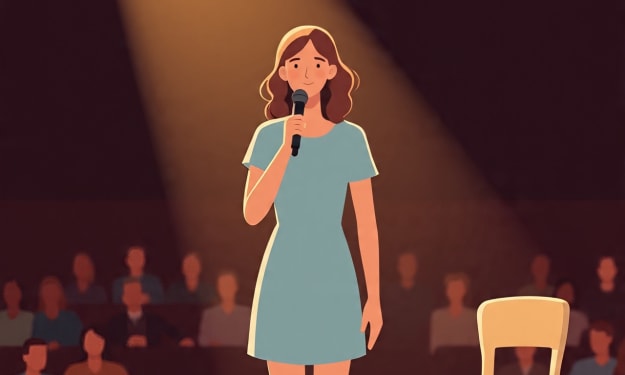
1. The Empty Auditorium The first time Maya stood on a stage, the auditorium was nearly empty. Just a janitor sweeping the back row and an old woman knitting in the second. She was 17, full of nerves, and every word in her speech trembled out of her like a bird afraid to fly. But she did it. She spoke for exactly 4 minutes and 32 seconds. And when she finished, no applause followed. The janitor kept sweeping. The woman kept knitting. She walked offstage, cheeks flushed, thinking: Maybe I’m not meant for this. But something stopped her from tearing up her note cards. A chair. A single, plastic chair in the middle of the room. Empty, upright, facing the stage. Waiting. Maya decided that day that no matter how many people filled or didn’t fill that room, she would always speak as if someone was sitting in that last chair. Listening. Needing. Hoping. Because once upon a time, she had been that person.
By Arshad khanabout a year ago in Motivation
The Last Chair in the Room
1- The Empty Auditorium The first time Maya stood on a stage, the auditorium was nearly empty. Just a janitor sweeping the back row and an old woman knitting in the second. She was 17, full of nerves, and every word in her speech trembled out of her like a bird afraid to fly. But she did it. She spoke for exactly 4 minutes and 32 seconds. And when she finished, no applause followed. The janitor kept sweeping. The woman kept knitting. She walked offstage, cheeks flushed, thinking: Maybe I’m not meant for this. But something stopped her from tearing up her note cards. A chair. A single, plastic chair in the middle of the room. Empty, upright, facing the stage. Waiting. Maya decided that day that no matter how many people filled or didn’t fill that room, she would always speak as if someone was sitting in that last chair. Listening. Needing. Hoping. Because once upon a time, she had been that person. --- 2. The Fear of Being Ordinary Maya was not born with a silver spoon or a perfect voice. Her father drove taxis in Detroit; her mother cleaned homes. They taught her to survive, not to dream. But Maya, as a child, would steal moments under her blanket with a flashlight, writing stories on old receipts, cereal boxes, and napkins. Her stories were about warriors with no swords, queens with broken crowns, and misfits who refused to fit in. But the older she grew, the louder the world became. “Be practical.” “Find a real job.” “Motivational speaking? That’s not a career, that’s a TED Talk fantasy.” She tried to obey. She enrolled in a business course at a local community college. She sold insurance for two years. She even worked at a shoe store where the slogan was: “Fit in or walk out.” Irony never paid well. Still, every time she passed a mirror, Maya felt the same gnawing truth: She was afraid of being ordinary. --- 3. The Risk Nobody Saw One stormy Thursday in April, Maya made a decision that terrified even herself. She quit her job, withdrew her college application, and took the remaining $372 from her savings. She spent $100 on a cheap microphone and the rest renting a hall for her first event. She printed fifty flyers that said: > “You’re Still Enough: A Free Motivational Talk” By Maya Reynolds – A Nobody with Something to Say. The night of her event, it rained so hard the power flickered in the hall. Only three people showed up. A boy with acne who said nothing. A woman with swollen eyes. And a man with a coffee stain on his tie who kept looking at his watch. Maya could’ve canceled. She could’ve apologized. Instead, she took a deep breath and imagined the last chair in the room. She imagined someone sitting there who was about to give up but chose to come anyway. So she spoke. She told them about her failures, her fears, the time she nearly dropped out of high school, and the voice inside her that kept whispering: “Try one more time.” When she finished, the room was silent. But the woman with the swollen eyes walked up and said, “I was going to take my life tonight. I came here instead.” Maya never charged for her events after that. Not for a long time. That night changed her, not because she was thanked—but because she realized something profound: Success isn’t measured by crowds. It’s measured by impact. --- 4. Going Viral Isn’t Everything In today’s world, everyone wants to go viral. Maya tried it once. She uploaded a dramatic, tear-filled video with sad piano music in the background. It got 1,200 views in two weeks. The comments? > “Cringe.” “Stop faking it.” “Another wannabe guru.” It crushed her. For three weeks, she didn’t get out of bed. But then, a handwritten letter arrived. It was from the boy with acne who had attended her first event. He wrote: > “I never said anything, but you changed my life. I’m studying psychology now because you made me feel heard. Thank you for seeing me.” That letter sat on her desk every day for the next five years. Because what Maya learned was this: Going viral is a moment. Changing someone is a mission. --- 5. The Day She Almost Quit At 28, Maya had been giving talks for over a decade. She was still living in a tiny apartment above a laundromat, driving a rusty Corolla with a broken window, and eating canned soup three nights a week. She was invited to speak at a conference in Chicago. Her dream event. But a week before, the organizer called and said: > “We’ve replaced you with a bigger name. Someone with a larger following.” Maya didn’t cry this time. She didn’t scream. She just looked in the mirror and said, “Maybe I’m not good enough.” But that night, she got an email. From a teenager in India. It read: > “I found one of your old YouTube videos. I was bullied for my weight and tried to starve myself. But your story made me stop. I want to be a speaker too, like you.” That one email lit a fire in Maya that a thousand rejections couldn’t kill. She replied with just four words: “You’re already speaking. Keep going.” --- 6. The Chair Was Never Empty By the time Maya turned 32, she had spoken in 46 cities across 9 countries. She still didn’t have a blue checkmark. Still hadn’t written a bestselling book. But when she spoke, the rooms were full. Not just with people—but with stories. Survivors. Fighters. Dreamers who had once almost given up. She gave her final speech of the year in a high school gymnasium in Cleveland. She had lost her voice that week, was recovering from the flu, and debated canceling. But she didn’t. And in the crowd sat a girl named Ellie. Sixteen, foster kid, shy, sitting in the last chair. After the talk, Ellie came up and whispered, “I didn’t know anyone else felt like me.” Maya smiled. “Me too,” she said. --- 7. The Legacy You Don’t See Maya never got famous. Not in the way Instagram defines it. She never married. Never owned a house. She kept her Corolla until it died on the highway at 241,000 miles. But her inbox was filled with letters from people in ten different languages. Letters that said: “You made me believe again.” “You helped me leave my abusive relationship.” “You made me feel seen.” And every time Maya stepped on a stage, she looked at the last chair. Even if the room had a thousand people, she focused on the invisible soul sitting quietly in the back, wondering if they mattered. Because they did. Because Maya once had. --- 8. The Final Talk Maya passed away at 44 after a sudden heart condition. Only 93 people came to her funeral. But what mattered is who came. The boy with acne—now a psychologist. The girl named Ellie—now a speaker herself. The woman with swollen eyes—now running a shelter for women like her. The janitor who heard her first speech—who had kept the flyer all those years. And sitting quietly in the back row of the chapel? A new face. A young man with trembling hands, holding a notebook. After the ceremony, he approached the podium and said, “I never met her. But her video saved me last year. I had planned my suicide. Then I heard her say: ‘The world needs your story.’” He paused. “So here I am. Telling it.” --- Epilogue: The Chair Remains Some stories don’t need to be shouted to be heard. Some legacies aren’t written in books, but in broken hearts mended, lives saved, and strangers who felt understood. Maya Reynolds was never a celebrity. But she was something rarer: A lighthouse in a storm. A voice in the dark. A hand reaching for the forgotten. And somewhere, in every room, a chair remains. Waiting for the next Maya. And the next soul who needs her.
By Arshad khanabout a year ago in Motivation
A Businessman’s Journey
Arjun stood at the edge of a bustling street in Mumbai, holding a single worn leather bag and a heart beating with anticipation. The city felt like a giant machine, every person a cog working toward a dream. At twenty-two, Arjun was no different. He had left the quiet village where he was born to find a path, a purpose. All he had was a degree, a faint hope, and a relentless drive.
By Abdullah khanabout a year ago in Motivation
Why Gen Z Is Quiet Quitting Life, Not Just Work
The term "quiet quitting" exploded across social media in recent years, capturing the imagination and frustration of a workforce no longer willing to go above and beyond. But what happens when this passive resistance spreads beyond the job into everyday life, relationships, and even dreams? Enter Gen Z: a generation not only quietly quitting work but slowly checking out of the structures, expectations, and even the hopes that have defined previous generations.
By Hamad Haiderabout a year ago in Motivation
A Community Reimagined: Howard Appel’s Journey from Personal Tragedy to Purpose
In a quiet corner of Philadelphia’s Fairmount neighborhood, the grandeur of the Stephen Appel Chabad Center stands as a testament to the resilient spirit of a community and the transformative power of a local businessman turning the personal pain of losing his son into a physical and spiritual center to help a community. Here, the story of the building goes beyond the brick and mortar; it's a tale of a community resurrected, a family's devotion, and an entrepreneur's audacity to dream.
By Howard Appelabout a year ago in Motivation
The Fake Face Era: When Beauty Becomes a Digital Illusion
The Fake Face Era: When Beauty Becomes a Digital Illusion By Muhammad Ibrahim --- In today’s hyper-connected world, where photos and videos dominate every platform, appearance has become a digital currency. But the faces we see online – flawless, symmetrical, glowing – are rarely real. Welcome to the Fake Face Era, where beauty is often just an illusion, crafted by filters, editing apps, and artificial intelligence. From Instagram selfies to TikTok filters and deepfake videos, the line between real and fake has become dangerously blurred. What started as simple enhancements has transformed into a cultural crisis that affects self-esteem, relationships, and our perception of truth. --- The Rise of the Fake Face In the early days of social media, beauty filters were just a fun gimmick. A dog face on Snapchat, glitter eyes on Instagram – harmless entertainment. But as these technologies advanced, they became more powerful and more deceptive. Today, apps like Facetune, Photoshop, and TikTok’s “beauty mode” can alter your facial features in seconds: Skin becomes smooth like porcelain Eyes grow larger and brighter Lips plump, cheekbones sharpen Blemishes vanish, and wrinkles disappear People now look at their filtered faces more than their real ones. Over time, this creates a disconnection between who we are and who we pretend to be. --- The Psychological Impact The fake face phenomenon is not just cosmetic – it’s deeply psychological. Psychologists have reported a sharp rise in “Snapchat dysmorphia” – a condition where individuals desire plastic surgery to look like their filtered selfies. Common mental health effects include: Body dysmorphic disorder (BDD) Anxiety and social withdrawal Depression and low self-worth Obsession with likes, comments, and validation When you constantly compare yourself to fake perfection, your real self never feels “good enough.” Teenagers, in particular, are the most vulnerable. Growing up in a world where fake is the norm, they begin to hate their natural faces. --- The Illusion of Perfection Social media has created a global beauty standard that is nearly impossible to achieve without digital help. The message is clear: > If you want to be beautiful, you must be flawless. This idea is dangerous. It tells people that pores, scars, uneven skin tones, or signs of aging are ugly. It makes us ashamed of being human. The irony? Even celebrities and influencers with access to the best skincare, makeup, and trainers still edit their photos – proving that no one truly looks like the images we admire. --- AI and Deepfake Technology: A New Threat The danger doesn’t stop at filters. Artificial Intelligence has entered the picture, and with it, a new breed of fake faces: deepfakes. These are hyper-realistic videos and images created using AI, where someone’s face is swapped or altered to say or do things they never actually did. Imagine: A fake video of a politician giving a speech A celebrity “leaked” in a scandal Someone creating a fake identity to scam or manipulate Deepfakes make it harder to trust what we see, eroding truth and authenticity in media. In the Fake Face Era, seeing is no longer believing. --- Social Media’s Role Platforms like Instagram, TikTok, and Snapchat are at the heart of this problem. Their algorithms reward appearances. Posts with more beauty, more perfection, and more “wow factor” get pushed to the top. This creates a cycle: 1. Users feel pressure to look perfect. 2. They use filters and edits. 3. They get more likes and validation. 4. Others copy the same methods. Before long, everyone is posting a version of themselves that doesn’t exist. --- The Fake Face in Relationships Romantic relationships are also suffering. When people fall for someone based on their filtered photos, reality often brings disappointment. In dating apps, fake faces dominate profiles. Once you meet in person, the illusion fades – and so does the attraction. This trend also breeds insecurity. If your partner is always online with a “perfect face,” it can make you question your own value. Trust, intimacy, and real connection are replaced by shallow aesthetics. --- The Business of Beauty Let’s not ignore the profit motive. The fake face industry is worth billions: Beauty apps generate millions in downloads and subscriptions. Skincare and makeup companies market products to “fix” flaws that filters have made unacceptable. Cosmetic surgery clinics promise to make you look like your edited selfie. Big Tech, beauty brands, and even influencers benefit from our insecurities. The more we hate our natural face, the more we spend to change it. --- How to Fight Back Escaping the Fake Face Era won’t be easy, but it’s possible. It starts with awareness and a return to authenticity. Here’s how you can resist: 1. Limit filter usage – Post unedited photos sometimes. Let people see the real you. 2. Curate your feed – Follow creators who show real skin, real flaws, and real lives. 3. Practice self-compassion – You don’t need to be perfect to be beautiful. 4. Educate others – Talk about fake face culture. Teach younger siblings, friends, and students to value authenticity. 5. Support honest media – Engage with brands and platforms that promote body positivity and real representation. --- A New Definition of Beauty Beauty should not be defined by pixels and algorithms. It should be about expression, uniqueness, and character. True beauty is in the laugh lines, the imperfect smiles, the scars that tell stories, and the diversity of human faces. In the end, the fake face is just a mask. And the more we rely on it, the more we lose touch with our real selves. It’s time to reclaim our identities, one real face at a time. --- Final Thoughts We are living in an era where fake is fashionable and illusion is admired. But deep inside, people crave honesty, connection, and truth. The Fake Face Era may be now, but it doesn’t have to be forever. Let’s bring back authenticity — not just in how we look, but in how we live. Because no filter can replicate the power of a real, confident, unedited face.
By Muhammad ibrahim about a year ago in Motivation
Brewing dreams: the story of Sara's Cafe'
When Sara Khan stood beside her tiny yellow coffee cart on a cold winter morning in Lahore, she was shivering not just from the wind — but from uncertainty. She had just taken the biggest risk of her life. While her classmates accepted office jobs with good salaries and air-conditioned rooms, she had taken her graduation money, borrowed an old espresso machine from a cousin in Dubai, and started a coffee business on the sidewalk. She wasn’t from a business family. Her father was a retired teacher and her mother ran a small home-based sewing service. Sara had learned about hard work, honesty, and resilience from watching her parents stretch every rupee, never complain, and still offer chai to every guest. She believed she could do more than just earn a living — she wanted to create something meaningful. But business was slow. For the first month, she barely sold ten cups a day. People were skeptical. Some mocked her prices, others questioned her decision. One man even said, “Aurat se business nahi hota, beta.” But Sara smiled, thanked him for the advice, and served him a cup anyway. Each night she went home tired, sometimes defeated, but never willing to give up. Then came the turning point — a food blogger named Omar Aziz stumbled upon her cart one late evening. He was in a rush but curious. He took a sip of her signature hazelnut mocha and stopped mid-sentence. “This is... amazing,” he said. He snapped a photo, asked a few questions, and left. Two days later, Sara woke up to a buzz of notifications. Omar had posted her photo on Instagram with the caption: “Best coffee I’ve tasted in Lahore — and it’s from a one-woman street cart run by a fearless dreamer. Support local. Support passion.” By 9 a.m., there was a line. Students from the nearby college, office workers, and even a couple of local celebrities stopped by. Word spread like fire. People came not just for the coffee but for the story. Everyone loves a good underdog — especially one that serves killer cappuccinos. Within three months, Sara’s Café became a viral name. Customers brought their friends. Some stayed to chat. Others posted photos with her. Her cart was no longer a cart — it was a movement. --- Chapter 2: Brewing Bigger Dreams With her savings, Sara rented a tiny shop just two streets away. The location wasn’t glamorous, but it had a roof, space for four tables, and most importantly — a future. Her mother helped in the kitchen, learning to bake banana bread and cinnamon rolls. Her younger brother, Sameer, managed orders and learned how to make latte art from YouTube. The community pitched in — a customer donated old furniture, another painted a mural on her wall that read: “Strong women. Strong coffee. Stronger dreams.” It became her slogan. She introduced loyalty cards, added herbal teas and desi options like cardamom chai and saffron milk. Soon, Sara’s Café wasn’t just a coffee place — it was a home for conversations, ideas, poetry nights, and warm hugs. Bookworms found comfort. Struggling writers wrote their first pages. Students prepped for exams sipping on steaming mugs of motivation. --- Chapter 3: Storms and Stand Tall Just as things were smooth, a big international franchise opened across the road. It had neon lights, touch screens, and heavy discounts. Her customer count dropped. Some people even asked if she would shut down. For the first time, Sara felt anxious. But she didn’t fight them — she leaned into what made her different. She posted a heartfelt video on social media: > “I’m not here to compete. I’m here to connect. If you love local, love honesty, and want your coffee with a story — I’ll be here, brewing with love. Always.” The video went viral. Hashtags like #BrewWithSara and #SupportLocal trended on Pakistani Twitter. Influencers visited, praising her courage. Celebrities posted selfies from her shop. Her sales not only recovered — they doubled. --- Chapter 4: Beyond Coffee Success didn’t change Sara — it changed her mission. She began hiring women who had never worked before. Some were single mothers, others were survivors of abuse. Sara trained them in customer service, gave them flexible hours, and fair wages. In 2023, she launched the “Barista Sisterhood Program” — free training for girls from rural areas to learn coffee-making and entrepreneurship. She partnered with NGOs to give scholarships, started a podcast about women in business, and even mentored students at her old university. She was invited to give a TEDx talk, titled: “Start Small. Dream Loud.” Her talk was raw, real, and emotional. She shared her struggles, her mistakes, and her triumphs. When she ended by saying, > “You don’t need permission to start — you just need courage to continue,” the hall erupted in applause. --- Chapter 5: A Legacy in the Making Today, Sara’s Café has expanded to five branches across Lahore and Islamabad. Each one carries the warmth of the original cart — hand-painted signs, book corners, poetry boards, and staff who smile like they know your story. She still visits her first cart, preserved like a monument in her flagship branch. She touches it, closes her eyes, and remembers the shivering girl who poured her heart into every cup. She is now recognized as one of the top 30 under 30 entrepreneurs in Pakistan. But when asked about her biggest success, she says: > “It’s not the awards. It’s the young girl from Bahawalpur who wrote to me, saying she started her own tea cart after watching my video.”
By Shehzad khanabout a year ago in Motivation