Holiday
The Majesty of the Falcon: A Symbol of Power and Grace
The falcon, often revered for its strength, grace, and precision, is more than just a bird of prey. It represents power, freedom, and the spirit of unyielding determination. Known for its unmatched hunting skills and exceptional flying abilities, the falcon has captivated the human imagination for centuries. But there’s something deeper, something symbolic, that sets this magnificent bird apart. This story aims to delve into the majestic world of the falcon, unraveling its profound impact on nature, culture, and the human heart. --- A Hunter Like No Other The falcon’s reputation as a formidable hunter isn’t just folklore. It is a bird of exceptional skill and precision. With its aerodynamic body built for speed and agility, the falcon can reach astonishing speeds of over 240 miles per hour when diving. This makes it the fastest bird in the world and the fastest animal on the planet. Its sharp talons and keen eyesight allow it to swoop down upon its prey with deadly accuracy. In the wild, falcons are known to hunt small to medium-sized birds and mammals. But beyond their role as predators, they are symbols of perseverance, as they never give up on their pursuit, relentlessly chasing their target until they achieve success. --- A Symbol of Freedom For many cultures, the falcon is not just a bird; it’s a symbol of freedom and courage. In ancient civilizations, falcons were seen as messengers between the heavens and earth, representing the connection between the mortal world and the divine. Egyptians, for example, associated the falcon with Horus, the god of the sky, representing strength and protection. In the modern world, the falcon continues to inspire people, particularly those who value independence and self-reliance. It reminds us that, just like the falcon in the sky, we too can rise above obstacles and soar to greater heights. Its presence in literature, art, and mythology continues to evoke feelings of awe and reverence, urging humanity to seek freedom and greatness. --- The Bond Between Human and Falcon Perhaps one of the most fascinating aspects of the falcon is its relationship with humans. Falcons have been used in falconry for over 3,000 years, making it one of the oldest forms of hunting. The bond between a falconer and their bird is a unique one, built on trust and respect. In ancient times, falconry was a sport of royalty, symbolizing status, wealth, and a deep connection with nature. Even today, falconers around the world maintain this ancient tradition, training falcons to hunt with them. The bond between the falconer and the falcon is one of mutual understanding. The falcon, wild at heart, learns to trust the falconer, while the falconer learns to respect the falcon's natural instincts. This partnership is a testament to the deep respect humans have for these majestic creatures and their place in the world. --- Falcons in Modern Culture The influence of the falcon extends far beyond hunting and symbolism. Today, it appears in sports team logos, military insignias, and even on the flags of several nations. It’s a symbol of precision, power, and focus—qualities that are highly valued in modern society. The falcon's sharp focus on its target, its ability to move swiftly, and its instinctive drive to succeed resonate with people in various walks of life. In the world of aviation, the falcon has even inspired aircraft designs, with engineers studying the bird’s flight mechanics to create faster, more efficient airplanes. The falcon’s sleek and aerodynamic body continues to inspire innovations in technology, design, and engineering, showing how nature often serves as the ultimate blueprint for human progress. --- The Spiritual Significance of the Falcon Beyond its physical attributes, the falcon holds significant spiritual meaning. Many spiritual leaders and philosophers have drawn parallels between the falcon's unyielding determination and the pursuit of higher knowledge. Just as the falcon rises above the clouds, humans are urged to rise above their limitations and chase after enlightenment and truth. In some traditions, falcons are seen as spirit guides, representing vision, clarity, and the ability to see things from a higher perspective. They are symbols of a spiritual journey—reminding us to seek clarity in our own lives, to rise above the noise and distractions, and to find our true path. --- Conclusion: The Timeless Legacy of the Falcon The falcon is much more than a bird of prey. It’s a creature that represents the best of what humanity strives to be: powerful, free, precise, and wise. Through its speed and elegance, the falcon has carved its place in the hearts and minds of people across the world. Whether as a symbol of strength in ancient cultures or as a modern-day inspiration, the falcon continues to soar high, leaving a legacy that will endure for generations to come. The falcon is not just a bird; it is a reminder of our potential to rise above, to hunt our goals with determination, and to soar to new heights, no matter what challenges lie ahead.
By Noman Afridiabout a year ago in Motivation
"Pornography and Society: Understanding its Impact, Ethics, and Future"
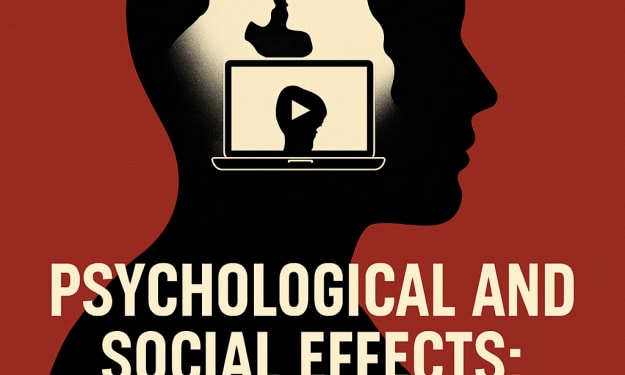
Psychological and Social Effects: How Pornography Shapes Minds and Relationships In the modern era, pornography has become an omnipresent part of the digital landscape, deeply intertwined with the fabric of daily life. It is no longer just confined to seedy corners of the internet but is easily accessible, often just a click away. For many, pornography is an expression of personal freedom and sexual exploration, but its pervasive nature also raises concerns about its psychological and social consequences. As the consumption of adult content continues to rise, researchers, psychologists, and sociologists are increasingly examining its profound impact on individuals and relationships. While some argue that pornography is harmless or even beneficial for certain aspects of sexual education and expression, others caution about its potential to distort perceptions of intimacy, influence sexual behavior, and contribute to unrealistic expectations in relationships. The psychological effects of pornography consumption are complex and multifaceted. On one hand, some studies suggest that it can serve as a harmless outlet for sexual desires or even a tool for learning about sexuality, especially when access to comprehensive sexual education is limited. In this context, pornography can offer individuals a means of exploring their sexual identity and desires in private. However, the problem arises when consumption becomes excessive or when it shapes an individual's sexual framework in unhealthy ways. Research has shown that frequent pornography consumption can lead to the desensitization of sexual stimuli, meaning individuals may become accustomed to more extreme or unrealistic content to achieve the same level of arousal. Over time, this could contribute to a diminished capacity for real-life sexual enjoyment, as partners may not be able to match the intense, often exaggerated scenarios depicted in pornographic media. In addition to desensitization, the potential for addiction is a concern. While not everyone who consumes pornography becomes addicted, there is evidence to suggest that some individuals may develop compulsive viewing habits. This can lead to significant distress and interfere with daily life. Similar to other behavioral addictions, pornography addiction can create a cycle of secrecy, shame, and withdrawal from real-world interactions, making it harder for individuals to form and maintain healthy relationships. People struggling with porn addiction often experience feelings of guilt and embarrassment, further exacerbating the psychological toll. They may also find it increasingly difficult to experience intimacy or arousal in the absence of pornographic content, which can create a vicious cycle of dependency. One of the most concerning psychological effects is the potential for distorted views on sexuality and relationships. Pornography often portrays an unrealistic and idealized version of sexual encounters, focusing heavily on physical pleasure while minimizing or ignoring emotional connection, communication, and mutual respect. In many cases, the content also reinforces harmful gender stereotypes and unrealistic expectations about body image, performance, and sexual behavior. For instance, women in pornography are frequently objectified, depicted as submissive or passive, while men are often shown as dominant and physically perfect. These portrayals can skew perceptions of gender roles and sexuality, especially for individuals who are not exposed to diverse or healthy representations of relationships. When these unrealistic ideals are internalized, they can lead to dissatisfaction with real-life sexual experiences and distorted expectations about what is normal or desirable in a partner. The social effects of pornography consumption extend beyond the individual level and into broader societal implications. Pornography, by its nature, is often detached from the complexities of human connection, reducing sexual encounters to a mere exchange of physical pleasure. This detachment can lead to a devaluation of intimacy in real-world relationships, where emotional and physical connection are equally important. Research suggests that couples who consume pornography together may experience a decline in relationship satisfaction, as one or both partners may develop unrealistic sexual expectations. These expectations can create pressure to perform in certain ways, leading to dissatisfaction and, in some cases, relationship breakdowns. Moreover, pornography can contribute to a culture of objectification, where individuals are seen not as whole, complex human beings but as bodies to be used for sexual pleasure. This objectification can be particularly damaging in intimate relationships, where partners may struggle to view each other as more than just sexual objects. Over time, this can erode the foundation of trust, respect, and emotional intimacy that is essential for healthy, lasting relationships. For those in committed partnerships, the consumption of pornography can sometimes lead to feelings of betrayal or insecurity, especially if one partner feels neglected or insufficient compared to the hypersexualized imagery seen in adult content. The issue of consent is another critical social dimension of pornography. While ethical porn does exist, much of the mainstream adult industry has been criticized for exploiting performers, often under circumstances that may not reflect mutual, informed consent. This creates a troubling paradox in which consumers of pornography might internalize notions of sexual exploitation or coercion, impacting their own behaviors and attitudes toward sex. In this context, pornography does not only shape sexual expectations but may also contribute to a culture of entitlement, where consent is overlooked or misinterpreted. Despite these negative impacts, there are ways to mitigate the harmful psychological and social effects of pornography. Education, both about healthy sexual relationships and the potential risks associated with pornography consumption, can help individuals develop a more balanced perspective. Open conversations about sexuality and intimacy can also create a foundation for mutual respect and understanding in relationships. For individuals struggling with compulsive pornography consumption, seeking professional help, such as therapy or support groups, can provide strategies to manage or overcome addiction. In conclusion, the psychological and social effects of pornography are complex and multifaceted, influencing both individual well-being and broader societal attitudes toward sexuality and relationships. While it is essential to acknowledge that not everyone who consumes pornography experiences negative consequences, the potential for harm, especially when consumption becomes excessive or distorted, cannot be ignored. By fostering open discussions, promoting ethical consumption, and offering resources for those who struggle with addiction, society can help mitigate the impact of pornography and support healthier, more fulfilling relationships.
By Abid khanabout a year ago in Motivation
Everyone Has a Story in Life.. AI-Generated.
A 25 year old boy seeing out from the train’s window shouted… “Dad, look the trees are going behind!” The 25-year-old's childish behavior was viewed with pity by a young couple seated nearby, and then suddenly he once more exclaimed... “Dad, look the clouds are running with us!”
By Rayhan Uddinabout a year ago in Motivation
The Billionaire’s Path: What They Do That Others Don’t
--- Introduction: The Mindset That Changes Everything Have you ever wondered what makes billionaires different from the rest of us? What do they see that others don’t? The truth is, becoming a billionaire isn’t just about having money—it’s about solving big problems in a way that creates massive value. This story explores what makes billionaires tick and how you can start thinking like one. --- The Story of David: The Quest for Impact Once upon a time in a city full of dreamers, there was a young man named David. He wasn’t born into wealth. In fact, he lived in a small room with peeling walls, and his dreams felt too big for his environment. But David had something that most people ignored: a mindset to solve big problems. While most people chased money, David was obsessed with one question: How do billionaires really think? As he studied the world’s wealthiest individuals, David noticed a strange pattern—billionaires weren’t chasing quick money. They were chasing something much deeper: impact. They didn’t wake up asking, “How can I get rich today?” They woke up asking, “What problem can I solve that millions, or even billions, of people face?” --- Aliko Dangote: The Vision of Self-Sufficiency Take Aliko Dangote, for example. Born in Kano, Nigeria, Dangote didn’t grow up with billions. His family wasn’t poor, but he started small, with a loan from his uncle to trade in rice and sugar. But Dangote didn’t stop there. He saw a problem: Africa was spending billions importing cement, sugar, flour, and basic needs that could be made locally. Instead of accepting the status quo, Dangote asked, “Why should we import what we can produce ourselves?” In response, he built factories that created thousands of jobs and produced products needed by millions. His vision was simple: Make Africa self-reliant. Today, Dangote is one of Africa’s richest men, not because he chased money, but because he solved the problem of Africa’s dependence on imports. His factories have changed the economy and provided jobs and stability to many. --- Howard Schultz: Creating a Global Community Another great example is Howard Schultz, the visionary behind Starbucks. Schultz was born into a poor family in Brooklyn, New York. His father struggled as a truck driver, and Schultz witnessed the harsh realities of life. But he didn’t let his circumstances define his future. One day, while visiting Italy, Schultz walked into a small coffee shop and was struck by the warmth and sense of community. He thought, “What if we brought this experience to America and made it global?” Schultz didn’t just create a coffee brand; he created a third place—a place where people could feel at home, away from work and home. Starbucks became a global symbol of connection, where people could escape the loneliness of modern life. Schultz didn’t just sell coffee; he solved the problem of isolation, providing a space where people could relax, connect, and feel a sense of belonging. --- What Billionaires Have in Common David saw a common thread between Dangote and Schultz. They were visionaries who didn’t just see problems—they saw opportunities to make life better for millions of people. They didn’t chase money. Instead, they focused on value. Here’s what David learned from them: 1. Billionaires Look for Big Problems: Where others see inconvenience, they see a chance to create massive impact. Dangote saw Africa’s dependence on imports. Schultz saw the loneliness of modern life. 2. They Think Long-Term: Billionaires aren’t in a rush to get rich quickly. Dangote spent years building factories, and Schultz spent decades growing Starbucks. They understand that true wealth takes time. 3. They Multiply Value: Instead of asking, “How can I make money?” they ask, “How can I make people’s lives better?” When you add value, wealth follows naturally. --- David’s Transformation David made a decision: he would stop chasing quick money. Instead, he would focus on solving big problems. His friends laughed at him, but David stayed patient, working day and night to build his vision. Eventually, his company exploded—not because he was focused on getting rich, but because he created something that people couldn’t live without. --- The Key to Becoming a Billionaire If you want to become a billionaire, ask yourself every day: What problem am I solving? Whose life am I improving? And are you patient enough to build something that lasts? The road to billionaire status isn’t about looking for shortcuts. It’s about understanding that the bigger the problem, the bigger the reward. Just like Aliko Dangote and Howard Schultz, your success will be defined by the value you create and the lives you touch. --- Conclusion: The Billionaire Mindset Remember, billionaires are not just rich—they are builders, problem-solvers, and visionaries. They sacrifice comfort today to build something that will change the world tomorrow. If you focus on impact and solve big problems, money will follow. The next time you think about your future, ask yourself: What can I do today to solve a problem that will change the world? --- Call to Action: What problems do you see in your community or industry that you could solve? Start thinking like a billionaire today—focus on the impact you can create. Share your ideas in the comments and let’s inspire each other to build a better future!
By young chaseabout a year ago in Motivation
"The Ant That Never Gave Up"
In a quiet garden full of flowers and green grass, lived a little ant named Andy. Andy was not the biggest, strongest, or fastest ant in his colony. He was just an ordinary ant with one special thing—he believed in never giving up.
By Imran Khanabout a year ago in Motivation
The Final Farewell of Friendship
As the sun began to set, casting a golden hue across the park, two old friends sat on a worn wooden bench, lost in the moments of their past. Their white hair, creased faces, and tired eyes told the story of many years spent together, both in joy and in sorrow. Their friendship was a bond so deep, it transcended time and space. It was more than just companionship—it was the essence of their shared life. "Do you remember when we first met?" one of them asked, his voice soft, almost a whisper, as though speaking the words of a long-forgotten secret. "How could I forget?" the other replied with a faint smile. "You stole my book, and I almost lost my temper." They both laughed, the sound ringing through the air like the echo of their youth. But in that laughter, there was a certain sadness—a recognition that time had caught up with them. The years had passed, and their bodies had aged, but the memories of their shared moments had not faded. They were still the same friends, sitting together on that old bench, just as they had so many times before. "You know, there's not much time left," one of them said, his voice growing more serious. "But I promise you, even when I'm gone, you'll always remember me." The other friend said nothing, but his eyes spoke volumes. In those eyes was a deep understanding—a bond that could not be broken, no matter how much time passed. They sat in silence for a while, watching the sun dip lower in the sky, each lost in their own thoughts. It was a silence that spoke louder than words, a silence that held all the memories, all the moments, and all the love they had shared throughout their lives. "Promise me something," the second friend finally said. "When I'm gone, don't forget me. Don't let this moment be the last. Remember the good times, the laughter, the tears, and everything we shared." The first friend nodded, his eyes moist with unshed tears. "You are my brother," he said, his voice thick with emotion. "Not just a friend, but a brother. I will never forget you." And so, in that moment, they both knew that their time together was drawing to a close. They had lived a lifetime of memories together, and now, as they faced the inevitable end, they understood that this final meeting held a significance greater than words could express. The evening air grew cooler, and the park began to empty. But these two friends remained on the bench, knowing that soon, they would have to part ways. Yet, in their hearts, they carried with them the warmth of a friendship that had stood the test of time. Their hands clasped tightly, as if to hold on to that final moment—because, deep down, they both knew this was their last farewell. "Don't worry," the second friend said softly, "We'll always be together, even if we're apart. In every memory, in every thought, we will live on. You have my promise." The first friend smiled, though it was tinged with sorrow. "Thank you for everything," he whispered. "You were the best friend I could ever have asked for." And with that, the park grew quieter, the last remnants of daylight slipping away. The two friends shared one final glance—a look that spoke of a lifetime of memories, of struggles and triumphs, of laughter and tears. In that glance, there was no need for words. They had said everything they needed to say. As the shadows of night crept over the park, one of them stood up, slowly, and looked at his friend one last time. The other remained seated, his eyes following his companion as he walked away, disappearing into the distance. The bench, once a place of shared stories and endless conversation, now stood empty, as if to remind the world that everything has a beginning and an end. But in the hearts of those who loved and were loved, time was but a fleeting moment. And the memories of a friendship like theirs would never fade.
By Noman Afridiabout a year ago in Motivation
5 Habits That (Honestly) Saved My Mental Health
Let me be real with you—I didn’t even know I was struggling with mental health until I hit a wall. I wasn’t crying every day. I wasn’t screaming. I was just... tired. All the time. I’d wake up tired. I’d laugh with people but feel nothing. I’d scroll for hours just to avoid thinking. And worst of all? I thought this was normal.
By Tauseeq Haiderabout a year ago in Motivation
Losing Doesn't Mean It's Over. AI-Generated.
Failure hurts. There's no sugarcoating it. Whether it's a job you didn’t get, a dream that didn’t work out, or a person who walked away—losing stings. It feels like a punch in the gut, leaving you questioning your worth, your abilities, and your future. But here's the truth most people don't realize: losing doesn’t mean it’s over. It doesn’t mean your dreams are dashed or that you should stop trying. It simply means that you’re not finished yet.
By sahinur sahinabout a year ago in Motivation
A Summer of Silence – When the Heat Took Away Our Nana Jaan
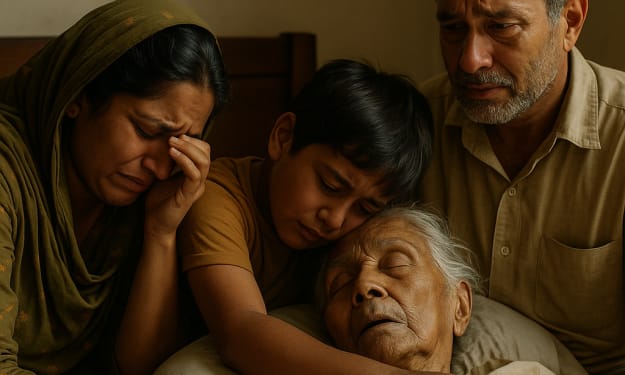
When the intense summer heat gripped the city, a change came into our lives that would stay etched in our hearts forever. It was a season in which we learned a lot, and its intensity taught us lessons that we had never thought we would have to learn. Our Nana Jaan, who had always been a symbol of love for us, appeared completely different during this summer. Her smile, which used to light up our faces, had now faded. Her body, which always felt like a strong pillar, now seemed tired. At first, we didn’t pay much attention to it, as none of us wanted to acknowledge the toll her age might be taking on her body. But soon, it became clear that it wasn’t just old age; the heat had also taken a toll on her health. The change in Nana Jaan’s condition was sudden one day. She began complaining of dehydration and started sleeping throughout the day. Sweat marks appeared on her body, and we never thought that such intense heat could endanger her life. We always assumed that the physical health of the elderly was simply a result of their age, but we didn’t realize that seasonal factors could be just as severe. One day, when we noticed that Nana Jaan’s condition had worsened, we rushed her to the doctor. But by then, it was too late. The doctor told us that her body had become weak due to the heat, and she was suffering from severe dehydration. Hearing this felt like the ground had slipped from under our feet. We had always thought that her staying healthy was a constant reality for us, but that day we learned that life is never predictable. The doctor informed us that had we taken better care of Nana Jaan earlier, she might have been able to recover. But now, it was too late. We asked the doctor if anything could still be done, but his response was simple: “It’s a matter of time, and we must accept the natural course of things.” Nana Jaan’s passing was a deep blow for us. After her departure, the whole house fell silent, as if someone had taken away the light from our world. For the first time after that moment, we thought about how we had neglected the importance of spending time with our elderly. We realized that it wasn’t enough to just spend time with them; we had to take practical steps for their health and well-being. I remember a moment when Nana Jaan’s face was radiant, and we all thought of her as an inseparable part of our lives, imagining she would be with us forever. But now we had to accept the reality that her body had grown tired, and the heat had deeply affected her. After Nana Jaan’s passing, we realized that this season was not just about heat; it was a test. A test that was teaching us how to take better care of our elderly. Everything that happened was a lesson, and we had to learn from it, taking the necessary precautions for our loved ones’ health. From that day on, we made a commitment that whenever there is intense heat, we will pay special attention to our elderly. We decided that we would take all necessary precautions, from keeping them hydrated to ensuring they stay in the shade, and providing them with proper nutrition. We also decided not to let them spend too much time in the sun and to be cautious in their daily activities so as not to put any strain on their bodies. This season taught us that the summer is not just a natural change; it’s an opportunity for us to take care of our elderly family members. Their bodies are more sensitive, and we must adopt precautionary measures to ensure they remain healthy and happy. Nana Jaan’s memories will always live on in our hearts, and her untimely death taught us to appreciate every moment of life. We took this lesson to heart, knowing that it will not only be a reminder for us but for the generations to come. Now, whenever we step outside in the summer or spend time with our elderly loved ones, we are more cautious about their health. This commitment is a tribute to Nana Jaan, who always taught us how to nurture and care for others with love. We vowed never to forget her teachings and to always follow her principles۔
By Noman Afridiabout a year ago in Motivation
Love that survives without clarity
There have been many moments when I’ve asked God to intervene in difficult situations and noticed a pattern in how I respond while waiting. Probably something we’ve all experienced at one point: either I become desperate, willing to sacrifice anything just to get an answer to what I’m praying for, or I do absolutely nothing — calling it ‘trust’ when in reality, I’m just stuck, scared, and unsure, waiting for perfect clarity before taking even the smallest step.
By Nora Arianaabout a year ago in Motivation
Warren Buffett's 12 Emotional Habits: The Journey from a Dreamer to a Billionaire
When it comes to the world's most successful people, the name Warren Buffett inevitably comes up. He is not just an investor, but a person who has lived his life with hard work, principles, and emotional stability.
By Arab Shahabout a year ago in Motivation