goals
Understanding your goals to help you achieve them.
The Journey Beyond the Comfort Zone
In a small town nestled between mountains and rolling hills, there lived a young man named Daniel. To the outside world, Daniel seemed like an ordinary person, working at a local shop, living a simple life, and rarely stepping outside the boundaries of his quiet existence. But within him, a constant whisper stirred—a voice that told him he was meant for something greater, that his potential reached far beyond the cozy comfort of his familiar world.
By MIGrowth2 years ago in Motivation
MASTER WHAT MATTERS. Content Warning.
"You don't have to be good at everything, be good at what you are good at". No one becomes successful overnight; every achievement is the result of continuous effort. The present is a reflection of the choices, actions, and input you’ve given in the past. Life operates on a system of balance—what you sow is what you reap. If your efforts are consistent and your decisions well-timed, the results will reflect that. Success doesn’t demand perfection in every aspect; it requires focus on what matters most.
By Selenooo2 years ago in Motivation
Encouraging Words for a Friend Going Through a Tough Time
In life, we all have times when things feel overwhelming, and those we care about encounter challenges that weigh them down. In such circumstances, our words can provide consolation, hope, and encouragement. Knowing what to say can make all the difference when your buddy is going through a personal loss, a career setback, health problems, or mental distress. This article will supply you with inspiring, meaningful phrases to help a buddy get through their worst moments.
By Bloom Boldly2 years ago in Motivation
Don’t Be a Slave to Attitude
Don’t Be a Slave to Attitude In a world where first impressions are often deemed the most lasting, the attitude we carry significantly shapes how we navigate our daily lives and interact with others. Attitude acts as a lens through which we perceive our experiences and relationships; it can be our greatest asset or our most formidable obstacle. When we become slaves to a negative attitude, we limit our potential and the richness of our experiences. Conversely, cultivating a positive mindset opens doors, nurtures connections, and enhances our overall quality of life. The Weight of Negativity Negativity is a heavy burden. It can manifest in various forms, from cynicism and pessimism to entitlement and anger. Each of these negative attitudes has the potential to close off opportunities, alienate loved ones, and create an impenetrable barrier between ourselves and the world around us. For instance, consider a person who has faced repeated failures in their career. Instead of viewing these setbacks as learning experiences, they develop a belief that they are destined to fail. This negative attitude not only saps their motivation but also alienates colleagues and friends, reinforcing their sense of isolation. Take the story of Mark, a talented artist whose work was consistently rejected by galleries. Initially, he was filled with hope and determination. However, after numerous rejections, he began to internalise a narrative of failure. His attitude shifted from one of creativity to bitterness. Mark would often berate himself for not being good enough, which led him to withdraw from the artistic community he once cherished. Instead of seeking constructive feedback, he shunned the very connections that could have supported his growth. However, the moment Mark decided to change his attitude marked a turning point in his life. He began attending art workshops and engaging with fellow artists, opening himself up to new perspectives. Through this transformation, he not only improved his craft but also forged meaningful relationships, eventually leading to the successful exhibition of his work. The Power of a Positive Mindset The opposite holds true for those who embrace a positive attitude. A constructive mindset empowers individuals to face challenges head-on, seeing them as opportunities for growth rather than as insurmountable obstacles. Take, for example, Sarah, a single mother who faced immense struggles after losing her job. Rather than succumbing to despair, she focused on the possibilities that lay ahead. With an unwavering belief in her ability to overcome adversity, Sarah began exploring freelance opportunities and taking online courses to enhance her skills. Her positive attitude attracted potential clients, and before long, she had built a successful freelance career. Not only did she provide for her family, but she also became a role model for her children, teaching them the value of resilience and optimism in the face of life’s challenges. Transforming Attitudes Changing one’s attitude is not a simple task; it requires conscious effort and practice. One effective strategy is to cultivate gratitude. By acknowledging the positive aspects of our lives, we can shift our focus away from negativity. Keeping a gratitude journal can be particularly beneficial, as it allows us to reflect on and document our blessings daily. Another approach is to surround ourselves with positive influences. The people we spend time with can have a profound impact on our attitudes. Engaging with those who uplift and inspire us can serve as a catalyst for positive change. For example, after a difficult period, David found solace and encouragement in a community group dedicated to personal growth. Surrounded by individuals who shared their challenges and triumphs, he began to shed his cynical outlook. The support and encouragement from this community transformed David’s perspective, allowing him to embrace hope and pursue his dreams once more. Moreover, mindfulness and self-compassion are crucial in this journey. Practising mindfulness helps us become aware of our thoughts and feelings without judgment. When negative thoughts arise, we can acknowledge them and choose not to act upon them. Self-compassion allows us to treat ourselves with kindness during difficult times, reminding us that it is okay to struggle and that we are not alone in our experiences. A Call to Action Choosing to reject a negative attitude and embrace positivity is a powerful act of self-liberation. It allows us to break free from the shackles of despair and opens our hearts to new possibilities. The transformation may not happen overnight, but with persistent effort and a commitment to change, we can shift our perspectives and redefine our narratives. In a world filled with challenges, we must remember that our attitude shapes our experiences. Rather than being slaves to negativity, let us strive to cultivate an attitude of hope, resilience, and compassion. By doing so, we can create a more fulfilling life for ourselves and inspire others to do the same. As we embark on this journey, let us remind ourselves that while we may not always have control over our circumstances, we can always choose our attitude. In this choice lies our greatest freedom. Embrace it.
By Dipak Pawar2 years ago in Motivation
Your Biggest Enemy: Overthinking! How It Affects Your Mind and Body
We’ve all been there—those moments when our mind races and we can’t stop thinking about something. Whether it’s a decision, a problem, or a situation, overthinking can take control, and before you know it, you're stuck in a loop of endless thoughts. While thinking deeply is normal, overthinking can become a problem when it starts affecting your mental and physical health. In fact, your biggest enemy in tough situations isn’t always the situation itself; it’s your overthinking mind! So, what exactly happens when you overthink, and why does it make you feel so drained, anxious, and even give you headaches? Let’s break it down in simple terms. What is Overthinking? Overthinking happens when your brain starts to repeatedly go over the same thought or problem, over and over again. It’s like a loop that doesn’t stop. Instead of coming to a solution, your mind keeps thinking about the possibilities, consequences, or “what if” scenarios. While a little bit of thinking helps us solve problems, too much thinking exhausts our mind. It works beyond its capacity, which can lead to stress, headaches, and feelings of being overwhelmed. In other words, when your brain is in overdrive, it struggles to handle everything at once. How Overthinking Affects Your Body Now, let’s talk about what happens inside your body when you overthink. The brain, like every other part of your body, needs energy to function. This energy comes from a special molecule called ATP (adenosine triphosphate), which is produced in our cells through a process called cellular respiration. Here’s the simple science behind it: 1. Energy and Oxygen : To create ATP, your body needs oxygen. Oxygen helps break down the food in your body, which releases glucose (a type of sugar) that your cells use to make ATP. 2. Cellular Respiration : This process takes place in every cell of your body, and it’s how you convert the food you eat into usable energy. Think of ATP as the fuel that powers every cell, including your brain. 3. Brain’s Energy Demand : Your brain uses a large amount of ATP. In fact, even though your brain makes up only about 2% of your body’s weight, it uses roughly 20% of your body’s energy! That’s because thinking, analyzing, and processing information require energy. 4. Oxygen Supply : When you start overthinking, your brain demands more oxygen to keep up with the increased mental activity. This is why your breathing may change, and you may find yourself taking deeper breaths during moments of stress or intense thinking. 5. Glucose Breakdown : Your body breaks down stored food, especially glucose, to fuel the brain’s increased activity. The more you think, the more energy your brain needs. Special enzymes help break down the food, making it easier for the body to create ATP. Why Does Overthinking Make You Feel Tired? When you overthink, your brain is working overtime. It’s using up a lot of energy, which can leave you feeling physically tired, even if you haven’t done any physical activity. It’s like running a mental marathon—your brain is pushing itself to keep going, but it eventually gets exhausted. The stress caused by overthinking can also trigger a headache. Think of it as your brain’s way of telling you it’s had enough. It’s overloaded with tasks, and the constant demand for energy starts to take a toll. This is why you might feel drained, even if all you’ve been doing is sitting and thinking. Stress and Its Impact on the Brain Overthinking often leads to stress. And when your body is under stress, it reacts in different ways. For instance: - Increased Heart Rate : Your heart starts pumping more blood to provide your brain and muscles with extra oxygen and energy. - Tense Muscles : Your muscles may become tense because they’re also using up energy to prepare for a “fight or flight” response, which is your body’s natural reaction to stress. - Mental Fatigue : The more you overthink, the more mental fatigue you experience. This is because your brain is continuously using up its energy reserves without getting any rest. How to Combat Overthinking While overthinking can feel like a vicious cycle, the good news is that you can take steps to break free from it. Here are some simple strategies to manage overthinking and reduce its effects on your mind and body: 1. Take Deep Breaths : Deep breathing exercises can help supply your brain with more oxygen, which calms your nervous system and reduces stress. 2. Practice Mindfulness : Mindfulness is all about staying present in the moment. It helps you focus on the “here and now” rather than getting lost in your thoughts. 3. Physical Activity : Exercise is a great way to release pent-up energy and reduce mental stress. It also increases the oxygen flow to your brain, which helps it function better. 4. Limit Thinking Time : Set a time limit for how long you’ll allow yourself to think about a problem. Once the time is up, shift your focus to something else. 5. Journaling : Writing down your thoughts can help clear your mind. Once they’re on paper, your brain can stop circling around them. Conclusion Overthinking is something most of us struggle with, especially during stressful situations. However, recognizing it as a problem and understanding how it affects your brain and body can help you take control of it. By giving your mind the break it needs and practicing healthy habits, you can manage overthinking and avoid the stress, fatigue, and headaches that come with it. Remember, your mind is a powerful tool—but it needs rest just like any other part of your body! Don’t let overthinking become your biggest enemy.
By Black Rose2 years ago in Motivation
Five Medication-free Strategies To Prevent Heart Disease. Content Warning. AI-Generated.
There are methods to help prevent heart disease other than leading a healthy life style. Heart disease is the leading cause of death yet it does not have to be a factor in your life. Here are five strategies to help protect the heart from heart disease.
By Marzan Hossain 2 years ago in Motivation
A Diary of My Troubles and Success. AI-Generated.
The Beginning of Uncertainty I never thought my life would take such a challenging turn. As I sit here in my small, cluttered apartment, staring at the pages of this diary, I feel the weight of everything pressing down on me. It’s strange how quickly life can change. One day you feel invincible, brimming with dreams and hope, and the next, you’re barely getting by.
By RAJEEVAN N P NADUMURI2 years ago in Motivation
Building Resilience: Strategies for Overcoming Life's Challenges. AI-Generated.
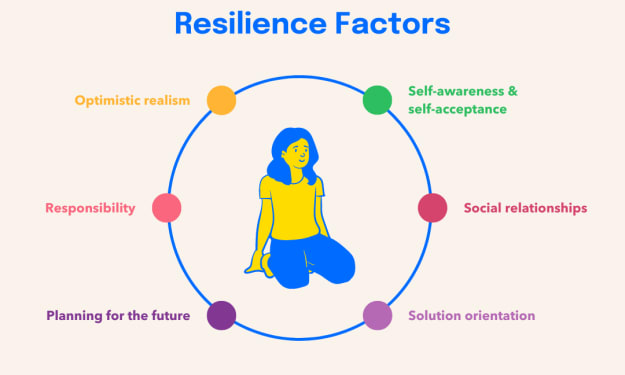
Building resilience is a crucial skill for navigating the unpredictable landscape of life. It encompasses the ability to recover from setbacks, adapt to change, and maintain a positive outlook despite challenges. Resilience is not merely about bouncing back; it involves growth and transformation, allowing individuals to emerge stronger and more capable after facing adversity.
By Siddhesh Gamare2 years ago in Motivation
NaNoWriMo 2024. Content Warning.
As per usual this story may be all over the place because why stay on topic when you can have multiple side stories to eventually get to the point? Sometimes a handful of side stories to get to the main story anyways. Usually makes it more enjoyable- for the most part to be honest.
By Jen Phillips2 years ago in Motivation
Generosity of Spirit: What We Can Learn from Ratan Tata
Ratan Tata, the esteemed former chairman of the Tata Group and a prominent figure in Indian industry, died on Wednesday at the age of 86. His life exemplified qualities such as compassion, resilience, humility, and perseverance, serving as an inspiration for those in public service. The Taj Mahal Palace Hotel, founded by Ratan Tata's grandfather in 1903, was targeted during the 2008 Mumbai attacks. In response, Ratan Tata dedicated himself to assisting the families of the hotel employees who were killed or injured, promising to provide lifelong salaries to the families of those who lost their lives, as reported by the BBC.
By Hridya Sharma2 years ago in Motivation
Take Your Steps Forward
Take Your Steps Forward Life is a journey, and at every stage, we are faced with choices that define our path. Some steps are easy, familiar, and comfortable, while others are terrifying, filled with uncertainty and fear. Yet, it is those uncertain steps that often lead to the most profound growth, the deepest self-realisation, and the most meaningful changes in our lives. The act of moving forward, of taking that leap into the unknown, is both an act of courage and faith, a decision to trust in oneself and in the beauty of what lies ahead.
By Dipak Pawar2 years ago in Motivation