goals
Understanding your goals to help you achieve them.
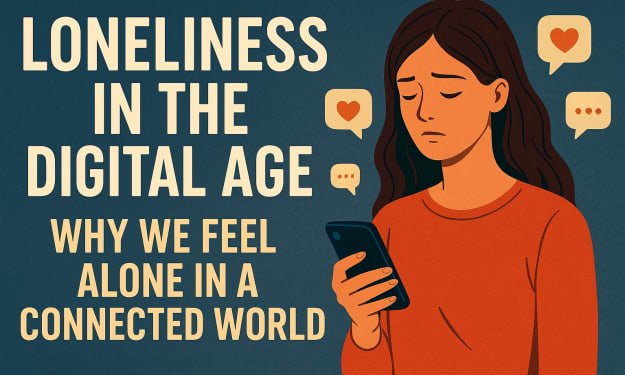
Loneliness in the Digital Age: A Silent Struggle
In today’s fast-paced digital world, humans are more connected than ever before. With just one click, we can speak to someone across the globe, share our thoughts instantly, and express our emotions through emojis, likes, and comments. Yet beneath this surface of constant connection lies a quiet warning: loneliness is spreading faster than ever. The Paradox of Connection It may sound strange, but the very tools designed to bring us together are the ones pulling us apart. Social media gives us endless scrolling, but often, it leaves our hearts empty. Online interactions, though quick and easy, rarely replace the warmth of a real conversation or the comfort of sitting beside a friend. This paradox of connection shows us that while we may never feel alone online, many of us are lonelier than we have ever been. When Silence Speaks Loudly Digital platforms fill our lives with noise—notifications, messages, and advertisements—but silence has taken root in our human interactions. Families sit together in the same room, yet each member is lost in their own digital world. Couples text across rooms rather than speaking face-to-face. This silence is not peaceful; it is heavy, a reminder that human bonds are fading while digital ties are strengthening. The Hidden Pain of Loneliness Loneliness is not always visible. A person may post smiling pictures online but cry silently at night. They may gain hundreds of followers, yet feel that no one truly knows them. Loneliness carries hidden pain—mental stress, depression, and even physical illness. Scientists have compared loneliness to smoking a pack of cigarettes a day; that’s how damaging it can be to human health. The Illusion of Belonging In the digital space, likes and comments create the illusion of belonging. A single notification can make us feel noticed, but this feeling fades quickly. Real belonging cannot be built on temporary attention. Belonging requires trust, presence, and genuine care—qualities that technology alone cannot provide. Without them, humans risk becoming addicted to the illusion while starving for the reality. Rediscovering Human Touch Despite the challenges, hope remains. Technology itself is not the enemy; how we use it defines its impact. To fight loneliness, we must rediscover the human touch. A simple phone call instead of a text, a visit to a friend instead of a comment, or sharing a meal without screens—these actions rebuild the bridges that technology has weakened. Balancing the Digital and the Human The digital age will only grow more advanced. Artificial intelligence, virtual reality, and new technologies will make the digital world more attractive than ever. But humans must learn to balance the digital with the human. The more time we give to real relationships, the more alive and fulfilled we become. Balance is the key—not complete rejection of technology, but wise use of it. A Human Detail We All Share At the end of the day, loneliness is a human detail we all share. Everyone, at some point, feels the emptiness of being unseen or unheard. But loneliness can be defeated with empathy, compassion, and genuine effort. In the digital age, the greatest revolution may not be technological—it may be human. Choosing to care, choosing to listen, and choosing to truly be there for one another can bring back what we are slowly losing. Conclusion: A Call to Humanity The digital world may give us speed, efficiency, and endless possibilities, but only humanity gives us meaning. Loneliness is the quiet warning of our time, but it does not have to be our future. If we hold on to each other with kindness and prioritize real connection over virtual attention, we can turn this age of loneliness into an age of togetherness. The choice is ours, and it begins with one small step—reaching out to another human with sincerity.
By Waqas Ahmad about a year ago in Motivation
"The Mountain of Human Sorrows" . AI-Generated.
Man is never happy in any state. Human nature, restless by design, always looks for something else—something beyond reach. Socrates, the philosopher, once shared a profound thought: > If all the troubles of the world were gathered in one place and then distributed equally among everyone, those who now consider themselves unfortunate would find this distribution a blessing compared to their original troubles. Another philosopher went even further, saying: > If we could exchange our troubles with each other, everyone would ultimately choose to keep their original burdens. These sayings hide a deep truth: the weight of sorrow is not in the sorrow itself but in how we bear it. Expanding on these two ideas, I sat one day, tired of the so-called carefree life, and sleep overcame me. In my dream, I saw an extraordinary vision. An announcement had been made from the Court of the Sultan of the Heavens: all the people of the world should bring their sorrows, pains, and hardships and pile them up in one place. For this purpose, a field larger than imagination itself was prepared, and people began to arrive from every direction. I stood in the middle, watching in awe. One after another, they came, casting down their burdens, yet each burden grew larger as it fell. Soon, a towering mountain of grief rose higher than the clouds. Amid the crowd, I saw a strange figure—thin, restless, quick as wind. He carried a mirror that magnified every reflection. His robe was embroidered with demons and genies, swaying to reveal countless illusions. His name was Illusion. It was he who tied up each burden and threw it onto the growing heap. At that moment, I realized: Illusion does not create sorrow, but it multiplies its weight. It makes a small shadow appear as a mountain, a moment’s pain appear eternal. I watched my fellow human beings, my brothers and sisters, with hearts heavy in pity. Some came with poverty, some with sickness, some with heartbreak. A countless crowd of lovers arrived with sighs and laments heavier than iron. They groaned and wept but strangely could not throw away their burdens; instead, they turned back carrying the same grief they had brought. This struck me deeply: Some burdens are not forced upon us—they are embraced. A heart that loves often refuses relief, for even pain becomes precious when tied to love. Old women threw off wrinkles, young men cast away their dark complexions or crooked teeth. Others brought strange ailments—some real, some imagined. Yet I noticed one thing missing: in this massive mountain of misfortunes, there was no foolishness, no cruelty, no bad behavior. I thought: If mankind could throw away greed, arrogance, and injustice as easily as they throw away wrinkles and ailments, then the world would shine like paradise. Meanwhile, a careless hedonist came carrying the weight of his sins. He threw them down, but when I looked closely, I saw he had also thrown away his foresight—the ability to repent and reform. What is lighter than sin carried without wisdom, and what is heavier than sin carried without regret? When the entire field was filled with groans and sighs, the Sultan of the Heavens commanded: “Now take back your burdens and return home.” Panic erupted. Illusion grew busy once more, distributing sorrows in confusion. People jostled, snatching burdens, regretting their choices. An old man who had no child gave up the pain of his illness and adopted a disobedient boy, only to beg later for his colic pain back, saying: “That first torment was a thousand times better than this.” A sailor gave away the torment of chains, only to inherit the torment of liver disease. A man threw away consumption only to take back another heavier illness. Everywhere I looked, regret and lament filled the field. Here I learned another truth: Every sorrow has its secret mercy. Often the burden we hate is lighter than the one we seek in its place. Finally, the Sultan of the Skies took pity and declared: “Throw away your burdens once more. This time you shall each receive your own original burden.” Joy returned. Everyone happily cast away the foreign burdens and received back their own familiar pain. At least their misery was known, not strange. And there is a strange comfort in the familiar, even when it hurts. Then came another command: “Banish Illusion from this place.” At once, Illusion vanished in smoke, and in his place descended a radiant angel. His name was Patience and Steadfastness. Calm, dignified, with eyes lifted to the heavens, he sat near the mountain. As he touched the heap, the mountain of sorrows began shrinking, until each burden was reduced to a mere fraction of its former weight. With kindness, the angel returned to each person their rightful burden, saying: “Do not fear. Lift this with patience, and you will find strength.” The people returned home, each carrying their own sorrow—but now lighter, more bearable, and filled with gratitude. --- Moral of the Story No life is free of sorrow. If all burdens were exchanged, each of us would choose our own again. Illusion makes sorrows unbearable, but patience makes them light. The secret of peace lies not in avoiding grief but in carrying it with steadfastness, gratitude, and faith—for patience transforms even the heaviest sorrow into strength.
By Ihtisham Ulhaqabout a year ago in Motivation
Your Subconscious Mind
The Subconscious mind is the most powerful tool a man or a woman could use. It functions like a huge secret memory and does not formulate any arguments. It is completely objective, and it can’t express any point of view. The neutrality of subconscious mind is the core of every action and reaction our thoughts activate.
By LaMarion Zieglerabout a year ago in Motivation
Unstoppable Spirit: How to Rise Stronger When Life Knocks You Down. Content Warning. AI-Generated.
Introduction: The Story We All Live Life is not a straight line. It bends, twists, and throws us into storms we never asked for. We fall, we stumble, we break. And yet, it is in these exact moments of hardship that we discover who we truly are.
By Chilam Wongabout a year ago in Motivation
Tiny Habits, Big Results: How Small Changes, Quick Actions, and Lessons from Failure Lead to Massive Success. Content Warning.
Introduction: Why Small Changes Matter More Than Big Goals Most people overestimate what they can do in a day and underestimate what they can achieve in a year. We set ambitious goals—lose 30 pounds, build a business, write a book—but often fail because we focus on big leaps instead of small steps.
By HABIB REHMANabout a year ago in Motivation
My First Story and Introduction to My Background
A New Chapter: Why I’m Joining the Vocal Community as a Retired Mental Health Professional Hello friends, Beginning again in a new creative space always carries a mixture of curiosity, humility, and hope. After five decades of work as a psychiatrist, writer, and editor, I find myself here on Vocal, opening the first page of what I hope will be a meaningful chapter of connection.
By Dr Albert Jonesabout a year ago in Motivation
Trusting God’s Timing.
There are moments in life when worry feels like second nature. We stress about the future, overthink decisions, and let doubt creep in when things don’t happen the way we expect. I’ve been there more times than I can count. However, the truth is that every single time I worried, God showed up right on time. His timing has never been late. And each time He pulls me through, I ask myself why was I even worrying in the first place? This realization has been the foundation of my journey with faith: learning to trust God completely, even when I don’t understand what’s happening around me.
By Rereabout a year ago in Motivation
Finding My Voice That I've Lost
A Dream That Refused to Die... Music has been the soundtrack to my life for as long as I can remember. But chasing a dream in music isn’t a straight road it’s a winding path filled with detours, setbacks, and lessons that hurt as much as they heal.
By Romeo Fordabout a year ago in Motivation
Timothée Chalamet: A Portrait of Resilience, Talent, and Stardom
Timothée Chalamet is a name that echoes through modern Hollywood with a rare kind of reverence. In an era where young actors are often manufactured by studios or propelled to fame through sudden viral moments, Chalamet’s rise has been different. His journey has been filled with passion, struggle, failure, and unwavering dedication to craft. What makes his biography not just a story of success, but also one of resilience, is how his vulnerabilities and setbacks became steppingstones toward greatness. This is the story of a boy from New York City who grew up with dreams, chased them relentlessly, and now stands as one of the most compelling actors of his generation.
By Frank Massey about a year ago in Motivation
Power of Resilience
Life is a journey filled with challenges, uncertainties, and unexpected hardships. No matter how carefully we plan, setbacks and obstacles are inevitable. What truly defines success is not the absence of problems but the ability to face them with strength and determination. This quality is known as resilience—the inner power to recover quickly, adapt to change, and keep moving forward even when circumstances seem difficult. The power of resilience lies in transforming pain into progress, failure into learning, and weakness into strength.
By Zia ur rehmanabout a year ago in Motivation
5 Rich People's Habits That Will Change Your Life
Have you ever wondered why some people seem to attract wealth while others struggle their whole lives? It's not just about luck. And it's not always about having a higher salary. The real secret is this: rich people live by different habits.
By Wealthy movesabout a year ago in Motivation