advice
Advice that will put you on the path to success; tips, tricks and nuggets of wisdom from trusted experts and motivational mentors.
Money Made Simple: Your First Step Toward Financial Freedom. AI-Generated.
Do you ever get to the end of the month and wonder where all your money went? You're not alone. For many people, managing money feels confusing, overwhelming, and sometimes even hopeless. But here's the good news: you don't need to be rich or a math genius to take control of your finances. You just need a plan—and that’s exactly what you’ll find here.
By HAMMAD KHAN OFFICIALabout a year ago in Motivation
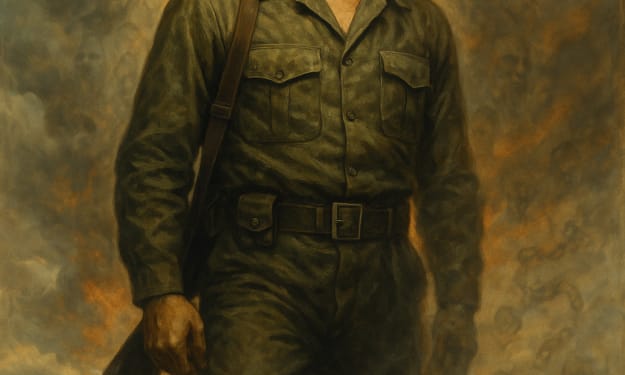
Saddam Hussein: The Last Roar of Arab Pride
The Beginning of a Storm Born in 1937 in the humble village of Al-Awja, near Tikrit, Saddam Hussein rose from poverty and abandonment to become one of the most influential — and controversial — figures of the Arab world. Orphaned young and raised by a harsh uncle, his early life was molded by survival, ambition, and a deep resentment toward colonial influence and oppression. By the 1950s, Saddam had joined the Arab nationalist Ba'ath Party, a political movement that believed in Arab unity, anti-imperialism, and strong leadership. His commitment was not just ideological — it was action-driven, daring, and often dangerous. He participated in the failed 1959 assassination attempt on then Prime Minister Abd al-Karim Qasim, marking the beginning of his reputation as a fearless nationalist. --- The Rise to Power Saddam's political climb was swift and calculated. In 1968, the Ba'ath Party seized power in Iraq. Saddam, though initially vice president under President Ahmed Hassan al-Bakr, quickly became the real force behind the government. By 1979, he formally took over the presidency — and Iraq would never be the same. Under his rule, Iraq experienced a unique blend of authoritarianism and advancement. He nationalized the oil industry, funneled revenues into education, infrastructure, and healthcare, and aimed to build Iraq as a modern Arab power. Literacy soared, universities expanded, and Baghdad emerged as a cultural and political capital of the Arab world. But his leadership came with an iron fist. Dissent was crushed with brutal precision. Political opponents vanished, and fear became a tool of governance. To some, he was a savior; to others, a tyrant. But even his critics could not ignore his defiance of Western dominance. --- The Revolutionary Voice What made Saddam Hussein distinct in the Arab world was not just his rule — but his roar. He dared to speak against Western imperialism, challenged Zionist expansion, and openly defied the United States. During the Iran-Iraq War (1980–1988), Saddam positioned himself as a bulwark against the spread of Iran's Islamic revolution into the Arab world. Though the war brought immense devastation, many Sunni Arab leaders saw him as their shield. In 1990, he invaded Kuwait, a move that would prove catastrophic. While his reasons were strategic — economic pressure, territorial disputes, and regional dominance — the reaction from the global stage was swift. The U.S.-led Gulf War in 1991 devastated Iraq's military and economy. International sanctions followed, isolating Iraq and plunging its people into suffering. --- The Downfall and the Trial The U.S. invasion of Iraq in 2003, under the pretext of weapons of mass destruction, marked the beginning of Saddam’s final chapter. Baghdad fell within weeks. Saddam disappeared, only to be found months later in a small underground hideout near Tikrit. His trial was public, polarizing, and emotionally charged. Supporters saw it as humiliation by foreign forces; critics called it justice long overdue. On December 30, 2006, Saddam Hussein was executed. His final words praised God, condemned foreign occupation, and invoked Arab unity. --- The Man, The Myth, The Memory To this day, Saddam Hussein remains one of the most debated figures in modern history. For some, he was a dictator who ruled through fear and war. For others, he was the last lion who dared to challenge the West and speak for Arab dignity. In a region fragmented by foreign interests and weakened leadership, Saddam stood out as a symbol of strength — even if his strength came with scars. His statues were torn down, but his image still appears on walls, in whispers, and in hearts yearning for self-respect and independence. --- A Final Salute History will always be divided about Saddam Hussein. But what cannot be denied is his impact — on Iraq, on the Arab identity, and on the global order. He ruled with fire, fell with defiance, and left behind a legacy that still echoes in debates, documentaries, and dreams of a united Arab future. Saddam Hussein was not just a man — he was a moment in Arab history. A moment that roared.
By Noman Afridiabout a year ago in Motivation
How to Lose Weight Fast – Backed by Science
Losing weight is one of the most common goals people set for themselves—but often, they find it frustrating and confusing. With so many fad diets and "quick fixes" out there, it’s easy to get overwhelmed. But here’s the good news: you can lose weight quickly and safely using methods supported by science.
By Mehtab Ahmadabout a year ago in Motivation
The Fire of the Mountains: Che Guevara’s Revolutionary Journey
Introduction: A Dream Born in Smoke and Sacrifice In the thick forests of Latin America, where bullets echoed louder than dreams and freedom was paid for in blood, a man emerged whose very name became the anthem of rebellion — Che Guevara. His revolutionary journey wasn’t just about overthrowing dictators. It was a burning mission to awaken the soul of the oppressed and challenge the empires of greed. This is the story of a man who walked away from comfort and safety to fight for strangers, only to become a legend. --- Caption: “If you tremble with indignation at every injustice, then you are a comrade of mine.” — Che Guevara --- Chapter 1: A Doctor with a Diagnosis for the World Ernesto Guevara, an Argentine doctor with a sharp mind and a compassionate heart, had seen enough of human suffering. In 1952, during his motorcycle journey across South America, he witnessed the lives of miners, peasants, and lepers—humans treated as shadows by a cruel capitalist system. Medicine could heal the body, he thought, but only revolution could heal society. Upon meeting Fidel Castro in Mexico in 1955, Che's path changed forever. Castro spoke of freedom, justice, and revolution in Cuba — a land crushed under Batista's dictatorship. Che didn’t hesitate. He joined the 26th of July Movement as a combat medic, but soon proved to be much more. --- Caption: He came to heal, but found the world too wounded for medicine alone. --- Chapter 2: Guerrilla in the Sierra Maestra In December 1956, Che landed in Cuba with 81 revolutionaries aboard the yacht Granma. Most of them were killed or captured within days. But Che survived and took refuge in the Sierra Maestra mountains, where the seeds of revolution took root. Through mud, hunger, and blood, he trained fighters, wrote diaries, and led raids. He became both feared and beloved. Known for his strict discipline, yet respected for treating wounded enemies with compassion, Che rose to the rank of commander. Villagers saw him as hope incarnate. With every ambush, they grew stronger. By 1958, Che led the decisive attack on Santa Clara, capturing it in a fierce battle that led to Batista’s flight. --- Caption: He didn’t just fight for Cuba — he fought to ignite hope where despair had ruled for decades. --- Chapter 3: The Face of a New Cuba After the revolution’s victory in 1959, Che Guevara became a pillar of the new Cuban government. But he didn’t ask for wealth or rest. Instead, he worked day and night: managing banks, giving fiery speeches, reforming land laws, and leading volunteer labor brigades. He taught by example, cutting sugarcane alongside workers, sleeping on factory floors, and urging the youth to become the "new man" — selfless, moral, revolutionary. Yet bureaucracy frustrated him. He warned that true socialism couldn’t survive without constant revolutionary spirit. He feared comfort would rot the soul of the cause. --- Caption: Che wanted to build a world where dignity was the currency and equality was law. --- Chapter 4: Leaving Power to Fight Again In 1965, Che disappeared from Cuba. He left behind letters to Fidel, to his children, to the people — saying he was needed where the fight still burned. He first went to the Congo, hoping to assist a Marxist rebellion. But disorganization and infighting doomed the mission. Still hungry for justice, he moved to Bolivia in 1966. With a small group of fighters, Che began training locals in the mountains. But things didn’t go as planned. The CIA, the Bolivian military, and lack of support from the peasants weakened the campaign. Yet, Che refused to give up. Even starving, wounded, and hunted, he wrote: "I know the fight will be hard, but victory is possible." --- Caption: Some men chase glory. Che chased struggle, believing justice was worth more than life. --- Chapter 5: The End That Became a Beginning On October 8, 1967, Che was captured after a firefight in Bolivia. His hands tied, he was held in a small schoolhouse. Refusing to beg, he spoke to his captors with calm defiance. The next day, he was executed. His last words were: “Shoot, coward! You are only going to kill a man.” But Che was not just a man anymore. His death immortalized him. His image, fierce and defiant, became a global banner of resistance. --- Caption: He died with bullets in his body, but fire in his eyes — a martyr of rebellion. --- Conclusion: The Unfinished Revolution Che Guevara’s story is not just history — it’s a question to every generation: Will you accept the world as it is, or fight for what it could be? His enemies called him dangerous. His followers called him a saint. But everyone remembers him. Today, his face appears on walls, flags, and hearts — not because he was perfect, but because he dared to believe the impossible. He taught us that revolutions aren’t started by armies — they begin in the soul. --- Final Caption: Che Guevara — the man who died fighting, and lives on in every cry for freedom.
By Noman Afridiabout a year ago in Motivation
Che Guevara: The Revolutionary Spirit That Shook the World
Introduction: The Man Behind the Myth Che Guevara — a name that echoes through history with fire and defiance. Born Ernesto Guevara in Argentina, he was more than just a revolutionary; he was an icon, a dreamer, and a relentless fighter for justice. His journey from a medical student to a global symbol of rebellion is a tale of passion, sacrifice, and unwavering struggle. This is not just the story of a man, but of a movement that challenged empires and inspired generations. --- Caption: “Let me say, at the risk of seeming ridiculous, that the true revolutionary is guided by great feelings of love.” — Che Guevara --- Early Life and Ideals Ernesto Guevara was born on June 14, 1928, in Rosario, Argentina, into a middle-class family. Despite suffering from chronic asthma, young Ernesto developed a fierce will and intellectual curiosity. His home was filled with books, and from an early age, he immersed himself in literature ranging from Marx to Freud and Neruda. His parents were liberal thinkers, and this deeply influenced his worldview. He studied medicine at the University of Buenos Aires and dreamed of becoming a doctor who would serve the poor. But in 1952, everything changed when he took a motorcycle journey across South America with his friend Alberto Granado. This trip exposed him to the crushing poverty, exploitation, and social injustice faced by indigenous communities and working-class people. He began to question whether treating individual patients was enough when entire systems were sick. The seeds of revolution were sown. --- Caption: The motorcycle journey that opened his eyes—and closed the door to a normal life forever. --- Joining the Revolution: Cuba and Castro In 1955, while in Mexico, Che met Fidel Castro and Raúl Castro, exiled Cuban revolutionaries planning to overthrow the brutal dictatorship of Fulgencio Batista. Che immediately joined the 26th of July Movement and began training as a guerrilla fighter. His intelligence, discipline, and fearlessness made him a natural leader. Che was part of the historic Granma expedition in 1956 and fought in the mountains of Sierra Maestra, where he earned a reputation for his bravery and harsh discipline. By 1959, the revolution succeeded, Batista fled, and Che entered Havana as a victorious commander. His role in the revolution made him a hero among the people and a key figure in shaping the new Cuban government. --- Caption: From doctor to soldier, from soldier to legend — Che Guevara became a face of victory. --- Che in Power: Minister and Diplomat Che was given major responsibilities in the new regime. He became head of the National Bank and later Minister of Industry. He worked tirelessly to reshape Cuba’s economy based on socialist ideals, promoting land reform, literacy programs, and industrialization. He also traveled as a diplomat, speaking at the United Nations and building relationships with other revolutionary nations. However, Guevara grew increasingly disillusioned with bureaucratic politics and economic setbacks. He believed the true revolution lay in constant struggle—not in sitting behind a desk. His heart burned for action. --- Spreading the Flame: Congo and Bolivia After disappearing from public life in 1965, Che secretly traveled to the Congo (present-day Democratic Republic of Congo) to support a Marxist rebellion. The mission failed due to poor leadership and internal conflicts. Undeterred, he then moved to Bolivia to ignite another revolution. But this mission also faced insurmountable challenges. The local peasants didn’t support the movement, the Bolivian army was well-prepared, and the CIA closely monitored his activities. After months of hardship, he was wounded, captured, and executed on October 9, 1967. His last words to his executioner were: “Shoot, coward! You’re only going to kill a man.” And with that, a legend was born. --- Caption: His blood stained the soil of Bolivia, but his spirit soaked the soul of the world. --- Legacy: More Than a Face on a T-shirt Che Guevara became a global icon after his death. The famous photograph taken by Alberto Korda—Che in military fatigues with a determined gaze—became the most reproduced image in history. From protest banners to pop culture, his face became a universal symbol of rebellion. But Che’s legacy is complex. To some, he is a champion of the poor, a voice for the voiceless, and a martyr for justice. To others, he was a ruthless ideologue who believed in armed violence and failed revolutions. Regardless of perspective, no one can deny the impact he made on the world. His writings, especially The Motorcycle Diaries and Guerrilla Warfare, continue to inspire young activists, revolutionaries, and idealists worldwide. Universities still hold debates in his name. His image still leads marches. His dream of justice still burns in hearts. --- Conclusion: The Immortal Revolutionary Che Guevara’s life reminds us that ideas are powerful weapons, and the courage to stand against oppression can echo through centuries. He lived for a cause larger than himself and died with unwavering conviction. His body may have been buried in the Bolivian highlands, but his spirit rises wherever there is injustice. He remains a flame that continues to burn—challenging us all: Will we stand, or will we stay silent?
By Noman Afridiabout a year ago in Motivation
Islam takes away women's rights and subordinates them to men.
Allegation: Islam takes away women's rights and subjugates men. This accusation is often heard in the modern world, especially from the Western media, secular feminist groups and some Islamophobic thinkers. They say that Islam has placed women below men, taken away their freedom and dignity and has confined them to a life of domestic confinement. How true is this claim? Has Islam really taken away women's rights? Or is this idea a distorted portrayal that contradicts the true message of the Quran and Hadith?
By Abdul Barikabout a year ago in Motivation
The Day I Found Out I Wasn't the Main Character — And Why That Was the Best Thing That Ever Happened to Me
- most of my life, I believed I was the main character of the universe. Before you roll your eyes — let me clarify. I don’t mean in a narcissistic way, necessarily. I wasn't trying to steal the spotlight at every party or post cryptic song lyrics on my Instagram stories to make people wonder about my emotional depth. I just felt like the world revolved around me in some vague, unspoken way. It was subtle — like the way I assumed bad traffic happened to me, as if the universe conspired to slow me down. Or how I believed that people were thinking about me way more than they actually were, especially when I said or did something awkward. I narrated my life like a movie in my head, complete with a mental soundtrack. (For the record, “Heroes” by David Bowie played way too often.) But then something weird happened. I got forgotten. Not in a dramatic, movie-montage way where friends disappear and your phone never rings. No, it was smaller than that. More ordinary. More powerful. It started when I went to a party and realized, halfway through the night, that no one had noticed I was there. Not in a tragic way — I just wasn’t a crucial part of anyone’s plan. I floated from group to group, smiling, making small talk. But nobody asked me to dance. Nobody introduced me to someone new. I wasn’t the glue holding any dynamic together. And then it happened again at work. I was left off a meeting invite. An honest mistake, apparently. No big deal. Then again at a friend’s wedding. I wasn’t asked to speak. I wasn’t in any of the photos. At first, it hurt. I started to question everything. Have I become invisible? Is something wrong with me? But then a new, quieter thought crept in: Maybe it’s not about me. And that — believe it or not — was the most liberating realization I’ve ever had. We talk a lot about “main character energy” these days. On social media, it’s often presented as this magical force: dressing up, romanticizing your coffee, walking down the street with confidence like a music video star. And there’s nothing wrong with that. Sometimes we need to feel like we’re the hero of our own story just to get through the day. But constantly needing to be the main character can also be a trap. It can make us feel anxious when we’re not the center of attention. It can make us compare ourselves constantly to others who look like they’re living a better plotline. And worst of all, it can make us miss out on the richness of simply being part of a bigger, messier, more beautiful ensemble cast. Once I let go of the need to be the protagonist, something funny happened. I started seeing people. Like, really seeing them. The barista at the corner cafe wasn’t just a background character anymore — she was a single mom trying to make rent and going back to school at night. The guy who always took the same train as me? I struck up a conversation one day and learned he used to be a jazz pianist in New Orleans. We ended up talking for three stops straight about Coltrane and second chances. I started to notice how rich everyone’s stories were — how layered, how surprising. And I realized that the universe didn’t revolve around me... but that was okay, because it didn’t revolve around anyone else either. We’re all spinning in this wild dance, bumping into each other’s narratives, co-writing scenes we don’t even realize we’re a part of. There’s something beautiful about becoming a background character in someone else’s story — showing up when they need you, supporting without spotlight, witnessing their growth without needing to insert yourself into every frame. It’s quiet. It’s humbling. And it’s where real connection begins. Since embracing this mindset, my anxiety has gone down. My empathy has gone up. I find joy in smaller moments — not because they’re about me, but because they’re real. Because they’re shared. And yes, sometimes I still play my life’s soundtrack in my head. (Bowie still makes an appearance now and then.) But I’ve stopped trying to be the star all the time. Some days, I’m a sidekick. Some days, I’m comic relief. Some days, I’m just an extra in the background of someone else’s big moment — and I’m cheering for them all the way. Because the truth is, no one is the main character forever. And when we stop clinging to that title, we make room for something better: Community. Kindness. A story worth telling — not because it’s all about us, but because it includes everyone. --- Author’s Note: If this resonated with you, I’d love to hear your thoughts in the comments. Have you ever had a “background character” moment that changed your perspective? Let’s talk about it. ---
By Umair Khanabout a year ago in Motivation
Top Trends Shaping Start-ups in 2025
In the dynamic and ever-evolving world of entrepreneurship, staying ahead of the curve is essential for success. The year 2025 marks a pivotal point for startups as emerging technologies, changing consumer expectations, and global socioeconomic shifts reshape how businesses are born, operate, and scale. From the widespread adoption of AI and automation to the redefinition of workplace culture, start-ups are undergoing a seismic transformation.
By Sanjay Sanjayabout a year ago in Motivation
Stop Wasting Your Life – 7 Things I Quit to Go From Broke to Millionaire
“I was working 60+ hours a week and still couldn’t afford a dentist.” That sentence was my rock bottom. I was sitting in my car, staring through a cracked windshield I couldn’t afford to fix, wondering if I even had enough gas to get home. My checking account was in the double digits. Rent was overdue. I was exhausted — not just physically, but in my bones.
By Wealthy movesabout a year ago in Motivation
How To Stop Wanting to Buy Stuff | Frugal Living
I was standing in the checkout line—again—with stuff I didn’t need, just because I had a bad day. A candle I’d never light. A shirt I didn’t love. Another planner I’d never use. The hit of dopamine was real… but so was the regret 20 minutes later.
By Wealthy movesabout a year ago in Motivation
3AM in Brooklyn: A Fan’s Letter to Betnijah Laney-Hamilton
When it comes to the heart of the New York Liberty, no one beats louder than Betnijah Laney-Hamilton. She’s grit, grace, and championship gold all in one frame. And though she won’t be suiting up this season due to a tough meniscus injury, her presence still echoes across Barclays Center like a battle cry from last year’s title run.
By NWO SPARROWabout a year ago in Motivation