advice
Advice that will put you on the path to success; tips, tricks and nuggets of wisdom from trusted experts and motivational mentors.
The Day I Almost Gave Up
I still remember the day like it was carved into my memory. It was a Monday. Cold. Gray. The kind of morning where everything feels a little heavier than usual. The sky was dull, my shoes were soaked from a puddle I didn’t see, and my backpack felt like it was carrying the weight of my future — probably because, in a way, it was.
By Nafees Ahmadabout a year ago in Motivation
How to Make Motivational Quotes Work for You
Motivational quotes are everywhere plastered across social media, pinned to office walls, and recited by life coaches. They’re often dismissed as superficial or cliché, yet millions still turn to them for inspiration. But the truth is, motivational quotes can work if you use them right. They’re not magical words that will transform your life instantly, but with intention, reflection, and consistent action, these short bursts of wisdom can become powerful tools for personal growth. Here’s how to make motivational quotes actually work for you.
By Fred Bradfordabout a year ago in Motivation
What are the Best Digital Products to Sell Fast and Make Money Online?
In the digital age, selling products online has become a lucrative and flexible business model. Digital products, in particular, have gained immense popularity due to their low production costs, global reach, and instant delivery. Unlike physical goods, digital products can be sold repeatedly without worrying about inventory, shipping, or storage. Here are some of the best digital products that sell fast on the internet.
By Emma Adeabout a year ago in Motivation
How To Never Get Angry or Bothered By People. AI-Generated.
In a thought-provoking conversation between Angella Nazarian and Sadhguru, the core themes of vision, willingness, and volunteerism take center stage. Hosted at a gathering organized by Visionary Women—a volunteer-run organization—this dialogue unpacks how true transformation begins not with external action, but with inner readiness and a shift in perspective.
By Abdul Rehman about a year ago in Motivation
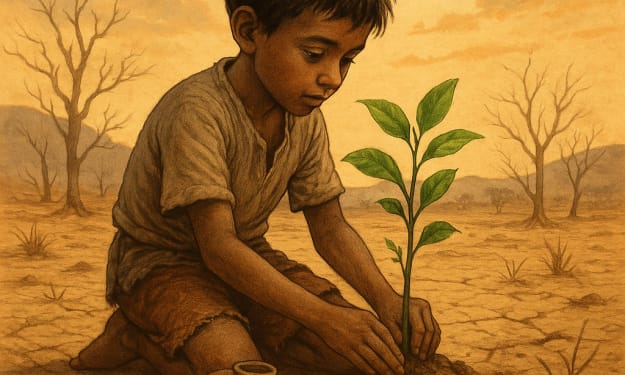
Who Planted Hope"
In a small, forgotten village on the edge of a vast desert, where dust covered every rooftop and the wind sang songs of sorrow, lived a boy named Ayan. He was no different from other children his age—barefoot, thin, and sunburned—but he carried a seed of something powerful inside him. Not a seed of grain or fruit, but a seed of hope.
By Rahimullah Mohmandabout a year ago in Motivation
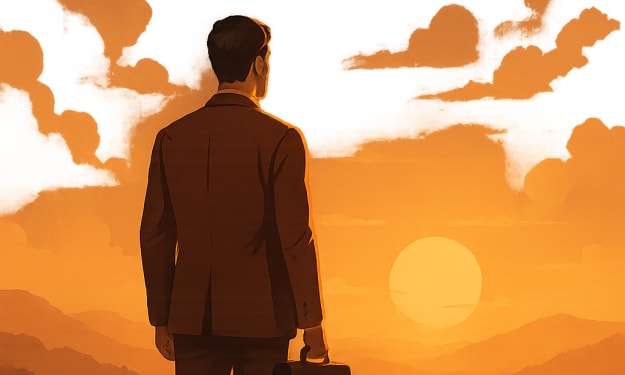
The Second Sunrise: A Story of Loss, Purpose, and Starting Again. Content Warning.
Part I: The Fall James Whitaker was the kind of man people admired from a distance—CEO of a growing tech startup, father of two, and a marathon runner. At 42, he had checked most boxes society labeled as “success.” But life has a strange way of asking: What if it all disappears? Who would you be then? On a rainy Tuesday morning in March, that question was answered in the most brutal way. A head-on collision with a truck took the lives of his wife, Laura, and their son, Ben, leaving only James and his 8-year-old daughter, Sophie, in the hospital. He woke up three days later to find a hole in his chest that would never fully heal. The world didn't just become darker for James—it stopped moving. He stepped down from his company, stopped running, stopped laughing. The man who had once led boardrooms and powered through 26-mile races couldn’t get out of bed without breaking down. Everyone told him to “take his time.” Grief counselors spoke of “stages.” But none of that mattered when the silence in the house echoed louder than any voice. One night, after tucking Sophie into bed, she whispered, “Daddy, are you still here?” That question shattered him—and saved him. --- Part II: The Awakening James realized that while he had lost a wife and a son, Sophie had lost half her world too. And now, she risked losing what was left—him. That was the night he made a promise: “If I can’t live for myself, I will live for her.” It started small. He began cooking breakfast again, even if it was just toast. He walked Sophie to school. He showered. These were victories—quiet and unseen—but they mattered. Slowly, days stopped being enemies and became blank canvases. A few months later, Sophie brought home a flyer: “Career Day.” Parents were invited to speak at school. “You used to be the boss of computers,” she said. James chuckled for the first time in months. He didn’t go as a CEO. He went as a dad who had a story to tell—not about business, but about rebuilding. He spoke to the children about resilience, explaining how even broken things can grow strong again. Afterward, a teacher pulled him aside and said, “You should speak more often.” And so he did. --- Part III: The Rise James began giving talks—not as a polished professional, but as a man who had walked through fire and came out not unburned, but unbroken. His story wasn’t filled with clever quotes or perfect solutions. It was raw, real, and rooted in hope. He created a podcast called The Second Sunrise, where he interviewed people who had survived loss, failure, and even near-death experiences. The theme was always the same: “Life ends more than once—but it can begin again, too.” Emails began to pour in. People who had lost jobs, marriages, parents, or children shared their stories. James listened. He cried with them. And he healed a little more with each message. He didn’t go back to running marathons, but he did jog again. Not to chase time—but to honor it. --- Part IV: The Gift Five years after the accident, James published a book: The Second Sunrise: How I Lost Everything and Found What Matters. It wasn't a bestseller. But it became a life-seller—it gave people a reason to believe again. He often said during his talks, “There is no going back to who you were. But there’s always a path to who you can become.” And Sophie? She grew up to be a social worker, inspired by her father's strength and vulnerability. On her graduation day, she hugged him and said, “You didn’t just survive, Dad. You lived. And because you did, so did I.” --- Final Thoughts: What This Story Teaches Us We often believe that life is linear—that we climb a ladder, tick boxes, and move forward. But real life is cyclical. There are rises, falls, and re-awakenings. What defines us is not the height of our success but the depth of our resilience. James’ story resonates not because he conquered the world—but because he continued in it. He teaches us that: Pain doesn’t mean the end; sometimes, it’s the beginning of something deeper. Even when you feel alone, someone—perhaps even your child—is looking to you for light. Purpose isn’t something you find; it’s something you create in the ashes of what you’ve lost. Life is fragile. But so is glass—and it still reflects light. --- Quote to End On: "The sun doesn’t rise just once. For those willing to look up, it rises again—and again—no matter how dark the night." — James Whitaker
By Fazal Maula about a year ago in Motivation
Reward and Punishment of Life:
In the heart of an old city filled with cobbled streets and whispering winds, lived a man named Arman. He was a quiet shopkeeper who ran a small bookstore on the corner of Market Street. His store wasn’t large, and his profits were never impressive, but he loved the smell of old pages, the rustle of stories, and the peace of a life lived slowly.
By syed waqar ahmedabout a year ago in Motivation
A Village Heart in an Urban World
In the heart of a bustling city, surrounded by skyscrapers, honking cars, and relentless routines, I often find myself pausing to listen—not to the noise around me, but to the quieter rhythm of where I come from. The village. The dusty paths, the sound of roosters at dawn, the laughter of barefoot children, and the peaceful rustle of wheat fields under the breeze. That world feels far away now, yet it lives in me—because I carry a village heart in an urban world. Where It All Began I was born in a small village tucked away in the mountains of Khyber Pakhtunkhwa, Pakistan. Life was simple—sometimes painfully so. We didn’t have much: no fancy gadgets, no fast food, no shiny malls. But we had each other. Neighbors were like family, and a shared meal meant more than any restaurant experience ever could. The village taught me values that no textbook could: respect for elders, the power of hard work, the beauty of silence, and the strength of community. But it also came with its limitations—especially for someone like me who had big dreams stitched quietly into the fabric of his mind. Stepping Into the Unknown My first day in the city was unforgettable. Everything moved faster, sounded louder, and felt bigger. I was a stranger here—lost in a sea of strangers. I barely understood the city’s language, not just literally but emotionally. People didn’t smile as easily. Time felt like money. Relationships were fleeting, and loneliness wore a new face. I remember feeling like I didn’t belong. My village accent made people laugh. My clothes made me look “different.” I was seen as unpolished, unprepared, even unintelligent. The city had sharp edges, and I was still too soft. But every time I wanted to give up, I remembered where I came from—not with shame, but with pride. My village had raised a fighter. My struggle wasn’t a sign of weakness—it was proof I was growing. Learning to Walk Tall Adapting to city life wasn’t easy. I had to work twice as hard to keep up—academically, socially, and emotionally. But I slowly began to discover that I didn’t need to erase my roots to succeed. In fact, it was those very roots that gave me strength. While others chased trends, I held onto values. While some got lost in the race, I stayed grounded in purpose. I didn’t have the polish of the urban-born, but I had grit—and that mattered more in the long run. I started reading more, writing better, and expressing myself more confidently. I learned the city’s ways, yes, but I didn’t let it change the core of who I was. And somewhere along the way, the boy from the village became a man who could walk through the city—not unnoticed, but unshaken. The Beauty of Dual Identity I am both—a child of the soil and a product of the streets. My feet still remember the feel of the earth back home, and my eyes have adjusted to the neon lights of the city. This dual identity is not a burden but a blessing. I know how to live simply, yet think ambitiously. I can be humble without being invisible. I can value tradition while embracing progress. And in a world that often demands you to pick a side, I stand proudly in between—proof that you can belong to both worlds without betraying either. Giving Back to the Roots Now that I’ve found a voice, I don’t want to just speak—I want to echo. I want to give back to the villages, not just with money but with meaning. I want young dreamers there to know that they can rise, not by abandoning who they are, but by believing in it. If I could speak to the younger version of myself, sitting on the rooftop of our mud house, staring at stars and wondering about a bigger world, I’d tell him this: “You’re not small because your world is small. You are as vast as your dreams. Your background doesn’t define your limits—it defines your strength. Carry your village in your heart, and the world will make space for you.” A Heart That Doesn’t Forget The city may offer opportunities, but it is the village that taught me what to do with them. The rush of success feels sweeter because I’ve known the silence of struggle. The pride of achievement is deeper because I’ve tasted the bitterness of failure. I never want to forget the scent of wet soil after rain, the taste of tea shared under a tree, the lullabies of my grandmother, or the prayers whispered into the wind. These are not just memories—they are anchors. They remind me of who I am, no matter how far I go. Inspiring Others Like Me If you’re someone who has traveled the same path—from a small place to a big one—know that your journey matters. It’s not just a change of address; it’s a transformation of the soul. You are proof that dreams are not reserved for the privileged—they are sparked in humble places, too. You don’t have to shed your skin to fit in. Keep your village in your voice, in your walk, in your values. It is your uniqueness that sets you apart. Let your roots fuel your rise.
By Sajid about a year ago in Motivation
Superstitions and inhuman social practices of Hinduism—An analysis
Superstitions and Inhuman Social Practices of Hinduism—An Analysis Although Hinduism is one of the oldest religions in the world, it contains many beliefs, rituals, customs, and traditions that challenge modern humanity and rationality. Even if the antiquity of a religion or philosophy honors it, if its practices are filled with superstitions and oppress people mentally and physically, then it is very important to question, analyze, and try to change that religious practice. Deep within Hinduism, there are many beliefs and practices that are scientifically unreasonable, socially discriminatory, and anti-human.
By Abdul Barikabout a year ago in Motivation