advice
Advice that will put you on the path to success; tips, tricks and nuggets of wisdom from trusted experts and motivational mentors.
Why Productivity Might Be Killing Your Creativity. AI-Generated.
In a world obsessed with productivity—where hustle is glorified, calendars are color-coded, and every minute must be accounted for—there’s an inconvenient truth we rarely stop to consider:
By Ahmet Kıvanç Demirkıranabout a year ago in Motivation
Top 10 High-Paying Jobs that will be in demand in the future
Top 10 Future Jobs That Could Change Your Life As we move deeper into the digital age, technology, sustainability, and data are transforming the global job market. Two professions, Artificial Intelligence and Machine Learning are leading the charge and are expected to see explosive growth over the next five years. But they’re not alone. Here are 10 careers of the future that could redefine your destiny. 1. AI and Machine Learning Specialists Artificial Intelligence aims to make machines think like humans—and AI specialists are the architects behind that mission. They design complex systems capable of solving problems, answering questions, and completing tasks usually done by people. Their work often involves handling vast datasets, training machines to make decisions, and pushing AI toward true autonomy. Machine Learning specialists, on the other hand, focus on teaching these AI systems to solve specific problems better and faster. While AI scientists build broad-thinking machines, ML experts fine-tune them for performance. Both roles are crucial—and found in every industry from finance to healthcare. There’s no single path into AI: many come from computer science, but others start in math, statistics, or engineering before transitioning into the field. 2. Environmental Sustainability Specialist As climate concerns rise, companies are hiring sustainability experts to reduce their carbon footprint and operate more responsibly. Whether it's cutting emissions, saving energy, or shaping eco-friendly policies, this role is all about guiding businesses toward greener practices. Sustainability specialists typically have backgrounds in environmental science but also need skills in data analysis and project management. The job is dynamic—and no two career paths into it look the same. 3. Business Intelligence Analyst This professional turns raw data into actionable business decisions. By analyzing internal processes, market trends, and performance metrics, BI analysts spot inefficiencies and suggest improvements. They need a strong mix of technical and business knowledge—blending data science, computer skills, and economics to help companies work smarter. 4. Information Security Analyst With cyberattacks on the rise, companies are fiercely protecting their digital assets. Enter the information security analyst: a professional who defends networks, databases, and sensitive information from hackers. These experts design security systems, monitor threats, and respond to breaches. A computer science degree is often required, and in some countries, cybersecurity certifications are a must. 5. Fintech Engineer Fintech engineers sit at the crossroads of finance and tech. They build the digital tools that power mobile banking, online investments, crypto platforms, and more. Fluent in programming languages like JavaScript, Ruby, PHP, HTML, and CSS, they also work with massive datasets and cloud infrastructure. Many of them are also well-versed in AI and machine learning—making them the tech backbone of modern finance. 6. Data Analysts and Data Scientists Both roles dive deep into data—but with slightly different scopes. Analysts usually work within specific goals set by their teams, while data scientists often define the questions themselves and build predictive models using machine learning. Data science is one of the fastest-growing fields in tech, and many professionals begin as analysts before moving up. Whether analyzing customer trends or building complex algorithms, both roles require strong statistical and programming skills. 7. Robotics Engineer These engineers build the robots that are transforming industries—from automated assembly lines to robotic surgery and even space exploration. They design, test, repair, and innovate robotic systems. Starting with a degree in robotics or a related field, engineers can specialize in areas like mechanical design or computer control systems. 8. Electrotechnology Engineer This umbrella profession covers electrical, electronics, and telecom engineering. These engineers design and maintain systems that power homes, factories, and communications. They’re vital in managing energy systems, ensuring the safety of electrical installations, and setting operational standards. Whether working on renewable energy or advanced communication networks, their skills are in high demand. 9. Farm Operator It may not sound futuristic, but modern farm operators are using high-tech machinery to revolutionize agriculture. From automated tractors and irrigation systems to post-harvest drones and AI-powered sensors, today’s farms are increasingly digital. Operators are hands-on with planting, harvesting, animal care, and logistics and they’re at the heart of global food production. 10. Digital Transformation Specialist In a world where technology evolves at lightning speed, digital transformation specialists help businesses keep up. They assess a company's needs, upgrade outdated systems, train staff, and introduce new tools to streamline operations. These professionals are agents of change—guiding organizations through the shift to digital workflows, cloud platforms, and emerging tech.
By Real contentabout a year ago in Motivation
Digital Self-Discipline: How to Resist the Scroll. AI-Generated.
In the age of smartphones, social media, and infinite feeds, we are all one thumb-flick away from losing an hour of our lives. What used to be moments of quiet—waiting for the bus, eating lunch, lying in bed—are now filled with scrolling. Endlessly. Mindlessly.
By Ahmet Kıvanç Demirkıranabout a year ago in Motivation
Learn French Faster
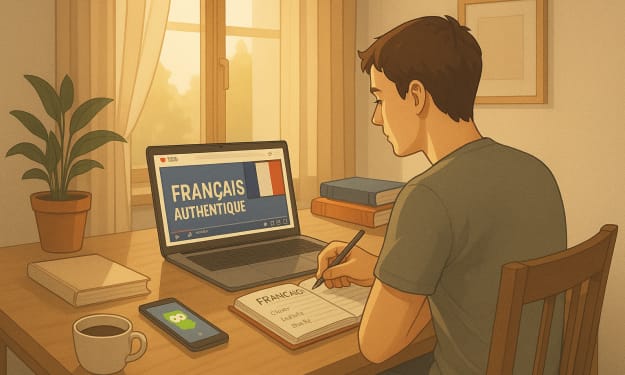
Why do some students seem to make incredible progress in French, while others feel stuck after months of lessons? The truth may surprise you: it’s not just about the teacher. No matter how skilled or passionate your tutor is, progress depends largely on what you do between classes. Learning French—or any language—is like learning an instrument: without regular personal practice, even the best lessons won’t take you far. If you’re taking lessons on platforms like Preply, great! But if you truly want to accelerate, you’ll need to become your own best coach outside of class. Here’s how.
By Bubble Chill Media about a year ago in Motivation
The Mother Who Gave Everything — and the Son Who Gave Nothing Back
The Mother Who Gave Everything — and the Son Who Gave Nothing Back Nasira was only twenty when her husband died in a road accident, leaving her alone with a one-year-old son named Haris. She had no education, no savings, and no family willing to help. But she had something stronger — a mother’s heart. She started stitching clothes for neighbors, working until her fingers bled and her eyesight blurred. Every rupee she earned went into Haris’s future — his milk, his books, his school fees. As Haris grew, so did her dreams. She never bought herself new clothes. She never joined weddings or celebrations. “Someday,” she whispered to herself, “he will become someone important. And I’ll be proud.” And he did. Haris was brilliant. He topped his classes, won scholarships, and eventually secured admission to a prestigious university abroad. Nasira wept with joy when she saw his plane ticket. “Now my son will fly where I never could,” she told the neighborhood. But life has a strange way of testing love. As Haris climbed the ladder of success, his tone changed. He stopped returning her calls regularly. He began replying with short, cold texts. When Nasira once sent him a voice message on WhatsApp, excitedly telling him she had saved money for his wedding, he didn’t reply for three weeks. And when he finally did, the reply was this: “Please don’t send voice notes. People here might think I’m poor.” That was the first time she cried silently — not from pain, but from shame. Years passed. Haris got a high-paying job. He visited Pakistan once — not to meet her, but to attend a school reunion. He stayed at a hotel, telling his friends that his mother had passed away years ago. Someone sent Nasira a photo of him at that event. She stared at it for hours. Her son — tall, handsome, smiling… Without her. She didn’t curse him. She didn’t call. She simply lit a candle, placed it beside the prayer mat, and prayed for his health and happiness. One day, a woman knocked at her door — a stranger. She introduced herself as Sofia, a journalist writing about forgotten heroes — especially single mothers. “I heard about your story,” she said. “May I write about you?” Nasira refused at first. But then she smiled faintly and said, “If someone remembers me, maybe he will too.” The article was published online with the title: “The Mother Who Raised a CEO — But Sleeps on a Mattress.” It went viral. Pictures of Nasira’s humble home, her sewing machine, and the medals Haris had won (still proudly framed on her broken shelf) flooded social media. People were enraged. Inspired. Moved. And Haris? He was humiliated. Investors questioned his character. Media demanded statements. And he finally flew back, cameras chasing him all the way. He arrived at her doorstep with gifts, apologies, and fake tears. But Nasira didn’t open the door. Through the iron gate, she spoke just one sentence: “I gave birth to a child. Not a brand.” And turned away. She wasn’t bitter. She was just done. Done sacrificing for someone who didn’t even remember where he came from. Today, Nasira still stitches clothes. Not for survival — but to keep her hands busy. Her heart, however, remains beautifully broken. Because love — real love — doesn’t always come back. But it never leaves either.
By Noman Afridiabout a year ago in Motivation
Everyone Thought I Was Fine. I Wasn’t.
I laughed at the right moments, showed up on time, replied to texts with smiley faces, and never said “no” when someone needed something. I was the “strong one.” The “resilient” one. The one who “always keeps it together.”
By majid aliabout a year ago in Motivation