advice
Advice that will put you on the path to success; tips, tricks and nuggets of wisdom from trusted experts and motivational mentors.
Chasing Everything, Catching Nothing
Chapter 1: Racing the Treadmill of Life Marina blinked at her phone as it pinged again—another group chat conversation about weekend plans, another email from her boss, another fitness tracker nudging her to take more steps. Lunch break, 11:37 a.m., a quiet corner at work. She scrolled one-handed through a sea of updates:
By Muhammad Saqibabout a year ago in Motivation
How to Keep Up
It began on a Monday morning—the kind that doesn’t knock, just barges in. Eli stared at their phone. Eleven notifications from work, four texts from friends asking about the weekend, a calendar full of meetings, and a fitness app chirping: “You’re behind on your step goal!”
By Muhammad Saqibabout a year ago in Motivation
Unlocking Your Brain: Proven Ways to Boost Memory Power
Memory is one of the most essential functions of the human brain. It enables us to retain knowledge, build skills, and shape our experiences. Yet, in the fast-paced, information-overloaded world we live in, many people struggle with forgetfulness, lack of focus, or poor recall. The good news is that memory isn’t fixed—just like physical strength, it can be trained, enhanced, and optimized through lifestyle choices, mental exercises, and healthy habits. Below are scientifically supported methods to boost your memory power effectively.
By Abdul hasib Habibiabout a year ago in Motivation
The Day I Quit My Job to Build My Own Business
It was a Tuesday. Not the beginning of the week, not the weekend rush—just a regular, uninspiring Tuesday. I was staring at my screen, fingers hovering over the keyboard, pretending to look busy while inside, I was screaming. My corporate job paid well, offered benefits, and had no major red flags. But I was suffocating. Every day felt like I was living the same 9-hour loop. Wake. Commute. Pretend. Eat lunch in silence. Pretend again. Commute. Sleep. Repeat.
By Muhammad Saqibabout a year ago in Motivation
The Unspoken Loneliness Epidemic No One Wants to Admit
We live in a world where connection is at our fingertips, yet so many of us feel devastatingly alone. We can scroll, swipe, heart, like, and react — but none of it seems to satisfy the deeper need for human closeness. In fact, despite more than 5 billion people being online and virtually linked, loneliness has silently grown into one of the most widespread and painful epidemics of our time.
By Hamad Haiderabout a year ago in Motivation
How I Built a $10K/Month Side Hustle with Zero Followers
You don't need a million followers, a six-figure investment, or a viral TikTok to change your financial life. I started with none of those things. What I did have was rent due, a laptop, and the stubborn belief that there had to be a smarter way to earn money than giving all my energy to a job I hated.
By Hamad Haiderabout a year ago in Motivation
Building a Life I Don’t Want to Escape From
For years, I lived in survival mode. Waking up each morning already tired. Clocking into a job that drained me. Saying “yes” when I meant “no.” Counting the days until Friday. Scrolling endlessly to feel something. Dreaming about vacations, getaways, or any life but my own.
By Irfan Aliabout a year ago in Motivation
The Attention Economy Is Stealing Your Mind. AI-Generated.
Your attention is no longer just yours. It’s a commodity—fought over, tracked, optimized, sold. In the 21st century, the most valuable asset isn’t gold, oil, or data. It’s your focus. And in a world of constant pings, scrolls, alerts, and algorithms, that focus is being stolen—not with violence, but with design.
By Ahmet Kıvanç Demirkıranabout a year ago in Motivation
If You Can’t Raise My Head, Don’t Lower It
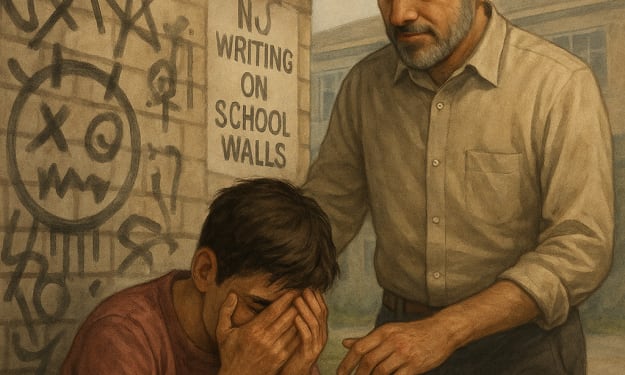
If You Can’t Raise My Head, Don’t Lower It By{Muhammad Faizan}. It was an ordinary school morning. The soft golden sunlight filtered through the trees as I arrived at the school gate, just like every other day. As the headmaster of a government secondary school, I took great pride in keeping the institution clean, disciplined, and well-organized. But that morning, something deeply disturbing caught my eye. The school’s outer walls—freshly painted only a few months ago—were now covered in graffiti. Someone had spray-painted crude drawings and vulgar words all over them. My eyes immediately went to the signboard I had placed myself: "Writing on the school walls is strictly prohibited." The sight of those defaced walls felt like a personal wound. This wasn’t just vandalism—it was an insult to the values we worked so hard to instill in our students. My heart sank. Once inside, I immediately called a staff meeting. I asked the administrative assistant to bring the attendance records and class logs. I wanted to find out who had done this—not to punish them, but to help them understand the weight of their actions. After some investigation and questioning a few students, we narrowed it down to one boy. He was in Grade 9. Quiet, not very disruptive in class, but clearly troubled in ways we hadn’t noticed before. I didn’t confront him directly that day. Instead, I called his father. ello, this is the headmaster speaking. I need to speak with you about your son. Could you please come to the school tomorrow morning?” The next day, the boy’s father arrived. He was a humble man, respectful in demeanor and calm in tone. I narrated the whole incident and then gently told him: “We have reason to believe that your son is responsible for the graffiti on the school walls.” He listened quietly and asked me to call his son in. When the boy entered the office, he kept his head down. His father, in a gentle voice, asked: “Son, did you do this?” The boy hesitated, then slowly nodded. “Yes, father. I did it.” What happened next took me completely by surprise. The father didn’t raise his voice. He didn’t slap his son or scold him. He didn’t even express visible anger. Instead, he calmly pulled out his phone and called a local painter. He said: “Please come to the school. I need you to repaint the school’s boundary walls.” Then he turned to me and said: “Sir, I will restore the walls at my own expense. Please allow the painter to begin.” I was stunned. I expected anger, maybe even denial. But this man’s composure and responsibility left me speechless. Before leaving, he placed his hand softly on his son's head and said one sentence that I will never forget: “Son, if you can’t raise my head with pride, at least don’t do something that lowers it.” And with that, he turned and walked away. As I turned to look at the boy, I noticed he had buried his face in his hands—and he was crying. Tears streamed down his cheeks, not because he had been punished, but because of the pain in that one sentence. I asked him softly: “Your father didn’t scold you, didn’t beat you, didn’t even raise his voice. Then why are you crying?” The boy wiped his tears and said: “Sir… I’m crying because I wish he had hit me. I wish he had shouted at me. But what he said hurt more than anything else. His disappointment broke me.” --- The Turning Point That single moment became a turning point in the boy’s life. In the weeks that followed, I watched him change completely. The once quiet and disconnected boy became one of our most active students. He began arriving early to school, participated in classroom discussions, and joined various extracurricular activities. He volunteered to help repaint the walls, joined the cleanliness committee, and even contributed articles to the school magazine. More importantly, he started helping other students—especially those who were struggling like he once was. His academic performance improved, and by the end of the year, he had become one of the top-performing students. It was incredible. --- A Father’s Method: The Power of Words In a world where many parents resort to harsh punishments, threats, or emotional detachment, this father chose a path of wisdom, empathy, and responsibility. He didn’t let his son off the hook. He made sure the damage was fixed. But he also ensured that his son understood the moral damage—not just the physical one. He spoke not to his son’s fear, but to his heart. That one sentence: “If you can’t raise my head, don’t lower it…” —had more power than any beating or punishment ever could. It carried weight, honor, and trust. --- The Boy’s Transformation Months later, I asked the boy, now a school prefect: “How did you change so much?” He smiled and said: “Sir, that one sentence from my father changed everything. I realized I never want to see that look in his eyes again. He didn’t humiliate me… but he made me realize what I had done. That kind of love is rare. And I want to make him proud now—not ashamed.” --- Conclusion: A Lesson for All Parents and Educators This true story carries a message for all of us: Discipline doesn’t always require anger. Correction doesn’t always require punishment. And transformation often comes from empathy, not fear. Talk to your children. Guide them with love. Make them feel accountable, not afraid. Sometimes, a single sentence filled with wisdom can change a life forever.
By Muhammad Faizanabout a year ago in Motivation
Escaping the Algorithm: What Social Media Taught Me About Freedom
When I was a teenager, the internet felt like freedom. I could talk to people across the world, share my thoughts, laugh at memes, and dive deep into rabbit holes that sparked my curiosity. It was magical. But somewhere between my teenage years and adulthood, that sense of freedom began to rot.
By nawab sagarabout a year ago in Motivation