advice
Advice that will put you on the path to success; tips, tricks and nuggets of wisdom from trusted experts and motivational mentors.
AI Spark-How WhatsApp Integration Can Take Your Marketplace to the Next Level
What is AI Spark? AI Spark is a game-changing platform that allows businesses to integrate AI-powered chatbots with WhatsApp Business. This revolutionary integration provides businesses with an easy and efficient way to communicate with customers and automate routine tasks, thereby improving engagement and customer satisfaction.
By aty belastegui3 years ago in Motivation
Physiological facts
Psychological facts are interesting pieces of information about the workings of the human mind, behavior, and emotions. As a field of study, psychology is concerned with understanding how individuals perceive, think, feel, and interact with each other and the world around them. In this article, we will explore some fascinating psychological facts that shed light on human behavior. 1. Body language speaks louder than words Body language is a powerful communication tool that can convey more information than words alone. Research has shown that nonverbal cues, such as facial expressions, gestures, and posture, can reveal a person's emotions, attitudes, and intentions. For example, crossed arms can indicate defensiveness or discomfort, while eye contact can convey confidence and interest. 2. We are wired to seek social connection Humans are social creatures who are biologically wired to seek connection with others. Research has shown that social isolation and loneliness can have negative effects on physical and mental health, while social support can promote well-being and resilience. 3. Our memories are fallible Our memories are not always accurate and can be influenced by various factors, such as emotions, expectations, and biases. For example, the way a question is phrased can influence how we remember an event, and our memories can be distorted by hindsight bias, which is the tendency to view past events as more predictable than they actually were. 4. Emotions are contagious Emotions are contagious, and we can pick up on the emotional states of others through facial expressions, tone of voice, and body language. Research has shown that emotional contagion can occur even through social media, where people can pick up on the emotions of others through posts and messages. 5. We have a tendency to conform Humans have a natural tendency to conform to social norms and the behavior of others. This tendency can be seen in various contexts, such as group decision-making, where individuals may conform to the opinions of others to avoid conflict or gain social acceptance. 6. We are susceptible to cognitive biases Cognitive biases are errors in thinking that can lead us to make irrational decisions and judgments. Examples of cognitive biases include confirmation bias, which is the tendency to seek out information that confirms our beliefs, and the halo effect, which is the tendency to judge people or things based on one characteristic or trait. 7. Our sense of time is subjective Our perception of time is not always accurate and can be influenced by various factors, such as age, mood, and attention. For example, time can seem to fly by when we are having fun, while it can drag on when we are bored or anxious. 8. We are more motivated by intrinsic than extrinsic rewards Research has shown that people are more motivated by intrinsic rewards, such as a sense of accomplishment or enjoyment, than by extrinsic rewards, such as money or praise. This suggests that creating a sense of meaning and purpose in our activities can be more effective in motivating us than external incentives. 9. Our beliefs can shape our reality Our beliefs and expectations can influence our perceptions and behavior. For example, the placebo effect is a phenomenon in which a person's belief that a treatment is effective can lead to improvements in their symptoms, even if the treatment is inactive. 10. We have a natural negativity bias Humans have a natural tendency to focus more on negative experiences than positive ones. This negativity bias may have evolved as a way to prioritize threats and avoid danger, but it can also lead to negative thinking patterns and anxiety.insights into the complexities of human behavior and thought. 11. Our attention is limited Our attention is a finite resource, and we can only focus on a limited amount of information at any given time. This can lead to attentional biases, such as selective attention or inattentional blindness, which can influence our perception of the world around us. 12. We are influenced by our environment Our behavior and attitudes can be influenced by our environment, such as the physical space we occupy, the people we interact with, and the cultural norms we are exposed to. This can be seen in various phenomena, such as the bystander effect, where individuals are less likely to help in an emergency situation when there are others present. 13. We have a natural need for autonomy Humans have a natural need for autonomy, which is the desire to have control over our lives and decisions. This need can be seen in various contexts, such as the workplace, where autonomy can lead to higher job satisfaction and motivation. 14. We are influenced by our past experiences Our past experiences can influence our current behavior and attitudes. This can be seen in various psychological phenomena, such as classical conditioning, where a neutral stimulus can become associated with a particular response through repeated pairings. 15. We have a limited capacity for self-control Our ability to exert self-control is limited, and it can be depleted by various factors, such as stress, fatigue, and temptation. This can lead to impulsive behavior and poor decision-making. 16. Our emotions can influence our reasoning Our emotions can influence our reasoning and decision-making, and they can be both positive and negative influences. For example, a positive mood can lead to more creative thinking, while negative emotions can lead to biased thinking and poor judgment. 17. We have a tendency to overestimate our abilities Humans have a natural tendency to overestimate our abilities, which can lead to overconfidence and underestimating the difficulty of tasks. This can be seen in various contexts, such as driving, where people may overestimate their driving skills and take unnecessary risks. 18. We are motivated by a sense of purpose Humans are motivated by a sense of purpose and meaning, and this can be a powerful driver of behavior. Research has shown that having a sense of purpose can lead to higher levels of well-being and greater resilience in the face of adversity. 19. Our personality is a complex interplay of factors Our personality is a complex interplay of genetic, environmental, and cultural factors, and it can change over time. Personality traits can influence our behavior, attitudes, and relationships with others. 20. We are capable of change Despite the many psychological factors that influence our behavior, humans are also capable of change and growth. This can be seen in various forms of psychotherapy, which aim to help individuals overcome psychological challenges and develop more adaptive behaviors and attitudes. In conclusion, psychological facts provide valuable insights into the workings of the human mind and behavior. Understanding these facts can help us better understand ourselves and others, and make more informed decisions about our lives. Whether we are studying psychology as a field of research or simply seeking to improve our personal well-being, these facts offer fascinatingOverall, psychological facts provide a fascinating look into the complexities of human behavior, thought, and emotion. By understanding these facts, we can gain greater insights into our own minds and behavior, and develop strategies to improve our personal well-being and relationships with others.
By Emmanuel destiny 3 years ago in Motivation
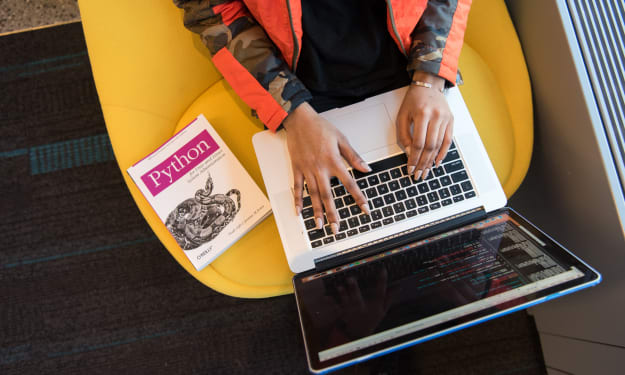
The Benefits of Using a MacBook for Software Development
When it comes to software development, having the right tools is crucial for success. While there are many options available on the market, one computer that stands out is the MacBook. In this article, we'll explore the benefits of using a MacBook for software development.
By Ömer Akşit3 years ago in Motivation
Top 10 ways to reduce stress and improve mental health
The world can be a stressful place. There are so many things that we have to deal with, from work and family obligations to financial concerns and health problems. And while stress is something we all experience at some point in our lives, it’s important to remember that not every problem requires an immediate reaction or solution. If you’re feeling overwhelmed by life’s challenges — and who isn’t sometimes? — we’ve got some tips on how you can reduce stress and improve your mental health:
By Meli Caramely3 years ago in Motivation
Don't Settle
Introduction We all have dreams and aspirations, but too often we settle for less than we deserve. We make compromises, take the easy way out, and settle for mediocrity. But settling is a surefire way to miss out on opportunities and experiences that could change our lives for the better. In this article, we'll explore the importance of not settling and how to pursue your dreams and ambitions.
By YathirajaSampathKumar K R3 years ago in Motivation
Healthy Eating on a Budget: How to Make Nutritious Meals Without Breaking the Bank
Eating a nutritious diet is important for maintaining good health, but it can be challenging when you're on a budget. Many people assume that eating healthy means spending more money on food, but that's not necessarily true. With some planning and creativity, it's possible to make delicious and nutritious meals without breaking the bank. In this article, we'll explore some tips and strategies for healthy eating on a budget.
By Sandy.3 years ago in Motivation
My Shadow Never Changes
Throughout my life, my shadow has been an unwavering companion, doggedly trailing my every step and action. In my youth, I would play games with my shadow, coaxing it into lively dances, jumps, and sprints that were a delightful interplay of light and movement. As I matured, however, my relationship with my shadow underwent a metamorphosis, and it became a mirror of myself and a symbol of my connection to the world.
By RK Bhanu3 years ago in Motivation