
Quaid-e-Azam: The Man Who Turned a Dream into a Nation
A powerful story of determination, leadership, and unwavering belief
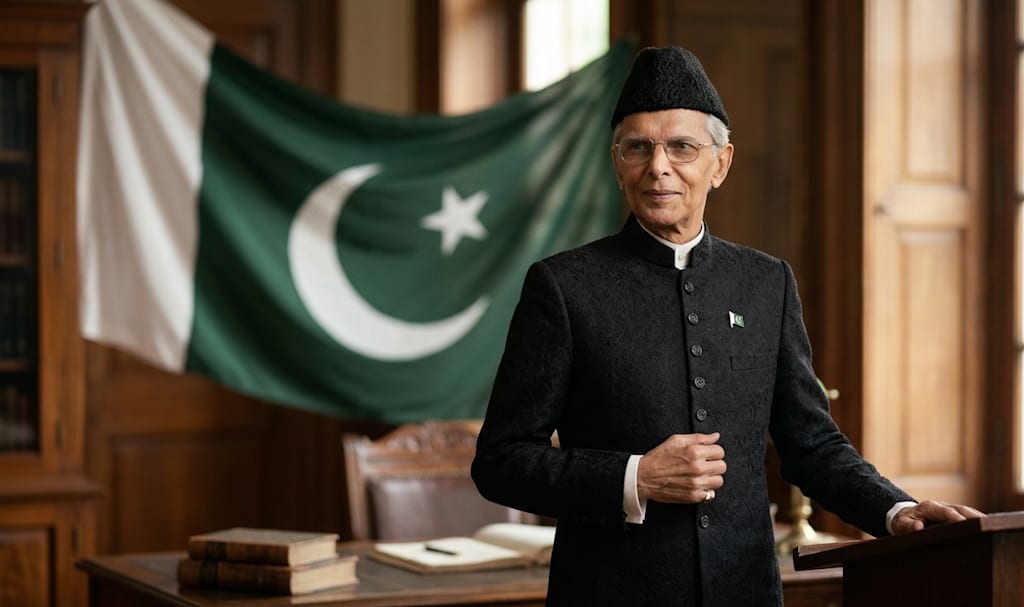
In the late nineteenth century, when the subcontinent was under British rule, a child was born in Karachi who would one day change the destiny of millions. His name was Muhammad Ali Jinnah. No one could have imagined that this quiet, disciplined boy would grow into a leader whose vision would lead to the creation of a new nation.
Jinnah’s early life was marked by a strong desire to learn and excel. He received his initial education in Karachi and later traveled to London to study law. In those years abroad, he developed not only a deep understanding of the legal system but also a refined sense of discipline and confidence. He admired constitutional methods and believed that justice must be achieved through law, reason, and perseverance.
When he returned to India, Jinnah began his career as a lawyer in Bombay. He quickly gained a reputation for his sharp mind, honesty, and powerful arguments. People respected him not just for his intelligence but for his integrity. He did not compromise on principles, even when it was difficult.
At that time, the political situation in the subcontinent was complex. Different communities had different concerns, and the demand for rights was growing. Jinnah initially worked for unity among all communities and believed in cooperation. He joined the Indian National Congress and also became associated with the All-India Muslim League, hoping to create harmony and mutual understanding.
However, over time, Jinnah realized that the concerns of Muslims were not being adequately addressed. He saw that political representation and protection of rights were essential for the future of the Muslim community. This realization marked a turning point in his life.
Jinnah’s leadership style was unique. He was calm, composed, and firm. He did not rely on emotional speeches alone; instead, he presented logical arguments and clear demands. His belief was simple: a community must have the power to shape its own future.
One of the most significant moments came in 1940 during the historic Lahore Resolution. This resolution laid the foundation for the demand of a separate homeland for Muslims. Many people opposed the idea, and challenges were immense. Critics doubted whether such a vision could ever become reality.
But Jinnah did not give up.
He traveled extensively, met people from all walks of life, and strengthened the movement with determination and clarity. His message was consistent: unity, faith, and discipline. He believed that with these values, any challenge could be overcome.
The journey toward independence was not easy. There were political struggles, negotiations, and moments of uncertainty. Yet Jinnah remained steadfast. He faced pressure from different sides but never lost sight of his goal.
Finally, in 1947, history was made. After years of struggle, sacrifices, and relentless effort, Pakistan came into existence. It was a moment of joy and relief for millions who had dreamed of a separate homeland.
On 14 August 1947, Jinnah stood as the founding father of the new nation. He became the first Governor-General of Pakistan. In his speeches, he emphasized justice, equality, and freedom of religion. He envisioned a country where every citizen, regardless of background, would have equal rights and opportunities.
But independence also brought challenges. The newly formed country faced issues such as migration, lack of resources, and administrative difficulties. Millions of people moved across borders, leaving behind homes and memories. It was a time of both hope and hardship.
Despite his declining health, Jinnah worked tirelessly to stabilize the nation. He guided the government, inspired the people, and laid down the principles that would shape Pakistan’s future. His dedication was extraordinary. Even when he was physically weak, his determination remained strong.
Jinnah’s life teaches us many lessons. He showed that leadership is not about power but about responsibility. He proved that determination and clarity of vision can overcome even the most difficult challenges. Most importantly, he demonstrated that one individual, with strong belief and unwavering commitment, can change the course of history.
Today, he is remembered as Quaid-e-Azam, the Great Leader. His legacy lives on in the hearts of the people and in the foundation of the country he helped create. His message of unity, faith, and discipline continues to guide generations.
As we look back at his journey, we see not just a political leader but a man of principles, courage, and vision. A man who turned a dream into reality.
💡 Moral
Great nations are built by those who believe in their vision, stay committed to their principles, and never give up in the face of challenges.
About the Creator
Enjoyed the story? Support the Creator.
Subscribe for free to receive all their stories in your feed.
Comments
There are no comments for this story
Be the first to respond and start the conversation.