
How to actually make people like you.
The Charisma Code: How to Master Presence, Warmth & Power

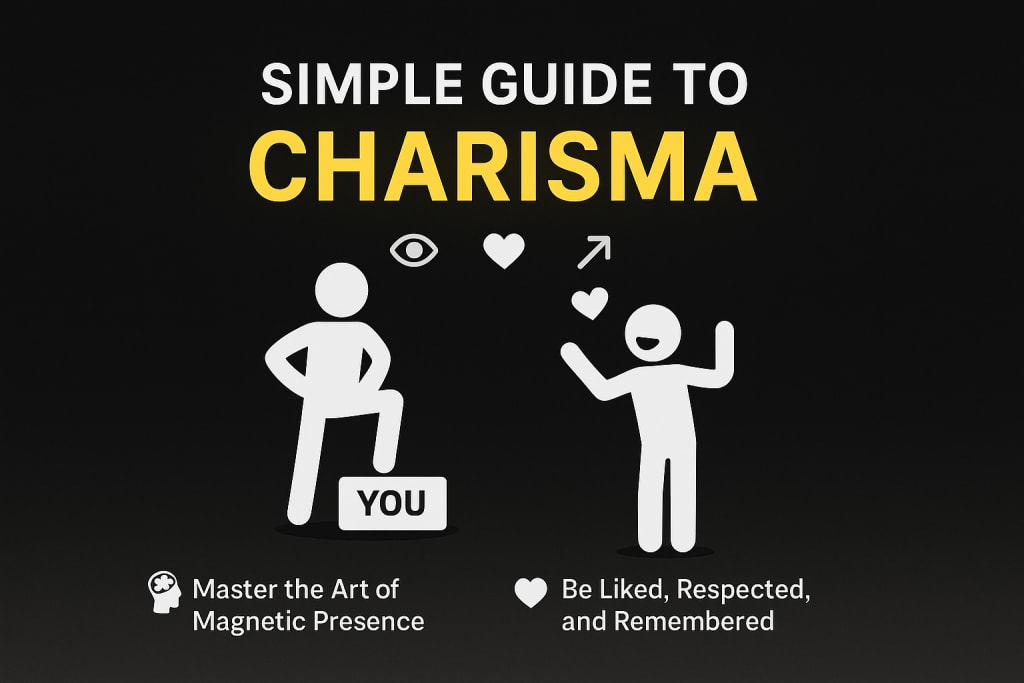
My Journey from Socially Awkward to Charismatic
I spent my childhood and adolescence as an introverted person. I never had friends and couldn't form friendships or acquaintances in real life. Until one day, I became interested in the concept of social skills. I started reading books like How to Win Friends and Influence People and How to Talk to Anyone, and I was watching videos about social skills. But do you know what happened? Nothing. None of that helped me, and I never knew why.
Until the day I started studying psychology and specialized in human behaviors. There I realized that everything society tells us about social skills—and all those pieces of advice we hear—are just nonsense that doesn't help at all. I realized that the solution to my problem wasn't making eye contact or constantly repeating the name of the person I'm talking to. All these are superficial things that don't have much value. The problem was in my personality and the way I behaved.
And I found out that having charisma and being liked by people is a very easy thing. So I promise you that if you watch this video to the end and apply what I'm going to tell you, people will become addicted to you.
Welcome to the second episode of the Social Skills Series. Let's talk about charisma.
The Three Elements of Charisma
Charisma consists of three elements: presence, warmth, and power. We will try to understand each one of these elements well, but it's necessary to apply them together. If the balance is disrupted, a problem will occur.
1. Presence
In 1886 in the UK, two people ran for elections. When the elections were nearing their end, they asked a journalist about her opinion of the candidates. She told them:
- "The first person makes me feel that he is the strongest person in the UK."
- "The second person makes me feel that I am the strongest person in the UK."
In the end, the person who won was the second one.
So the first rule we have in this video is that you don't need to show your strength to have charisma. Instead, you need to make the other person feel that they are strong.
How will you do that? Through presence.
When you talk to someone, you have to focus on what they're saying. You have to be a good listener. This advice about being a good listener—you might hear a lot, and you may continue hearing phrases like:
- "Maintain eye contact."
- "Nod your head."
- "Smile."
Look, I could come now and instead of telling you to be a good listener, start telling you:
- "You must make eye contact."
- "You must keep asking questions."
- "You must open your hands."
- "You must keep smiling."
We'll go through all this, but I'll sum it up for you in one sentence:
When you talk to someone who is speaking, don't think about what you will say. Listen to what they are saying.
It's not important what will happen after they finish talking. Just listen. Because this is the biggest mistake people make. When someone is speaking, instead of listening, they keep thinking about what they should say.
"Ah, should I ask him so I seem interested in what he's saying?"
No. Just listen. And that's it. Care about what they're saying.
You might ask: "How will he know that I'm listening to him?"
He will feel it. How? We'll answer this in the next part of the video about warmth. Just wait.
But what I want to convey to you is that when someone is talking to you, just listen. And that's it. What you will say afterward will come naturally.
Now, this may seem simple to you, but few people do it. And that's why if you're sitting among people and someone is speaking, there's a high chance that none of those sitting are truly listening. So if you're the person who listens, this will make the speaker feel a connection, and they'll start talking to you more than others.
Without you noticing, you'll find everyone just wants to talk to you. Everyone wants to listen to you. Why? Because when you listen to someone, you give them value. And value is the thing people search for the most.
That was the first aspect of presence.
The second thing is that you have to be comfortable. This is important, and you need to remember it throughout your life. Whether you're sitting among people, sitting alone in a café, or talking with someone, you have to be comfortable. Your body language and everything about you should be relaxed.
Again, the other person will unconsciously sense whether you're comfortable or not. If you're not comfortable, it gives the impression to the other person that you don't want to be with them.
How to be comfortable? Quite simply, be at ease. Be spontaneous.
I don't need to tell you again to:
- "Sit up straight."
- "Open your legs."
- "Open your hands."
- "Laugh out loud."
This isn't important. If you can convince yourself to be comfortable from the inside, your body language will follow.
What does it mean to be comfortable in the first place?
Suppose you're sitting and you feel a sneeze coming. If you feel shy and think, "I'll try to suppress it," then you won't be comfortable. You need to be spontaneous.
Understand that you have the right to be yourself as long as you don't harm anyone else. That is, if you feel a sneeze coming, it doesn't matter who's next to you—whether it's a man, a woman, your boss, or people you don't know. Just let it out. Sneeze with all your might. And no one will mind. And even if they do, what's the problem after that?
This is charisma. You're sitting comfortably. Do what you want, and no one will care.
When you do what you like, those with you feel closer to you. Because, for example, when you're sitting with your brother or your mother, how are you? You're comfortable, unconcerned, and spontaneous. Do the same with your friends and other people. Sit comfortably, and this will make them feel closer to you.
Moreover, they will also start behaving comfortably around you. You want to sneeze? You want to sleep? You want to laugh out loud? You want to say something? Do what you want. Just don't harm anyone. And that's it.
This was simply presence:
You relax to make others relax with you.
- You listen to the other person.
- Now, let's move on to the second element of charisma.
2. Warmth
This element is called warmth—meaning kindness, gentleness, affection, love.
So listen to me carefully on this because it's important. Being kind and compassionate doesn't mean you keep praising others and do whatever they ask you to do. Why? Because if you're being nice just to have charisma and be liked, that's called hypocrisy.
That's why people don't like a "nice person"—because he often doesn't act naturally and is being hypocritical.
So how do you apply the second element of charisma?
First, you have to understand that we humans—we people—don't communicate through words alone. Only 7% of the communication process depends on words, and 93% depends on body language, feelings, and emotions.
For example, one day you talk to someone who is speaking normally and sitting normally, but quite simply, he didn't touch your heart, and you didn't know why. The reason lies in his feelings—in his emotions.
Meaning, for instance, you don't like doctors. If one day you talk to a doctor, even though you don't show him this dislike and you speak normally, that energy coming from you—he will feel it and won't like it. And you won't touch his heart.
This happens without him knowing why. He will just say, "I didn't like that person," and the reason is that you didn't want him.
Your feelings and emotions play a big role in whether that other person will want to be around you or not.
So when you come to talk to someone, always assume that he is a good person. Look at his good qualities. But listen carefully—if this person is someone you already know and you know he is not a good person, that's another matter. Why would you want to impress someone you don't like in the first place?
But when you meet someone for the first time or talk to one of your friends, feel inside yourself admiration for that person. Be enthusiastic about talking with him. Feel that you want to listen to him.
This inner feeling will come out of you without you realizing it and will reach him. And you will touch his heart without him knowing why. And he will touch yours too. Because as humans, we share feelings.
If you're comfortable in talking to someone, he will also feel comfortable. If you're angry, he will become tense. If you want to be with him, he will also want to be with you.
The important thing is to always look at the person as a good person. Of course, within limits—not that you trust him completely or something like that. Just expect that the person is a good person.
This was the first point in warmth.
The second point is the power of giving. You add value to a person's life by giving advice. But listen—you give advice, but don't impose it.
For example, you're sitting with your friends, and someone says to you, "I want to rent a house," without asking you anything else. He just says, "I want to rent a house," and that's it. You know a website with houses for rent. What do you do?
Don't stay silent and uninterested. No. Tell him about the website you know. Give him information or advice. But don't impose your advice on him.
That is, don't tell him the website, take out your phone, go through it, and keep saying, "Look at how the houses are," and then send him the link on WhatsApp. When you meet him again, don't ask, "Did you check that site? Did you see?"
It's enough to give him the information, and that's it. If he asks you or says, "Send me the link," you send it to him. But don't follow up with him.
The important thing is to give something to your friends and the people around you. If you know something, don't stay silent. Share information. Giving is a beautiful thing—but in the right way. And I've told you how: you give advice, but you don't impose it.
The third point in this warmth is acceptance, understanding, and honesty—plus doing all this in a positive way.
You were talking to someone, and he said, "I like football. Do you like it?" And let's suppose you don't like football. So don't say, "I also like football," just to seem agreeable with him. Because one day, he'll find out you're lying.
And if you keep agreeing with someone on everything, he'll feel you're boring.
First of all, you don't like football, so you'll tell him, "No, I don't like football." But as we said before—acceptance, understanding, and honesty.
Even though you don't like football, you accept this idea. You accept that he likes it. Not that you start telling him, "Oh, football is boring. What do you gain from it? It's a waste of time," and so on.
With those words, people who are hard to get along with speak.
You have to accept the person as he is, understand him, and at the same time, be honest. Each of these should stand alone, but I wanted to combine them to save time.
Meaning:
- Be honest. If you don't like something, say, "I didn't like it."
- If you didn't agree with him on something, say so.
- If you liked something, say so.
Your friend wore a hat, and you liked it? Tell him, "That hat suits you." Praise should be like that—but it must be sincere.
Also, if your friend wore something you didn't like, you can say, for example, "I didn't like that shirt," and add, "It didn't suit you."
If it's someone you have that kind of relationship with—meaning you share advice but briefly.
Here we return again to what we said earlier: don't keep insisting and keep following up.
Be honest with him, and at the same time, accept him. Accept the other. Be honest. Share advice and value. Sympathize with him and love him.
These are the components of warmth. This is how you should be kind. This is true kindness.
But presence and warmth without power will not make you charismatic.
3. Power
I left this element—which is power—until the end because it requires a lot of discussion. To have that inner strength, you need self-confidence and a strong personality. And this topic needs a dedicated video on its own.
But I'll try to give you some ideas quickly.
First, don't talk about yourself too much, and don't seek others' approval.
This is a point I discussed in the previous episode of this series. Please go back and watch it after you finish this video because I explained this topic well.
Secondly, don't be afraid to confront people.
Your principles and what you believe in are personal to you, and you shouldn't be afraid of them.
For example, you don't drink alcohol. That's a principle you hold. If one day you're sitting with some friends who are drinking, and they say to you, "Go ahead, have a drink," you should simply tell them, "No."
Even if logically there's no reason not to drink, despite that, say, "No," and that's it.
The same applies to anything else. There are some matters considered red lines. If someone tries to cross them, you must stop them and not allow them to overstep those boundaries.
In the context of this idea about confronting people, if you want something, don't be afraid to say it.
For instance, you were eating in a restaurant and found a hair in your food. You can get up and tell them about it, and you don't have to pay for that meal.
Our third point is strong body language.
Look, body language has a significant connection with your psyche. If you feel strong mentally and internally, this will reflect in your body language. And if you can't feel the strength, you can adopt strong body language, and this will affect you psychologically.
I'm not going to tell you:
- "Stand in a certain way."
- "Open your hands."
- "Lift your leg."
But what I'll say is: be comfortable.
What I told you earlier, I'll repeat now: be comfortable and don't worry. Do what you want. When you're comfortable and let your hands and legs move freely, this will reflect internally, and you'll feel strong.
Imagine yourself as the strongest person in the place you're in. How would you act? You take your place and sit comfortably. And this is what you should try to maintain in your body language.
One last thing: watch the self-confidence video I made in this series because this series is about social skills. Its episodes are interconnected, and it will change your idea about yourself and your way of thinking.
And here we have finished the ARTECEL.
Don't forget: the benefits of charisma are more important than just making people like you and accept doing what you want. Charisma will help you work efficiently, advance in your career, and succeed in your life in general.
Your Next Step: From Theory to Transformation
This is just 10% of what Alpha Aura covers. In the book, you’ll get:
- 🔥 The "90-Second Charisma Drill" – Hook anyone in under two minutes.
- 🔥 Voice Alchemy – Transform your vocal tone to command rooms.
- 🔥 The Power Gaze – A scientificaly proven stare that boosts perceived authority by 68%.
👉 Click Here to Download Alpha Aura Now 👈
"The difference between invisible and unforgettable is one book away."
Final Thought
Charisma isn’t about manipulation—it’s about becoming the best version of yourself. Start today. The world rewards those who master human connection.
Question for You: Which pillar (Presence, Warmth, Power) do you struggle with most? Comment below.
About the Creator
amine lwajdi
Shaped by society to play a role that wasn’t mine, I spent years living a life designed by others. Now I help people break free and walk the path toward the life they truly desire—and deeply deserve.
Enjoyed the story? Support the Creator.
Subscribe for free to receive all their stories in your feed.
Comments
There are no comments for this story
Be the first to respond and start the conversation.