
How Small Habits Lead To Big Changes
Dive Into Personal Growth
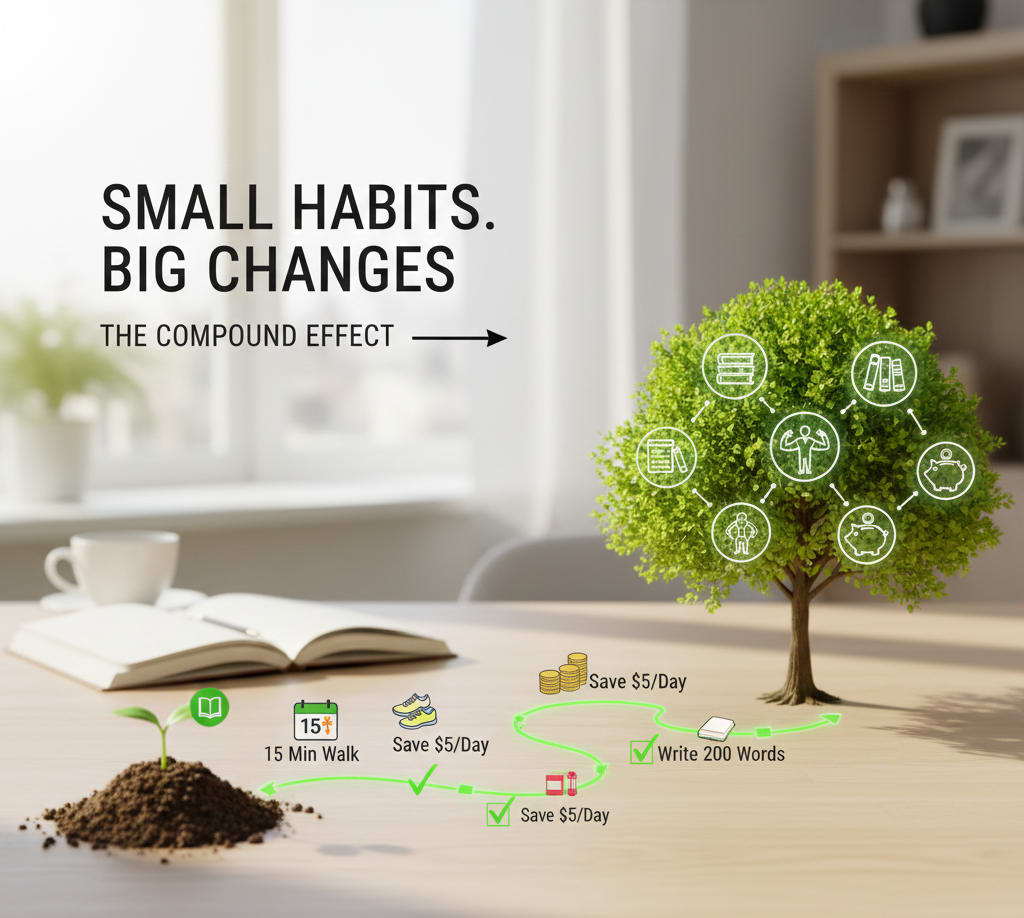
We live in a world obsessed with overnight success, viral trends, and instant gratification. Yet, the most profound changes in life rarely happen suddenly—they emerge from consistent, small actions repeated over time. Understanding how small habits influence personal growth can be the key to achieving long-term success, health, and happiness. THE SCIENCE BEHIND HABITS s mental effort, allowing us to focus on other tasks. Neuroscience shows that repeated behaviors strengthen neural pathways, making those actions easier and more automatic. This explains why consistent small efforts—like reading ten pages a day, walking for fifteen minutes, or writing in a journal—can have a compounding effect over months or years. What starts as a tiny action eventually becomes second nature, reshaping your life in subtle but powerful ways. Why Small Habits Matter More Than Big Goals Big goals can feel overwhelming and often lead to procrastination or burnout. Small habits, on the other hand: Are manageable: Breaking a goal into tiny actions makes it easier to start. Build momentum: Every completed habit reinforces motivation and confidence. Reduce failure risk: Small habits are easier to maintain consistently, reducing the likelihood of giving up. For example, someone aiming to write a book might struggle to dedicate hours daily. But committing to writing just 200 words a day may feel manageable. Over a year, those small efforts can accumulate into a full-length book. The Compound Effect: Small Actions Multiply Over Time The concept of compounding isn’t limited to finance—it applies directly to personal growth. Just like interest accumulates over time, small habits compound into meaningful results. Consider this: Reading 10 pages per day leads to roughly 3,650 pages a year—about 12 to 15 books. Walking 15 minutes a day totals over 90 hours of physical activity annually, significantly improving health. Saving just $5 daily adds up to $1,825 in a year, excluding interest. These examples demonstrate how tiny, consistent actions can create extraordinary results, often more reliably than sporadic, intense efforts. Designing Effective Small Habits Creating habits that stick isn’t just about intention—it’s about strategy. Here are actionable steps: 1. Start Tiny Begin with the smallest version of your habit. If your goal is to meditate daily, start with 2–3 minutes. The key is to make it so easy that it feels almost impossible to skip. 2. Anchor Your Habit Connect your new habit to an existing routine. For instance, you can do stretches right after brushing your teeth each morning. This “habit stacking” leverages existing behaviors to build new ones. 3. Track Your Progress Visual tracking provides motivation. Use a calendar or app to mark each day you complete your habit. Seeing streaks accumulate creates a psychological reward loop, reinforcing consistency. 4. Focus on Systems, Not Goals James Clear, author of Atomic Habits, emphasizes systems over goals. Goals set direction, but systems—your daily habits—determine progress. Concentrate on creating routines that naturally lead to your desired outcome. 5. Be Patient and Forgiving Change takes time. Missing a day doesn’t erase progress. Treat habits as lifelong experiments, and focus on long-term consistency rather than perfection. Real-Life Examples of Small Habits Leading to Big Changes Exercise: Someone who walks 20 minutes daily might seem insignificant at first, but over a year, they’ve walked over 70 hours, improving cardiovascular health and energy levels. Learning a Language: Spending 10 minutes daily on vocabulary apps results in thousands of words learned over months, enabling conversational fluency. Financial Growth: Setting aside $5–10 daily for investment can compound into thousands of dollars over time. These examples prove that big achievements often hide behind small, consistent actions. Overcoming Common Challenges Even small habits face obstacles. Common challenges include: Lack of motivation: Focus on starting, not feeling motivated. Action creates motivation, not the other way around. Distractions: Remove environmental triggers that prevent the habit. For example, keep your journal on your bedside table if you want to write at night. Plateaus: Habit results may take time. Trust the process and track progress objectively. Conclusion: The Power of Tiny Steps Small habits are deceptively powerful. They build momentum, reinforce discipline, and ultimately transform your life. By committing to tiny, manageable actions daily, you can achieve goals that once felt impossible. Remember, success is rarely a leap—it’s a series of small, deliberate steps. Start small today, stay consistent, and watch as your life changes in ways you never imagined.
About the Creator
Enjoyed the story? Support the Creator.
Subscribe for free to receive all their stories in your feed.
Comments
There are no comments for this story
Be the first to respond and start the conversation.