
How Gen Z is Redefining the Job Market in 2025
From Flexibility to Purpose, the Next Generation is Transforming Work Culture and Expectations

Article
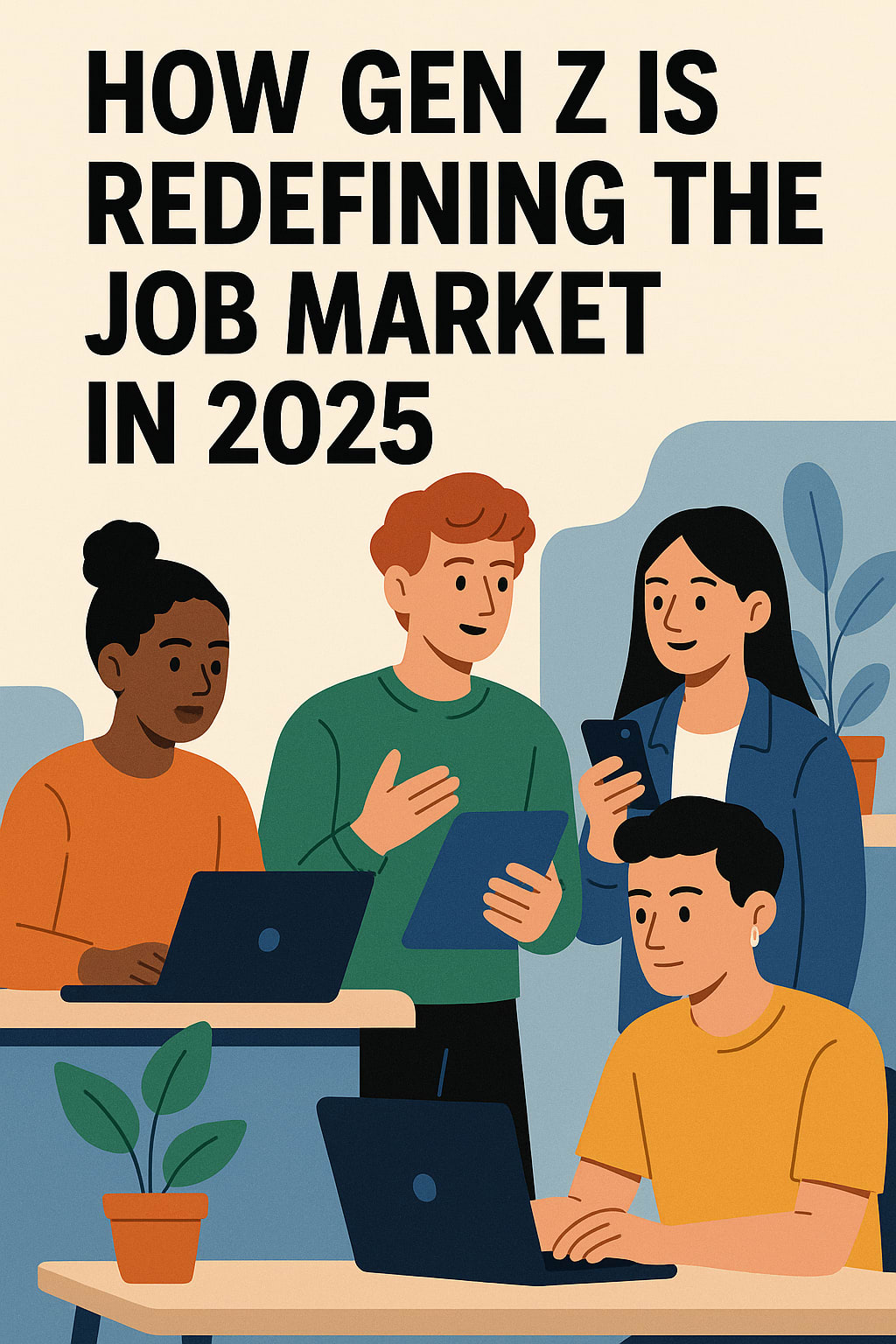
In 2025, Gen Z—born between 1997 and 2012—is making a significant impact on the global workforce. No longer just interns or entry-level hires, members of this generation are becoming managers, entrepreneurs, and influential voices in shaping how and where we work. As the first fully digital generation, Gen Z brings a unique blend of tech-savviness, social consciousness, and a deep desire for purpose, challenging long-held norms about careers, companies, and the meaning of work itself.
Rethinking Work-Life Balance
One of the most visible shifts Gen Z is driving in the job market is a reevaluation of work-life balance. Unlike previous generations that often celebrated hustle culture and long hours, Gen Z values boundaries, wellness, and personal time. For them, work is a part of life—not the center of it. They are vocal advocates for mental health, and many actively seek out employers who offer flexible working hours, mental health days, wellness programs, and remote work options.
This emphasis on balance has forced employers to reconsider rigid work structures. The rise of four-day workweeks, hybrid schedules, and asynchronous collaboration tools is largely a response to Gen Z's demand for a more humane approach to productivity. Companies that resist these changes are increasingly finding it difficult to attract and retain young talent.
Purpose Over Paycheck
Gen Z is not just looking for jobs—they’re looking for purpose. This generation places a high premium on working for companies whose values align with their own. Whether it’s environmental sustainability, social justice, or ethical governance, Gen Z wants to feel like their work contributes to something meaningful.
In 2025, many Gen Z employees are choosing employers based on their mission statements, ESG (Environmental, Social, and Governance) ratings, and community impact. It's no longer enough for companies to offer competitive salaries—they must also offer transparency, ethical leadership, and a clear sense of purpose. This has led to a rise in “conscious companies,” where profit and purpose go hand in hand.
Digital Natives in a Tech-First Economy
Growing up in a digital world, Gen Z is naturally fluent in technology. They’ve never known a world without smartphones, social media, or instant access to information. This digital fluency is a major asset in today's fast-changing job market, where artificial intelligence, automation, and digital platforms are central to operations.
Gen Z employees are often the ones helping organizations modernize, whether by implementing new tech tools, running social media campaigns, or streamlining workflows using apps and AI. They're not just consumers of technology—they're innovators, constantly seeking ways to work smarter and more efficiently.
Diversity, Equity, and Inclusion Are Non-Negotiable
Diversity and inclusion are foundational values for Gen Z. They expect their workplaces to reflect the diversity of the world around them and to foster an inclusive environment where everyone feels seen, heard, and respected. Token gestures or surface-level DEI initiatives won’t cut it; Gen Z wants real, measurable progress.
Companies are being held to higher standards. Gen Z employees are pushing for more transparent hiring practices, equitable pay, inclusive leadership, and accountability when it comes to racism, sexism, and other forms of discrimination. In response, many organizations are overhauling their DEI strategies, creating employee resource groups, and implementing regular bias training.
Nonlinear Career Paths and Entrepreneurship
Gone are the days when young professionals expected to stay at one company for decades. Gen Z is embracing a more fluid and dynamic approach to career building. Many are pursuing side hustles, freelancing, launching startups, or hopping between industries to build diverse skills.
In 2025, the gig economy and remote work platforms have made it easier than ever for Gen Z to take control of their careers. Entrepreneurship is booming, especially among those who want autonomy, creativity, and flexibility. Even within traditional roles, Gen Z values cross-functional experience and continuous growth over titles and tenure.
Learning as a Lifelong Journey
Higher education no longer holds the same authority it once did. While degrees still matter in some fields, Gen Z places increasing value on hands-on experience, micro-credentials, online certifications, and self-directed learning. Platforms like Coursera, Udemy, and LinkedIn Learning are helping them upskill in real time.
Employers are adapting by offering in-house training programs, tuition support for online courses, and pathways for nontraditional candidates. In many cases, a candidate’s ability to learn quickly and adapt to change is more valuable than their academic background.
Conclusion
Gen Z is not merely participating in the job market—they’re reshaping it. With a focus on balance, values, inclusivity, and innovation, they are challenging outdated norms and setting new standards for what a meaningful career looks like. In 2025, the most successful companies are not the ones with the flashiest perks or biggest salaries, but those that listen, adapt, and align with the evolving expectations of this bold, purpose-driven generation.
As the workplace continues to evolve, one thing is clear: Gen Z isn’t just the future of work—they’re the present. And they’re here to make it better.
About the Creator
Enjoyed the story? Support the Creator.
Subscribe for free to receive all their stories in your feed.
Comments
There are no comments for this story
Be the first to respond and start the conversation.