
Turkish F-16 exercises increase over Cyprus airspace
Increased Turkish fighter activity around Cyprus is drawing attention as Ankara strengthens its military presence on the divided island and tensions with Greece and the Republic of Cyprus remain unresolved.
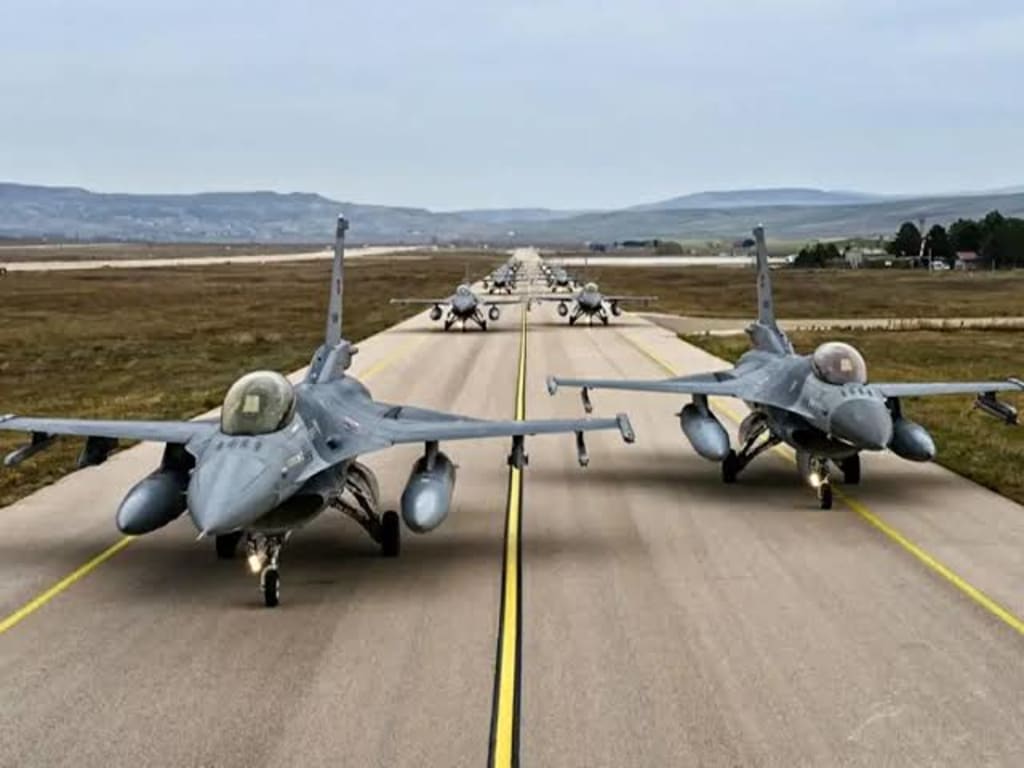
Turkish F-16 fighter activity around Cyprus has become an increasingly important security issue in the Eastern Mediterranean, with recent training flights highlighting the continuing military competition surrounding the divided island.
A Turkish Air Force F-16 conducted a training flight in international airspace south of Cyprus in July, according to Turkish reporting. The activity came after Turkey had already increased its military presence in northern Cyprus, including the deployment of F-16 fighters and air-defense systems earlier in 2026.
The latest developments have renewed attention on one of the Mediterranean's longest-running territorial and security disputes. Cyprus has remained divided since 1974, with the internationally recognized Republic of Cyprus controlling the south and the self-declared Turkish Republic of Northern Cyprus controlling the north. The latter is recognized only by Turkey.
Turkish F-16 Training Activity
The F-16 remains one of the most important aircraft in Turkey's air force. Its multirole capabilities allow it to conduct air-defense, interception, reconnaissance and strike missions.
Recent training activity south of Cyprus demonstrates that Turkish aircraft continue to operate in the broader airspace surrounding the island. However, it is important to distinguish between flights in international airspace and alleged incursions into areas claimed by the Republic of Cyprus.
The Turkish government has repeatedly disputed the Republic of Cyprus's interpretation of airspace rights and has its own position regarding the status and security of northern Cyprus.
This complicated legal and political environment makes military flights around the island particularly sensitive.
Why Cyprus Is Strategically Important
Cyprus occupies a highly strategic position in the Eastern Mediterranean. It sits close to Turkey, Greece, Israel, Lebanon, Syria and Egypt, while major maritime routes and energy resources are located nearby.
The island is also home to British sovereign military bases at Akrotiri and Dhekelia, giving Britain a permanent military presence in the region.
Because of its geography, developments around Cyprus can quickly become connected to wider Middle Eastern and European security concerns.
The island's importance has increased further as regional conflicts have expanded and military forces from different countries have operated across the Eastern Mediterranean.
Turkey's F-16 Deployment to Northern Cyprus
Turkey significantly increased its military presence in northern Cyprus earlier this year when Ankara announced the deployment of six F-16 fighter jets and air-defense systems.
The move was presented by Turkish authorities as a defensive measure intended to strengthen the security of the Turkish Cypriot community. Reports said the deployment came during heightened regional tensions connected to the conflict involving Iran.
The deployment attracted attention because stationing advanced fighter aircraft on Cyprus changes the military balance around the island.
For Turkey, the aircraft provide an additional defensive capability close to its southern approaches. For Greece and the Republic of Cyprus, however, the presence of additional Turkish combat aircraft raises concerns about escalation.
Greek and Cypriot Concerns
Greece and the Republic of Cyprus have historically viewed Turkish military activity around the island with considerable suspicion.
The two countries maintain close political and military relationships, while Greece also operates advanced fighter aircraft of its own.
Any increase in Turkish fighter activity can therefore generate a corresponding increase in Greek surveillance and readiness.
In March, three Turkish F-16s taking off from Ercan Airport in northern Cyprus generated significant attention after their engines were heard across parts of Nicosia.
Such incidents demonstrate how military aviation has become an everyday feature of the security environment surrounding the island.
Disputes Over Airspace
The airspace issue is particularly complicated because different authorities use different definitions and claims.
The Republic of Cyprus has repeatedly complained to the United Nations about what it describes as Turkish violations of Cypriot airspace and the Nicosia Flight Information Region.
In June, Cypriot authorities reportedly complained to the UN about more than 500 alleged airspace violations by Turkey.
Turkey, however, rejects many of these accusations and has issued its own statements alleging violations involving aircraft operating from the Greek side.
For example, Turkey's communications authorities said in June that Turkish F-16s were scrambled after aircraft operating between Greece and the Republic of Cyprus allegedly entered airspace claimed by the Turkish Cypriot administration. Ankara described the response as precautionary.
These competing claims illustrate why airspace incidents around Cyprus can become politically sensitive even when no weapons are used.
The Risk of Miscalculation
The greatest danger from increased military aviation activity may not necessarily be an intentional attack. It could be an accident or miscalculation.
Fighter aircraft operate at high speeds and frequently conduct training missions involving interception, maneuvering and simulated combat scenarios. When opposing militaries operate in close proximity, the possibility of an incident increases.
A single encounter could create a political crisis, particularly between Turkey and Greece, two NATO members that have experienced military confrontations and disputes for decades.
That makes communication and established military procedures extremely important.
Cyprus and the Wider Eastern Mediterranean
The F-16 activity is also part of a larger military transformation across the Eastern Mediterranean.
Turkey has expanded its naval and air capabilities, while Greece has invested heavily in new aircraft and advanced weapons. Israel maintains one of the region's most capable air forces, and Egypt has also strengthened its military aviation capabilities.
France, Britain and the United States regularly maintain military interests or conduct operations in the wider region.
Energy resources add another layer to the competition. Natural gas discoveries and offshore exploration have produced disagreements over maritime boundaries and economic zones.
Consequently, military aircraft are operating in an environment where territorial disputes, energy interests and regional conflicts overlap.
What Happens Next?
The future of Turkish F-16 operations around Cyprus will depend heavily on regional security developments and diplomatic relations between Ankara, Athens and Nicosia.
If tensions remain high, Turkey is likely to maintain a strong military presence in northern Cyprus. Greece and the Republic of Cyprus are also expected to continue monitoring Turkish aircraft closely.
At the same time, NATO membership creates an unusual situation. Turkey and Greece are both members of the alliance, meaning that their military competition takes place within the same broader collective-security structure.
This makes diplomacy particularly important.
Conclusion
The increase in Turkish F-16 activity around Cyprus is another sign that the Eastern Mediterranean remains one of Europe's most sensitive security regions.
Recent Turkish training flights south of Cyprus and the earlier deployment of six F-16s and air-defense systems to northern Cyprus demonstrate Ankara's determination to maintain a strong military posture on and around the island.
However, increased fighter activity should not automatically be interpreted as preparation for conflict. Much of the activity is described as training, patrol or defensive operations.
The real concern is the possibility that repeated encounters between Turkish, Greek and other regional aircraft could produce an accident or political escalation.
For Cyprus, Greece and Turkey, maintaining communication and avoiding unnecessary confrontation will remain essential. In a region where military aircraft increasingly share the same skies, even a routine training mission can carry significant geopolitical consequences.
About the Creator
Enjoyed the story? Support the Creator.
Subscribe for free to receive all their stories in your feed.
Comments
There are no comments for this story
Be the first to respond and start the conversation.