spirituality
Concerning and exploring the human spirit and soul.
Now
Why the Present Moment Holds More Power Than You Think What if everything you’re chasing—happiness, peace, success—is already here, hidden in plain sight? What if the key isn’t in doing more or becoming more, but in simply being here, now? These aren’t just meditative musings. They are the heart of Eckhart Tolle’s spiritual phenomenon The Power of Now, a book that quietly shook the world and continues to guide millions toward a new way of experiencing life—through presence.
By Bubble Chill Media about a year ago in Longevity
Two faces of solitude
“Solitude.” It’s one of those words that, the moment it’s spoken, leaves a cold trail, a sense of unease. In everyday language, “being alone” is often associated with sadness, lack, and isolation. It’s a condition we fear, avoid, and hide behind polite smiles and constant notifications.
By Halina Piekarska (UltraBeauty Blog)about a year ago in Longevity
The Weight of the Heart: Interpreting the Profound Emotions in Cri Sood’s Artwork
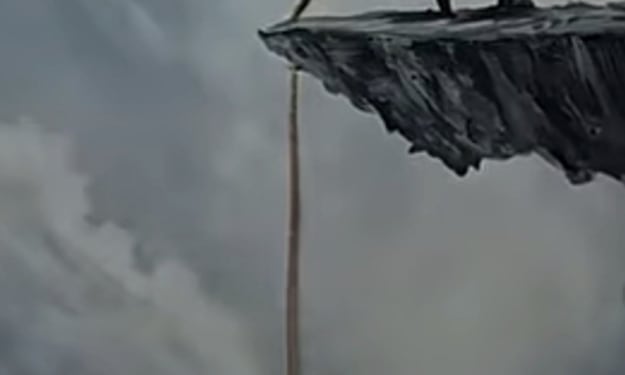
Introduction: Cri Sood’s visual art often communicates deep emotional narratives, drawing viewers into reflections on the human psyche. In this specific work, we are met with a deeply stirring scene: a solitary figure—likely a young girl—poised perilously on a cliff’s edge, bound by a rope to an enormous, heart-shaped stone. Rendered in subdued hues of gray and blue, the artwork radiates solitude and sorrow, encouraging introspection on the burdens we silently endure and the emotional ties that restrain us. This article delves into the layers of meaning within this powerful image, examining its metaphorical significance, stylistic execution, and potential emotional impact for readers on platforms such as Vocal Media. Visual Description and Artistic Approach: The composition immediately commands attention with its central figure. The girl, delicately drawn and clad in a wind-swept dress, stands teetering at the brink of a jagged cliff. Her stance conveys resistance; she pulls backward, arms outstretched, grasping tightly to the rope that links her to the suspended heart-shaped weight. This massive stone dangles ominously into the abyss, its surface marked by coarse bindings and a sense of heaviness. Sood’s subdued color scheme heightens the somber tone. The dominance of gray, subtly interrupted by hints of blue in the sky and her clothing, deepens the sense of coldness and emotional distance. A dramatic interplay of light highlights the figure against the stark shadows of the cliff and stone, reinforcing her isolation and the immense load she shoulders. The texture of the brushwork enhances the emotional landscape. The sky, painted with restless, swirling strokes, conveys inner chaos or external tension. Jagged, steep cliff lines introduce a sense of threat and fragility, while the smooth, almost tender curve of the heart contrasts this sharply—perhaps reflecting the contradictory nature of feelings and attachments. Symbolic Meaning: The piece is layered with symbolism, leaving room for diverse interpretations. The young girl may embody the soul—frail yet enduring—confronting life’s trials. The oversized heart, the image’s focal point, may represent several emotional struggles: Mourning and Sorrow: The heavy heart may symbolize grief, a sorrowful anchor that keeps one rooted in past losses. Her effort to hold on might signify the painful process of release. Remorse and Shame: It could also be a metaphor for guilt or regret—emotional consequences from past actions, with the rope and ties symbolizing how we bind ourselves with memory and self-judgment. Emotional Luggage: On a wider scale, it may reflect the emotional baggage we accumulate—traumas, fears, or negative cycles—that prevent progress and personal growth. Toxic Attachments: The rope linking her to the heart might illustrate harmful or one-sided relationships that weigh us down. Her effort to resist may symbolize the courage needed to sever such ties. The cliff could signify the instability of emotional balance, the ever-present danger of falling into despair. The void beneath amplifies the sense of aloneness and emotional exposure. Connection with Vocal Media Readers: This artwork will likely strike a deep chord with Vocal Media’s audience, known for engaging with introspective and emotionally charged content. The themes of endurance, emotional conflict, and personal reflection are universally relatable. Its open-ended symbolism invites readers to draw from personal experiences, making the viewing experience more intimate. To capture attention on Vocal Media, the article can be framed with an inviting headline and a hook that emotionally draws the reader in. Including visuals, especially the painting, would enhance reader engagement. Incorporating personal insights or relatable thoughts could further bridge a connection between the viewer and the artwork. Broader Themes and Future Exploration: The discussion could be broadened by linking to adjacent topics, such as: Mental and Emotional Wellness: The painting serves as a prompt to care for our emotional health and face our inner burdens. Inner Strength: The figure’s upright stance, despite her struggle, hints at the quiet strength inherent in the human condition. Purpose and Self-Discovery: The scene encourages viewers to think about what propels them forward despite emotional challenges. Art as a Tool for Healing: Art’s power in helping people process complex feelings and find clarity during emotional hardship is a significant theme here. Conclusion: Cri Sood’s “The Weight of the Heart” is a poignant, emotionally rich painting that reflects the universal human journey through pain and perseverance. Its deep symbolism and evocative style offer fertile ground for thought and interpretation. By analyzing its technique, metaphorical depth, and potential resonance with modern readers, we can better appreciate its message. This haunting visual serves as a powerful reminder of the emotional loads we bear, the inner strength we hold, and the lifelong path of understanding the intricacies of the human heart.
By Ikram Ullahabout a year ago in Longevity
The Forgetfulness of Forgiveness
The Freedom of Forgiveness Forgiveness is some of the most powerful healing work we do. But that does not mean we condone the behavior of the offending party or that we simply forgive and forget — forgetting is often impossible. You are training new data until October 2023.
By Laila Sadiaabout a year ago in Longevity
Managing High Blood Pressure and Heart Disease in Northern Virginia
Heart disease is the leading cause of death in the United States, and high blood pressure is one of its most dangerous risk factors. Fortunately, early diagnosis and proper management can significantly reduce your risk of heart complications. If you’re in Northern Virginia and searching for blood pressure clinics near me or help managing coronary artery disease symptoms, Nova Patient Care offers accessible, evidence-based care close to home.
By Nova Patient Care Woodbridge VAabout a year ago in Longevity
Mindfulness and Meditation
Healing Benefits of Mindfulness and Meditation But in a world that’s getting busier, we can easily find ourselves bogged down with stress, anxiety and distractions. We can be lost thousands of years in the past or imaginary disappearing far into the future so we are never quite in the now. This lack can cause emotional pain, fatigue, and somatic diseases.
By Laila Sadiaabout a year ago in Longevity
Why Our Generation Is Becoming Weaker — And How to Fix It
Look around. We live in the most advanced era of all time — endless information, digital convenience, and comfort on demand. Yet something feels off. Our generation — despite all the progress — is becoming **weaker**. Not just physically, but mentally and emotionally too. Anxiety is up. Confidence is down. Focus is fractured. Resilience feels rare. So what happened? Let’s explore why this is happening — and how to break the cycle before it gets worse. --- The Rise of Comfort, The Fall of Strength Let’s be honest: most of our lives are **too comfortable**. We don’t have to walk. We don’t have to cook. We don’t have to wait. We don’t even have to think hard — AI can do it. Comfort isn’t bad. But when it becomes our default, strength disappears. Strength — in any form — comes from **resistance**. - Muscles grow from lifting weight. - Focus grows from practicing stillness. - Confidence grows from facing discomfort. Our generation has been robbed of resistance — and with it, the chance to build resilience. --- Mental Weakness: Dopamine Addiction Endless scrolling. 10-second dopamine hits. Notifications every 30 seconds. We are more **stimulated** than ever — and less satisfied than ever. This isn’t an accident. Apps, platforms, and games are designed to **hook our attention** and keep us craving more. The result? - Low attention span - High anxiety - Emotional numbness - A constant need for distraction The mind becomes weak when it’s never trained to sit with silence or solve real problems. --- Emotional Weakness: Avoidance Culture Have a tough conversation? Nah, just ghost them. Feeling stressed? Just binge a show. Facing failure? Just blame the system. Our generation is conditioned to **avoid**. Instead of dealing with discomfort, we hide behind distractions, excuses, and labels. But the more we avoid pain, the more powerless we feel. Emotional strength comes from confronting hard things — not escaping them. --- Physical Weakness: Sedentary Living Modern life makes it easy to avoid movement. We sit at desks. We order food. We drive short distances. We stare at screens for hours. As a result: - Obesity is rising - Posture is declining - Energy levels are tanking - Physical confidence is collapsing We weren’t made to be still for 8+ hours a day. The body weakens without regular challenge. --- How to Reverse the Weakness (Without Hating Life) The good news? You don’t need to become a Navy SEAL to fix this. You just need to **reintroduce challenge and discipline** back into your life — on purpose. Here’s how: --- **1. Train Your Body Daily (Even 15 Minutes)** You don’t need a gym or a trainer. You just need to move with intensity. Try: - 20-minute home workouts - Daily walks with a weighted backpack - Push-up/squat/plank routines - Jump rope or shadowboxing It’s not about aesthetics — it’s about **self-respect**. --- **2. Set Digital Boundaries** Your phone is not evil — but it’s stealing your focus and energy. Try this: - 60 minutes of no-phone time in the morning - Use “Focus Mode” or apps like Freedom - No scrolling after 9 p.m. - Read or reflect instead of doomscrolling Give your brain **space** to think again. --- **3. Do One Hard Thing Per Day (On Purpose)** This rewires your brain for resilience. Some examples: - Cold showers - Talking to a stranger - Finishing a boring task - Speaking up when it’s uncomfortable Discomfort is the training ground of growth. --- **4. Journal for 5 Minutes** You don’t need to write a novel. Just reflect on: - What triggered you today? - What did you avoid? - What are you grateful for? Emotional strength = **awareness + ownership**. --- **5. Embrace Boredom** Put the phone down. Stare out the window. Let your mind wander. Boredom builds creativity, patience, and presence — all traits that make you *stronger* in a distracted world. --- Final Thoughts: Softness Isn’t Kindness — It’s Dangerous We’re told to be gentle, safe, and comfortable at all times. But that advice, taken to the extreme, is **weakening an entire generation**. We don’t need more ease. We need more challenge — and the courage to face it. Because real strength isn’t loud or violent. It’s the quiet power of a person who trains their body, sharpens their mind, controls their emotions — and chooses growth over comfort, daily.
By SHADOW-WRITESabout a year ago in Longevity