psychology
Studying the complexities of the human mind and its many functions and behaviors.
Thinking And Feeling
Thinking And Feeling The human brain has a remarkable ability to categorize and distinguish between concepts which has shaped our understanding of the world in binary terms. We often divide reality into opposing forces light and dark right and wrong, rationality and emotion. Among these dualities, the distinction between "thinking" and "feeling" has been particularly influential in shaping personal identities political ideologies, and even entire cultures. However as we move into an era of increasing complexity and uncertainty it is worth questioning whether this binary mindset truly serves us. Could our reliance on rigid categorization be creating blind spots preventing us from embracing a more holistic integrative approach to knowledge and human experience? Throughout history the Enlightenment era championed rationality and empirical thinking pushing societies toward scientific advancements and intellectual rigor. The emphasis on logic and objectivity led to incredible breakthroughs from technological innovations to medical discoveries shaping much of the modern world. However the dominance of reason also came with unintended consequences. It often led to the marginalization of emotions intuition and subjective experience creating an imbalance that neglected the full spectrum of human understanding. In contrast many indigenous and Eastern philosophical traditions have long emphasized the integration of thinking and feeling. These traditions recognize the necessity of emotional intelligence intuition and interconnectedness as fundamental aspects of wisdom. Western societies however have been slower to embrace these aspects, often dismissing them as irrational or unscientific. The result has been a culture that prizes efficiency productivity and analytical reasoning while undervaluing empathy, creativity and the emotional dimensions of decision making. This division between thinking and feeling is not just a philosophical abstraction it manifests in real-world consequences. In politics, the growing polarization between ideological groups often stems from an inability to integrate logic with emotional resonance. Political leaders and media outlets frequently exploit emotions fear anger and outrage to manipulate public perception. At the same time, a purely analytical approach to governance can create policies that seem disconnected from human experiences failing to address the emotional and psychological needs of society. The challenge, therefore is to find a balance where analytical rigor and emotional intelligence work in tandem rather than opposition. One of the most profound ways beliefs shape our feelings is through our values. Values are not merely intellectual constructs; they are deeply emotional influencing our perceptions decisions and relationships. When we encounter information that aligns with our values, we experience emotional affirmation reinforcing our sense of identity and belonging. Conversely when faced with opposing viewpoints, we often react emotionally before engaging in logical analysis. This cognitive bias known as motivated reasoning demonstrates how deeply intertwined thinking and feeling are. Understanding this connection is crucial for fostering dialogue cooperation and civility in an increasingly divided world. The past few decades have seen a strong emphasis on objective facts and data driven decision making. While this approach has undoubtedly contributed to progress it has also revealed its limitations. Facts alone are not always enough to inspire change or drive action. Climate change for instance is backed by overwhelming scientific evidence yet public response remains fragmented. This is because facts no matter how compelling, need to be emotionally resonant to motivate people. Storytelling personal experiences, and ethical considerations play a significant role in shaping public opinion and driving meaningful action. Without integrating values and emotions into our analytical frameworks, even the most well reasoned arguments can fall on deaf ears.
By Adnan Rasheed2 years ago in Longevity
The Hidden Epidemic: How Porn is Destroying Lives and How to Break Free. Content Warning.
I came across a statistic that absolutely blew my mind: the average age at which someone consumes porn for the first time is now 12. Porn has become the greatest addiction and drug the world has ever seen. We are living in a world where the average 12-year-old, with a single click, has access to more naked women than the most powerful and richest kings 200 years ago.
By Vishnu Aravindhan2 years ago in Longevity
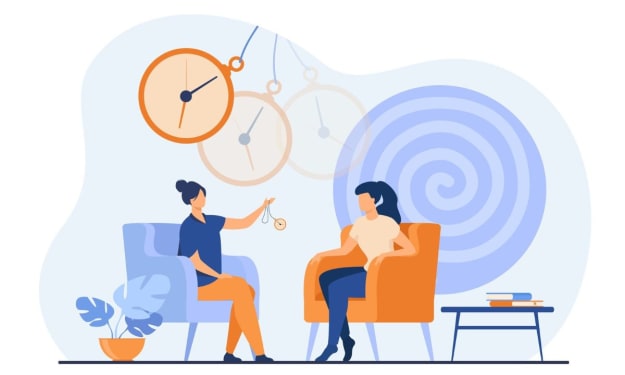
The Ideal Length For A Therapy Session
Therapy sessions are often set at 45 minutes, but have you ever wondered why this specific duration has become the standard? While it may seem arbitrary, this timeframe is rooted in historical practices, practical considerations and psychological principles. Understanding the logic behind the 45 minute session can help both clients and therapists make the most of their time together.
By iDigitize Infotech LLP2 years ago in Longevity
The Mystical Yogis of the Himalayas
The Amazing Yogis of the Himalayas Who Shake with the Third Eye The Himalayas, a beautiful mountain range spanning five countries in South Asia, are not only a natural wonder but also a spiritual haven for many. It is believed that among the high peaks of the Himalayas, covered in vegetation and snow, there are many sages who have dedicated their lives to yoga and meditation, breaking the laws and customs of physics and displaying incredible abilities.
By Rohitha Lanka2 years ago in Longevity
The 15-Minute Workout That Burns Fat All Day
The Workout That Burns Fat All Day Long in 15 Minutes In the fast-paced world we live in today, finding time to exercise can feel like a daunting task. Between work, social commitments, and family obligations, it's often challenging to carve out hours in the day for a workout. But what if you didn’t need to spend hours at the gym to achieve great results? What if you could burn fat all day with just a 15-minute workout? Sounds too good to be true, right? In fact, it is not. A quick and effective 15-minute workout can help you burn the most fat and speed up your metabolism, allowing you to burn calories even after your workout is over. This is made possible by incorporating High-Intensity Interval Training (IHIT), metabolic conditioning, and strength training. These elements combine to create a workout that maximizes fat loss in minimal time. In this article, we'll explore why a 15-minute workout is so effective, what exercises to include, and how to incorporate this into your daily routine for lasting results.
By Afia Sikder2 years ago in Longevity
7 Surprising Habits That Make You Gain Weight
Overeating or not getting enough exercise are two common causes of weight gain, but the truth is much more nuanced. Sometimes, it’s not just about what you eat or how much you move, but rather subtle habits that contribute to weight gain over time. These habits may be sneaky, often going unnoticed until they begin to have a significant impact on your health and weight. We'll look at seven surprising habits that could be making you gain weight and offer suggestions for changing them in this article.
By Afia Sikder2 years ago in Longevity