
Myanmar’s Rich Seek “Positive Vibes” as Civil War Rages Around Them
In Yangon, an affluent social world of luxury, nightlife and private parties continues despite Myanmar’s devastating conflict, revealing a stark divide between those insulated by wealth and millions facing violence and hardship.
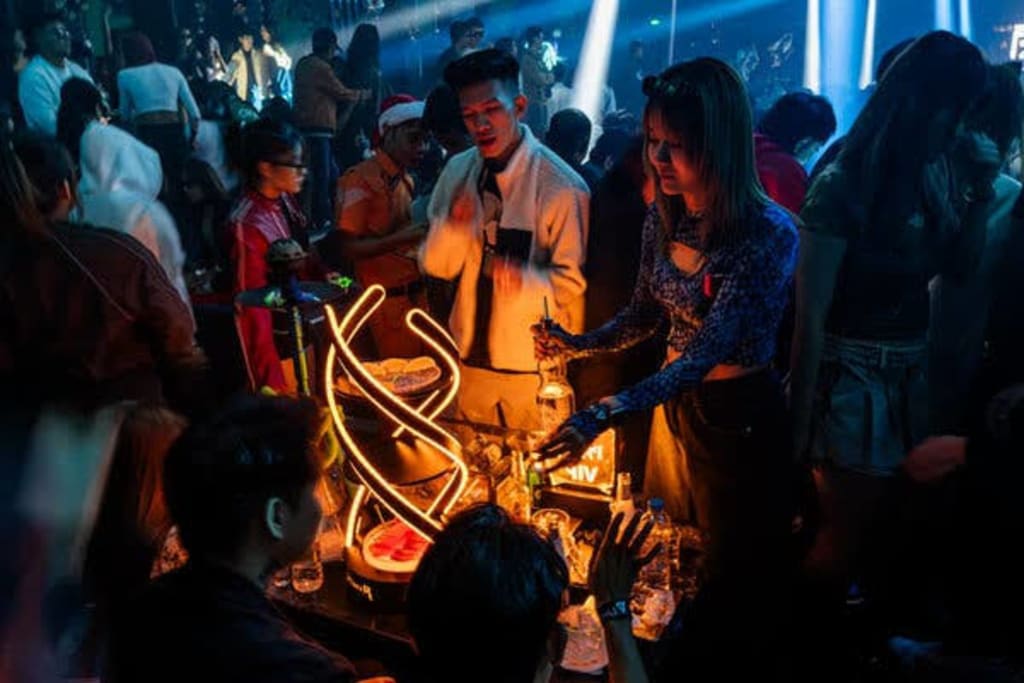
Myanmar has spent years trapped in one of the world’s most complicated and destructive conflicts. Since the military coup of February 2021, fighting between the armed forces, resistance groups and ethnic armed organisations has spread across large parts of the country. Yet in Yangon, Myanmar’s largest city, another reality exists alongside the conflict: wealthy residents continue to attend parties, visit nightclubs, enjoy expensive food and seek moments of normality.
Recent reporting has highlighted the striking contrast between Myanmar’s war economy and the lifestyle of its affluent population. While millions of people face displacement, economic hardship and insecurity, parts of the wealthy elite appear determined to maintain a social environment built around entertainment and what could be described as “positive vibes only.”
A Country Divided by War and Wealth
Myanmar’s civil war has created enormous differences in how people experience daily life. In conflict-affected regions, civilians have faced fighting, displacement, damaged infrastructure and severe shortages. Meanwhile, Yangon has remained comparatively insulated from the worst battlefield violence.
That does not mean the city is unaffected. Inflation, electricity shortages, economic restrictions and political repression have changed everyday life. Businesses have struggled, imported goods have become harder to obtain and many families have seen their purchasing power decline.
But money provides a level of protection unavailable to ordinary citizens.
For wealthy residents, access to private transportation, imported products, expensive restaurants, entertainment venues and overseas travel can create a bubble that separates them from the harsher realities experienced elsewhere in Myanmar.
This economic divide has become one of the most revealing aspects of life during the conflict.
Yangon’s Nightlife Refuses to Disappear
Despite years of instability, Yangon’s nightlife has continued. Reports from the city describe clubs filled with music and young people looking for opportunities to socialise and escape the pressure of wartime life.
In June 2026, reporting from Yangon described revellers staying inside clubs until dawn because travelling through the streets late at night could feel risky. Some people reportedly slept on sofas inside venues rather than immediately returning home.
For some, partying is not necessarily a sign that they are indifferent to the conflict. It can be a coping mechanism.
When people live with prolonged uncertainty, entertainment can provide temporary relief. Music, friendship, food and nightlife can offer a few hours during which war and politics disappear from conversation.
But the situation becomes more controversial when such lifestyles are associated with wealthy groups who have greater access to resources than the majority of the population.
The Meaning of “Positive Vibes Only”
The phrase “positive vibes only” captures a desire to avoid difficult political conversations and focus on enjoyment. For Myanmar’s affluent circles, it can represent an attempt to preserve normal life despite extraordinary circumstances.
There is a psychological explanation for this behaviour. People living through prolonged crises can experience exhaustion and emotional burnout. Constant exposure to violence, political uncertainty and economic instability can become overwhelming.
Entertainment can therefore become a form of escape.
However, critics may see the phenomenon differently. When wealthy people continue enjoying luxury while ordinary citizens struggle with displacement and shortages, the contrast can appear deeply unequal.
The same country can simultaneously contain people worrying about survival and others discussing parties, restaurants and overseas holidays.
Wealth Creates a Different Myanmar
Myanmar’s economic inequality has become particularly visible during the conflict. Wealthy families and business networks can have access to foreign currencies, private supplies, better housing and international connections.
This does not necessarily mean every wealthy person supports the military or benefits directly from the conflict. Myanmar’s elite is not a single political group. Some affluent citizens may oppose military rule, while others may remain politically neutral or have relationships with powerful institutions.
Nevertheless, economic privilege can make the consequences of war less immediate.
For someone with enough money to leave the country temporarily, purchase scarce goods or move within protected social circles, the conflict can feel very different from the experience of a displaced farmer or a family living near an active battlefield.
A City Trying to Look Normal
The continuation of nightlife also has a political dimension. A functioning entertainment industry can create an appearance of normality, even when the wider country remains deeply unstable.
Myanmar’s military authorities have sought to project an image of stability and political normalisation. But the persistence of armed conflict and humanitarian problems makes such claims controversial. Reuters reported in August 2026 that Myanmar’s civil war had entered a possible but uncertain period of diplomatic engagement, with regional actors pushing for dialogue while military operations continued.
Against this background, Yangon’s restaurants and clubs can look almost disconnected from the battlefield.
Yet appearances can be misleading.
People dancing in a nightclub do not necessarily believe the country is peaceful. They may simply be trying to experience a few hours of ordinary life.
The Human Cost Behind the Luxury
The most important issue is the enormous gap between those who can escape the consequences of war and those who cannot.
Conflict affects access to food, healthcare, education, employment and safe housing. Displacement can destroy livelihoods, while inflation makes basic necessities increasingly difficult to afford.
For wealthy citizens, these problems can sometimes be softened by financial resources. For poorer households, there may be no such safety net.
This creates two very different versions of Myanmar: one struggling to survive and another trying to maintain a lifestyle that resembles the country before the coup.
The contrast is uncomfortable but important because it demonstrates that war does not affect every social class equally.
Escaping Reality or Preserving Hope?
It would be too simple to describe Myanmar’s wealthy party scene only as selfishness. Human beings have always sought entertainment during difficult periods. Throughout history, people have celebrated birthdays, listened to music and gathered with friends even during wars and disasters.
For some Myanmar residents, nightlife may represent resilience rather than indifference.
The ability to laugh, dance and maintain friendships can be a way of resisting despair.
At the same time, the extreme difference between luxury and suffering raises legitimate questions about inequality. When survival itself depends heavily on financial resources, the meaning of “normal life” becomes profoundly unequal.
Myanmar’s Unfinished Story
Myanmar’s civil war remains unresolved, and recent diplomatic efforts offer only cautious grounds for optimism. The country continues to face political instability, armed conflict and a serious humanitarian crisis.
Yet Yangon’s affluent social circles demonstrate something important about life during war: people do not stop being human simply because their country is experiencing catastrophe.
They still seek friendship, entertainment, romance, music and moments of happiness.
The disturbing reality is that access to those moments can depend heavily on wealth.
Myanmar therefore presents a complicated picture. Beyond the headlines about battles and political negotiations lies a society divided by vastly different experiences of the same crisis. For some, war means displacement and survival. For others, it means finding a nightclub, ordering an expensive meal and insisting on enjoying the evening.
That contrast may be one of the clearest illustrations of how deeply inequality can shape life during conflict. **Myanmar is at war, but in parts of Yangon, the wealthy are still trying to live as though tomorrow can wait.**
About the Creator
Enjoyed the story? Support the Creator.
Subscribe for free to receive all their stories in your feed.
Comments
There are no comments for this story
Be the first to respond and start the conversation.