
He's been frozen on Everest for 30 years, now 'Green Boots' may finally be coming home
A dangerous recovery mission is being planned for the climber known as “Green Boots,” whose frozen remains have become one of Mount Everest’s most haunting landmarks.
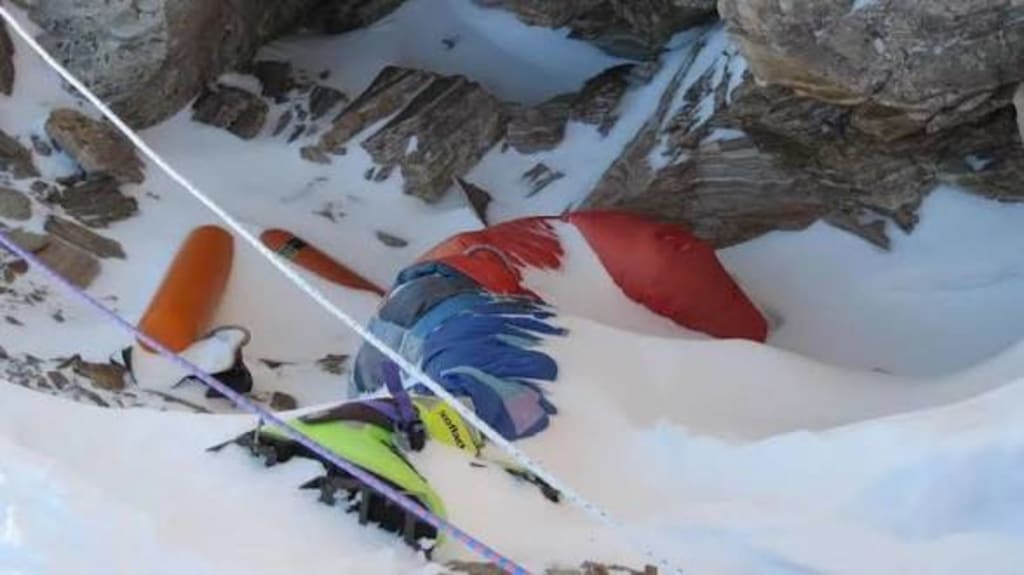
For nearly three decades, the frozen remains of a climber known around the world as “Green Boots” have represented the deadly reality of Mount Everest. Now, after almost 30 years exposed to the extreme conditions of the mountain, the body may finally be brought down and returned home.
Indian authorities are working toward a high-altitude recovery mission involving specialist climbers who would attempt to retrieve the remains from the northern side of Mount Everest. The operation is expected to be exceptionally difficult because the body lies in the mountain’s so-called Death Zone, above 8,000 meters, where oxygen levels are dangerously low and weather conditions can change rapidly.
Who Was ‘Green Boots’?
The nickname “Green Boots” came from the distinctive bright-green mountaineering boots visible on the frozen body. For years, climbers using Everest’s northeastern route regarded the remains as a grim landmark during their ascent.
The body was associated for decades with the tragic 1996 Everest disaster, one of the mountain’s deadliest periods. An Indo-Tibetan Border Police expedition was caught in severe weather while attempting to climb the peak. Three members continued toward the summit while others turned back. The climbers who remained high on the mountain did not survive the storm.
For years, the identity of Green Boots was widely believed to be Tsewang Paljor, one of the Indian climbers who died during the 1996 expedition. More recent reporting, however, says Indian authorities have identified the remains as Dorje Morup, another member of that expedition.
That identification adds another emotional dimension to the planned recovery. What was once simply a mysterious body on Everest could finally be connected to a name, a family and a personal history.
Why Has the Body Remained on Everest?
Recovering a body from Everest is dramatically different from recovering one from a conventional mountain environment. At extreme altitude, rescuers themselves face serious risks from hypoxia, freezing temperatures, high winds, avalanches and unstable terrain.
The area above 8,000 meters is commonly called the Death Zone because the human body cannot survive there indefinitely. Even healthy climbers carrying modern equipment can become severely impaired by the lack of oxygen.
A recovery team must therefore balance the desire to retrieve the remains with the safety of the people performing the operation. Helicopters cannot simply fly to the location and lift the body away. At such extreme elevations, the rescue has to rely heavily on highly experienced high-altitude climbers and Sherpas.
The body itself can also be extremely difficult to move. After decades exposed to freezing conditions, remains can become embedded in ice and snow. Extracting them without damaging the surrounding terrain requires considerable physical effort and technical expertise.
A Mission More Dangerous Than a Normal Climb
Reports indicate that Indian authorities have begun arrangements to hire specialist high-altitude recovery personnel for the mission. The operation is expected to require an elite team capable of working in conditions where even ordinary climbing is considered dangerous.
One report described the recovery as potentially involving a team of Sherpas working at approximately 8,500 meters. The objective is not to reach the summit but to locate, free and transport the remains safely down the mountain.
This distinction is important. Climbers attempting Everest can prepare themselves for a relatively defined ascent. A body-recovery operation adds another major burden because rescuers must carry additional equipment and potentially transport a heavy, frozen body over steep and technically challenging terrain.
Weather could also determine whether the mission succeeds. Strong winds, snowfall, low visibility and avalanche conditions can make movement impossible even for experienced mountaineers.
The Human Cost Behind Everest’s Frozen Bodies
Green Boots is only one example of the dangers that have made Everest known as both a symbol of human achievement and a graveyard at extreme altitude.
Hundreds of climbers have died attempting to reach the summit over the decades, and many bodies remain on the mountain because recovery is too dangerous or expensive. In some cases, the frozen remains become permanently preserved by the environment.
For climbers, passing such remains can be a sobering reminder that reaching the summit is never guaranteed. The mountain does not become safer simply because modern equipment, weather forecasting and climbing techniques have improved.
The story of Green Boots has therefore become much larger than the identity of one climber. It represents the human consequences of pursuing the highest point on Earth.
Why Bringing Green Boots Home Matters
The planned recovery is significant not only because Green Boots has become famous in mountaineering culture, but because bringing the remains home could provide a sense of closure to the climber’s family.
For decades, the remains have been associated with an anonymous nickname rather than a personal identity. If the recovery mission succeeds, the climber could finally leave the mountain and return to his homeland, allowing his family and community to perform appropriate funeral and religious rites.
There is also an ethical question surrounding the treatment of deceased climbers on Everest. As climbing traffic has increased, the mountain has increasingly become a place where human remains can be encountered along popular routes. Recovering bodies, when it can be done safely, reflects an effort to restore dignity to those who lost their lives pursuing their mountaineering ambitions.
Everest’s Most Famous Landmark May Disappear
For generations of climbers, “Green Boots” became one of the most recognizable reminders of the dangers of Everest. His presence on the northeastern route transformed a tragedy from 1996 into a lasting part of the mountain’s modern history.
Now, that chapter could be approaching its conclusion.
The planned operation remains challenging, and a proposed recovery should not be confused with a completed rescue. Authorities and climbing specialists still face difficult logistical, political and environmental obstacles, including access to the Tibetan side of Everest.
If the mission succeeds, however, Green Boots will no longer be simply a frozen landmark high above the clouds. The climber once known primarily by the color of his boots could finally return home with his identity and story restored.
After almost 30 years on Mount Everest, his journey may finally be coming to an end—not at the summit, but back where every lost climber ultimately belongs: with their family.
SEO keywords: Green Boots Everest, Mount Everest Green Boots, Dorje Morup, Everest body recovery, Mount Everest 1996 disaster, Everest Death Zone, Everest climber recovery, Indian climber Everest, Everest frozen bodies, Mount Everest latest news.
About the Creator
Enjoyed the story? Support the Creator.
Subscribe for free to receive all their stories in your feed.
Comments
There are no comments for this story
Be the first to respond and start the conversation.