
Healthcare Technology in 2026
What’s Changing, and Why It Matters

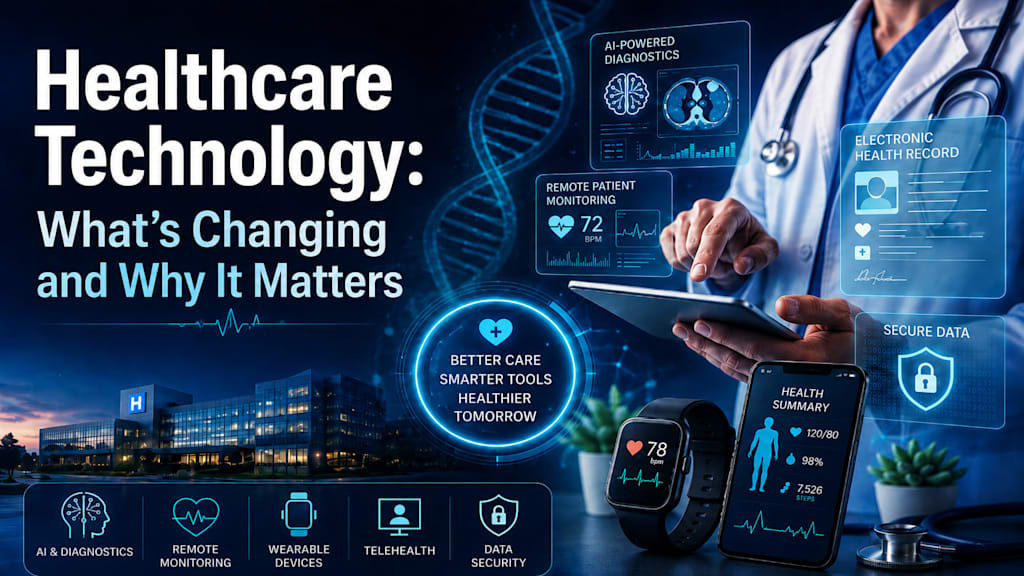
A patient leaves the clinic wearing a small heart monitor. By evening, her doctor can already review its readings. The doctor listens while software writes the visit notes. That small change allows both people to maintain more eye contact. Digital health is projected to become a $420 billion market by 2026. Yet cost and privacy still raise hard questions. Why does this shift matter?
Quick Answer
Healthcare technology now supports quicker reviews, home monitoring, and virtual appointments. Connected records also help care teams see updated information. However, older software, weak security, and poor training create delays. The strongest tools will be those that save time, share data safely, and work reliably in daily care.
Why is Healthcare Technology Changing So Fast in 2026?
Care teams face heavy paperwork and growing patient demand. Meanwhile, people expect quicker access and easier ways to understand their health information. Better sensors now collect useful readings outside clinics.
Cloud systems can move records between approved care teams. AI also sorts large amounts of information quickly. In 2026, 81% of physicians reported using AI professionally. Doctors still make final decisions, but they can see patterns sooner.
Healthcare Technology Trends 2026
Current healthcare technology trends in 2026 focus on earlier, connected care:
AI-assisted diagnosis: Flags unusual scans and drafts visit notes.
Remote patient monitoring: Tracks health readings between clinic visits.
Wearable devices: Follow glucose, heart rhythm, or blood oxygen.
Shared record standards: Help systems read the same information.
Agentic AI: Supports scheduling, paperwork, and basic triage tasks.
Stronger cybersecurity: Protects devices and private health records.
Together, these trends extend monitoring between appointments. They also give care teams a more complete view of daily health.
Healthcare Technology Market Size in 2026
Market estimates show growing demand for connected healthcare services. Grand View Research provides the figures below. CAGR means average yearly growth.
Digital health: $1.83 trillion projected by 2033, CAGR = 23.4%
Wearable medical devices: $330.5 billion by 2033, CAGR = 29.5%
Remote patient monitoring: $110.7 billion by 2033, CAGR = 20.0%
Agentic AI in healthcare: $4.96 billion by 2030, CAGR = 45.6%
These forecasts show market growth, not guaranteed patient results.
Technology in Healthcare Examples Used Today
Many healthcare tools already feel like part of everyday life. A smartwatch may track heart rhythm during sleep. A glucose sensor records sugar levels throughout the day. Telehealth platforms connect patients with distant specialists.
AI imaging tools can highlight suspicious areas on medical scans. Think of them as another set of eyes. However, a trained clinician still checks every finding.
How Many AI Medical Devices Has the FDA Authorized?
The FDA reported over 1,300 authorized AI-enabled devices during 2025. Its live list added more devices during March 2026. Many listed products support medical imaging and heart care.
10 Importance Points of Technology in Healthcare
The 10 importance points of technology in healthcare affects patients and care teams:
Faster diagnosis
Earlier health warnings
Fewer missed follow-ups
Specialist access from home
Less paperwork during visits
Easier access to records
Better medical image reviews
Lower travel needs
More personal care plans
Safer medication checks
Together, these changes reduce missed appointments, repeated paperwork, and unnecessary travel.
Advancement of Technology in Medical Field
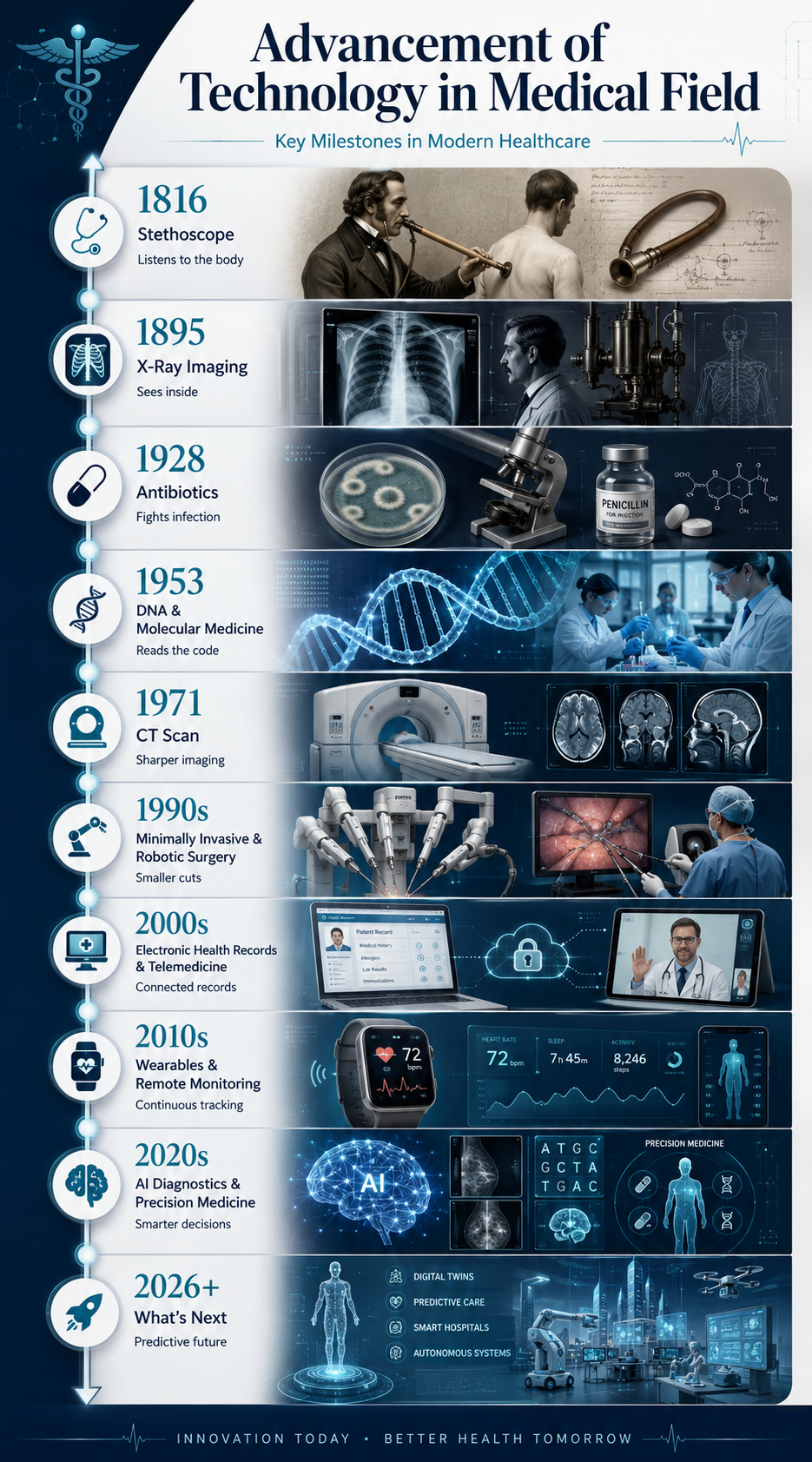
The advancement of technology in the medical field goes beyond digital paperwork. AI-supported scans can mark unusual areas. Doctors can then study those areas more closely.
Wearable devices continue collecting readings after patients leave clinics. For example, someone may wear a small heart monitor at home. The device works during meals, sleep, and light exercise.
This longer view can reveal patterns missed during short visits. However, the information must reach the right care team safely.
Medical systems are also learning to share records better. This process is known as interoperability. It means different programs can read the same patient information.
That may sound simple, but it remains difficult. Many hospitals still use older software. The main problem is that hospitals often use outdated software. Many older systems were built before modern sharing standards. Newer tools may not exchange records with them correctly.
What is the Biggest Challenge Facing Healthcare Technology?
The hardest problem is sharing data without weakening privacy. Connected records improve teamwork but create more targets for attackers. Older software may also reject newer devices. Staff then juggle systems that cannot communicate.
Data Security Risks
Healthcare breaches cost an average of $7.42 million during 2025. IBM ranked healthcare highest for fourteen straight years. Hospitals need safer software, regular updates, and trained workers.
Cost and Access Gaps
Smaller clinics may lack money for new systems. Remote communities often face poor internet service. Even a good virtual-care tool fails without stable connections. Fair progress needs affordable devices and practical support.
Where is Healthcare Technology Headed Next?
Healthcare is shifting toward care based on regular readings collected at home. Home sensors may warn care teams before symptoms grow worse. AI may reduce paperwork and support faster reviews.
WHO extended its digital health strategy through 2027. Work has also started on its 2028–2033 direction. That plan focuses on fair access, shared standards, and responsible AI.
The next challenge involves trust. People need to know who sees their information. They also need clear choices about data use.
Healthcare Technology Should Keep Care Human
Healthcare technology is moving care beyond hospital walls. Smart tools can spot warning signs earlier. They can also give doctors more time to listen.
Still, faster systems mean little without safe data and fair access. The next step is not simply more technology. It is better technology that people can understand and trust.
When useful tools support human judgment, care becomes easier to follow and more responsive to each patient. That is the kind of medical progress worth carrying forward.
About the Creator
Naheed Ali, MD, PhD, ScD
I'm the founder and editor-in-chief of HealthcarePropulsion.com, the latest international medical news at your fingertips with 2 million+ GA4 verified active users per month.
Enjoyed the story? Support the Creator.
Subscribe for free to receive all their stories in your feed.
Comments