
Croatia Wildfires: Deadly Blaze Forces Evacuations Along the Adriatic Coast
Deadly Wildfires Sweep Croatia’s Adriatic Coast, Forcing Mass Evacuations as Extreme Heat, Dry Vegetation, and Strong Winds Fuel the Blaze
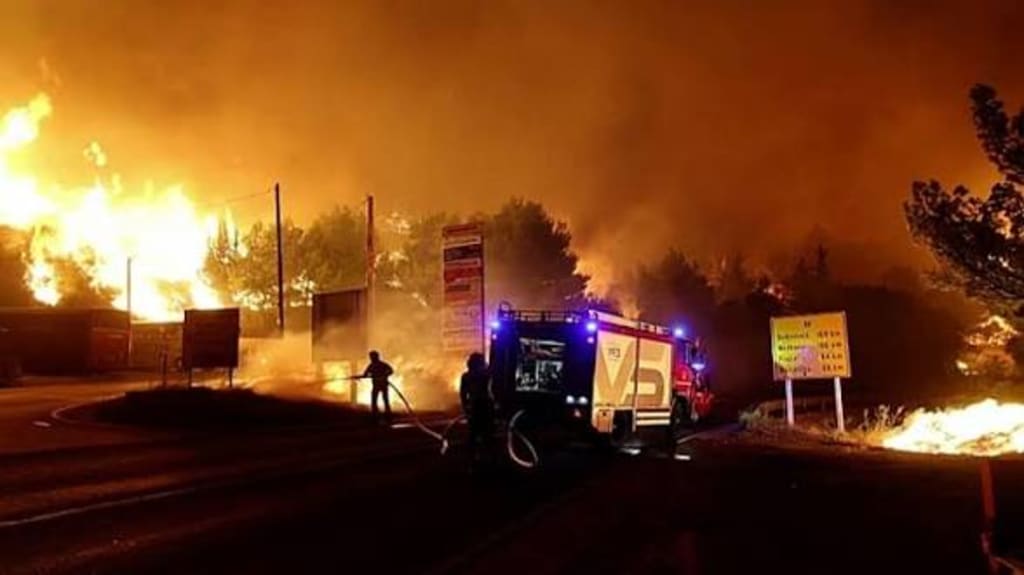
Croatia is facing another serious wildfire emergency as a fast-moving blaze swept through the coastal area around Omiš, turning a popular Adriatic tourist destination into a scene of destruction and emergency evacuation. The fire, intensified by strong winds, extreme heat, and exceptionally dry vegetation, reached homes and vehicles and forced residents and tourists to flee.
The wildfire near Omiš and Lokva Rogoznica became one of the most serious fires reported in Croatia during the current summer season. Authorities evacuated around 1,200 people from affected areas, while dozens of people required medical treatment. At least one person was found dead after the fire, according to reports, while several injured people remained in serious condition.
Wildfire Sweeps Through Omiš
The blaze began near Lokva Rogoznica on Croatia's central Dalmatian coast and rapidly expanded toward residential areas. Strong winds helped push flames through dry vegetation and woodland, making it difficult for firefighters to contain the fire.
Residents described frightening scenes as flames approached homes and roads. The night sky reportedly turned red as the fire moved through the hills surrounding the coastal communities. Several houses and vehicles were damaged, while roads were closed as emergency crews worked to protect people and property.
More than 1,000 hectares were affected by the blaze according to early reports, highlighting the speed and scale of the fire.
Thousands Forced to Leave
The evacuation of residents and tourists became one of the most urgent priorities for Croatian authorities. Around 1,200 people were moved away from danger, with temporary accommodation provided for those unable to return home.
The evacuation also affected international visitors enjoying Croatia during the peak summer tourism season. Omiš and the surrounding Dalmatian coast are popular destinations because of their beaches, historic towns, mountains, and scenic Adriatic landscape.
Emergency shelters were opened as authorities worked to ensure that evacuated families and tourists had access to basic necessities. The situation demonstrated how quickly a wildfire can transform a busy holiday destination into an emergency zone.
Firefighters Battle Extreme Conditions
Fire crews faced challenging conditions because of high temperatures, dry vegetation, and strong winds. Hundreds of firefighters were deployed alongside dozens of emergency vehicles and aircraft.
Reports indicated that around 286 firefighters and 90 vehicles were involved in operations during the most intense phase of the Omiš fire, supported by aircraft used to attack flames from the air.
Aerial firefighting is particularly important in Croatia's rugged coastal terrain, where steep hills and limited road access can make it difficult for ground crews to reach rapidly advancing fires.
Firefighters must also remain cautious because changing winds can suddenly alter the direction of a wildfire. Even when flames appear to be under control, burning vegetation and hot spots can reignite.
A Deadly Human Cost
The wildfire has already had a tragic human cost. Croatian authorities reported that a body was found in a burned area, while dozens of people were injured during the emergency.
Medical facilities in nearby Split treated people suffering injuries related to the fire. Several patients were reported to be in serious or life-threatening condition.
The human consequences of wildfires extend beyond physical injuries. People who lose homes, personal belongings, vehicles, or businesses can face months or years of financial and emotional recovery.
For tourists, an evacuation can also become a traumatic experience, particularly when flames and smoke appear suddenly and roads become congested.
Why Croatia Is Vulnerable to Wildfires
Croatia's Adriatic coastline is naturally vulnerable to summer wildfires. The region experiences hot and dry summers, while Mediterranean vegetation can become highly flammable after prolonged periods without significant rainfall.
Strong winds can make the situation even more dangerous. Once a fire begins, wind can carry embers over considerable distances, allowing new fires to start away from the original flames.
Climate change is also an important factor in understanding Europe's increasingly difficult wildfire seasons. Scientists have linked rising temperatures and drought conditions with environments that are more favorable for extreme fires. The European Union's Copernicus Climate Change Service recently warned of very extreme wildfire conditions across significant parts of Europe.
Threat to Tourism
Croatia's tourism industry is closely connected to its natural environment. The country's beaches, forests, islands, mountains, and historic coastal towns attract millions of visitors.
Wildfires can therefore cause significant economic disruption. Evacuations may force hotels and holiday rentals to close temporarily, while damaged roads and infrastructure can prevent tourists from reaching affected destinations.
Images of burning forests and evacuation operations can also influence future travel decisions. Although Croatia remains a major tourism destination, repeated extreme fires could increase pressure on authorities to strengthen prevention measures in popular coastal areas.
Fire Prevention Becomes More Important
The latest wildfire demonstrates why prevention is as important as emergency response. Authorities can reduce risks by clearing dangerous vegetation around communities, improving firebreaks, monitoring high-risk areas, and enforcing restrictions during extreme fire weather.
Residents and visitors also have an important role. Careless disposal of cigarettes, unattended fires, fireworks, and other human activities can create serious risks when vegetation is extremely dry.
Public awareness campaigns can help tourists understand local fire restrictions and evacuation procedures before an emergency begins.
Climate Change and Europe's Fire Crisis
Croatia's wildfire is part of a much wider European pattern. Major fires have recently affected several countries, including Greece, France, Spain, Germany, and the United Kingdom. Record-breaking heat and drought have created dangerous conditions across large areas.
Reuters reported that the European wildfire crisis is occurring during a period of extreme heat and drought, with climate change contributing to conditions that allow fires to spread more easily.
This does not mean every individual wildfire is directly caused by climate change. However, hotter temperatures and prolonged dryness can increase the likelihood that vegetation becomes highly combustible and that fires become more difficult to control.
What Happens Next?
The immediate priority for Croatian authorities remains protecting communities, controlling remaining hot spots, supporting evacuated residents, and assessing damage.
Authorities will also need to inspect buildings and infrastructure before allowing people to return. Damaged structures can remain dangerous after flames disappear, particularly when roofs, electrical systems, or supporting walls have been weakened.
Longer-term recovery will involve rebuilding damaged property, restoring landscapes, and strengthening wildfire prevention strategies.
Conclusion
The Croatia wildfires near Omiš have highlighted the growing danger faced by Mediterranean communities during extreme summer weather. The deadly blaze forced around 1,200 people to evacuate, injured dozens, damaged homes and vehicles, and placed enormous pressure on firefighters and emergency services.
The disaster is a reminder that wildfire preparedness cannot begin when flames reach a neighborhood. Communities need early-warning systems, effective evacuation plans, strong emergency services, responsible tourism practices, and long-term strategies for managing increasingly dry landscapes.
Croatia's Adriatic coast remains one of Europe's most beautiful regions, but the latest fire shows how quickly extreme weather can threaten people, property, tourism, and the natural environment. As heatwaves and drought conditions become more challenging, preventing and preparing for wildfires will remain a critical priority for Croatia and the wider Mediterranean region.
About the Creator
Enjoyed the story? Support the Creator.
Subscribe for free to receive all their stories in your feed.
Comments
There are no comments for this story
Be the first to respond and start the conversation.