
Whispered Warnings Are Not a Safety Plan
What theater keeps doing when it already knows who is dangerous

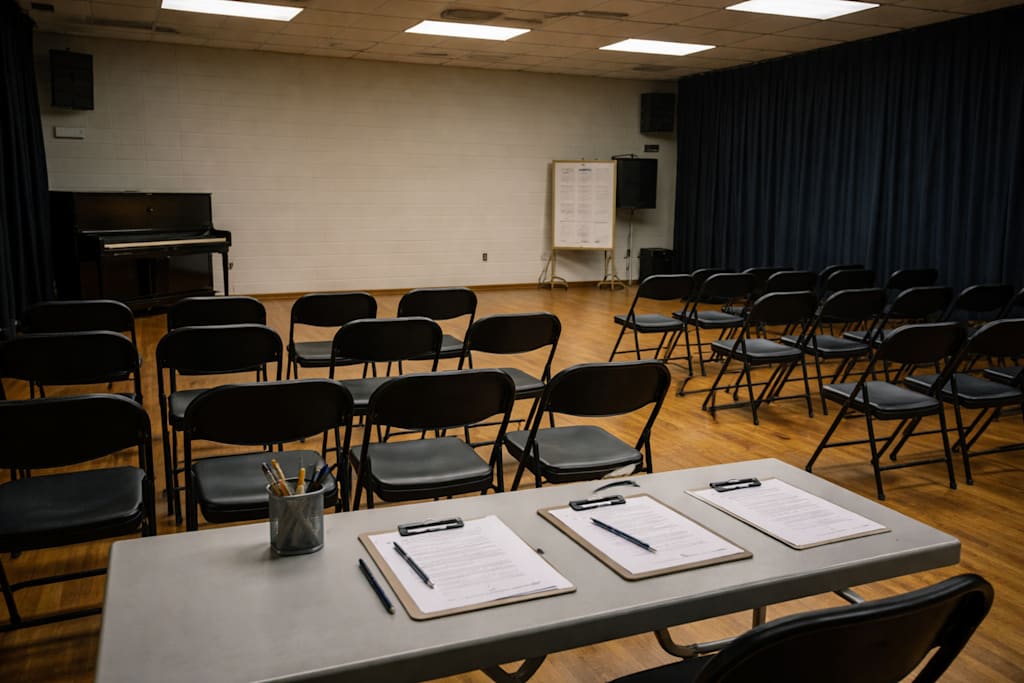
Theater has a predator problem.
That sentence should not feel controversial by now. It should not feel edgy. It should not feel like an overstatement. And yet in too many rooms, saying it plainly still produces the same familiar discomfort, the same defensive tightening, the same immediate urge to qualify what should already be obvious.
Maybe not everyone.
Maybe not this case.
Maybe people change.
Maybe everyone deserves inclusion.
Maybe we should not judge someone by their worst moment.
Maybe the past is complicated.
I have heard all of it.
And over the past few years, I have seen, heard, and had to be involved with more than fifteen accounts involving predatory behavior in theater spaces. Different people. Different settings. Different levels of severity, manipulation, grooming, coercion, harassment, boundary-crossing, intimidation, and sexual misconduct. Different ages. Different organizational structures. But the most chilling common thread has not been the behavior itself.
It has been this: people knew.
Maybe not everyone. But enough.
Enough to whisper.
Enough to warn privately.
Enough to trade stories in parking lots and backstage corners.
Enough to say “just keep an eye on him.”
Enough to tell younger people who to avoid.
Enough to quietly adjust dressing room assignments, call times, chaperoning, social plans, rides home, afterparties, casting decisions, and volunteer access without ever saying the central truth out loud.
Enough to know.
And still, over and over, I have watched people show up to auditions with their reputations intact enough to be considered. I have watched organizations behave as though a known history of predatory behavior is merely one factor among many. I have watched communities decide, consciously or not, that if the person is talented enough, charming enough, socially embedded enough, or distant enough from the last incident, then maybe this time they can be folded back in.
That is not ignorance.
That is permission...
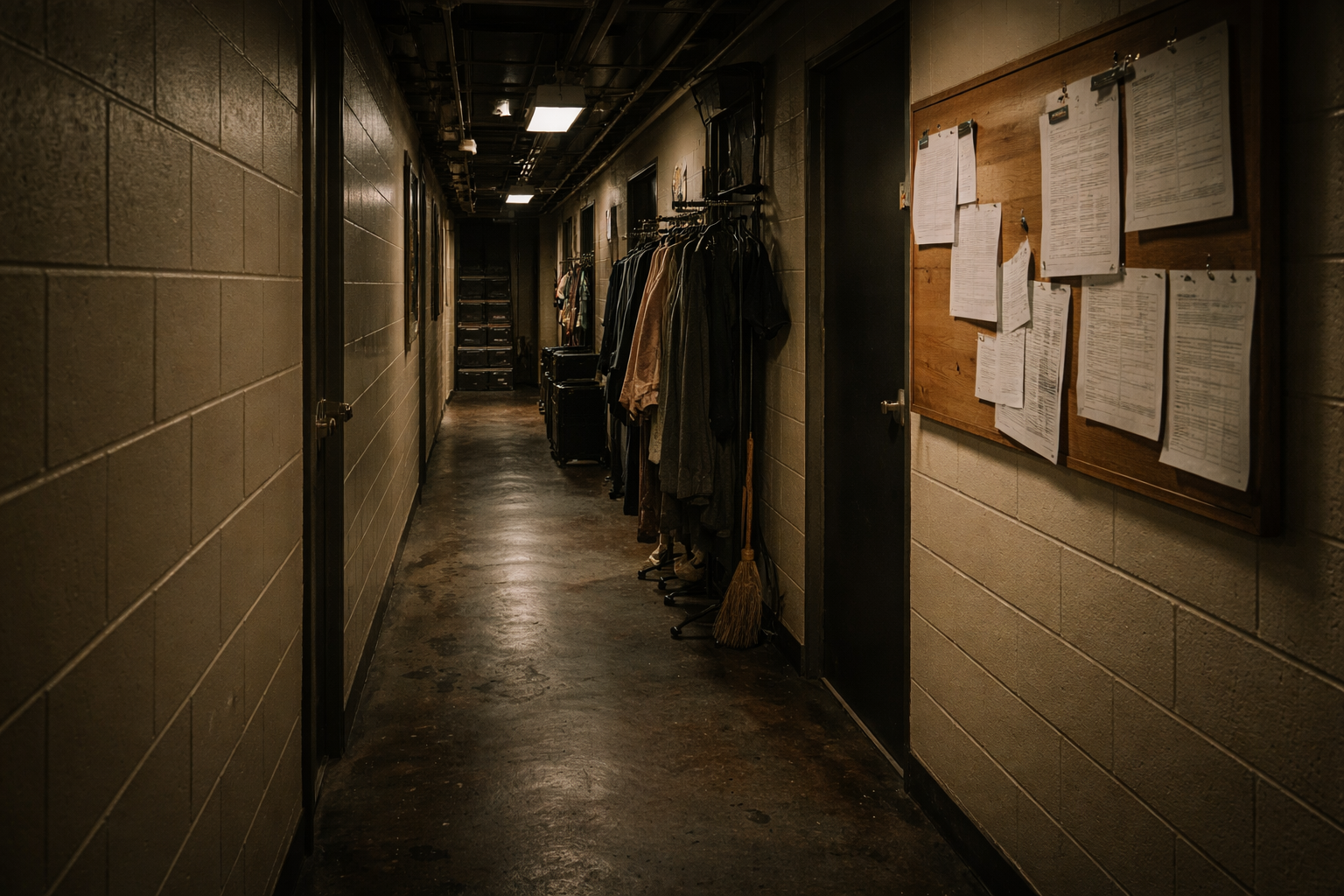
I am not writing about this only as an observer. I have also experienced sexual misconduct and assault in theater, and that reality has sharpened my understanding of how often communities confuse prior knowledge with action.
We do not talk enough about the many forms predatory behavior takes in theater because people still imagine a predator as one recognizable type. One obvious monster. One person so unmistakably dangerous that no reasonable community could miss it.
But theater does miss it. Constantly. Or rather, it notices and then translates what it notices into something easier to live with.
Predatory behavior is not only physical assault. It is not only the most extreme headline-ready act. It can look like grooming younger or more vulnerable people for access. It can look like directors, staff, actors, teachers, or volunteers using authority, experience, admiration, age, social standing, or emotional dependency to blur boundaries. It can look like repeated sexual comments disguised as humor. It can look like private messages that become more personal, more suggestive, more entitled over time. It can look like opportunistic touch, coercive intimacy, emotional isolation, favoritism tied to access, persistent pressure after refusal, or the cultivation of a reputation that makes people doubt themselves before they ever name what is happening.
It can also look like what happens after someone says no. Turning down a person in power should not cost someone their place in the room, and yet that is exactly what can happen. I have seen people reject unwanted attention or pressure from someone with influence and then find themselves quietly ostracized, treated differently, excluded, recast in the social story of the room, or made to feel that their refusal was the real offense. That is not awkwardness. That is retaliation, and it belongs in any honest conversation about predatory behavior in theater.
To be clear, not every candid joke, adult rapport, or boundary-pushing exchange is predatory by default. There are trusted relationships in theater, as in life, where people have explicitly or implicitly established mutual comfort, authority, and respect for that kind of dynamic. Those spaces exist, and they should not be confused with predatory behavior. The difference is not simply tone. It is power, consent, clarity, reciprocity, and whether everyone involved is genuinely free and safe to set limits without consequence.
It can also look maddeningly normal from the outside.
That is part of why theater is so vulnerable to it.
Theater runs on closeness. Trust. Late nights. Fast intimacy. Admiration. Vulnerability. Uneven power. Shared secrets. Emotional openness. Physical proximity. Blurred professional boundaries. Intense rehearsal periods that can make people feel bonded, chosen, exceptional, indebted, or seen in ways that are very real and also very easy to exploit.
Predators know this.
They know theater communities often pride themselves on being warm, informal, emotionally expressive, and “like family.” They know many spaces confuse friendliness with safety. They know young artists are often eager to please, eager to belong, eager to be cast, eager to be mentored, eager not to be seen as difficult. They know adults in these spaces often value harmony, reputation, and continuity over confrontation. They know volunteer-run or under-resourced organizations frequently lack policy, training, reporting structures, and the stamina to follow through once something ugly has been named.
Most of all, predators know that if they are useful enough, many people will work very hard to keep the problem survivable rather than stop it.
That is the part I keep coming back to.
Not only the predator. The ecosystem around them.
Because theater communities do not just fail through direct denial. They fail through soft language. Through selective memory. Through moral vagueness disguised as generosity. Through that maddening tendency to act as though inclusion is the highest good even when what is being included is danger.
I have heard people say, “Everyone deserves a chance.”
A chance at what, exactly?
A chance to audition again?
A chance to be placed in authority again?
A chance to re-enter youth spaces?
A chance to be around the same kinds of people they have already shown themselves willing to manipulate, target, or harm?
There is a difference between believing in human complexity and refusing to protect people.
There is a difference between mercy and negligence.
There is a difference between someone changing and a community simply deciding it would be more convenient to act as though they have.
“People change” is one of the most dangerous sentences in these conversations, not because change is impossible, but because the phrase is so often used by people other than the harmed. Usually by people for whom the risk is theoretical. Usually by people who will not be the ones cornered, pressured, disbelieved, retraumatized, isolated, or blamed if the so-called second chance turns out to be exactly what many of us already knew it would be.
And then there is the line about inclusion.
I have heard that one too. “Everyone needs to be included.”
No. They do not.
Not in every space.
Not in every role.
Not in every room.
Not when the cost of that inclusion is somebody else’s safety.
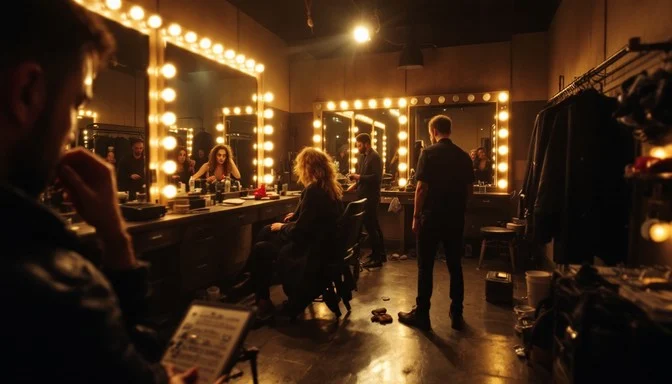
Theater has become so attached to the language of welcome that some communities can no longer distinguish between openness and a total failure of discernment. They want to be the kind of place that gives everyone a home. They want to be compassionate. They want to avoid conflict. They want to believe in redemption because redemption is emotionally satisfying and theater people, for all our talk of realism, are often deeply attached to hopeful narratives.
But some narratives are not ours to impose.
And no one gets to write a redemption arc on top of someone else’s risk.
This is especially true when people already know the history.
Because once a community knows, the burden changes. It is no longer dealing with uncertainty. It is making a choice. A choice about whose comfort matters, whose talent matters, whose access matters, whose testimony counts, and whose fear is considered an acceptable trade-off.
That choice can hide behind all kinds of language.
He has always been nice to me.
I never saw anything myself.
That was years ago.
They were young too.
The story is more complicated than people say.
I just do not want to exclude someone.
We have to let people move forward.
But underneath all of it is the same ugly calculation: maybe the community can absorb the risk.
And that is where I lose patience.
Because it is not abstract risk. It is not philosophical risk. It lands somewhere. Usually on people with less power, less age, less status, less institutional trust, less practice saying no, or less certainty that anyone will protect them if they do.
The cost is paid by the people most likely to already be carrying too much.
Young artists.
Women.
Queer people.
Trans people.
Disabled people.
People new to the organization.
People who do not yet know which smiles are safe and which ones have a history behind them.
People who come to theater hoping for belonging and find out, too late, that the room knew more than it said.
That betrayal runs deep.
And it is not just the direct harm that matters. It is the community lesson. The hidden curriculum. The thing everybody learns when a known predator is welcomed back, cast, protected, or casually absorbed into the room.
They learn that talent can buy forgiveness other people will never get.
They learn that some people’s behavior is always being contextualized while other people’s reactions are always being scrutinized.
They learn that safety is conditional.
They learn that the burden of vigilance will fall downward, not upward.
They learn that if something happens, the room may already have practice looking away.
Theater likes to think of itself as a refuge. Sometimes it is. But a refuge that knowingly makes room for predators is not a refuge. It is a stage set. It is safety painted onto flats.
And people can feel the difference.
So what do we do with that truth?
We stop pretending this is only about individual bad actors. It is also about institutional cowardice. About communities that would rather manage discomfort than draw a line. About boards, directors, producers, teachers, volunteers, and longtime members who keep mistaking silence for neutrality and second chances for ethics.
We get more precise about behavior. We stop speaking in fog. We stop calling predatory behavior “drama,” “complicated history,” “social awkwardness,” “boundary issues,” or “miscommunication” when what we mean is that someone has repeatedly used access, charm, power, sexuality, manipulation, or emotional pressure in ways that make others unsafe.
We stop pretending that private knowledge is not real knowledge.
And we stop casting people while quietly telling everyone else to be careful around them.
That one, especially, should shame us.
If someone is unsafe enough that people feel compelled to whisper warnings, that person is unsafe enough that an organization should not be handing them more access, more authority, or more proximity to vulnerable people.
That should not be a radical sentence.
Theater does not have a predator problem only because predators exist. Every field has dangerous people in it. Theater has a predator problem because communities keep making room. Because people know and repackage what they know into something socially manageable. Because too many organizations still believe that avoiding the ugliness of confrontation is a form of kindness.
It is not kindness.
It is exposure.
And if theater spaces want to be what it so often claims to be. A place of care, courage, vulnerability, collaboration, and human truth; then it is going to have to become far less sentimental about who gets to stay in the room.
Because some people do not need another opportunity to belong there.
Some people need to lose access.
And some communities need to stop acting like they do not already know why....

About the Creator
Jason Hair-Wynn
Theatre artist, director, choreographer, and arts leader writing on accountability, equity, and culture in the performing arts, with a deep belief in storytelling, truth, and spaces rooted in care. And some travel content along the way
Enjoyed the story? Support the Creator.
Subscribe for free to receive all their stories in your feed. You could also become a paid subscriber, letting them know you appreciate their work.
Comments
There are no comments for this story
Be the first to respond and start the conversation.