
The Journal in the Locked Drawer
When Secrets Become Evidence The Inheritance No One Expected Margaret Ashford had been dead for six days when her son Thomas discovered the journal
M Mehran
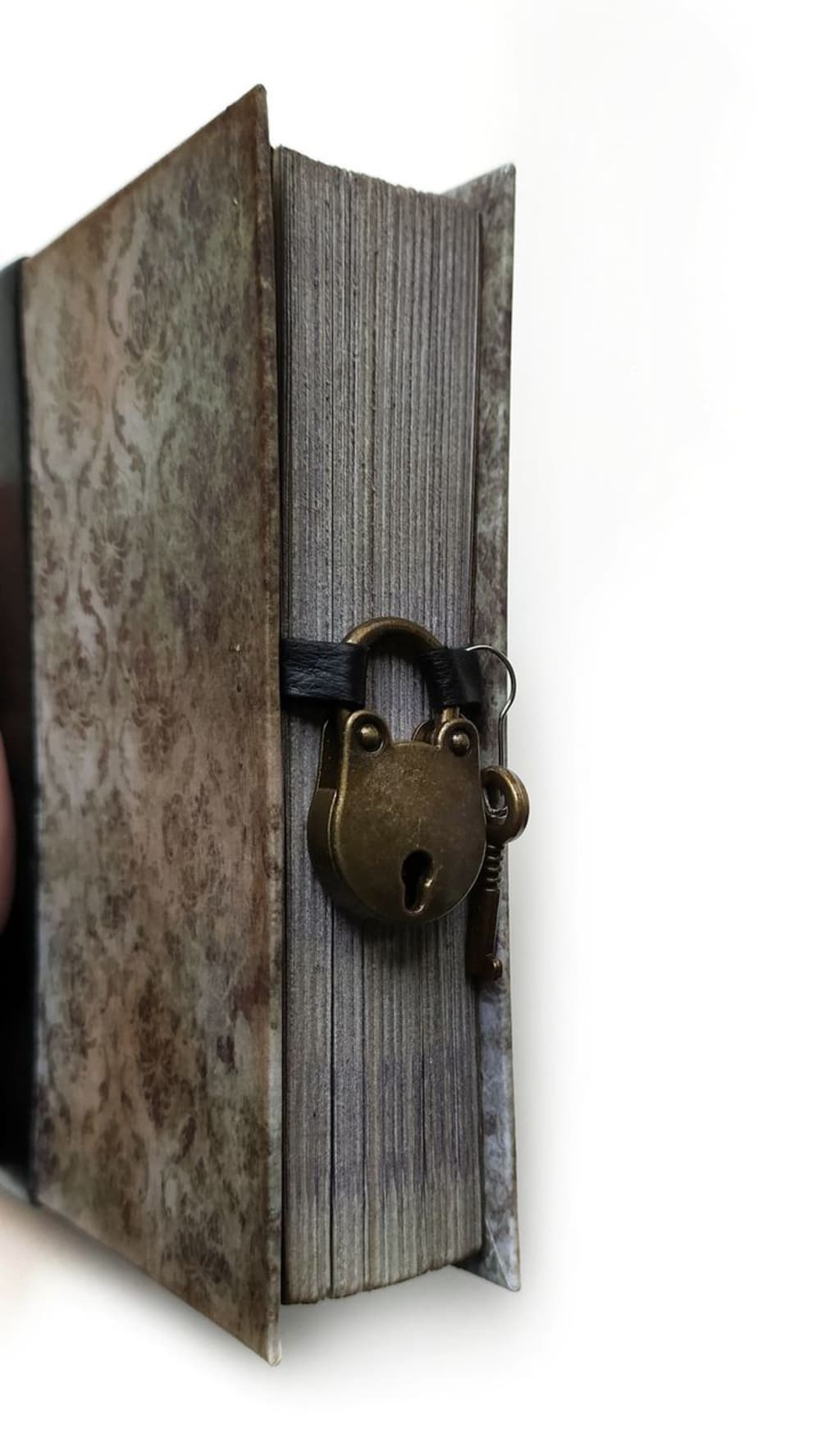
Margaret Ashford had been dead for six days when her son Thomas discovered the journal. The funeral was scheduled for the following afternoon—a gray Tuesday in late October when the world seemed to move in slow motion. Thomas had returned to his mother's house to collect her personal effects, photographs, and the small valuables she'd accumulated over seventy-eight years of meticulous living. He wasn't looking for secrets. But secrets, Thomas would learn, have a way of finding those who disturb the order they've been buried beneath. The desk was mahogany, imported from somewhere elegant decades ago. Thomas had sat at this desk as a child, watching his mother write letters in her careful script, keeping lists of household tasks in her leather-bound planner. Everything about Margaret Ashford suggested routine, propriety, and the kind of discretion that comes from old money and older values. The small brass key was in the third drawer, tucked beneath yellowed photographs of family members Thomas barely remembered. It was small, ornate, the kind of key that didn't belong in the modern world. Thomas held it in his palm, and something in his chest tightened—an intuition that some doors, once opened, cannot be closed again. The Lock That Held Everything The locked drawer was at the base of the desk, a compartment Thomas had never noticed despite visiting this house countless times. The key slid into the mechanism with surprising smoothness, as though it had been turned recently. The drawer opened to reveal a single object: a leather journal, its pages worn from handling, its cover embossed with Margaret's initials in fading gold leaf. Thomas opened it carefully, as though the pages might crumble to dust if handled roughly. The first entry was dated January 3rd, 1962—forty-seven years earlier. "I did something today that can never be undone. God forgive me, but I would do it again. Some people are not meant to live. Some people destroy everything they touch. I have protected this family from ruin, even if no one will ever know what I've protected them from." Thomas felt his hands tremble as he read. His mother, the woman who'd served on charity boards and volunteered at the church, who'd hosted elegant dinner parties and mentored young women from the neighborhood—this woman had written something that sounded like a confession. He turned the page. Entry after entry detailed a story that unfolded like a nightmare: Thomas's father, Charles Ashford, had been involved in a hit-and-run accident in the winter of 1962. A young woman—a secretary from his office—had been struck by his car as she crossed the street late at night. Charles had panicked and driven away, leaving her broken on the pavement. The woman had died three days later in the hospital, her family unaware that their daughter's death wasn't an accident. Margaret had discovered the truth when she found Charles's bloodstained coat hidden in the garage. Instead of reporting it to the police, instead of doing what the law demanded, Margaret had made a choice that would haunt her for the rest of her life. A Mother's Impossible Decision The journal became a chronicle of Margaret's guilt and justification, a psychological autopsy of a woman torn between morality and family loyalty. She'd hidden the evidence. She'd ensured Charles had an alibi. She'd helped him fabricate a story about being home all evening. When the police investigated, they found no witnesses, no leads, no suspects. The case went cold. The young woman's family never received justice. Her killer lived free, unpunished, for the next twenty-three years until he died of a heart attack in 1985. But Margaret lived with the knowledge. Every single day. The journal documented her deterioration—the nightmares, the guilt, the way she'd thrown herself into charity work as though helping others might balance the cosmic scales. She wrote about seeing the young woman's mother at the grocery store and having to turn away. She wrote about attending the woman's grave on the anniversary of her death, standing in the shadows, unable to pray or grieve openly. Most painfully, she wrote about her son. "Thomas is kind. He has a good heart. I must teach him that family comes first, no matter the cost. That's the burden we carry—loyalty above all else. And yet, I pray he never has to face the choice I faced. I pray he never understands what I've done." The Detective's Discovery Thomas sat in the dark study for hours, the journal resting in his lap like a loaded weapon. He knew what he should do. The statute of limitations had long since expired—his father couldn't be prosecuted. The young woman's family had moved away decades ago. Justice, in any meaningful sense, was impossible. And yet, the knowledge burned inside him like poison. He called Detective Morrison, a woman he'd met years ago at a neighborhood event. He read passages from the journal, his voice steady despite the horror of the words. Morrison listened without interruption, understanding immediately the complexity of what Thomas had discovered. "Your father is dead," Morrison finally said. "Your mother is dead. The victim is dead. The case can't be prosecuted." "But her family," Thomas said quietly. "They deserve to know." The Truth Emerges Finding the victim's family took weeks. Margaret's journal had included the woman's name: Rachel Chen. Morrison's research revealed that Rachel's sister, Diana, still lived in the city—a woman now in her seventies who'd spent decades wondering what had happened to her sibling. Thomas requested a meeting. He brought the journal. What followed was the hardest conversation of Thomas's life. He sat across from Diana Chen and read passages from his mother's confession, watching the older woman's face transform through shock, grief, rage, and finally—something unexpected—understanding. "Your mother lived in hell," Diana said quietly. "That doesn't excuse what she did. But I've spent seventy years in my own hell, wondering about my sister. At least now I know. At least now I can finally grieve properly." Diana chose not to pursue legal action—there was no one to prosecute. Instead, she requested a proper memorial service for her sister, conducted with full acknowledgment of what had happened. Thomas attended, standing beside Diana as they honored Rachel Chen's memory and acknowledged the injustice that had stolen her life. The Weight of Inherited Guilt The journal was eventually donated to a true crime archive, with the families' permission. Criminologists study it as a case study in moral ambiguity and the psychological costs of complicity. Margaret Ashford's carefully constructed life became a lesson about the dangers of choosing family loyalty over justice. Thomas spent years processing his inheritance of guilt. He established a scholarship fund in Rachel Chen's name. He became an advocate for transparency in criminal investigations. He lived with the knowledge that his mother's choices had cost a life, and that her decades of suffering were both punishment and penance for a crime she hadn't committed but had protected. The Questions That Remain The journal in the locked drawer teaches us something uncomfortable: sometimes, the worst crimes aren't committed by those we'd call criminals. Sometimes, they're committed by ordinary people—parents, loved ones, good citizens—who choose to protect those they love over the abstract concept of justice. Margaret Ashford never stole, never killed, never physically harmed anyone. And yet her legacy became a crime scene—a locked drawer full of secrets that destroyed more than any violent act could have.
About the Creator
Enjoyed the story? Support the Creator.
Subscribe for free to receive all their stories in your feed.
Comments
There are no comments for this story
Be the first to respond and start the conversation.