
Artificial Intelligence in the Educational Sector
Are AI really helpful for childrens?
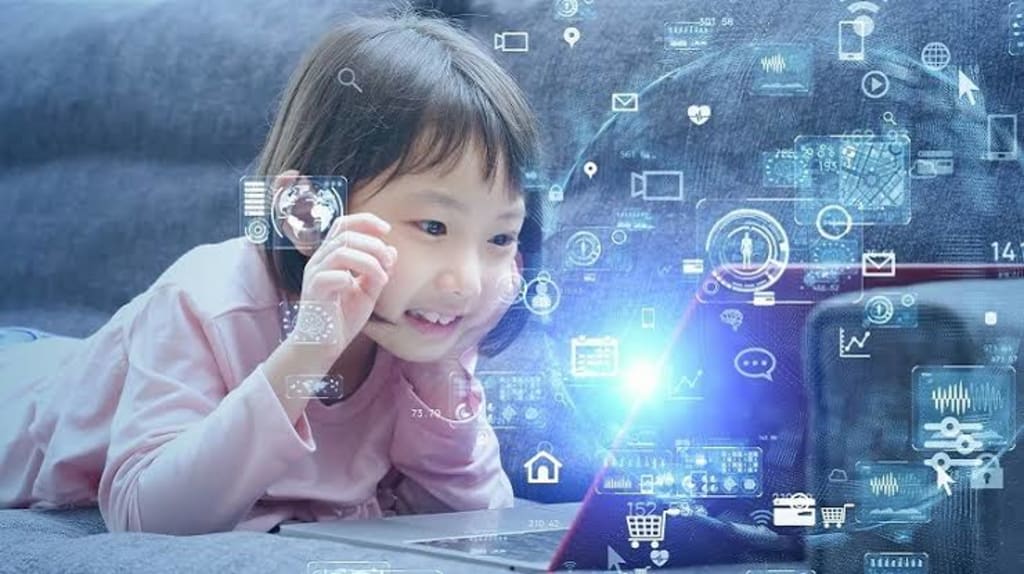
Artificial Intelligence has been making waves in various industries, and the education sector is no exception. Education has a history of being impervious to inventions that have transformed society in other ways. Perhaps artificial intelligence is no different from its many new versions, like chat bots.
AI is the intelligence of machines and softwares, opposed to the intelligence of other living beings, primarily of humans. There are many tools created most especially to help people lessen their work.
According to Christodoulou (2024), In the current discussion about AI and its impact on education, two particularly damaging misconceptions keep returning. One is that students don’t have to bother learning basic facts or skills, because the computer will do that for them. The second is that the school curriculum should be redesigned to focus on new AI applications, as that will be the best preparation for the world of work.
AI has found its way into learning, providing students with personalized learning experiences and teachers with powerful tools to track students' records. Artificial Intelligence (AI) systems offer effective support for online learning and teaching, including personalizing learning for students, automating instructors routines tasks, and powering adaptive assessment. However, while the opportunities for AI are promising, the impact of AI systems on the culture of norms in, and expectations about interactions between students and instructors are still elusive.
One of the most significant impacts of AI in the education sector is how it has personalized the way we learn, not every student is the same. Their interests and IQs vary. In this modern era, our conventional classrooms struggle to have students enjoy studying. On the contrary, you will often find students engaging in their learning more when it caters to their needs and capabilities of learning. This is how you can surely say that personalized learning is motivating pupils to learn. AI caters to the needs of students by identifying their weak spots, analyzing their behavior and learning patterns. Accordingly, AI creates a tailored plan for the students to learn at their individual speeds.
AI delivers organized information enabling students to effortlessly access knowledge from varied sources. ChatGPT, has gained so much popularity due to its ability to track and engage people in a conversational manner, similar to that of a human tutor. It releases information that someone needs immediately, that helps people reduce their workload. With that, instead of listening to the teacher, students usually use this kind of tool to create their assignments easily, meaning there's no learning.
In the future, it is very scary when a fear of job loss for teachers and no learning for students can be caused by AI. For now, Educators need to be mindful of limitations of AI and use it appropriately, while learners need to develop skills to navigate AI-based learning tools effectively. AI has the potential to transform education, but it must be ethically, transparently, and with consideration.
According to Cohen 2023, AI should be seen as a valuable tool that complements and enhances the teaching and learning process, rather than a substitute for human interaction. AI are tools have revolutionized education by providing personalized learning experiences, making education more accessible, and enhancing student engagement.
AI in higher education extends beyond this binary distinction, focusing on ensuring fairness in interpreting student data and making decisions based on machine-generated insights. Prioritizing fairness is critical for institutions to navigate the challenges posed by AI effectively.
The integration of AI in education has showcased remarkable potential, reshaped traditional methods, and brought forth a new era of personalized innovation. It holds an important place in the global education industry and has one of the largest networks of higher education institutions in the world.
About the Creator
Enjoyed the story? Support the Creator.
Subscribe for free to receive all their stories in your feed.
Comments
There are no comments for this story
Be the first to respond and start the conversation.