
A $34 Million Slugger Had One Unusual Contract Request: A Japanese Toilet
The White Sox signed a slugger — then renovated the bathrooms. A Japan-based look at the toilet seat two MLB stars treated as non-negotiable, and how to get the same thing at home.
Disclosure: I write from Japan and check Japanese sources and official announcements for the stories I publish. This article was drafted with AI assistance and reviewed and fact-checked by me.
When the Chicago White Sox signed Japanese slugger Munetaka Murakami to a two-year, $34 million contract last December, general manager Chris Getz expected the usual negotiation topics — money, role, playing time. What stood out instead, he told MLB.com, was a bathroom.
"He did notice we didn't have a bidet in our locker room," Getz said. "That's something that's new to him. And we are putting one in. So it was like, 'OK, that's new. We can do that.'"
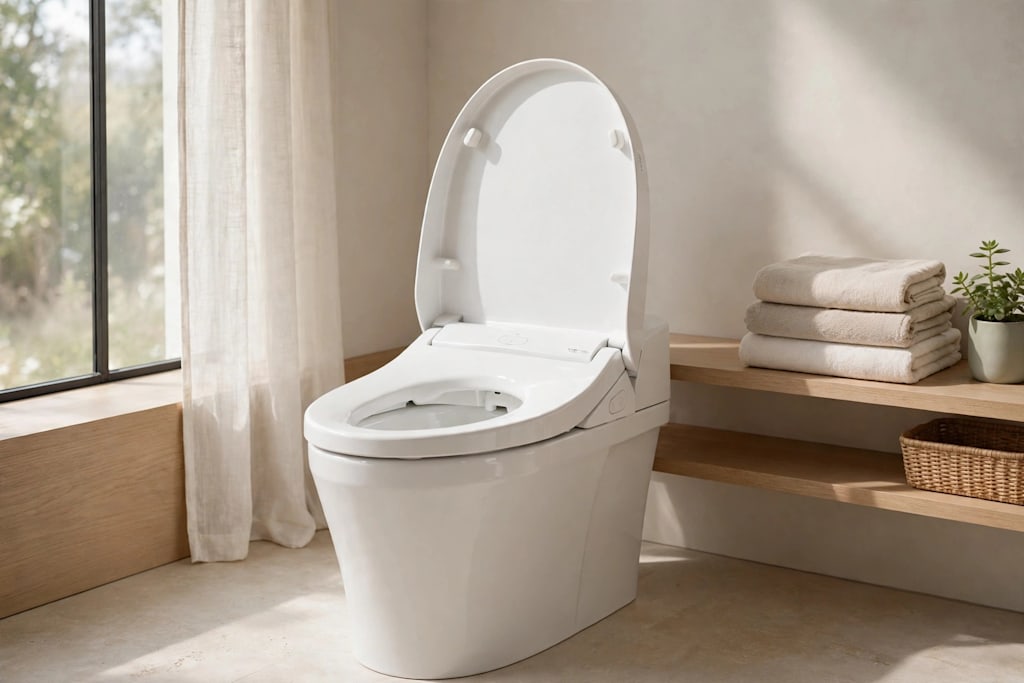
The Sox didn't install one. They installed TOTO WASHLET bidet seats throughout the clubhouse — the S7A, a top-tier model from Japan's biggest toilet maker.
Murakami's reasoning, through his interpreter, was disarmingly practical: "I use the bathroom a lot. I don't want to deal with a stomachache and not feel like playing, so I'd rather get that taken care of and feel good."
And then the story got better. The White Sox — a team that had lost 100+ games three straight seasons — turned into one of the stories of the 2026 season, with Murakami homering in his first three MLB games and CNN eventually running the headline "From bidets to baseball magic." TOTO sponsored a Murakami bobblehead giveaway — 15,000 of them, nodding to the bidet, later reselling for over $100. A toilet seat had become a franchise mascot.
He's not the only one
Murakami wasn't even the first Japanese star to raise it. A year earlier, pitcher Roki Sasaki reportedly asked about Japanese-style toilets during his free-agent process with the Los Angeles Dodgers. Dodgers president Stan Kasten confirmed the request publicly. For Sasaki, a proper Japanese toilet was part of how he judged whether a club understood what he needed to perform.
Two of the most sought-after Japanese players of the decade. Both negotiations touched, at some point, on the toilet.
If you're American, this sounds like a punchline. If you're Japanese, it sounds like Tuesday.
Why Japanese players can't go back
In Japan, the washlet — a toilet seat with a heated surface, warm-water washing, a dryer, automatic lid and self-cleaning nozzles — is not a luxury item. It's the default. Roughly 80% of Japanese households have one, and you'll find them in convenience stores, highway rest stops and rural train stations. Growing up with one isn't a preference; it's plumbing infrastructure, like hot water.
In the United States, adoption of bidet seats is still around 3%.
The gap isn't about hygiene squeamishness. It's mostly that Americans have never sat on one. The conversion pattern is so consistent it's become a running joke among expats: nobody in Japan evangelises about the washlet until they leave Japan, move somewhere without one, and discover that what they miss most isn't the food. Travellers come home from Japan talking about the food, the trains — and the toilets. Murakami and Sasaki are simply the most expensive examples of the same experience.
There's also a performance angle the players themselves point to. Murakami's quote isn't about luxury; it's about not letting a stomachache cost him a game. Warm water, less irritation, less paper, done. Over a 162-game season, boring physical comfort is a competitive edge.
A word of caution, from Japan
Reporting on this story from Japan, one detail deserves a warning label. When a washlet makes headlines, some readers go looking for the "real" Japanese model on Japanese shopping sites, where domestic units can look temptingly cheap.
Resist that. The White Sox did not have a Japanese unit shipped over — they installed the US-spec version. Japanese domestic washlets are built for Japan's 100V power supply and Japanese plumbing fittings, and they carry no US warranty. The two ballplayers' actual lesson is the opposite of importing: they asked for the local version of a Japanese standard, fitted to where they live.
Bottom line
A bidet seat is the rare "Japan product" that isn't a souvenir. It's infrastructure — the kind of thing two franchises quietly installed because a star player treated it as non-negotiable everyday equipment, no different from a good mattress or a quiet room.
Which raises the only question that matters: if a $34 million slugger wouldn't sign off on a bathroom without one — what's your current toilet seat doing for you? Tell me in the comments. I'm genuinely curious how many readers have made the switch, and how many think the rest of us are exaggerating.
If this story made you smile, a heart helps other readers find it — thank you for reading.
About the Creator
JIM | Japan Finds
From Nagoya, Japan. I write about the three Japanese products the world is quietly obsessed with — washlet bidet seats, Japanese kitchen knives, and real Uji matcha — checked against Japanese sources and domestic prices.
Enjoyed the story? Support the Creator.
Subscribe for free to receive all their stories in your feed.
Comments
There are no comments for this story
Be the first to respond and start the conversation.