
The Mystery of Our First Black President- Thomas Jefferson
For Sasha Desideri's Summer Mystery Unofficial Challenge

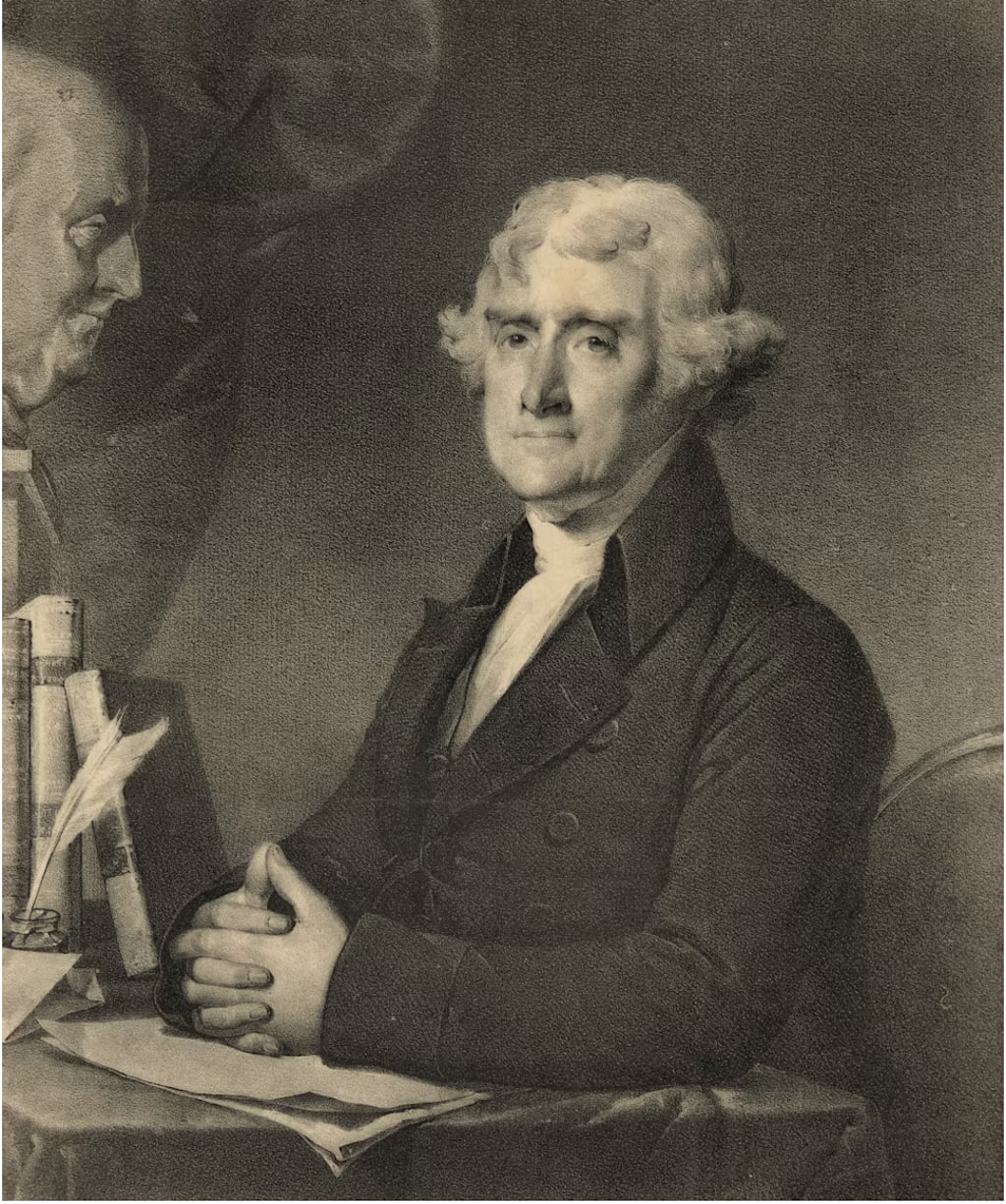
Historians have spent more than two hundred years trying to solve one of America’s greatest mysteries.
How could Thomas Jefferson write the words, “All men are created equal,” while simultaneously owning slaves?
Entire libraries have been devoted to answering this question. Professors have dedicated careers to it. Books have been written. Documentaries have been filmed. Academic conferences and family reunions have been held.
Yet somehow nobody has arrived at the obvious conclusion.
Fortunately, I watch a lot of true crime documentaries.
After conducting my own investigation, I believe I have solved the Jefferson Mystery.
The first clue appeared when I learned that Thomas Jefferson was incredibly introverted.
Most people say he joined the Revolution to resist taxation without representation.
I disagree.
Thomas Jefferson didn’t join the Revolution to resist taxation without representation.
He joined because he wanted independence from representation.
That’s the most introverted reason I’ve ever heard to start a country.
The man lived on a plantation with hundreds of acres. He was socially distancing before COVID.
He didn’t just want freedom from England.
He wanted freedom from the expectations of British Caucasian culture.
The second clue emerged when I looked at who Jefferson surrounded himself with.
The man lived in a compound and spent most of his life surrounded by people of African descent.
Interesting.
Very interesting.
At first, I ignored this detail.
Then I remembered every great detective story begins with a clue everyone else overlooks.
The evidence was starting to pile up.
Then I discovered another clue.
Historians point out that Jefferson’s household included relatives connected to his wife’s family who were of mixed ancestry.
Again, historians looked at this information and somehow concluded absolutely nothing.
Meanwhile, I was standing in front of a corkboard connecting red strings like a lunatic.
I could practically picture Jefferson greeting these family members at Monticello.
“What’s up, my brother?” 👊🏼
At this point, historians call it speculation.
I call it following the facts.
Then I started examining Jefferson’s personal interests.
The man wrote poetry.
He dressed like Prince.
At some point, I stopped seeing historical facts and started seeing evidence.
Look at the pattern.
An overwhelming desire to be around black people.
Poetry.
Flamboyant fashion choices that raised questions.
The clues were everywhere.
Historians remained baffled.
I was one pushpin away from solving the case.
In 1997, we unearthed further evidence. A blood test confirmed that Jefferson was the ancestor of hundreds of African Americans of mixed heritage.
By now, I was seeing Thomas Jefferson in an entirely new light.
I could practically visualize him as Kip from Napoleon Dynamite after he met Lafawnduh.
Gold chains.
A do-rag.
Standing on the porch at Monticello, saying:
“I guess things are getting pretty serious.”
At this point, I wasn’t studying American history anymore.
I was watching the world’s longest interracial romance subplot unfold in powdered wigs.
Then the breakthrough came.
I realized everyone had been asking the wrong question.
For over two hundred years, historians have asked:
“How could a man write that all men are created equal while owning slaves?”
Wrong question.
The correct question was:
What if Thomas Jefferson wasn’t looking down on black people?
What if he was looking over at them, thinking:
“Those are my people.”
Suddenly everything made sense.
The poetry.
The fashion.
The people he surrounded himself with.
The controversy at the center of his life.
The mystery was solved.
Thomas Jefferson wasn’t conflicted.
Thomas Jefferson was attempting the world’s longest-running race identity crisis.
He was the Eminem of Monticello.
A colonial white rapper in a powdered wig.
The Wigger of Williamsburg.
History’s first man to say:
“It’s okay. My baby momma is black.”
I wonder if his mulatto children ever said, “Dad! You can’t use that word!”
For over two hundred years, historians have asked:
“How could a man write that all men are created equal while owning slaves?”
They were asking the wrong question.
The real question was:
“How long was Thomas Jefferson trying to convince himself he was black?”
I presented my findings to my daughter.
She informed me that she gets most of her Founding Fathers history from watching the production, Hamilton.
She already thought Thomas Jefferson was black.
With the exception of the actor being an obvious extrovert, I believe that’s how he would like to be remembered.
After two hundred years of scholarship, thousands of historians, countless books, and enough academic debate to fill a warehouse, a teenager who learned history from Broadway had reached the same conclusion before I did.
Thomas Jefferson was our first Black President.
Case closed.
Author’s note: In case you haven’t figured it out yet this was satire. I’m a standup comedian and this was based on a new bit I wrote and performed for the first time last night. I tried to record it to share but my phone memory filled up and didn’t capture it.
About the Creator
Jesse Lee
Jesse Lee is a comedian and writer that investigates ordinary experiences until they reveal extraordinary truths about being human.
socials:
Enjoyed the story? Support the Creator.
Subscribe for free to receive all their stories in your feed. You could also become a paid subscriber, letting them know you appreciate their work.
Comments
There are no comments for this story
Be the first to respond and start the conversation.