Latest Stories
Most recently published stories in Humor.
Where the ‘P’ dad Sings, and the phone denies access to binge
On the day of the 17th of July. Everything became too loud. The police siren. The music my sister in law was playing. The sound whilst they scored the paper and moved the tool across the wall, erasing what we were all tired of seeing. It was annoying. All of it, without internet access.
By Caitlin Charltonabout a year ago in Humor
What Are Nootropics
In a world that demands peak mental performance, the quest for enhanced cognitive function has led many to explore a category of substances known as nootropics. Commonly referred to as “smart drugs,” nootropics are supplements or compounds believed to improve memory, focus, creativity, motivation, and overall brain function. But with increasing popularity comes the need for a deeper understanding of how they work, their actual effectiveness, and their safety. The term “nootropic” was coined in 1972 by Romanian psychologist and chemist Dr. Corneliu Giurgea. He defined a nootropic as a substance that enhances learning and memory, protects the brain from physical or chemical injury, and has very few side effects or toxicity. Over time, the term has expanded to include a wide range of both natural and synthetic substances, from everyday caffeine to prescription medications. Nootropics can be broadly divided into two categories: prescription and non-prescription. Prescription nootropics include medications like Modafinil, Adderall, and Ritalin. These are typically used to treat medical conditions such as narcolepsy, ADHD, or cognitive dysfunction resulting from neurological disorders. Though effective for clinical use, they can carry side effects like anxiety, insomnia, and potential for addiction. On the other hand, non-prescription nootropics encompass natural substances, vitamins, amino acids, and over-the-counter supplements. Some of the most common include caffeine, L-theanine (found in green tea), omega-3 fatty acids, ginkgo biloba, bacopa monnieri, creatine, and Rhodiola rosea. These compounds are often marketed as memory boosters, mood enhancers, or stress reducers. How do nootropics work? Their mechanisms vary depending on the compound. Many act on neurotransmitters—the chemical messengers of the brain. For example, caffeine works by blocking adenosine receptors, which prevents drowsiness and increases alertness. L-theanine promotes relaxation by increasing levels of GABA, dopamine, and serotonin. Omega-3 fatty acids contribute to the maintenance of healthy cell membranes in the brain and support communication between brain cells. Prescription nootropics like Modafinil influence several neurotransmitters including dopamine, which is linked to alertness, motivation, and concentration. Racetams, another class of synthetic nootropics, are believed to enhance memory by modulating acetylcholine receptors in the brain. However, many of these mechanisms are still being studied and not all are fully understood. In terms of efficacy, the scientific evidence behind nootropics is mixed. Some natural compounds, like caffeine and L-theanine, have well-documented effects on cognition. Caffeine has been shown to improve attention, vigilance, and reaction time, especially during tasks that require prolonged focus. When combined with L-theanine, the duo may enhance mental clarity and reduce the jittery side effects often associated with caffeine alone. Creatine, commonly used as a sports supplement, has also demonstrated cognitive benefits in tasks requiring short-term memory and quick thinking, particularly in individuals who are sleep-deprived or under stress. Bacopa monnieri, used in traditional Ayurvedic medicine, has been associated with improved memory and reduced anxiety, though its effects usually become apparent after several weeks of consistent use. Other supplements like ginkgo biloba and Rhodiola rosea show promise in improving circulation and reducing fatigue, but results from clinical studies are inconsistent. Some studies show small cognitive benefits, while others find little to no improvement over placebo. The variability in outcomes may be due to differences in dosage, duration of use, or the population being studied. While some nootropics may offer mild benefits, they should not be seen as miracle solutions. Healthy individuals may only experience subtle changes, and many effects are more noticeable in people experiencing cognitive decline or stress-related impairment. The safety of nootropics is another major consideration. Prescription nootropics, while effective under medical supervision, can cause side effects and should not be used recreationally. Misuse of medications like Adderall or Ritalin, especially without a diagnosis of ADHD, can lead to dependence, cardiovascular issues, and psychological problems. Natural and over-the-counter nootropics are generally considered safer, but they are not without risk. The supplement industry is not tightly regulated in many countries, meaning product quality, dosage, and purity can vary greatly. Some supplements may interact with medications or cause side effects like nausea, headaches, or digestive issues. Additionally, long-term safety data is lacking for many newer synthetic nootropics. The human brain is complex, and altering its chemistry—especially over extended periods—may lead to unforeseen consequences. Rather than relying solely on pills or powders, experts recommend a holistic approach to cognitive health. Regular physical activity, adequate sleep, balanced nutrition, stress management, and mental stimulation through learning and social interaction are all proven ways to maintain and enhance brain function. In conclusion, nootropics offer an intriguing glimpse into the future of brain enhancement. While some compounds show promise, they are not a substitute for healthy lifestyle choices. As research continues, we may gain a clearer picture of which substances are truly effective and safe. For now, individuals considering nootropics should do so with caution, seek medical advice, and prioritize long-term well-being over quick mental fixes.
By DigitalAddiabout a year ago in Humor
Miss Gloria and the Case of the Grand Prize Sandwich
Miss Gloria Whitaker had never won anything in her life. Not a spelling bee. Not a game of bingo. Not even the church raffle that had only seven entries. She was the type of woman who played for the joy of participation, always cheered for others, and said things like, “Winning isn’t everything, darling. Sometimes it’s just about showing up in your best pearls.”
By Muhammad Sabeelabout a year ago in Humor
"The Clever Cat and the Greedy Rat"
Once upon a time in a small village nestled between rolling hills, lived a clever cat named Cleo. Cleo wasn’t like the other cats—she didn’t just chase mice for fun. She was wise, patient, and very observant. Most of all, she hated trouble. On the other side of the village, in a dusty old barn, lived a rat named Rango. Rango was no ordinary rat. He was huge, greedy, and known as the king of the barn. Other rats feared him, and the farmers hated him. Every night, he’d sneak into pantries and steal food—cheese, bread, fruits, even cake if he found any. One day, Cleo was sitting under a tree near the barn when she heard the birds chirping nervously. “Rango is out again,” one of them said. “He stole a whole basket of apples from Farmer Bill’s house last night!” Cleo’s ears twitched. “This rat is out of control,” she muttered. “Time someone taught him a lesson.” Cleo decided to watch Rango for a few days before making a move. She observed his routine: he would sneak out just after sunset, always using the same path, always alone, and always returning smug and full. One evening, Cleo set her plan in motion. She found a piece of cheese and placed it on a shiny silver plate, right in the middle of the path Rango always used. She hid behind a barrel and waited. Soon, the greedy rat came waddling down the path. His eyes sparkled when he saw the cheese. “Well, well, what do we have here?” Rango grinned. “Someone left me a gift.” He rushed to the plate, but as soon as he touched it, SNAP! A cage dropped from the tree above and trapped him. “Let me out! This is unfair!” Rango screeched. Cleo stepped out from the shadows, her tail flicking with amusement. “You’ve been stealing from everyone for too long,” she said. “It’s time for justice.” “But I’m a rat! That’s what I do!” Rango argued. Cleo smiled. “Then I’m a cat. And this is what I do.” But Cleo wasn’t cruel. Instead of harming Rango, she offered him a deal. “I’ll let you go,” she said. “But only if you promise to return everything you’ve stolen and never take from others again.” Rango laughed. “You think I’ll just become a nice rat?” Cleo’s eyes narrowed. “If you don’t, I’ll tell every animal in this village about you. And trust me, the owls, the dogs, even the crows will not be so kind next time.” Rango gulped. He wasn’t brave, just greedy. He thought for a moment, then nodded. “Alright, alright. I’ll stop. No more stealing.” Cleo let him go, but not before making him drag the cage all the way back to the barn as punishment. The other animals watched and chuckled as the once-proud rat looked embarrassed and tired. Days turned into weeks, and surprisingly, Rango kept his word. He stopped stealing and even began helping the farmers by cleaning up grain spills and warning about snakes. He was still greedy, but now he worked for his treats. One morning, Cleo visited the barn. She found Rango nibbling on a biscuit. “You’ve changed,” Cleo said, sitting beside him. “I’ve learned,” Rango replied. “It’s easier to sleep at night when no one’s out to get you.” Cleo smiled. “That’s wisdom.” From that day on, Cleo and Rango became unlikely friends. The clever cat and the once-greedy rat would often be seen talking under the old tree where their story had truly begun. And the village? It was a little quieter, a little safer, and a lot more peaceful—thanks to a wise cat and a reformed rat And the village? It became a little quieter, a little safer, and a lot more peaceful—thanks to a wise cat and a reformed rat. Children could now leave crumbs on their windowsills without fear of theft. Farmers rested easier knowing their grain would remain untouched. Even the birds, once afraid to chirp near the barn, now sang freely every morning. The change wasn’t just in one rat—it was in the whole village. Kindness had replaced fear. Trust had taken the place of suspicion. And the story of Cleo and Rango became a tale told by mothers to their children, as a bedtime story filled with lessons of wisdom, redemption, and the magic of unlikely friendships. Sometimes, all it takes to change a place is one brave heart, and one foolish heart willing to learn.
By Asif nawazabout a year ago in Humor
THE UNIVERSE IS EXPANDING (AND SO ARE YOUR PANTS)
WHEN THE COSMOS MEETS CARBS Scientists tell us the universe is expanding at an accelerating rate, fueled by mysterious forces like dark energy. And honestly? I would have to agree... Except in my case, the mysterious force is extra queso and that ill-advised third chimichanga. Cosmic inflation, they call it. Cute. Meanwhile, my jeans are experiencing catastrophic waistband failure, and astronomers aren’t writing papers about that. Forget black holes; the real singularity is your belly button after you polish off a family-size nacho platter “because it was on special.”
By The Pompous Postabout a year ago in Humor
"Labubu Mania: How a Toothy Elf Doll Conquered Pop Culture"
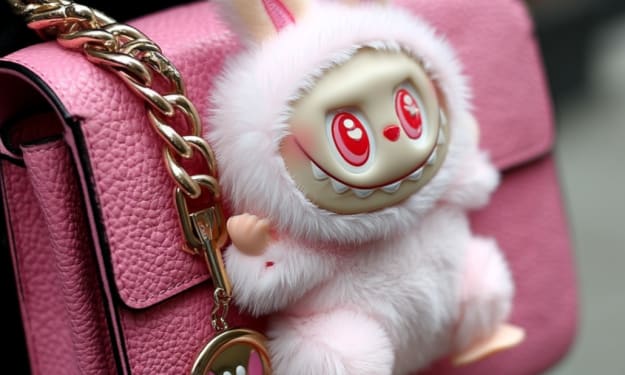
The Labubu Doll Phenomenon: A Global Craze Redefining Collectible Culture In the ever-evolving world of pop culture, few phenomena have captured the collective imagination as swiftly and intensely as the Labubu doll. These quirky, plush, elf-like creatures with their mischievous grins and sharp teeth have transcended their origins as niche collectibles to become a global sensation. From adorning the handbags of celebrities like BLACKPINK’s Lisa and Rihanna to sparking frenzied queues outside stores and commanding six-figure auction prices, Labubu dolls have redefined what it means to be a "must-have" accessory in 2025. This 1000-word article delves into the origins, appeal, cultural impact, and controversies surrounding the Labubu doll, exploring how a small, toothy monster became a symbol of modern consumerism and nostalgia. Origins of Labubu: From Nordic Folklore to Pop Mart The Labubu doll, part of "The Monsters" universe, was created by Hong Kong-born, Netherlands-raised artist Kasing Lung in 2015. Inspired by Nordic folklore and fairy tales that fascinated him during his childhood in Utrecht, Lung crafted a whimsical storybook series featuring a tribe of playful, slightly mischievous elves. Labubu, the star of this series, is characterized by a round, furry body, wide eyes, pointed ears, and a signature grin revealing nine sharp teeth—a design that’s equal parts cute and creepy. Other characters in the universe, such as Mokoko, Pato, Spooky, Tycoco (Labubu’s skeleton-like boyfriend), and Zimomo (the tribe’s spiked-tailed leader), add depth to this fantastical world. Initially introduced as figurines by the Hong Kong-based company How2Work, Labubu gained modest traction among toy collectors. However, it was Lung’s 2019 partnership with Chinese retailer Pop Mart that catapulted the doll into the mainstream. Pop Mart, founded in 2010 by Wang Ning, specializes in "blind box" collectibles, where buyers purchase a sealed package without knowing which specific figure they’ll receive. This marketing strategy, combined with Labubu’s unique aesthetic, tapped into a growing appetite for surprise and scarcity-driven products, setting the stage for a global craze. The Blind Box Appeal and Celebrity Endorsement The allure of Labubu dolls lies partly in their blind box distribution model, a concept Pop Mart perfected with earlier successes like Molly dolls. Each blind box contains a random figure from a themed series, such as "Exciting Macaron" (released October 2023), "Have a Seat," "Fall in Wild," or "Massive into Energy." Some boxes include rare "secret" figures, which can fetch hundreds or even thousands of dollars on resale platforms like eBay and StockX. This element of chance, akin to opening a pack of trading cards, fuels excitement and encourages collectors to buy multiple boxes in pursuit of coveted designs like the Chestnut Cocoa or Chinese New Year editions. The Labubu phenomenon exploded in April 2024 when BLACKPINK’s Lisa was photographed with a Labubu keychain clipped to her Louis Vuitton bag. Her endorsement sparked a tidal wave of interest, particularly in Southeast Asia, where fans rushed to emulate her style. Celebrities like Rihanna, Kim Kardashian, Dua Lipa, and David Beckham soon followed, showcasing Labubus as bag charms or collectibles on social media. In India, celebrities like Ananya Panday and influencers like Shantanu Dhope joined the trend, further amplifying its reach. This celebrity-driven hype transformed Labubu from a niche toy into a fashion statement, blurring the lines between collectible and luxury accessory. A Cultural and Fashion Phenomenon Labubu’s appeal extends beyond its cute-yet-creepy aesthetic. As New York Magazine’s Liza Corsillo noted, the dolls’ "hard-to-explain cuteness" and scarcity-driven marketing make them both huggable and highly desirable. Their versatility as bag charms, keychains, or display pieces has made them a staple in streetwear and high fashion alike. Men’s fashion magazine GQ highlighted Labubu’s role in the growing market for men’s luxury handbags, noting how they add a playful, personalized touch to otherwise serious accessories. Collectors like Thania Gonzalez, a Los Angeles-based fashion content creator, customize their Labubus with miniature outfits—some even sporting bootleg Prada or Louis Vuitton clothing—further cementing their status as a fashion-forward collectible. The dolls’ cultural impact is evident in their integration into diverse settings. In Singapore, the People’s Action Party used a Labubu plush keychain as a "volunteer" at a community event, while the Ling Lian Bao Dian Temple dressed Labubus as devotees during the Nine Emperor Gods Festival to attract younger generations. In Thailand, Labubus are believed to bring wealth and good fortune, adding a layer of cultural significance to their popularity. These instances highlight how Labubu has transcended its role as a toy to become a symbol of community, creativity, and cultural relevance. Economic Impact and Market Dynamics The Labubu craze has been a financial boon for Pop Mart, which reported $1.8 billion in global revenue in 2024, with $423 million attributed to Labubu sales alone—a 729% increase from 2023. The company’s market cap of $43.28 billion dwarfs that of traditional toy giants like Mattel and Hasbro, underscoring the power of its blind box strategy. Pop Mart operates over 2,000 "roboshops" (vending machines) and stores in more than 30 countries, yet demand consistently outstrips supply, leading to sell-outs within seconds and long queues at physical locations. The secondary market for Labubus is equally robust. Rare figures, such as a secret Labubu from the "Big Into Energy" series, can fetch $500 on StockX, while a life-size, mint-green Labubu sold for $172,000 at a Beijing auction in June 2025—the highest price ever for a Labubu item. This auction, hosted by Yongle Auction, saw nearly 1,000 bidders and total sales of $520,000, reflecting the dolls’ growing status as art collectibles. However, the high demand has also spawned a market for counterfeits, dubbed "Lafufus," which often feature incorrect tooth counts or lack the Pop Mart logo under the foot. Controversies and Criticisms Despite their popularity, Labubu dolls have faced scrutiny. In Russia, officials like Ekaterina Altabaeva claimed the dolls’ "fierce" appearance could frighten children, prompting calls for a ban. In Iraq’s Kurdistan Region, authorities seized 4,000 dolls in July 2025, citing concerns about behavioral issues and unfounded claims of "demonic spirits." A viral conspiracy linking Labubu to the Mesopotamian demon Pazuzu, fueled by a misleading Instagram post and a Simpsons episode, sparked panic among some fans, though fact-checking sites like Snopes debunked these claims, affirming Lung’s fairy tale-inspired design. Critics also argue that Labubu’s success reflects excessive consumerism, with collectors spending thousands on blind boxes in pursuit of rare figures. The frenzy has led to disorderly lines and even fights in the UK, prompting Pop Mart to temporarily halt sales in its 16 stores there. Yet, for many, the thrill of the hunt and the joy of unboxing outweigh these concerns, as evidenced by vibrant online communities on Reddit, TikTok, and Discord where fans share tips and showcase their collections. Why Labubu Resonates Labubu’s meteoric rise can be attributed to a perfect storm of nostalgia, exclusivity, and cultural relevance. As design academic Gozde Goncu Berk suggests, the dolls tap into a broader trend of "comfort core meets camp," offering a playful escape from the complexities of modern life. Their quirky aesthetic and customizable nature appeal to both children and adults, evoking a sense of childhood simplicity in an era of global uncertainty. The blind box model, meanwhile, gamifies collecting, turning each purchase into a dopamine-fueled adventure. Moreover, Labubu’s global appeal reflects the growing influence of Asian pop culture. As China’s Xinhua news agency noted, the dolls showcase "Chinese creativity, quality, and culture" on a global stage, even if their Hong Kong-Dutch origins complicate this narrative. For many fans, however, the dolls’ origins are secondary to their emotional and social value, whether as a status symbol, a creative outlet, or a shared obsession within collector communities. The Future of Labubu As Labubu’s popularity shows no signs of waning, Pop Mart plans to expand its international presence and artist collaborations, ensuring the brand’s longevity. Limited-edition releases, such as the Coca-Cola-themed winter series and the One Piece-inspired collection, keep the hype alive, while partnerships with institutions like the Louvre add cultural cachet. However, the dolls’ reliance on scarcity and viral trends raises questions about their staying power. Will Labubu fade like past fads such as Beanie Babies, or will it endure like Hello Kitty? For now, Labubu remains a cultural juggernaut, embodying the intersection of art, fashion, and consumerism. Whether clipped to a luxury handbag, displayed on a collector’s shelf, or sparking debates about demonic influences, these toothy elves have left an indelible mark on 2025. As collectors continue to chase the next rare drop and celebrities flaunt their customized Labubus, one thing is clear: the mischievous grin of Labubu is here to stay, at least for now.
By Faheem ullahabout a year ago in Humor
Sermon Humor Jokes: Adding a Holy Chuckle to the Pulpit
Laughter isn’t just good medicine—it’s also a fantastic way to connect hearts, lighten the mood, and drive home a message. Even in a sermon, a well-placed joke can wake up a sleepy pew, break tension, or make a point stick like glue.
By JokeJesterabout a year ago in Humor