


“It is lonely at the top”, thought to himself Zeus and sighed. As of today - the last day of Spring, Zeus stood alone. He had managed to alienate all the other gods of Mount Olympus, and was enjoying the solitude, while reflecting on his new circumstances
There were still humans of course - his loyal subjects, who worshipped him daily on its face value, yet for the most part were simply afraid of him. Terrified to be more precise. His rage can indeed be frightening, not to mention the lightning and thunderstorm that so often accompanied the volatile emotions of the mightiest of them all.
The other residents of Olympus had had enough for similar reasons. While unable to feel fear, they nonetheless didn’t enjoy the temper of their leader and finally decided that they deserved better. Gods are free, after all. Humans allegedly have a free will , but it is mainly so on paper. In reality they are more like pawns in the games of the powerful ones. Ironically, for some of the more principled Gods and especially Goddesses, this very mistreatment of humans was the primarily reason of the departure. Both humans and gods want to be treated with respect, and not just the means to achieve an end. The difference is that a goddess demands what she knows she deserves. Zeus, while being a loving and protective father to at least some of his countless kids, wasn’t treating the women - their mothers with the reverence they knew they deserved. Well, the Divine women knew they deserved.
This was especially true for Hera, the goddess wife of Zeus. The mistreatment of humans was a major factor for both her inner conflict and the alienation that was clearly felt at the Olympus as of late. She was a protector of women after all. On paper. And yet, each time when faced with countless infidelities of her husband, she couldn’t control herself and would end up harshly punishing the mortal women involved in transgression , as opposed to keeping her partner accountable. The explanation she would comfort herself with afterwards, was that she was protecting the sanctity of marriage - something those women clearly didn't value. And yet, the truth of the matter was - she was very much enabling and keeping afloat the patriarchal hypocrisy of finding justifications for male behaviour while blaming women for everything.
Part of her knew this, of course, but even gods have shadows they do not want to look at. Her archetype carried these inner contradictions through a mixture of dissociation and denial, even naming them wisdom - though they were anything but. The cost of this self-deception was a persistent inner tension she could no longer ignore.
The word that could sum up the attitude reflected in the mighty god’s treatment of mortal women was: disposable.
Could she continue living the lie? Could she continue pretending they deserved the punishment?

The abandonment. Can a God be abandoned? That’s laughable, really. Zeus looked down at the Earth, the beautiful Gaia, so abundant and wild. She too, belonged to him. He had the power to create the rain to nourish her. He owned her and her children. He was in charge. And he was alone at the very top of it all.
He could see Artemis hunting and having fun. She was so independent and powerful, nothing like his human lovers. A hint of pride appeared in his chest, this was his daughter, of course she wouldn’t be as weak as the mere mortals. And yet, he also felt intimidated at the thought of losing his authority over the pantheon , given the latest developments. Perhaps they will change their minds. And what is this sudden protection of the mortals all about? Aren’t they aware that we need to maintain the hierarchy, which includes a certain distance from the mankind? Punishment is the only language they understand anyway.

And yet, he knew full well that the problems have been longer lasting than the latest plot twist. Humans have been losing their faith since this whole Philosophy entered the scene. So much questioning has happened in a short period of time. So much thinking about the themes that shouldn’t even concern them.
Up until then - it was his other daughter - Athena who represented wisdom, clearly reflected in the symbolism of her owl companion. Her power was reflected in the fact that the city of Athens proudly wore her name. And yet , it was a strategic kind of intelligence, a means to achieve an end, important especially in the context of military activity, and yet limited compared to the direction the things were beginning to move towards.
The love of wisdom. He was aware of course of the evolutionary point that was reached in the Cosmos and its implications on Earth. No point trying to hold on to the old ways, change is the only constant in this realm. At least the women were prevented from learning and studying, this should allow him to have power over them longer. Ironic really, given that the cosmic wisdom herself, Sophia - is a feminine archetype. The intellect is but one ingredient of it, without the feminine intuitive knowing, without the wisdom of the heart, all the questions and all the answers will fall short of unraveling the mysteries of the Universe. They will learn that in time of course, but for now let them develop the independent thought. Humans remain children no matter how old they are, and right now they were at the toddler stage of the development - enquiring about the world around them with so much curiosity - it was amusing to watch.
Hera and others knew this too of course, but there wasn’t much they could do about it. The human evolution wasn’t to be interrupted by Gods, even if there were some serious distortions made by the mortal patriarchs in charge. The progress will be slow, not to mention a spiral like, but this is the price one pays for having a free will. Mistakes and distortions will happen - plenty of them. And the mightiest patriarch of them all, sighed once again, this time a sigh of relief, feeling noticeably better after admitting to himself the truth of the situation. As much as he disliked the beginning stages of losing his power, it was also not his responsibility to indefinitely parent his children, they had to grow up at some point. One day they will even remember their own divinity, but that is a long way from now on.
While reflecting on his complex relationships with human and gods alike, a certain Goddess entered his mind.
Aphrodite. The power she had over men, both mortal and not. No one should be allowed to have this much power and know it. One look at those almond shaped eyes accompanied by the seductive smile, and even the strongest defences a man might have, start to melt. She is a goddess with the most dangerous weapon. Athena fights in more obvious ways, more brutal on their face value. But Aphrodite always gets what she wants, without as much as lifting her finger. Zeus was both mesmerised and infuriated by this form of the feminine expression. Their paths didn’t cross all that often though, Aphrodite knew how to successfully avoid excess confrontations , after all she had to learn how to escape Zeus as soon as she emerged from the sea foam. As a daughter of the ocean, she was also under the protection of Poseidon, a status that set her apart in tangible ways.
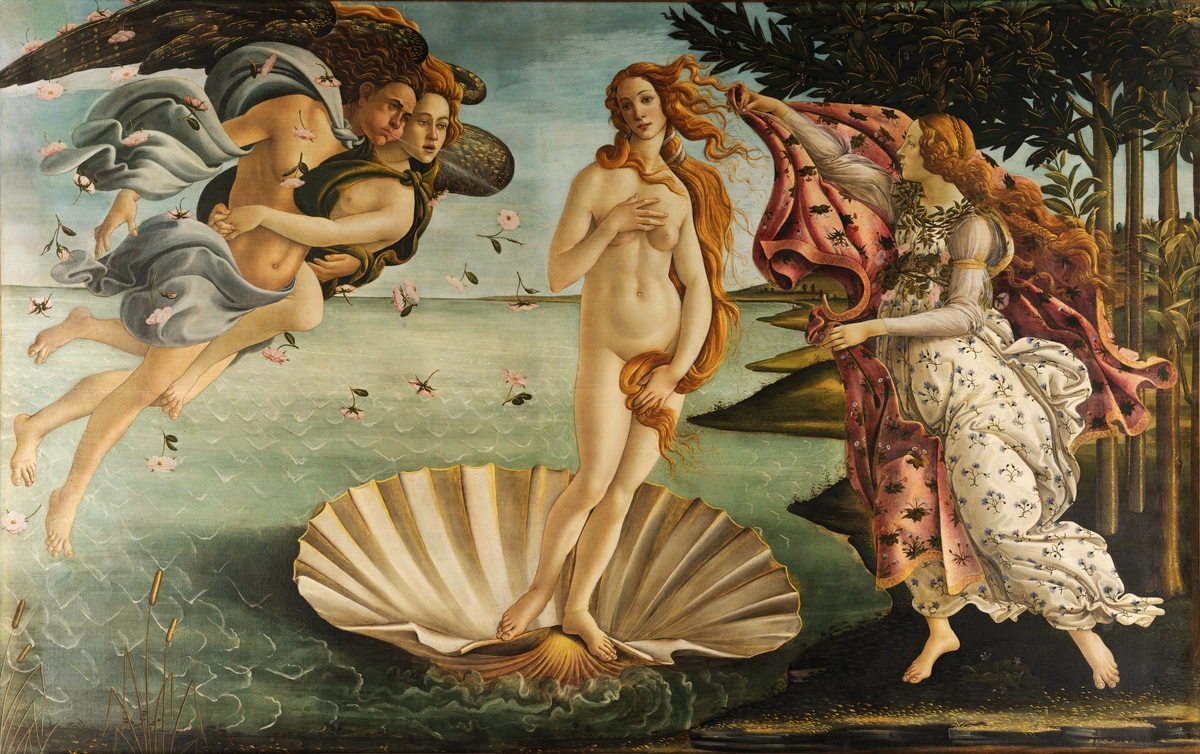
Aphrodite could see right through Zeus’s antics and games; they were not that different from the ones she used. One might say, they were quite similar in the way they treated mortals. Used and discarded on the field of romance and seduction. It was sports for both of them - the Olympic Games of lust. Greeks have many words describing love, and this was definitely the realm of Eros. That was the most popular form of love between a man and a woman on Earth at the time, and so the gods behaved accordingly.
It is commonly believed that the God created a human being in his likeness, and in the higher sense this is true , in the physical reality however, it is exactly the opposite - humans create Gods in their likeness. Zeus and Aphrodite were simply bringing to life the shadows of their respective archetypes accordingly.
Aphrodite was also the goddess of beauty of course. And the beauty was undeniable, as much as Zeus knew better not to look directly at her for long periods of time, it was nearly impossible not to stare when she walked into the hall at the top of Olympus. The feminine flowing nature of her form, the way she walked , the curves that danced under the silk as she moved her hips approaching the throne in the east wing of the room. The mischievous look in her eyes, sometimes giggling with a girly excitement, other times displaying cold arrogance.
Perhaps this very power of the feminine that a man is absolutely powerless to resist was one of the reasons the patriarchal order was beginning to emerge and gain strength.
Zeus wondered whether men had built entire kingdoms around a simple terror - the terror of being moved by something they could not command. Unable to control themselves, men had to control women , and what better way to do so - than by convincing them of their inferiority, their inability to participate in the development of the intellect. Ironically, the strategy will backfire enormously down the line, as in order to survive the limitation imposed on them - plenty of women will have no choice but to become manipulative, and the archetype of Aphrodite will be increasingly utilised in its shadow form. If a woman isn’t allowed to use her intellect or have any power in the society, she will be forced to use her beauty and sexuality as a commodity , which greatly reduces the quality of relationships for both genders.
Aphrodite had a foresight to see what’s coming, she was of course so much more than beauty incarnate, and it saddened her that something as sacred as love will be reduced to transactional relationships for centuries to come, with marriage becoming a necessary survival tactic for women, rather than a choice and expression of love. She was multifaceted enough to know the difference between love and lust, and grew tired of having to embody the primitive aspect of romance, simply because that’s all people knew, and unfortunately this wasn’t changing any time soon.
Zeus didn’t bother himself with any of these moral dilemmas, it wasn’t his domain, yet every time Aphrodite spoke at the council meetings, and expressed concern about what values they are bringing to humanity by playing the characters the mortals expect them to play, he felt uncomfortable and immediately found an excuse to finish the meeting early. He reminded her that human possessed free will and if this was how they chose to use it, then the choice belonged to them. Aphrodite pushed back. Freedom, she argued, did not mean indifference. They were meant to inspire humanity to become more than itself, to not reduce love merely to appetite and desire. She knew, of course, that it would take thousands of years for humanity to grow into the age of the heart, and yet the thought still saddened her. There would always be souls ahead of their time, but it is difficult enough to live in a world that does not yet understand you, let alone transform it.
In other words, she held up a mirror that was too uncomfortable to look in. It was a far safer option to dismiss her as being unreasonable, irrational and too emotional - labels that would cling to women for millennia to come. Zeu’s own emotions, especially anger were completely justified of course, it was needed to preserve the order and control immature humanity. Zeus saw no contradiction between love and fear. To him, authority was the highest form of care, and obedience its natural consequence.
Evidently, the divine patriarch lacked the foresight to see that children raised in fear might obey for the time being, but once the opportunity presented itself, they would turn their backs on their aggressor, as fear of punishment hardly cultivates strong relational bonds.

Philosophy proved to be this very opportunity for many mortals, and there was nothing Zeus could have done to stop this impulse, only delay it by instilling more fear.
Zeus looked once more upon the Earth, where the prayers had grown quieter, and the questions had grown louder. He could command storms, strike mountains, even shake Olympus itself. But there was one force his thunderbolt could not silence - an independent mind that had begun to awaken. Because once consciousness begins to remembers its own divinity, no God, however mighty, can persuade it to kneel forever.
About the Creator
Eva Smitte
Writer, model, mental health advocate. Instagram @eva_smitte
Enjoyed the story? Support the Creator.
Subscribe for free to receive all their stories in your feed.
Comments
There are no comments for this story
Be the first to respond and start the conversation.