
Which Bible, and in What Language?
Let’s finally get to the nitty-gritty

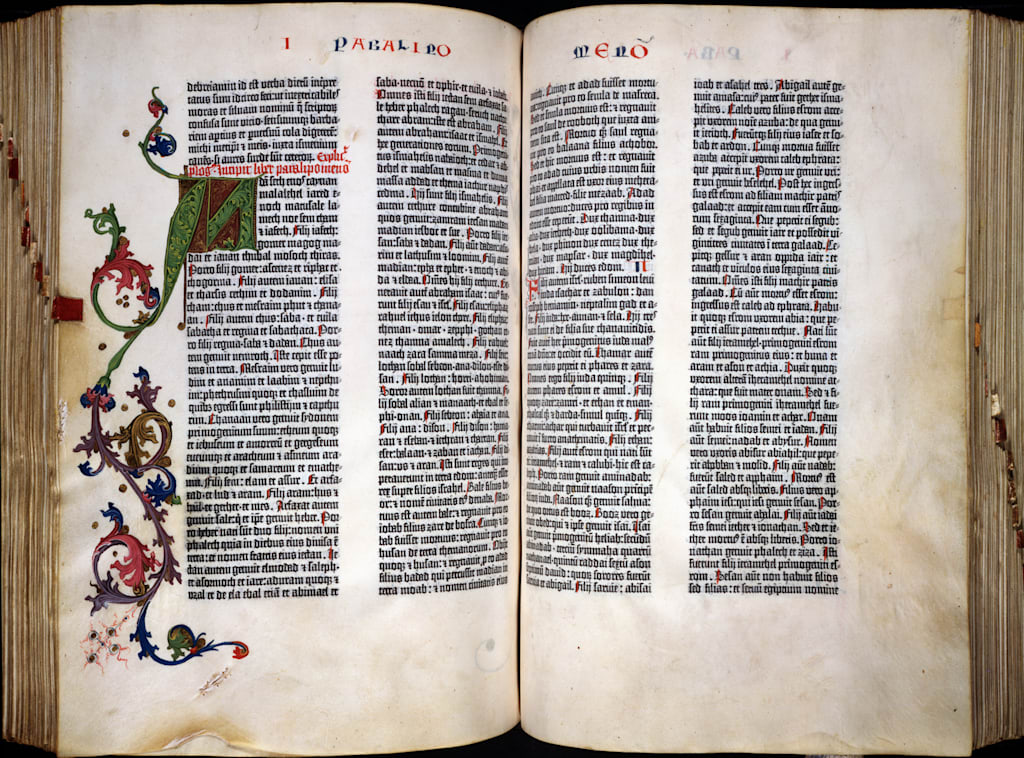
So let’s dive right into controversy, shall we?
If you live in a Western society, you’ve no doubt come across someone letting you know exactly what “The Bible says.”
Some of you probably have loved ones like this. You may even have trauma from family members using the same tactic.
A lot of times they’ll start by asking it as a question. “Do you know what the Bible says?”
I think anyone who asks this should be met with four other questions first:
❓❔❓❔
Why is this important?
How do you know it’s real?
How do you know your interpretation is right?
Why should I take the same lesson from it?
❔❓❔❓
While this might trip up a few, it’s not about that. The large majority of these believers will have immediate answers.
But it gets to something essential that probably all believers — and even hardened atheists — should confront.
Christianity is the largest religion in the world — when combining Othodox, Protestant, and Catholic — so naturally most adherents don’t flaunt their knowledge of the text, or tell others how to live because of it.
Or if they do, it’s within their own circles… not directed at everyone else they encounter.
So, to me, this is not a problem of the religion. It’s a problem of the proselytizers.
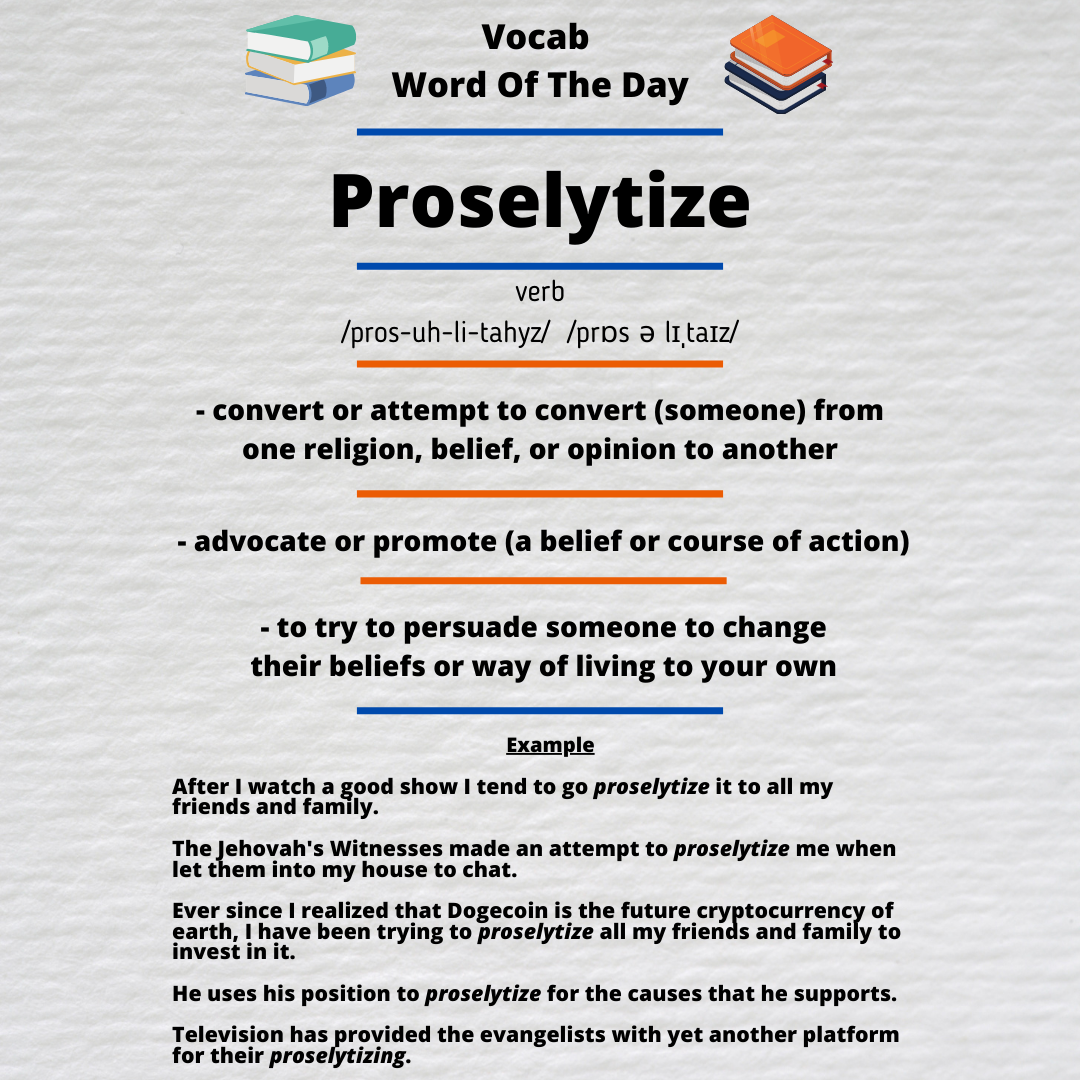
If you don’t know, that’s a fancy word for those who try to convert others in the outside world.
By the time someone does this, not only are they dug in on their belief, but they feel driven to make sure everyone else believes the exact same way.
There is no reasoning with that. Because when it comes to why it’s important… well, it’s about all of our souls and the entire world. The entire world, and the cosmos, and the eons-long battle between Heaven and Hell!
How is one tiny person supposed to respond to that? The only remedy would be to spend your entire life converting, and for everyone you convert to spend their entire lives too.
How daunting. I think most of us call that idea terrifying.
But they persist, day after day, all around the world.
So how do they know it’s true? Some will be taken aback by the question. Well, because it’s the Bible. Obviously.
But how do you know the Bible is true? Because it’s the word of God. But how do you know that? Because God said keep it holy. How do you know that? Because it’s the Holy Bible.
See? I know that most other denominations are a lot more astute than this. But anyone who answers that was dives straight into logical fallacy.
This fallacy is called circular reasoning. The thing (book) is defined as true because it has a certain nature that makes it true (the word of God) and then that nature is used to prove that it’s true. By logical standards, you haven’t proven anything at all.
So, let’s investigate this “word of God” thing. Was it directly written by the hand of God himself? Oh, no it was transcribed by prophets and ministers, I see.
By the way, I’m aware some fundamentalist goofballs would answer yes there, but let’s give dignify that.
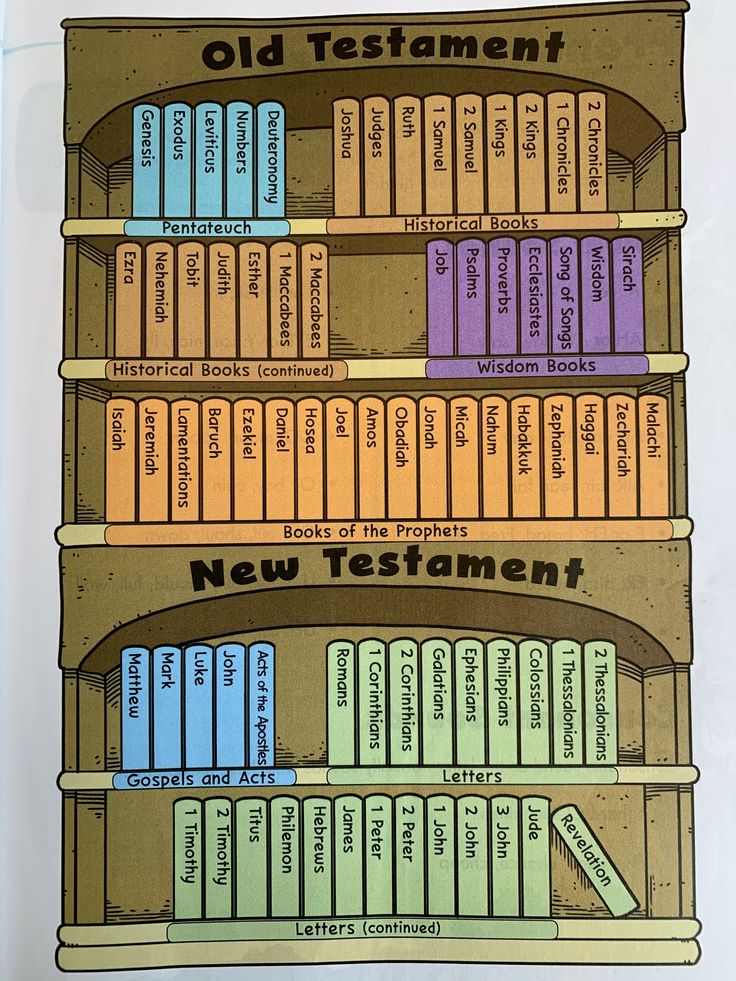
So, first there actually two different “Bibles” within the same volume here, not to mention it’s divided into dozens of so-called “Books.”
What do I mean by two? Well, as you should know if you’ve studied the thing as all is there’s the division of the Old and New Testaments.
That alone confirms they were not written (or “revealed”) at the same time. This is not just two different versions from two different times. These are in fact two different bibles that make the difference of two different religions.
I happen to be Jewish, by the way. By culture and upbringing, if not current belief. So I can speak to this personally.
You see, what Christians call the “Old Testament” is the book Jews regard as the one and only testament. Then there are other texts added that complete the Tanakh, or Jewish Bible.
So that was the sacred text before the advent of Jesus. So, even if one singular person is responsible for each Testament, in this part it’s all about Moses.
So there are hundreds of millions around the world who hear in Sunday School about Genesis, or Noah, or Esther, or Jonah, Samson, or Solomon, etc. — who don’t fully understand that all of that is passed down from a tradition millennia earlier.
And don’t get me started on the Ten Commandments and Leviticus! Most Western Jews don’t take that literally in any way. As far as I’m concerned, it’s just the most hateful Christians who do. Yeah, come at me bro.
Anyway, so there’s already two different Bibles within one. Then there’s a lot more variations with versions and translations than you would ever think.
Because, for one, was the Bible originally in English? Hopefully any of you reading gets the stupidity of the question. But I’ve heard accounts from former believers on YouTube admitting that they actually still thought it was into adulthood.
To be clear, no one spoke English anywhere in the world until several centuries later. The earliest Bibles were written in Hebrew, Aramaic, or (for the New Testament) Greek.
So already there’s translation difficulties. Aramaic is a dead language, like Latin. You can only learn it as it was last spoken. It’s believed this is most likely the language Jesus used.
Greek and Hebrew have survived, but they are not similar enough to their ancient counterparts that one can just “pick it up.”
Needless to say, there are many translations and versions then. The most popular, perhaps of all time, is the King James version. This goes back to the height of British royalty.
There are others that paved the way for it, however:
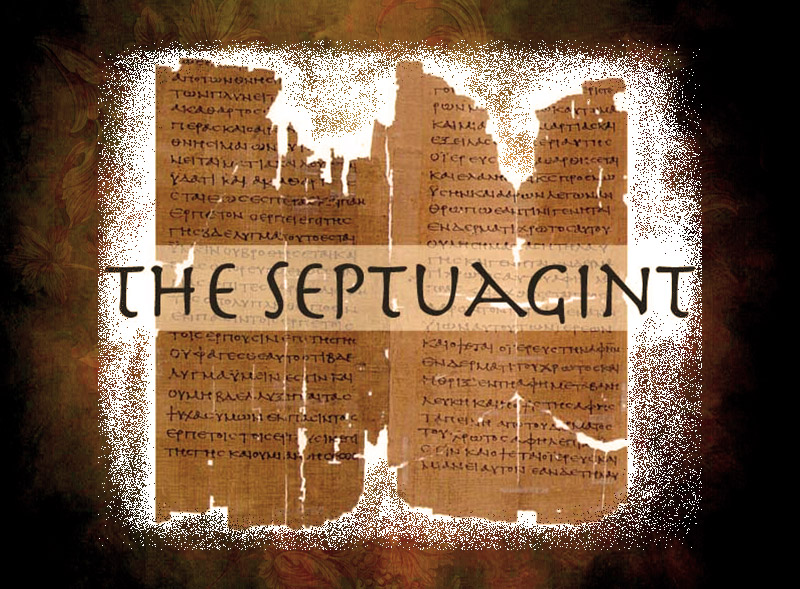
The Septuagint was the first Greek translation of the Hebrew Bible in the 3rd Century BCE. There had been resistance from the beginning to translating it because the tradition had demanded Hebrew be the language of Judaism.
With so many Jews then living outside Israel, and now as far away as Greece, it finally had to be translated.
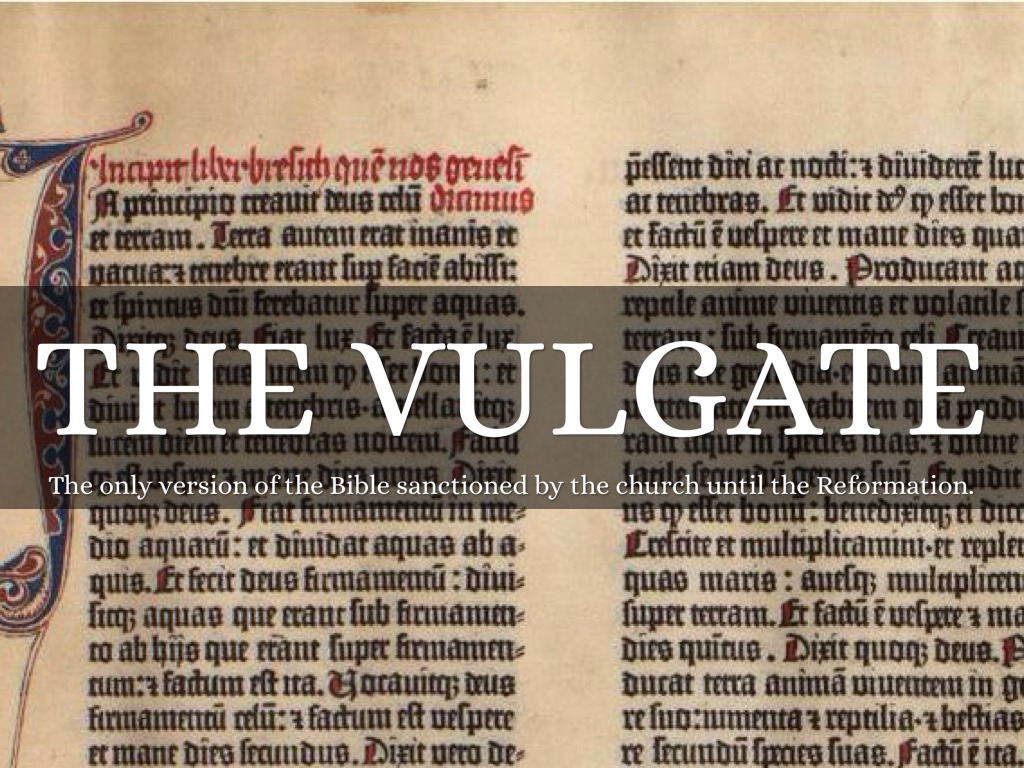
The Vulgate was the first Bible in Latin, translated around the 4th or 5th Century AD. That democratized the scriptures as more people could understand it.
I could go on and on, but that’s all we really need to know. Words change with these translations, or with each choice of word definition. And even beyond that, there are some passages that were added or taken away over this long, long history.
So next time someone jumps forward to tell you “what the Bible says,” ask them which Bible, and what language of it.
About the Creator
Gabriel B. Shames
I’m an east coast American, interested in writing poetry and fiction as long as I can remember. I took a test in 4th grade where they told me I wrote creatively at a college level!
Hope you enjoy reading as much I as I do creating ❣️
Enjoyed the story? Support the Creator.
Subscribe for free to receive all their stories in your feed. You could also become a paid subscriber, letting them know you appreciate their work.
Comments
There are no comments for this story
Be the first to respond and start the conversation.