
“What’s the Difference Between Thomas Jefferson and Jeffrey Epstein?”
Two names, two eras—and a troubling conversation about power, consent, and history

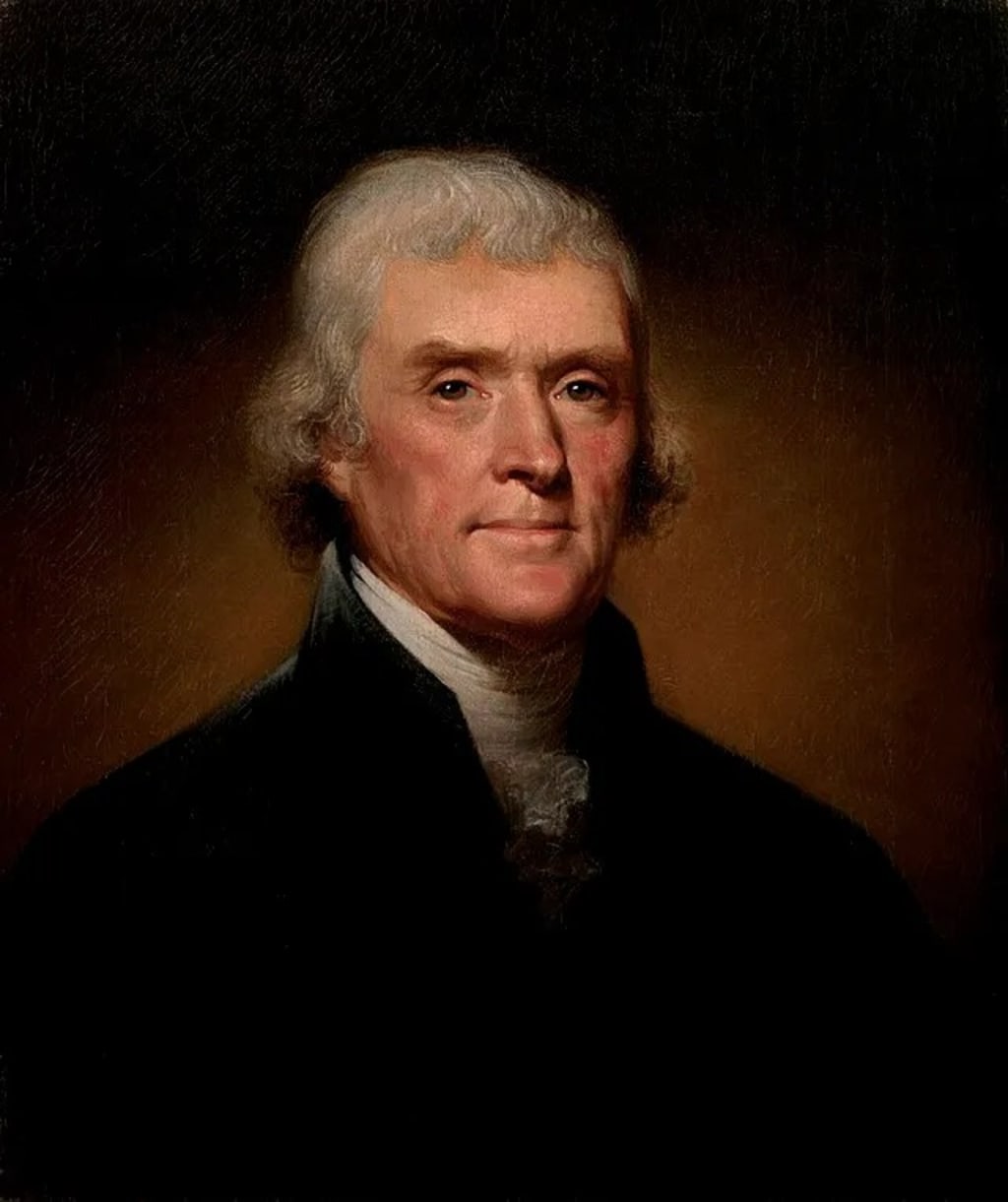
Some questions are the kind that sound dangerous just by being asked.
This is one of them.
When the names Thomas Jefferson and Jeffrey Epstein are mentioned together, a strange unease immediately arises. The heart says, "This comparison is wrong."
But the mind asks, "Really?"
This story is not about two people.
This is a story about power. About silence. And about the truth we do not want to accept.
From childhood, we are taught that some people in history are "heroes."
Their names are written in golden letters in books.
Their mistakes are understood "in context."
And then one day, we realize the story wasn’t that simple.
Jefferson... a name associated with freedom, equality, and revolution.
But with this name comes another reality—a reality often suppressed.
A enslaved woman, a relationship of power, and a question whose answer is still unclear today:
Is consent really possible in the face of power?
Now, look at Epstein from the other side.
He was not a character from a history book.
He was a man of our times.
In the news, in courts, and close to the truth.
Voices were raised against him.
People spoke out.
Stories came out—such stories that make it hard to remain silent upon hearing them.
But even here, there was a surprising thing:
Power.
The same power that shuts doors.
The same power that allows the truth to come out late.
So what is the difference?
Is the difference only of time?
Or is the difference only that one person's story became 'history' and the other's 'news'?
This question is not easy.
And perhaps that is why it is important.
We often say:
"That was a different time."
But do morals also have a time?
Do right and wrong change with time?
Or do we only change principles to save our heroes?
In Jefferson's time, slavery was legal.
But does that mean every legal thing is also moral?
In Epstein's time, everything was illegal.
But does the law always immediately apply to powerful people?
There is a bitter truth hidden here.
Power often changes the story.
It decides who will become the hero and who the criminal.
It decides which voice will be heard and which will be suppressed.
And sometimes...
it even makes us forget what the real question was.
This article is not meant to prove anyone right.
Nor is it an attempt to erase anyone's history.
It is just a mirror.
A mirror in which we can see ourselves—
our principles, our thinking, and our weaknesses.
The real question is not what the difference between the two is.
The real question is:
How do we differentiate?
Do we judge everyone by the same standard of justice?
Or do we change our decisions based on name, time, and status?
Because in the end…
A story is what we repeat.
And a story is what we hide.
And history does not always write the truth—
sometimes it only writes what we want to hear.
Perhaps this is the most dangerous thing.
And now the question is for you:
Have we really changed?
Or have we just changed the way we tell the truth? 🔥
About the Creator
Mohib Ullah
I write about crime, justice, and political affairs, focusing on real cases and current events. My goal is to deliver clear, research-based content that informs readers about law, society, and government systems.
Enjoyed the story? Support the Creator.
Subscribe for free to receive all their stories in your feed.
Comments
There are no comments for this story
Be the first to respond and start the conversation.