
What Happens After Death in Islam? Barzakh, the Grave, Resurrection and Judgment Explained
Islamic beliefs about the soul after death, life in Barzakh, the Day of Resurrection, judgment, Jannah and Jahannam

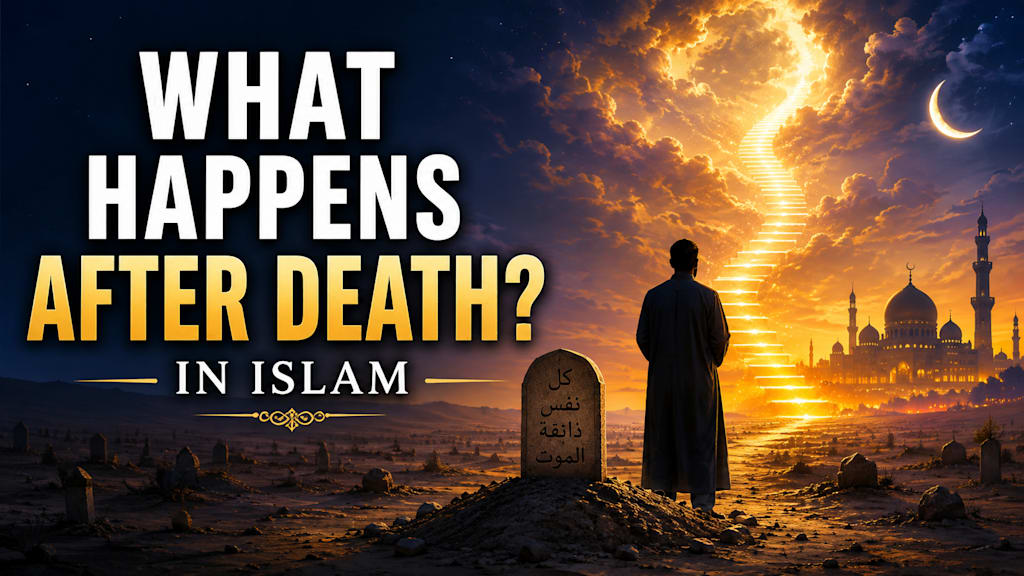
Death is one of humanity’s greatest mysteries. Almost every person has wondered at some point: What happens after we die? Where does the soul go? Is death the end, or does another life begin?
Islam provides a detailed spiritual understanding of what happens after death. According to Islamic belief, earthly death is not the end of human existence. Instead, it marks the beginning of a new stage in a journey that eventually leads to resurrection, judgment and eternal life.
The Qur’an reminds humanity that every soul will experience death and that the complete reward for a person's deeds will be given on the Day of Judgment.
What Happens to the Soul When a Person Dies in Islam?
In Islamic teaching, human life in this world is temporary. Death occurs at the time determined by Allah.
The Qur’an describes Allah as taking souls at the time of death. It also draws a connection between death and sleep, explaining that souls are taken during sleep and those whose death has not been decreed are returned until their appointed time.
For Muslims, this means death is not viewed simply as a biological ending. It represents the soul leaving the temporary worldly stage and entering the next phase of existence.
What Is Barzakh in Islam?
One of the most important concepts connected with the Islamic afterlife is Barzakh.
Barzakh can be understood as the intermediate state between a person's death and the Day of Resurrection.
The Qur’an describes a barrier existing after death until people are resurrected. A person who has died cannot simply return to earthly life and begin again.
This makes worldly life extremely important in Islam. People are encouraged to use their time wisely, perform good deeds, seek forgiveness, help others and strengthen their relationship with Allah while they still have the opportunity.
Life in the Grave According to Islam
Islamic tradition also discusses a stage commonly referred to as the life of the grave.
Death therefore does not mean that the entire journey has finished. The deceased remains in the state of Barzakh until the resurrection.
Traditional Islamic teachings describe this period as having different experiences depending upon a person's faith and deeds. Because details surrounding the unseen come from religious revelation and interpretation, Muslims are encouraged to approach the subject with humility rather than speculation.
The central message remains clear: actions performed during earthly life have consequences beyond death.
The Day of Resurrection
Islam teaches that the present world will not continue forever.
A time will come when creation as we know it ends and humanity is resurrected. This event is known as Yawm al-Qiyamah, or the Day of Resurrection.
People will be brought back to life and gathered before Allah.
The Qur’an repeatedly connects resurrection with accountability, reminding humanity that earthly status, possessions and temporary success will not determine a person's ultimate destination.
What matters is faith, intentions, actions, justice and Allah's judgment.
What Happens on the Day of Judgment?
The Day of Judgment in Islam is the moment of ultimate accountability.
Every person's deeds will be judged. The Qur’an describes the weighing of deeds, with those whose scales are heavy being among the successful.
This belief creates a powerful moral responsibility.
A good deed that nobody notices is still known to Allah. Likewise, wrongdoing cannot ultimately be hidden simply because it escaped punishment in this world.
For believers, the Day of Judgment therefore represents both justice and hope.
Jannah and Jahannam
After judgment comes the final destination.
Jannah, or Paradise, is described in Islamic teachings as the ultimate reward, while Jahannam represents punishment.
The Qur’an says that whoever is kept away from the Fire and admitted into Paradise has truly succeeded.
This changes the Islamic understanding of success. Wealth, fame and power may disappear at death, while spiritual and moral choices can have lasting consequences.
Why Islam Encourages People to Remember Death
Remembering death in Islam is not meant simply to create fear.
It is meant to create perspective.
Knowing that life is temporary can encourage people to forgive sooner, value family, avoid injustice, help those in need, seek forgiveness and stop wasting years on hatred or meaningless competition.
The Islamic concept of the afterlife turns death from an ending into a transition.
Earthly life is temporary. Barzakh follows death. Resurrection brings humanity together again, judgment establishes ultimate accountability, and the afterlife becomes the final destination.
For believers, the message is simple but profound: life has purpose, actions matter, and death is not the end.
About the Creator
parwinder singh
🎬 Movie & Entertainment Writer sharing reviews, ending explanations, story breakdowns, plot twists and hidden details from Bollywood, Hollywood, South Indian cinema, Korean dramas and OTT releases.
Enjoyed the story? Support the Creator.
Subscribe for free to receive all their stories in your feed.
Comments
There are no comments for this story
Be the first to respond and start the conversation.