
What Beautiful Eyes You Have
Why do people have different coloured eyes?

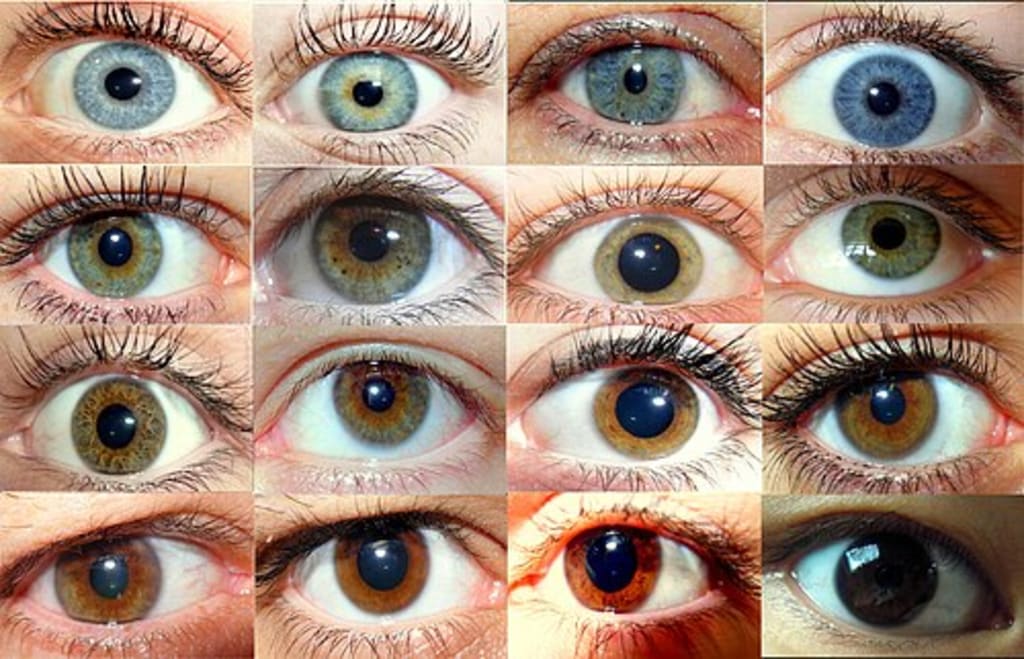
This story was prompted by a poem that was written by George’s Girl 2026: “Why Are Our Eyes Not the Same Colour.” The three opening lines really caught my attention.
Some are blue like oceans far away,
Some are brown like earth after the rain,
Green eyes sparkle brightly in the sun,….
When I was growing up, there was a science program on TV that I sometimes watched. It was hosted by a quirky guy with a squeaky voice, Professor Julius Sumner Miller. His infectious catchphrase that I always remember was "Why Is It So?”
You can find out about him in this YouTube video.
I asked the same question when I read this poem – why is it so?
You guessed it: genetics. Your eye colour is determined by your parents. A baby inherits half of their eye colour genetics from each parent. The way that the multiple genes interact also plays a role in determining eye colour.
Eye colour differences come from different amounts of melanin. Melanin is the pigment that affects eye colour, hair colour, and skin tone. If both of your parents have blue eyes, there is a very good chance their child will also have blue eyes. Similarly, for brown or green eyes.
Scientists say that parents with brown or green eyes have a 75% chance of having a child with brown or green eyes too. Both parents with blue eyes are 95% likely to have a blue-eyed child.
Parents with brown or green eyes usually have kids with:
Brown eyes: 50%
Green eyes: 37.5%
Blue eyes: 12.5%
It is not foolproof because eye colour also depends on the amount of melanin in your iris. Brown eyes have more melanin than blue eyes do, and there are various shades in between. Darker eyes tend to be more dominant, especially in warmer climates. Around 75% of people globally have brown eyes, and almost all animals have brown eyes.
One exception is those spooky-looking husky dogs that have blue or white eyes. Green is the rarest human eye colour, seen in about 2% of all people worldwide. Blue eyes sit in the middle with around 8-10% of people.
All blue-eyed people have been traced back to a common ancient ancestor. Blue eyes came from one mutation in one person. This individual lived in Europe or the Near East over 14,000 years ago. Prior to that, everyone had brown eyes.
Some people have two different-colored eyes. This is called heterochromia. This happens in humans and some domesticated animal breeds. It affects less than 1% of the world's population.
People born with albinism often have little to no melanin in their bodies. They typically have light blue eyes. In rare cases, they may have clear irises, which can make their eyes look pink or red.
Eye colour can influence perceived personality. For example, brown eyes often show trustworthiness. Blue eyes suggest calmness, while green eyes hint at charisma and mystery. Eye color isn’t the only physical trait that shapes how we see personality.
A National Library of Medicine study found that people see brown-eyed faces as more trustworthy than blue-eyed ones. However, brown eye colour alone didn’t explain this stronger trust. Other facial features associated with brown eyes also played a part. Stereotypes about eye colour exist. However, it’s really a mix of facial features that shapes our perception of someone's looks.
The colour of your eyes is a unique and beautiful aspect of your makeup. Whether you have deep brown eyes, sparkling blue, or vibrant green, your eyes are unique. No two people's eyes are the same, and after all, they are the windows to your soul.
Till next time,
Calvin
About the Creator
Calvin London
I write fiction, non-fiction and poetry about all things weird and wonderful, past and present. Life is full of different things to spark your imagination. All you have to do is embrace it - join me on my journey.
Enjoyed the story? Support the Creator.
Subscribe for free to receive all their stories in your feed. You could also become a paid subscriber, letting them know you appreciate their work.
Comments
There are no comments for this story
Be the first to respond and start the conversation.