
"We Should Grab Coffee Soon" and Other Polite Lies We Say to Avoid Each Other
A guide to Optimistic Rejections

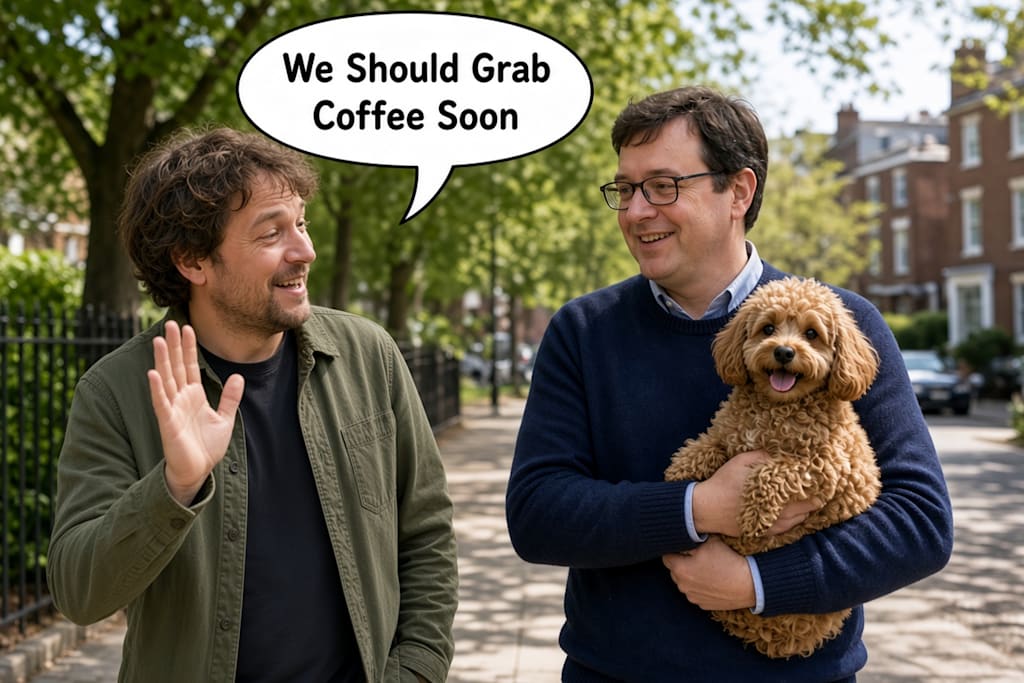
The English language is a magnificent, sprawling monument to cowardice. And nowhere is this proclivity to cowardice more obvious than in our use of “Optimistic Rejections” — words that sound like a sunny promise of future collaboration, but in reality mean that absolutely, categorically, nothing is going to happen.
People have spent decades perfecting the vocabulary designed specifically to avoid telling others the truth to their faces, all while sounding aggressively enthusiastic.
All the while, I didn’t know this fact. Because I am a pathetic, chronic people-pleaser.
I navigate life like a needy, trembling mini poodle sitting by the front door, panting heavily, desperately hoping someone will put a leash on me and take me to a public park.
If you show me even a shred of warmth, I will metaphorically roll over, expose my belly, and await instructions. I don’t navigate social interactions like a normal cynical human adult. This emotional defect means I am the ultimate prey for Optimistic Rejections.
“We should definitely grab a drink/coffee/lunch soon.”
Soon is not an invitation; it is a punctuation mark. It is a verbal period used to end a chance encounter at the grocery store so you can both walk away. If you ever replied to “We should grab a drink soon” by pulling out your phone and opening your Google Calendar app, you have committed a profound social atrocity. You have broken the contract.
The correct response is to agree enthusiastically that it “must” happen, while mutually understanding that neither of you will ever take a single step to make it a reality.
“Soon,” “must,” ”try to” … when other people hear these optimistic-sounding words, their brains correctly register a polite “no.” When my brain hears them, I start wagging my tail in anticipation.
For instance, if someone says, “Let’s hang out soon!”, I will text them three days later with a bulleted list of my availability for the next fiscal quarter.
I will genuinely think they are sitting at home, rubbing their temples, deeply engaged in the cognitive labor of “thinking about” including me in their lives “soon”, “trying” to find the right time to see me.
If they don’t reply, I will assume they have been involved in a minor traffic accident, and will text again to see if they are okay and if they still want to get tacos.
For months, I may reply to their Instagram stories with things like, “Wow, that artisanal cheese board looks great, we should definitely do that soon!” — entirely blind to the fact that they are currently eating that cheese board with four people who are not me.
“I’ll think about it.”
Parents are the masters of this one.
When a kid asks, “Can we go to Disney World?” and the parent replies, “I’ll think about it,” the kid hears a 50/50 probability. The parent, however, is using “think about it” as a sedative. It is a tactical delay designed to lower the child’s heart rate until they become distracted by an iPad or a juice box.
In adult life, it functions exactly the same way. When an employee asks for a pay raise, and a manager replies, “I’ll think about it,” It is a stay of execution.
My Rock Bottom: The Lunch Incident
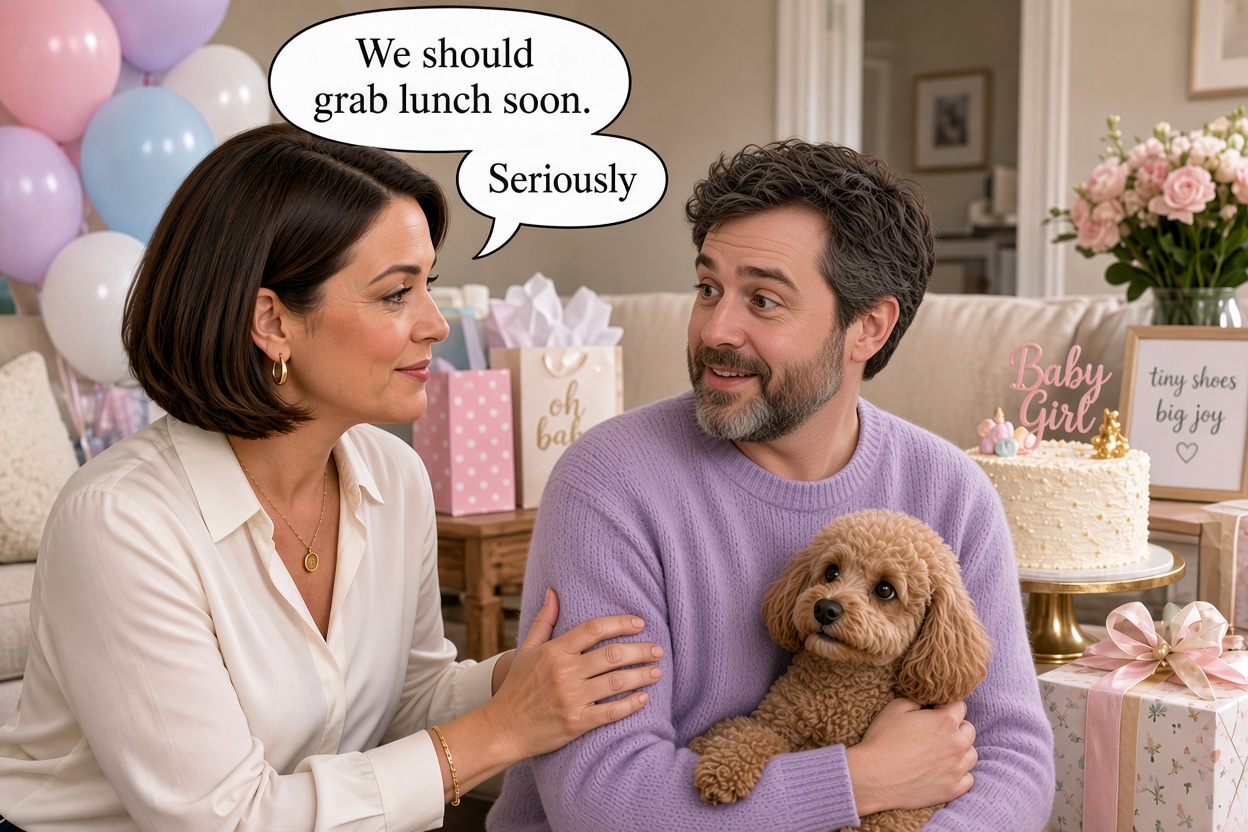
The breaking point for my dignity occurred at a mutual friend’s baby shower. Rebecca Taylor, who works for a major publishing firm, was there. She appeared fascinated by my insights into the genre of paranormal vampire fantasy. I also mentioned I’m in the final stage of editing my first novel of that genre, possibly a future bestseller.
She squeezed my arm, looked into my wide, moist poodle eyes, and said, “We should grab lunch soon.” Then she added the ultimate drug for a people-pleaser: “Seriously.”
My tail practically detached itself. Seriously! She didn’t just say soon; she added a modifier!
I went home and blocked out my entire next three weeks. I didn’t accept any new plans because I needed to keep my schedule completely flexible for the Rebecca Taylor Lunch Summit. Three days later, I sent a casual, “Hey! Just checking in about that lunch!”
Silence.
Two weeks later: “Hey Rebbeca! No worries if you’re busy, just thought I’d check in!”
More silence.
Six months later: “Hey! Saw it was raining today, reminded me of that lunch we talked about!”
I kept contacting her for a year.
It turned out Rebecca was a normal human using the universal code for “have a nice life,” and I was a dog barking at a closed door.
Perhaps she should have said…
“I’ll see what I can do.”
This is a magnificent shield.
It paints the speaker as a heroic, benevolent figure fighting against a faceless corporate bureaucracy on your behalf. “I’ll see what I can do,” they say with a grave nod. What they are actually doing is looking at the clock to see how long until they can log off. They will do nothing. They knew they would do nothing when the words left their mouth. But they want you to feel looked after while they usher you out of the meeting.
Which brings me to my comprehensive…
Glossary of Optimistic Rejections
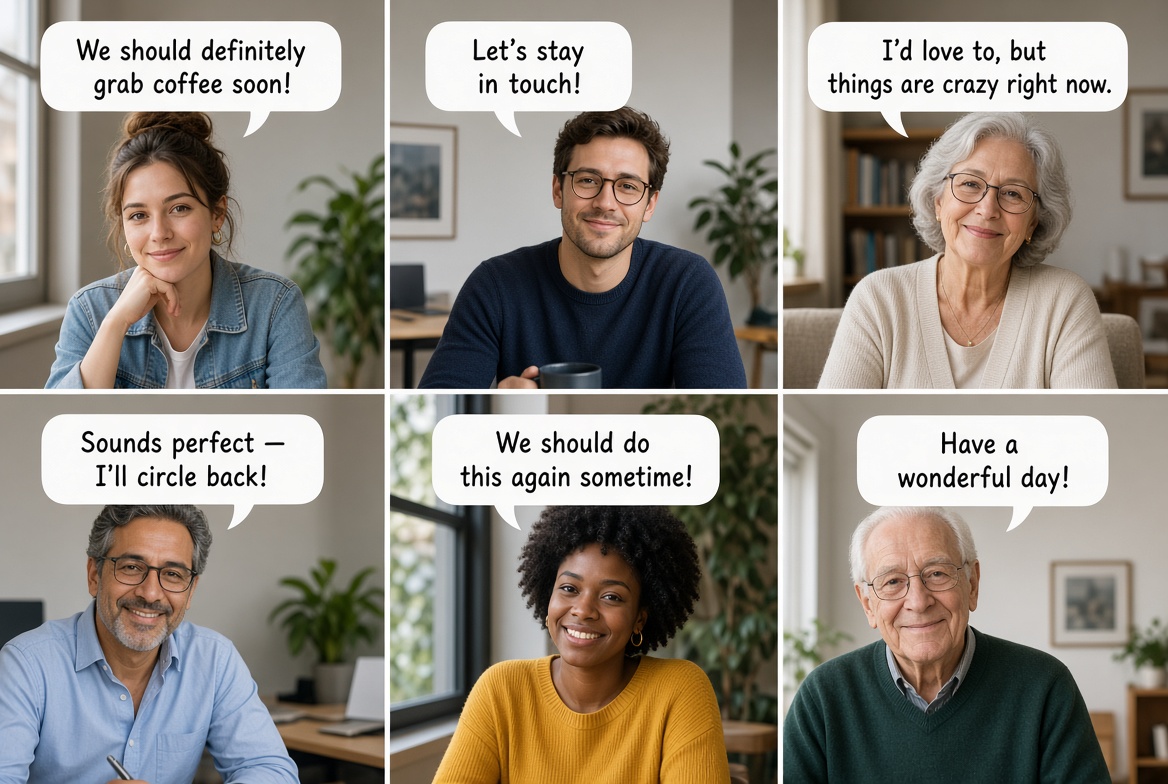
Should: A moral obligation or a high probability.
What It Actually Means: I am aware this is the correct human response, but I lack the spiritual fortitude to execute it.
The One Exception: When predicting disaster. “If you eat this gas station sushi, you should get sick.” (You will.)
Think about it: Active cognitive processing and weighing of options.
I am going to bury this request in a deep, dark recess of my brain and let time erode your memory of asking.
The One Exception: “I’m thinking about quitting.” = I have already checked out. I am currently doing 12 minutes of actual work per day and using the rest of my time to steal office supplies and update my LinkedIn.
Soon: In the near future; shortly.
Anytime between next Tuesday and the heat death of the universe.
The One Exception: When a toddler says they need to pee. In this specific context, “soon” means within the next four seconds, or your carpet is forfeit.
Keep it on my radar: An active tracking system for important tasks.
I have looked at your request, filed it under ‘Not My Problem,’ and will now actively fly in the opposite direction.
The One Exception: If you are an actual air traffic controller. That is it.
Let’s do lunch: A warm invitation to share a meal and catch up.
I acknowledge your existence, but I would rather eat glass than schedule 45 minutes of forced eye contact with you.
The One Exception: If you are both dynamic 1980s Wall Street executives wearing power suits and snorting cocaine.
Try: An expenditure of genuine effort and willpower.
What It Actually Means — I am announcing my future failure in advance so you can’t be mad when it happens.
The One Exception: When making a baby. Human procreation is the only arena where “thinking about” “trying” and “soon” usually results in someone screaming in a delivery room nine months later.
So if your partner says, “We should try for a baby,” the word try is a binding declaration of intent, and “try for a baby, soon” means “immediately, before the ovulation window closes.”
About the Creator
Scott Christenson🌴
Born and raised in Milwaukee WI, living in Hong Kong. Hoping to share some of my experiences w short story & non-fiction writing.
Enjoyed the story? Support the Creator.
Subscribe for free to receive all their stories in your feed. You could also become a paid subscriber, letting them know you appreciate their work.
Comments
There are no comments for this story
Be the first to respond and start the conversation.