
The Weight of the Unspoken
The "I'm sorry" that took me twenty years to say

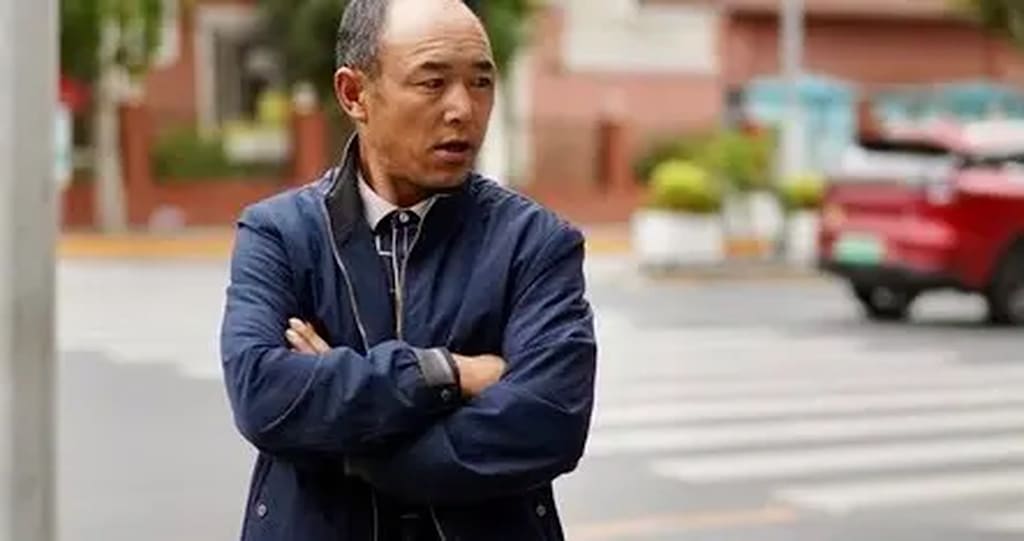
Have you ever had that feeling? Where your heart is heavy and suffocating, and the words are right there at the edge of your tongue, but you force yourself to swallow them back down. And that single swallow lasts for years—maybe even a lifetime.
I have.
I’m thirty-two this year. By all accounts, someone in their early thirties has seen what they need to see, weathered a few things they shouldn't have, and ought to have life figured out. But it wasn't until last month that I finally said those words I’d been holding in for twenty years: "I’m sorry."
I said them to my dad.
I
My father is an "honest man" in the most traditional Chinese sense—the kind of man who, if a vendor at the wet market accidentally gave him five extra yuan in change, would pedal his bicycle all the way back just to return it. My mom used to scold him for being a fool, but he’d never talk back; he’d just give a little "hei-hei" chuckle and go back to whatever he was doing.
He was an electric welder, working most of his life in a small factory in our township. I remember as a kid, he’d leave at six in the morning and wouldn't be back until seven or eight at night. His work clothes were peppered with tiny holes burned by sparks, and his hands were a map of calluses and scars. Summer was the worst. The workshop would hit 40 or 50 degrees Celsius, and he’d spend the whole day in those thick, heavy overalls. Every time he came home, you could literally wring the water out of his shirt.
We weren't well-off, but I never lacked for anything. If I wanted something to eat, he bought it; if I needed school supplies, he never hesitated. But back then, I didn't understand any of that. I just thought he was "useless"—a man with no ben-shi, no status.
Other kids' dads drove cars to pick them up from school. My dad rode a battered bicycle with his hard hat sitting in the front basket and his pant legs covered in dust. Every time I saw him waiting at the school gate, I’d pretend I didn't see him. I’d keep my head down, walk past him quickly, and only hop on the bike once we were around the corner out of sight.
He never seemed to notice. Or perhaps he did, but he never said a word to me.
Once, there was a parent-teacher meeting. My mom was busy, so my dad had to go. I almost cried out of frustration. I told him, "Don't go. You'll embarrass me." He just stood there, still holding the work clothes he hadn't had time to change out of. I still remember the expression on his face—it wasn't anger, and it wasn't exactly sadness. It was... I don't know how to describe it. He looked like someone who had been pushed and was struggling to find his footing.
He went anyway. But he stood against the back wall of the classroom. He didn't even dare to sit in a chair, saying he was too dirty. I sat in the front row, and throughout the entire meeting, I didn't look back at him once.
I’ve carried the memory of that day for twenty years.
Every time I think of it, it feels like a needle pricking my heart. But back then, I was only twelve. What does a twelve-year-old know? I only cared about "face" and keeping up with the Joneses. I didn't understand the sheer courage it took for a man in hole-ridden work clothes to stand at the back of that classroom for his son.
II
When I was in high school, my dad was laid off. The factory wasn't doing well, and he was on the list. He came home early that day carrying a plastic bag containing his hard hat, his water bottle, and the welding torch he’d used for over a decade.
He didn't say much; he just sat in the living room watching TV. My mom asked why he was home so early, and he said the factory gave everyone a few days off. It took a week before she found out the truth.
The two of them whispered in the kitchen for a long time that night. I expected an argument, but there wasn't one. The next morning, my dad went to the labor market to find work.
From then on, he took whatever he could get. Hauling bricks at construction sites, unloading cargo at logistics parks, working as a helper for interior decorators, even carrying bags of cement at the docks. Welding had been exhausting, but at least it was skilled labor with steady pay. After being laid off, he was doing pure manual labor. The pay was lower, and it took a brutal toll on his body.
I remember once he came home after hauling cement; the skin on his shoulders had been rubbed raw, and his shirt was stuck to the flesh. When my mom peeled the shirt off, he gritted his teeth and didn't make a sound. I watched from the side, tears welling in my eyes, but I didn't go over to help, and I didn't say a single kind word.
Why didn't I speak? I still don't quite understand it. Maybe teenagers just need a wake-up call; you know the truth in your heart, but your mouth refuses to yield.
The year of the Gaokao, I got into a university in the provincial capital—a "Tier 2" school. Honestly, it wasn't a stellar result, but for my family, it was as if the "ancestral graves were smoking with good fortune." My dad was overjoyed. He took three days off work just to tell everyone he met that his son was going to university. He even went to the county seat to buy a pair of new leather shoes, saying he’d wear them when he took me to report for enrollment.
He wore those shoes for the next three years, refusing to throw them away even after the soles were worn flat.
During those four years of college, I went home less and less. In my freshman year, I went back every semester. By my sophomore year, it was only winter and summer breaks. By junior and senior year, I didn't even go back for the summer, claiming I had internships. In truth, there weren't that many internships; I just didn't want to go back.
That home was too small, too old, and it made me feel ashamed.
My classmates spent their breaks discussing where to travel. I’d say I was going home, and they’d ask what was fun in my hometown. I’d stammer, unable to answer. I couldn't exactly tell them that I was going home to help my mom pull weeds in the yard and help my dad sort through scrap metal to sell for spare change.
III
After graduation, I stayed in the provincial capital to work. I started as a clerk at a small company, making 3,500 yuan a month. After rent and food, there wasn't much left. But I refused to ask my family for money, and I refused to go back.
Eventually, I hopped around a few jobs and my salary grew. Later, I passed the civil service exam and got a job at a municipal bureau. The pay wasn't astronomical, but it was stable and carried a certain prestige.
I bought a car and took out a mortgage for an apartment. Even though the place was in the suburbs and there wasn't much left after the monthly payments, I felt I had finally become the person I wanted to be.
I started dating a girl. She was a local with a good family background; both her parents were in the "system." The first time I took her home to meet my parents, my anxiety started a week in advance.
I told my mom to clean the house thoroughly and throw away all the useless junk. She said okay. I told my dad not to wear that shirt with the frayed collar and to change into something better. He said okay, too.
But the day we actually went back, everything still felt wrong. The house was too small, the walls were too dingy, and the smell of chicken droppings in the yard was too strong. My dad had put on a new shirt, but he wasn't used to it; he kept tugging at the collar, looking completely unnatural.
My girlfriend was very well-bred. She smiled the whole time, complimented my mom’s cooking, and chatted with my dad. But after she left, my mom told me, "Your dad was so nervous his hands were shaking; he spilled water all over the table when he was pouring it."
It hurt to hear that, but I still said nothing.
I eventually broke up with that girl—not because of my family, but for other reasons. Yet, when we split, I couldn't help but wonder: Did she look down on my family? Did she think my parents were too "earthy"? In reality, she never said anything of the sort; it was just the narrative I kept running in my head.
I had been using the most cynical assumptions to judge how others viewed my parents. At the end of the day, I was the one who was ashamed of them.
IV
Last winter, my mom called to say my dad was in the hospital.
I asked what was wrong. She stammered, saying it was just an old ailment and nothing to worry about. I had a project on my plate at the time, so I told her I’d head back once I was done. She said okay and told me not to rush.
Three days later, my aunt called. She tore into me, yelling that my dad had collapsed from exhaustion—he’d fainted right there at the construction site while hauling materials. The hospital checkup revealed a laundry list of problems: a herniated disc, high blood pressure, coronary heart disease. The doctor said if he kept working like this, it would cost him his life.
"You’re over thirty years old, and your father is still hauling bricks on a construction site. How can you live with yourself?" my aunt screamed through the phone.
I stood there, frozen, unable to utter a single word.
I took leave that night and drove back. It was a three-hour drive, but it took me four and a half. I had to pull over at service areas twice—not because I was tired, but because my eyes were too blurred to see the road.
It was midnight when I reached the hospital. I pushed open the ward door and saw my dad lying in the bed by the window. He was on an IV, and the heart monitor beside him was blinking with a steady green light.
He had lost so much weight. Why hadn't I noticed? His hair was entirely white, his face was a map of deep wrinkles, the veins on the back of his hands were bulging, and there was grime under his fingernails that wouldn't wash away.
My mom had fallen asleep leaning against the bed. I stood at the door for a long time before finally walking over and sitting in the chair by his side.
My dad woke up. He saw me, looked startled for a second, then smiled. "Why are you here? Didn't you say you were busy?"
"It’s fine," I said. "I took some time off."
He continued, "It’s nothing serious. I’m just a bit tired. I’ll be fine after a couple of days' rest."
I didn't respond. He kept talking: "Don't listen to your aunt; she makes a big deal out of everything. My health is fine. I can still work a few more years."
"Don't do it anymore," I said.
He paused.
"I said, don't do it anymore." My voice was shaking. "You’re sixty-two. What are you still working for?"
He was silent for a moment, then said, "If I don't work, where will the money come from? You haven't finished paying off your mortgage, and you’ll need money to get married..."
"I can earn it myself."
"With your salary..."
"I can earn it myself!" I almost shouted.
The ward fell silent. The patient in the next bed shifted. My mom woke up, rubbing her eyes and looking between us, unsure of what to say.
My dad didn't say anything. He just looked at me. His gaze was so calm—it was a calmness that made me want to sob.
I opened my mouth to say something, but my throat felt blocked. I wanted to say "I’m sorry," I wanted to say "I was wrong," I wanted to say "I shouldn't have treated you like that all those years," but not a single word came out.
Finally, I stood up, walked to the window, and turned my back to him, pretending to look at the night view. There was nothing out there—just a vast, empty blackness.
I heard him let out a soft sigh behind me.
V
My dad was in the hospital for half a month, and I stayed by his side the whole time.
In those two weeks, we talked more than we had in the previous decade combined. But it was all trivial—what we ate today, where the patient in the next bed was from, whether the nurse was good at drawing blood. The things that really needed to be said remained unspoken.
Every day, I brought him food, poured his water, and helped him to the bathroom. Every time, he’d say, "No need, no need, I can do it myself," and then he’d shakily grab the bed rail to stand up, only to be out of breath after two steps.
Watching him like that was agonizing. In my memory, my father was always the man who could carry and lift anything, the man for whom no labor was too heavy. How did he get so old? How did he get so sick?
The day he was discharged, I drove them back to our hometown. When we got home, I helped him into bed and started cleaning the house.
There was a pile of cardboard and plastic bottles in the yard—things he’d collected to sell at the scrap yard. I found a large bag, packed them all up, and loaded them onto his tricycle.
In the kitchen, the bottles of oil and soy sauce were leaning every which way, and the stove was thick with grease. I bought some heavy-duty degreaser and spent two hours scrubbing until the skin on my hands started to peel.
My dad kept calling from the bedroom: "Stop now, take a break. It doesn't need to be that clean."
I ignored him and kept scrubbing.
As I scrubbed, I suddenly remembered him washing my shoes when I was little. I was in primary school, and the school required us to wear white canvas sneakers. Every day I came home, they were black with dirt. No matter how tired he was, every single night he would scrub my shoes clean and set them by the stove to dry. Every morning when I woke up, my shoes were always white.
He washed my shoes for six years. I never once said thank you.
And me? I couldn't even manage to admit I was wrong to his face.
That night, while my mom was cooking in the kitchen, I sat by my dad’s bed. We sat there, staring at each other, neither of us speaking.
The weather forecast was on the TV, saying it would rain tomorrow. My dad said, "It’s going to rain tomorrow. Take an umbrella when you leave."
I said, "I’m not leaving. I took a week off."
He gave an "oh" and fell silent again.
I stared at the TV for a long time, then suddenly said, "Dad."
"Yeah?"
"About that..."
I couldn't say it. I really couldn't. The words spun around in my mouth a hundred times, but they wouldn't come out.
My dad probably saw my struggle. He waved his hand and said, "Alright, alright, don't say it. I know."
What do you know? You don't know anything. You don't know that I never dared to tell people what you did for a living. You don't know that I was ashamed of you for twenty years. You don't know that every time I came back, I didn't want to stay because I thought this house was pathetic.
If you knew all that, would you still be sitting here so calmly?
I didn't say it. I swallowed it again.
VI
What finally made the words come out was something incredibly small.
Last month, I went back to the old house to drop some things off. I’d bought them a new rice cooker since their old one was years old and the non-stick coating was peeling off. When I arrived, my dad wasn't inside; my mom said he was in the back shed fixing the tricycle.
I went to find him and saw him squatting on the ground, wrench in hand, tightening a bolt. Beside him was a basin of water where he was checking an inner tube for leaks.
He looked up and smiled when he saw me. "Wait just a second, I’m almost done."
He went back to work. As I stood there watching, I suddenly noticed his hands. They were deformed—the joints were swollen, several fingers wouldn't fully straighten, and his palms and knuckles were a mess of cracks and calluses. Some of the cracks were oozing blood.
As he tried to turn the wrench, his hand was shaking. A simple bolt, and he couldn't get it to budge after several tries.
I knelt down and said, "Let me do it."
He said, "No, I’ve got it."
"Let me." I reached out and took the wrench.
He paused, then just squatted there watching me. I didn't really know how to fix things either, but I could manage a wrench. After a while, the inner tube was patched. I pumped it up, tested it—no leaks.
He smiled and said, "Young people are just better at this. My hands aren't much use anymore."
I looked at him smiling, and suddenly, I just broke.
It wasn't a loud, wailing sob. The tears just started falling, and I couldn't stop them. I kept my head down, pretending to pack up the tools, but the tears hit the dusty ground, creating little craters in the dirt.
He saw it and panicked. I think the thing he’s feared most his entire life is seeing me cry. When I cried as a child, he’d be at a total loss, not knowing how to comfort me. Now that I’m over thirty, he knew even less what to do.
"What’s wrong? What is it?" He reached out to pat my shoulder, but halfway there he pulled his hand back—probably thinking his hand was too dirty.
I reached out and grabbed that hand before he could pull it away.
It was rough and coarse, like sandpaper. I gripped his hand and said, "Dad, I’m sorry."
He finally heard it.
"I’m sorry for all these years," I said. "I was ashamed of you. I thought you were useless. I was ashamed of how poor we were. I never dared to tell anyone what you did. When you picked me up from school, I pretended I didn't know you. At the parent-teacher meeting, when you stood at the back of the room, I didn't look back at you once..."
I couldn't go on.
My dad didn't say anything. He just squatted there and let me hold his hand.
After a long time, he finally spoke, his voice a bit raspy. "Are you finished?"
I nodded.
He said, "That’s all it was? I thought it was something serious."
I looked up at him and realized he was crying, too. But he was smiling through the tears—a strange, beautiful expression.
He said, "You’re my son. Do you think I don't know you? Do you think I don't know your temper? Everyone has a time when they’re young and foolish. Do you think I’d hold that against you?"
"But..."
"But nothing." He pulled his hand back, wiped it on his clothes, and then firmly patted my shoulder. "Aren't you doing well now? You have a job, a house—you’re living a good life. That’s all your mother and I care about. Nothing else matters."
I sat there on the ground, crying like an idiot.
VII
That night, the two of us had a few drinks. He isn't actually supposed to drink—the doctor forbade it—but he insisted, saying he was happy. My mom scolded him from the sidelines, but he didn't listen.
After two glasses, he started talking more. He told me many things I never knew.
He said that after he was laid off, he went to the labor market for three days and found nothing. He had only 200 yuan left. He ate steamed buns and pickles at a roadside stall for three days, not daring to come home because he didn't want my mom to worry.
He said during the time he was hauling cement, his shoulders were swollen every night, but he’d still get up at four in the morning to wait in line for work. If you were late, someone else would take the job.
He said during my university years, he and my mom lived on less than 500 yuan a month. Every cent they saved went to my tuition and living expenses. My monthly allowance was 1,200 yuan; the two of them lived on less than half of that combined.
He said one winter, he fell off a scaffold at a construction site and broke three ribs. He spent a month in the hospital. He wouldn't let my mom tell me because he didn't want me to worry or have it affect my studies.
By the time he got to that part, I couldn't even hold my glass steady.
"Why didn't you ever say anything?" I asked.
He looked at me and said, "What good would saying it do? You were just a kid. Even if I told you, you couldn't have helped; you’d just have worried along with us. As a father, I couldn't let my son carry that weight."
That one sentence completely broke me.
That’s how he’s been his whole life—saying nothing. He didn't speak of exhaustion, pain, bitterness, or grievance. He carried everything himself, and when he could no longer carry it, he kept carrying it anyway.
And me? Out of fear of "losing face," I couldn't even bring myself to call him "Dad" loudly enough for the world to hear.
At the end of the night, I helped him back to his room. As he lay in bed, he took my hand and said something I don't think he’s ever said in his life.
He said, "Son, as long as you’re doing well out there, that’s enough. I’m here at home. I can still move; I won’t be a burden to you."
I said, "Don't work anymore. I’ll take care of you."
He smiled, said nothing, turned over, and fell asleep.
I sat by his bed, looking at his white hair and his thin back. I suddenly realized that I had spent twenty years taking a massive detour just to understand the simplest truth in the world:
If someone is willing to tread their dignity into the dirt for you, it isn't because they have no dignity. It’s because you are more important than their dignity could ever be.
VIII
Now, I go back home every weekend. No matter how busy or tired I am, the moment I finish work on Friday, I head back. The three-hour drive is a journey I make gladly.
I’ve started teaching him how to use a smartphone. He’s a slow learner—I’ve taught him how to send a WeChat voice message ten times and he still forgets—but I’m not in a hurry. I remember when he taught me to ride a bike; he held onto the back for a month and never once called me stupid.
I took him for a full physical exam. I organized his medications, sorting them into morning, noon, and night, and labeled them all. He grumbles that it’s a hassle, like being assigned "tasks." I tell him he has to take them whether he likes it or not. "If you collapse, who’s going to talk to me?"
He chuckles and says, "Alright, I’ll listen to you."
When I went back last week, I saw he’d planted a loquat tree in the yard. He said, "Don't you love loquats? I planted one; it’ll bear fruit in a couple of years."
I said, "The fruit from a tree you planted will definitely be sour."
He said impossible—anything he plants turns out sweet.
My mom rolled her eyes and said, "Can you two be normal? You’re getting all sentimental."
We all laughed.
The loquat tree is planted on the east side of the yard, right outside his bedroom window. He says he can see it every morning when he opens the curtains, and it puts him in a good mood.
I think to myself: when it finally bears fruit, I’m definitely coming back to eat them. No matter if they’re sweet or sour, I’m going to say they’re the sweetest things I’ve ever tasted.
Some things are just better once they’re said.
That "I’m sorry" that stayed tucked away for twenty years—it wasn't actually that hard to say. The hard part is being willing to kneel down, take those callus-covered hands in yours, and truly look at the person in front of you.
Look at his hair. Look at his hands. Look at the way his back has bowed.
And you will understand everything.
(The End)
About the Creator
Water&Well&Page
I think to write, I write to think
Enjoyed the story? Support the Creator.
Subscribe for free to receive all their stories in your feed.
Comments
There are no comments for this story
Be the first to respond and start the conversation.