
The Ultimate Solution for Missing Teeth: Dental Implants
Discover how dental implants offer a lasting solution for missing teeth, restoring function, appearance, and confidence with natural-looking results.

Introduction
Dental implants have become quite famous since their invention, and the field of dental innovations continues to evolve. They are a highly effective long-term solution for missing teeth and are believed to be one of the best options available. Once you have dental implants, you can smile with confidence again, as they are designed to closely resemble your natural teeth in appearance, feel, and functionality.
Dental implants are surgically inserted into the jawbone. Once positioned, they allow your dentist to attach replacement teeth or crowns via abutments. When there are insufficient natural tooth roots, dental implants serve as a reliable alternative to poorly fitting dentures or bridges for tooth replacement.
So, what makes dental implants a good option? Dental implants can enhance your general oral health in addition to the evident visual benefits. In contrast to bridges, dental implants do not require the altering of neighboring teeth. This is a big advantage because your dental health will improve the more teeth you can preserve. If you have a missing tooth and are looking for dental implant treatment in Swawlambi Nagar, Om Dental Clinic has the right solution.
What Are Dental Implants?
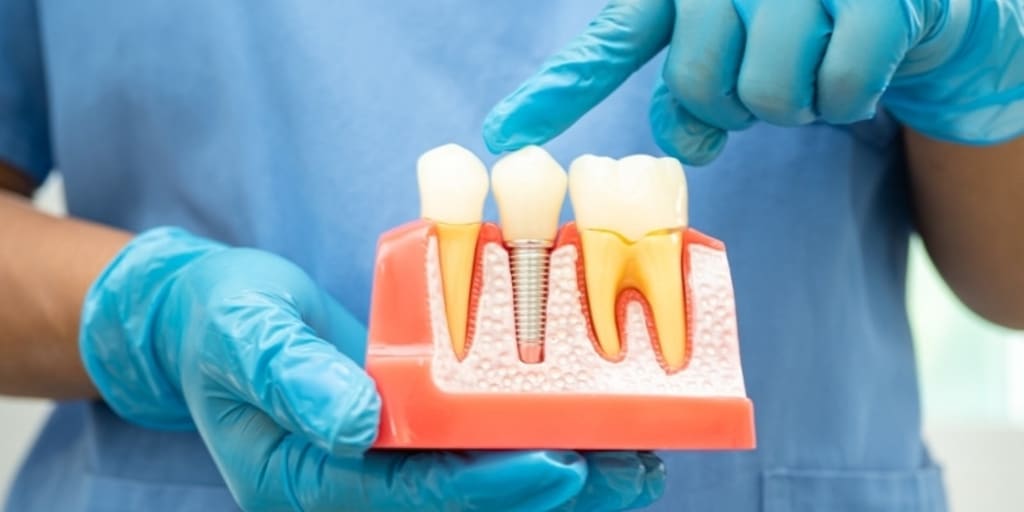
These artificial anchors are surgically inserted into the jaw to provide a stable foundation for prosthetic teeth. Made of biocompatible materials like titanium, they gradually merge with the surrounding bone to form a robust and long-lasting anchor for artificial teeth.
The implant itself resembles a natural tooth root and is formed like a tiny post or screw. During a minor surgical operation, it is carefully placed in the jawbone by a skilled periodontist or oral surgeon. Following implantation, the implant integrates with the surrounding bone tissue through a process known as osseointegration.
When completely integrated, it can support a variety of restorations, including dentures, bridges, and crowns. These prosthetic teeth, which correspond to the appearance of your natural teeth, look and work just like real ones, giving you a better appearance and better biting and chewing abilities.
How Dental Implants Work
Because dental implants restore both function and appearance, they are an amazing way to replace lost teeth. Dental implants, as compared to alternative tooth replacement solutions like dentures or bridges, are surgically placed into the jawbone to provide a secure base for prosthetic teeth.
The procedure starts with a comprehensive examination by an implant dentist to determine whether you are a good candidate for dental implants. After being found qualified, titanium posts are inserted into the jaw. Through a process called osseointegration, these posts eventually bond with the bone to function as artificial roots.
Abutments are used to secure prosthetic teeth or custom-made crowns to these implanted supports following a several-month healing period. This produces a tooth that functions and looks natural, blending in perfectly with your smile.
Dental implants work well because they can provide the stability and strength of natural teeth. Unlike removable dentures, they are strongly fixed in the jawbone, so there is no chance that they may slip or move when speaking or eating.
Additionally, dental implants can help maintain the density of bone in your jaw by promoting growth in the same way that natural tooth roots would. Over time, this preserves facial structure and prevents bone loss.
Dental implants have aesthetic benefits in addition to their practical ones. They perfectly complement the appearance and color of the surrounding natural teeth.
Dental implants have an excellent success rate and can last longer if you take good care of them and see your dentist for regular checkups after the treatment.
Dental implants stand out as one of the best solutions accessible today when thinking about tooth replacement options for missing teeth because of their stability, longevity, and capacity to improve oral health and general quality of life.
Benefits of Dental Implants
1. Natural Look and Feel
Dental implants are created to look, feel, and function like natural teeth. They are customized to mimic the color, size, shape, and functionality of your natural teeth, ensuring a seamless appearance.
2. Improved Oral Health
Unlike bridges, which require the trimming of adjacent teeth, implants do not compromise the health of neighboring teeth. They also stimulate the jawbone, preventing bone loss—a common problem with missing teeth.
3. Long-Lasting Solution
With suitable care, dental implants can last longer than other alternatives. Their durability makes them a cost-effective option in the long run compared to other solutions that may need frequent replacements.
4. Enhanced Comfort and Confidence
Implants get rid of the discomfort usually related to removable dentures. They stay securely in place, allowing you to eat, speak, and smile with confidence.
5. Improved Speech and Chewing Ability
Missing teeth or ill-fitting dentures can result in speech problems and difficulty chewing certain foods. Implants restore full functionality, enabling clear speech and a varied diet.
The Dental Implant Process
1. Initial Consultation
The process begins with a consultation where your dentist evaluates your oral health, jawbone density, and suitability for implants. X-rays or CT scans are often used to create a detailed treatment plan.
2. Implant Placement
During surgery, the titanium post is placed into your jawbone under local anesthesia or sedation. Over time, the implant connects with the bone in the osseointegration phase, providing a stable foundation.
3. Healing Period
Osseointegration typically takes 3-6 months. During this time, your jawbone recovers around the implant, securing it firmly. A temporary crown may be set to maintain aesthetics during the healing period.
4. Abutment Placement
Once the implant has connected with the bone, an abutment (connector piece) is fixed to the implant. This serves as the base for the artificial tooth.
5. Placement of the Crown
Finally, a custom-made crown, bridge, or denture is attached to the abutment. The result is a fully functional and natural-looking tooth.
Are You a Candidate for Dental Implants?
While dental implants are an incredible choice for many, they are not suitable for everyone. Ideal candidates should:
Have healthy gums and adequate jawbone density. If you have infected gums or gum disease, gum treatment will be required before the dental implant surgery.
Must be in good overall health to undergo minor surgery. The overall health of the patient also affects the outcomes of dental implant surgery.
Commit to maintaining good oral hygiene. Following dental routines, including brushing and flossing daily and drinking plenty of water, can keep your gum and oral health on track.
In some cases, bone grafting may be required if the jawbone is too thin or soft to support an implant.
Types of Dental Implants
1. Single Tooth Implant
This option is used to replace a single missing tooth, and it involves one implant and one crown.
2. Multiple Implants
If you are missing several teeth, multiple implants can support a bridge or partial denture.
3. Full Mouth Implants
For those missing all their teeth, a full arch can be backed by as few as four implants (known as All-on-4 or All-on-6 implants).
4. Mini Implants
These are smaller in size and are often used for patients with less jawbone density.
Caring for Dental Implants
Proper care is essential to ensure the long life of your dental implants. Follow these tips to maintain them:
Brush and Floss Regularly: Treat your implants like natural teeth. Brush twice daily and floss to remove plaque and prevent gum disease.
Use a Soft-Bristled Toothbrush: This prevents scratching the implant surface or irritating the gums.
Visit Your Dentist Regularly: Regular check-ups and cleanings help detect any issues early.
Avoid Hard Foods: Refrain from chewing ice or hard candies, as they can damage the crown.
Cost of Dental Implants
The cost of dental implants varies depending on factors such as:
- The number of implants needed.
- The type of implant and material used.
- Additional procedures like bone grafting or sinus lifts.
While the initial cost may be higher than other tooth replacement options, their durability and benefits make them a worthwhile investment.
Alternatives to Dental Implants
While implants are highly effective, some individuals may prefer or require alternative solutions:
Dentures: A removable option suitable for multiple missing teeth.
Bridges: A fixed option that uses adjacent teeth for support.
Resin-Bonded Bridges: A conservative option for replacing front teeth.
Each option has pros and cons, but none offer the same durability and functionality as dental implants.
Why Choose Dental Implants?
Dental implants provide unparalleled stability, functionality, and aesthetics. They not only restore your smile but also improve your overall oral health and quality of life. Whether replacing one tooth or an entire arch, implants offer a reliable, long-term solution tailored to your needs.
Conclusion
Missing teeth don’t have to limit your lifestyle and choices. With dental implants, you can regain your smile, confidence, and functionality in the most natural and durable way possible. If you’re considering dental implant treatment in Swawlambi Nagar, consult Om Dental Clinic to explore options and take the first step toward a healthier smile.
About the Creator
OM DENTAL CLINIC
Shop No.1, Mayur Palace, Trimurti Nagar Square, Mankapur Ring Rd, Nagpur, Maharashtra 440022
Mob.83087291
Enjoyed the story? Support the Creator.
Subscribe for free to receive all their stories in your feed.
Comments
There are no comments for this story
Be the first to respond and start the conversation.