
The Quiet Ways People Fall Apart
Not Every Breakdown Looks Dramatic
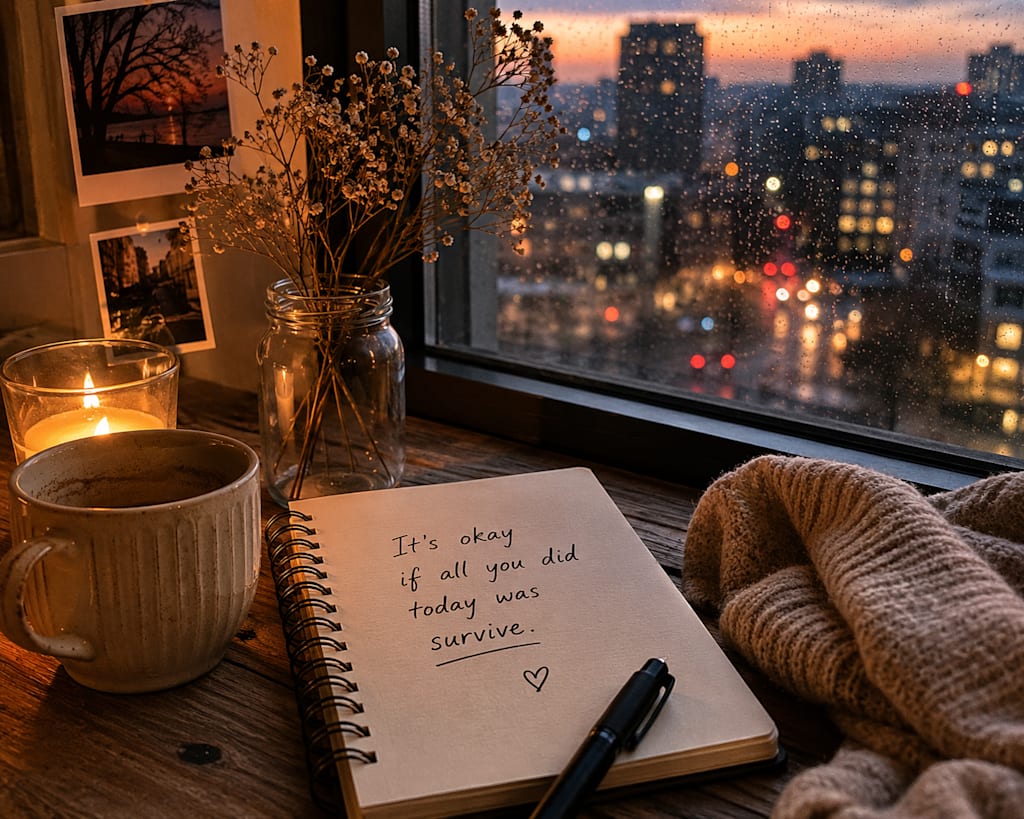
Most people imagine emotional breakdowns as dramatic moments.
Crying on the bathroom floor. Yelling during an argument. Walking out of a job unexpectedly. Some kind of visible collapse that clearly signals something is wrong.
But honestly, I don’t think most people fall apart that way.
Usually it happens much more quietly.
Someone starts replying to messages a little later than usual. A person who once loved cooking begins ordering takeout every night because they no longer have the energy to decide what to eat. Laundry sits unfolded for days. Small tasks feel strangely heavier than they should.
Nothing looks catastrophic from the outside.
That’s part of why it’s difficult to notice.
A few months ago, I was sitting in a grocery store parking lot longer than necessary after finishing shopping. I remember staring at the steering wheel for almost ten minutes for no real reason. I wasn’t crying. I wasn’t even especially upset. I just felt mentally tired in a way that was difficult to explain clearly.
Eventually I drove home, unpacked groceries, answered emails, and continued the rest of the evening normally.
But something about that moment stayed with me.
Mostly because I realized how many adults are probably carrying around that same quiet exhaustion every day without talking about it openly.
Modern life leaves surprisingly little room for emotional recovery.
People continue functioning even when they are overwhelmed. They go to work. They answer messages. They attend meetings. They smile during conversations. From the outside, everything appears completely normal.
Meanwhile, internally, they are operating on emotional low battery for months at a time.
And eventually the smallest things begin feeling enormous.
Replying to a text message feels exhausting. Choosing what to wear feels irritating. Someone asks a simple question and suddenly it takes effort not to cry from pure mental overload.
I think a lot of adults become experts at appearing okay while quietly struggling.
Part of the problem is that modern stress rarely arrives one problem at a time anymore. It accumulates slowly from dozens of directions at once. Work pressure. Financial anxiety. Family responsibilities. Constant notifications. News updates. Social expectations. Health concerns. Loneliness. Exhaustion.
Individually, many of these problems seem manageable.
Together, they create constant emotional background noise.
And background noise becomes exhausting when it never fully stops.
Sometimes people don’t even realize how overwhelmed they are until something unexpectedly small pushes them over the edge. A minor inconvenience suddenly feels devastating. A delayed email triggers disproportionate frustration. Someone forgetting to reply feels deeply personal even when it probably isn’t.
The emotional reaction often has very little to do with the actual situation.
It’s usually accumulated exhaustion looking for somewhere to go.
I noticed this last winter after a particularly busy month. One evening I accidentally dropped a glass while washing dishes. It shattered across the kitchen floor, and for a second I just stood there staring at it, feeling bizarrely defeated.
Not because of the glass itself.
Because it felt like one more thing.
That sounds ridiculous now, but I think many people understand the feeling immediately.
Sometimes emotional overwhelm disguises itself as irritation, numbness, forgetfulness, or exhaustion rather than sadness. People assume they are lazy when they are actually burned out. They assume they are becoming antisocial when they are emotionally overloaded. They assume they are “bad at adulthood” when in reality they are trying to function inside environments that rarely allow genuine rest.
And social media makes this even stranger.
Modern life creates enormous pressure to appear emotionally stable all the time. People post vacation photos during periods when they are privately struggling. They continue answering work emails while emotionally exhausted. They joke about being burned out because humor often feels easier than honesty.
Meanwhile everyone else scrolling through those updates assumes other people are coping better than they are.
It becomes a cycle of invisible overwhelm.
What makes quiet emotional exhaustion difficult is that there is often no clear breaking point. No dramatic moment where life suddenly becomes unmanageable. Instead, people slowly lose energy for things they once cared about. Music sounds less interesting. Texts remain unanswered longer. Weekends become recovery periods rather than enjoyable time off.
Even rest starts feeling unproductive somehow.
And honestly, I think many adults are far more emotionally tired than they realize.
Not weak.
Not lazy.
Just overloaded for too long without enough real recovery.
A lot of modern advice about stress focuses on optimization. Better morning routines. Better productivity systems. Better time management. Some of that can genuinely help. But emotional exhaustion is not always a scheduling problem.
Sometimes people simply need softness.
More sleep. More silence. Slower weekends. Less pressure to constantly perform wellness, success, ambition, or happiness for other people.
A few weeks ago, I spent an entire Saturday doing almost nothing productive. I made coffee, cleaned my apartment slowly, listened to music, and walked around the neighborhood without checking my phone much.
Nothing important happened.
But by evening, I realized it was the calmest my mind had felt in weeks.
That surprised me more than it should have.
Maybe part of adulthood is realizing that emotional recovery often looks incredibly ordinary. Quiet apartments. Unrushed conversations. Going outside for no reason. Sitting still long enough to hear your own thoughts again.
Not every problem can be solved with rest, obviously. Some situations are serious and complicated. But I think many people underestimate how much constant stimulation affects emotional wellbeing over time.
Human beings were never designed to process this much information, stress, comparison, and attention every single day without consequence.
Eventually something begins feeling emotionally worn down.
And the difficult part is that people often continue functioning long after they should have slowed down.
That’s why quiet emotional exhaustion can become so hard to recognize.
From the outside, someone may still appear completely fine.
They still go to work.
They still reply eventually.
They still laugh at jokes.
But internally, they may be carrying far more than anyone around them realizes.
And sometimes the people struggling the most are the ones who have become the best at hiding it.
About the Creator
Enjoyed the story? Support the Creator.
Subscribe for free to receive all their stories in your feed.
Comments
There are no comments for this story
Be the first to respond and start the conversation.