
The Neighbor Who Never Left His House
Curiosity leads to an unexpected friendship.

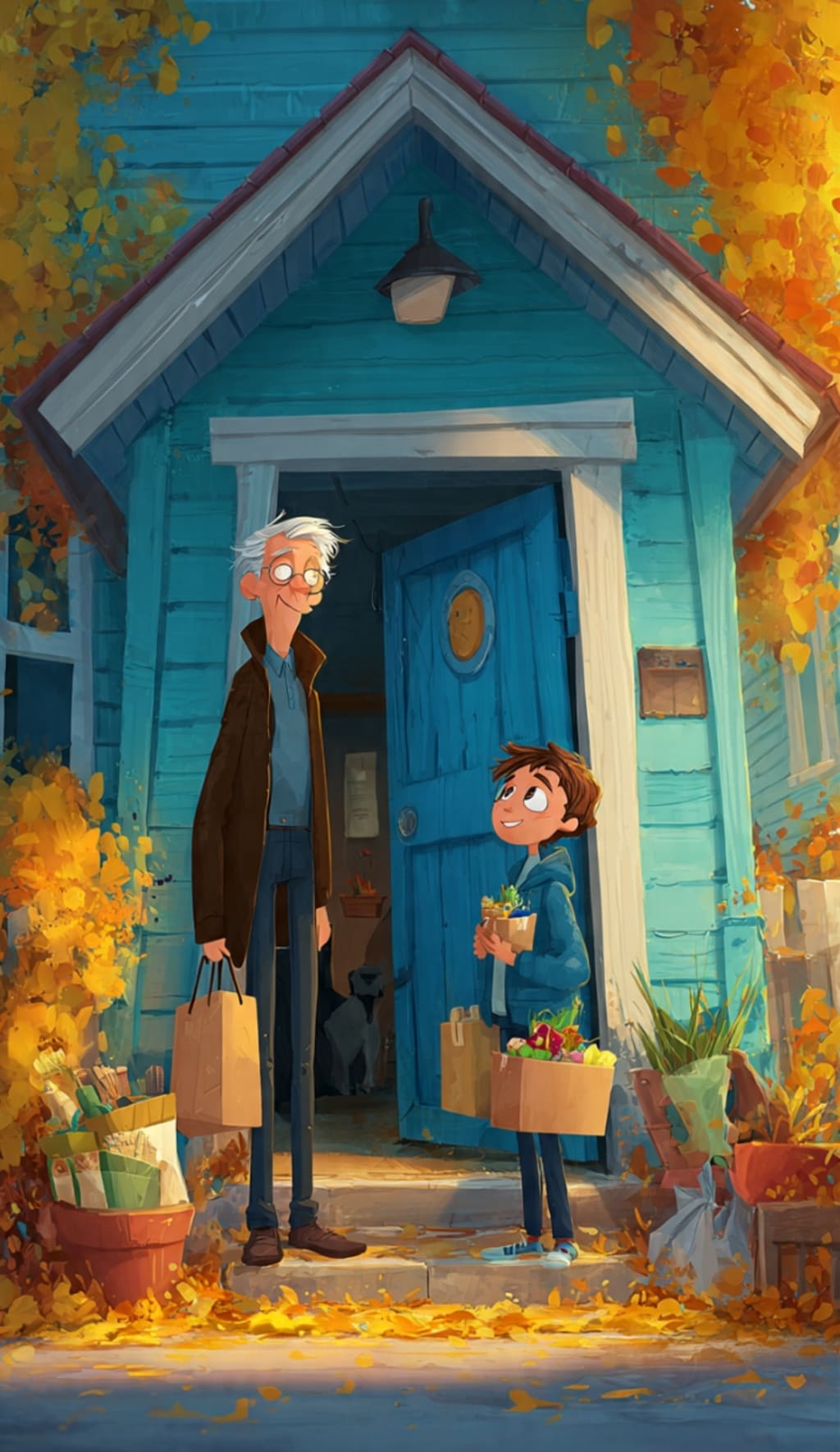
When I moved into Willow Street, I quickly learned that every neighborhood has its mysteries. Ours was Mr. Carter. He lived in the old blue house at the end of the road. The curtains were always closed. His lawn was neatly maintained, groceries appeared on his porch every week, and yet nobody ever saw him leave. For fifteen years, according to my neighbor Mrs. Jenkins, Mr. Carter had barely stepped outside. Naturally, people talked. Some thought he was incredibly wealthy. Others believed he had committed a crime years ago and was hiding from the world. A few children claimed the house was haunted. Personally, I thought people simply enjoyed mysteries. Still, I couldn't deny my curiosity. Every morning on my way to work, I passed his house. Every evening, the lights inside glowed warmly, but the front door remained shut. Months went by. Then one autumn afternoon, I noticed something unusual. A package had been left on Mr. Carter's porch. And another. And another. Three days later, they were still there. For the first time, something felt wrong. I walked up to the house and knocked. No answer. I knocked again. Nothing. Just as I was about to leave, I heard a weak voice. "Coming." Slowly, the door opened. Standing before me was a thin elderly man with silver hair and kind blue eyes. He looked exhausted. "Can I help you?" he asked politely. "I'm sorry to bother you," I said. "I noticed your packages outside and wanted to make sure you were okay." For a moment, he simply stared. Then he smiled. "That's very thoughtful." He explained that he had caught a severe flu and had been too weak to carry the boxes inside. Together, we brought the packages into his living room. As I prepared to leave, he surprised me. "Would you like some tea?" That was how I met Mr. Carter. His first name was Samuel. And contrary to all the rumors, he wasn't mysterious at all. He was lonely. Over tea, he told me about his life. He had once been a history teacher. His wife, Eleanor, had been a pianist. They had been married for forty-eight years. Then, five years earlier, Eleanor had passed away. After losing her, Samuel found it difficult to face the world. Little by little, he withdrew from friends. Then from neighbors. Eventually, from almost everyone. "People assume I dislike company," he said softly. "The truth is, I forgot how to live without her." I didn't know what to say. So I simply listened. And sometimes, listening is enough. After that day, I began visiting him every weekend. Sometimes we played chess. Sometimes we talked. And sometimes we sat quietly while he shared stories about Eleanor. Word spread quickly through the neighborhood. Soon Mrs. Jenkins started bringing homemade pies. The children from across the street helped clean his garden. One family invited him to Thanksgiving dinner. At first, Samuel resisted. "I'm too old for all this fuss," he insisted. But secretly, I think he enjoyed every minute. By Christmas, something remarkable had happened. The man who hadn't left his house in years began sitting on his front porch. People stopped to chat. Children waved to him after school. And Samuel smiled more often. One spring morning, I found him planting flowers. "Look at you," I laughed. "Fresh air and sunshine." He chuckled. "Eleanor loved roses. I think she'd approve." Months later, our neighborhood organized a summer picnic. Everyone expected Samuel to decline. Instead, he appeared wearing a straw hat and carrying a homemade apple pie. The crowd erupted into applause. His cheeks turned bright red. "I only brought dessert," he protested. Mrs. Jenkins wiped tears from her eyes. "No, Samuel," she said. "You brought yourself." As the years passed, Samuel became the unofficial grandfather of Willow Street. He taught children history. He coached teenagers in chess. He told stories that made everyone laugh. And every spring, he planted roses in memory of Eleanor. One evening, while watching the sunset from his porch, I asked him something. "Why did you invite me inside that day?" Samuel smiled. "Because you knocked." "That's it?" "That's everything." He looked toward the roses. "People think kindness must be something grand." He shook his head. "Sometimes kindness is just noticing that packages have been sitting outside for too long." Years later, after Samuel passed away peacefully at the age of eighty-seven, the entire neighborhood attended his memorial service. And there, among the flowers and photographs, we discovered something none of us had expected. In his will, Samuel had left a letter. It read: "To my friends on Willow Street, Thank you for giving an old man a second life. You never knew it, but after losing Eleanor, I believed my happiest days were behind me. I was wrong. Because happiness returned disguised as neighbors. Thank you for reminding me that even after loss, life still has room for friendship, laughter, and love. And thank you to the young man who knocked on my door when everyone else simply walked by. With gratitude, Samuel Carter." Even now, whenever I pass the old blue house, I remember Mr. Carter. The neighbor who never left his house. Until friendship gave him a reason to step outside again.
About the Creator
Nabil Ahmad
I write heartwarming stories about kindness, hope, courage, and second chances. Through inspiring animal tales and emotional life lessons, my goal is to remind readers that even the smallest act of compassion can change a life forever.
Enjoyed the story? Support the Creator.
Subscribe for free to receive all their stories in your feed.
Comments
There are no comments for this story
Be the first to respond and start the conversation.