
The Most Memorable Gifts Are the Least Practical
A $3 keychain can outlast a $50 bag of rice. Here’s why.
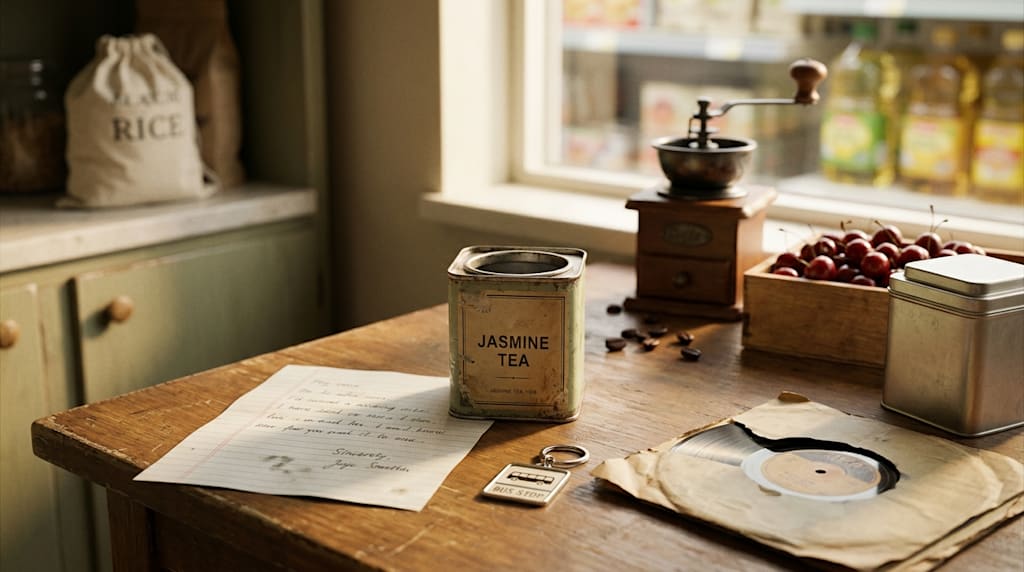
My friend Lin keeps an empty tea tin on her desk. The label has faded. It once held jasmine tea. She has a cupboard full of tea and does not drink this one. Someone remembered she liked jasmine. In her kitchen there is rice. She does not remember who gave it.
Practical gifts disappear. They become inventory. A bottle of cooking oil goes into the cabinet next to another bottle. You cannot tell which one came from you. Tissues, detergent, paper towels, socks: useful, used, forgotten. The receiver thinks, Good, I needed this. Not, You know me.
The supermarket will always beat you on price. It has coupons and aisles. You cannot win that game. You can win a different one: attention.
“Low cost-performance” does not mean cheap junk. It means the price is not justified by utility. It is justified by specificity. A limited record. A custom notebook. Coffee beans from a farm he mentioned once. A mug with a wobble from the hand that threw it. Honey from a mountain she hiked five years ago. You pay for scarcity, ritual, recognition. You pay for the moment the receiver thinks, This is for me. Not for the house.
A friend gave her boyfriend a keychain. It cost almost nothing. It was a tiny replica of the bus stop where they met. He has lost three cars. He has not lost the keychain. The keychain is a terrible keychain. It is a wonderful gift.
Every gift carries three kinds of value. Use value: does it work? Emotional value: does it say I see you? Social value: does it feel like a gift, not a handout? Practical gifts score high on use. They score low on the other two. They are groceries with a bow.
Premium gifts work differently. A vinyl record is useless if you do not own a record player. If you do, it is a morning ritual. A framed record on the wall is a story. The best gifts are things people would not buy for themselves. A coffee lover will not spend eighty dollars on a hand grinder. He will use it every morning. A writer will not buy the hundred-dollar notebook. She will fill it with the novel she has avoided. A mother will not buy herself expensive strawberries. She will put them on a plate when guests come. The object is only the excuse. You are buying permission to enjoy it.
Boundaries. Do not turn this into a rule. Relationship matters. Luxury perfume for a casual colleague is strange. A handwritten card for a close friend is fine. A custom keychain on a first date is too much. On a fifth anniversary it is right. Preference matters. Coffee beans for someone who does not drink coffee are a burden. A record for someone who streams everything is dust. A beautiful box with a bad product is still a bad product. Quality matters. The mug must hold water. The pen must write. The tea must taste like tea. Use value is the base. Emotional value is the bonus. If the base fails, the bonus does not matter.
Meeting the parents. Parents are not impressed by viral trends. They care about respect, health, practicality, and not feeling pressured. They do not want to ask, How much did this cost? Ask the boyfriend. What do they drink? Any health issues? Do they drink alcohol? Do they like sweets? Is there a family favorite? Avoid clocks, umbrellas, pears. Use double numbers. A fruit box with cherries and strawberries. Tea. Wine if they drink. Local pastries from an old brand. If the mother loves coffee, good beans and a simple pour-over cone. Price is secondary. Homework is the point. Help in the kitchen. Do not sit like a guest. Expensive tea will not fix a bad attitude. Ordinary tea with a warm conversation will be remembered.
If you need a formula: their obsession first. Then a rare experience. Then a high-quality necessity. Then ordinary daily goods. Spend most of the budget on their thing. Leave some for packaging and a note. Do not spend every dollar. A note costs almost nothing and lasts. For a coffee lover: a hand grinder, beans, brewing time written on a card. For a writer: a good pen, a custom notebook, a sentence you want to read in their handwriting. For parents: core-origin tea, old-brand pastries, a framed photo. For a friend who loves music: a vinyl record, not a speaker. For a friend who loves cooking: one good knife, not a set of twelve. For a friend who loves baths: a bath bomb from a hotel they once mentioned, not a generic basket. The gift does not have to be expensive. It has to be specific.
Lin still has the tin. It is empty. She does not keep it because it is useful. She keeps it because someone remembered jasmine. The rice was eaten. The tin stayed.
About the Creator
Jin
Writer of reamstories
https://reamstories.com/jin
Enjoyed the story? Support the Creator.
Subscribe for free to receive all their stories in your feed. You could also become a paid subscriber, letting them know you appreciate their work.
Comments
There are no comments for this story
Be the first to respond and start the conversation.