
The Moon Feels Close Again
A historic journey that proves humanity is ready to explore.
In 2026, something quietly changed in the way we look at the night sky. For most of my life, the Moon has simply been there—steady, distant, and almost taken for granted. It was something we admired, something poets wrote about, something photographers chased. But not somewhere we thought about going anymore.
That idea always belonged to the past.
I grew up watching clips from the Apollo missions—those grainy black-and-white videos that felt more like ancient history than human achievement. It was incredible, of course, but it also felt finished. Like humanity had already had its moment on the Moon and moved on.
But this mission feels different. This time, it doesn’t feel like we’re revisiting history—it feels like we’re starting a new one.
On the morning of the launch at the Kennedy Space Center, there was a kind of silence that didn’t feel empty. It felt full—of expectation, of pressure, of hope. The kind of silence you get right before something meaningful happens. You could imagine people standing there, not just watching a rocket, but witnessing a turning point.
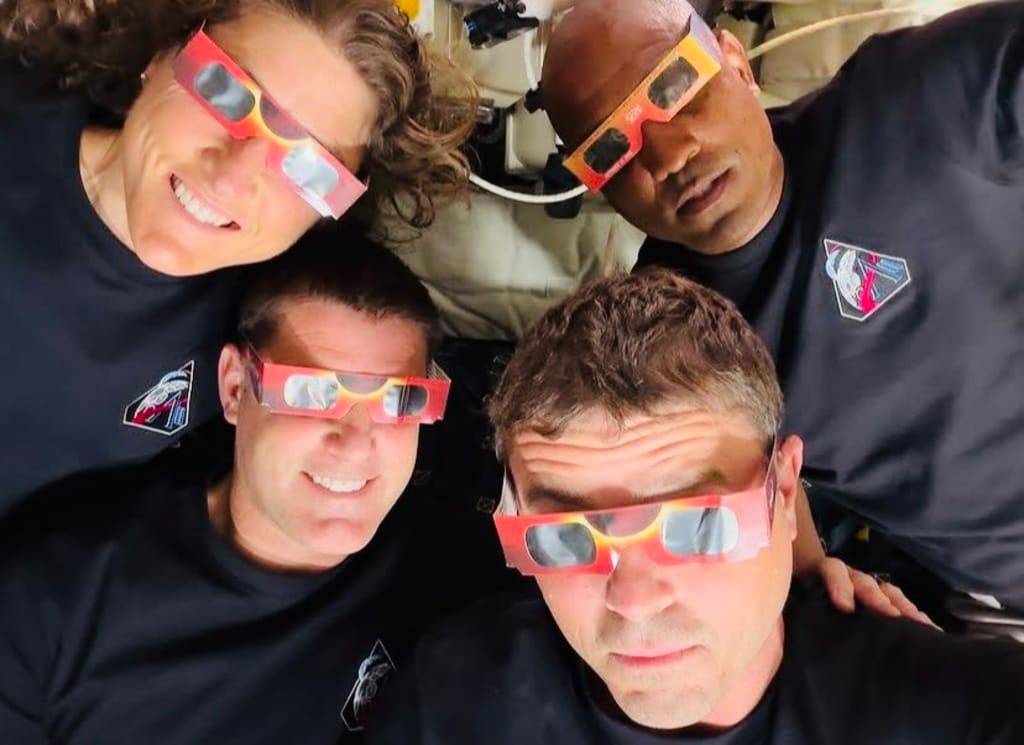
When the four astronauts stepped forward, it didn’t feel like they were just doing a job. There was something symbolic about it. They represented more than themselves—they carried the curiosity, ambition, and imagination of millions of people watching around the world.
Reid Wiseman led the mission with a calm presence that comes from years of preparation. Victor Glover stood beside him, representing not just his role as pilot, but a moment of progress that mattered deeply to many. Christina Koch, already familiar with the isolation of space, prepared to go even further than before. And Jeremy Hansen brought a global dimension to the mission, reminding us that exploration is something that connects us all. As powerful as the launch itself must have been—the roar of the engines, the ground shaking beneath it—I find myself thinking more about what came after.
The quiet moments.
The journey to the Moon is not quick or simple. It’s a three-day trip through a vast emptiness that’s difficult to truly understand. Inside the spacecraft, space is limited—about the size of a small kitchen. There’s no room for distractions, no escape from the reality of where you are. Just a small crew, moving farther away from Earth with every passing hour.
I imagine those moments being filled with a mix of emotions. Excitement, of course. But also reflection. Conversations that probably shift between technical checklists and personal thoughts. Maybe even moments of silence, just staring out at the growing darkness.
Then came the moment that stands out the most to me.
As the spacecraft moved behind the Moon, all communication with Earth was lost.
For about forty minutes, there was complete silence.
No messages. No updates. No connection to the rest of humanity.
It’s hard to fully grasp what that means. In a world where we are constantly connected—phones, messages, notifications—this was the exact opposite. Four people, completely alone, on the far side of the Moon.
I don’t imagine it as a moment of fear, but rather something deeper. A kind of stillness that forces you to be present. Looking out at a surface that has remained unchanged for billions of years, knowing that at that moment, you are farther from home than anyone else on Earth.
And then, slowly, they emerged from behind the Moon.
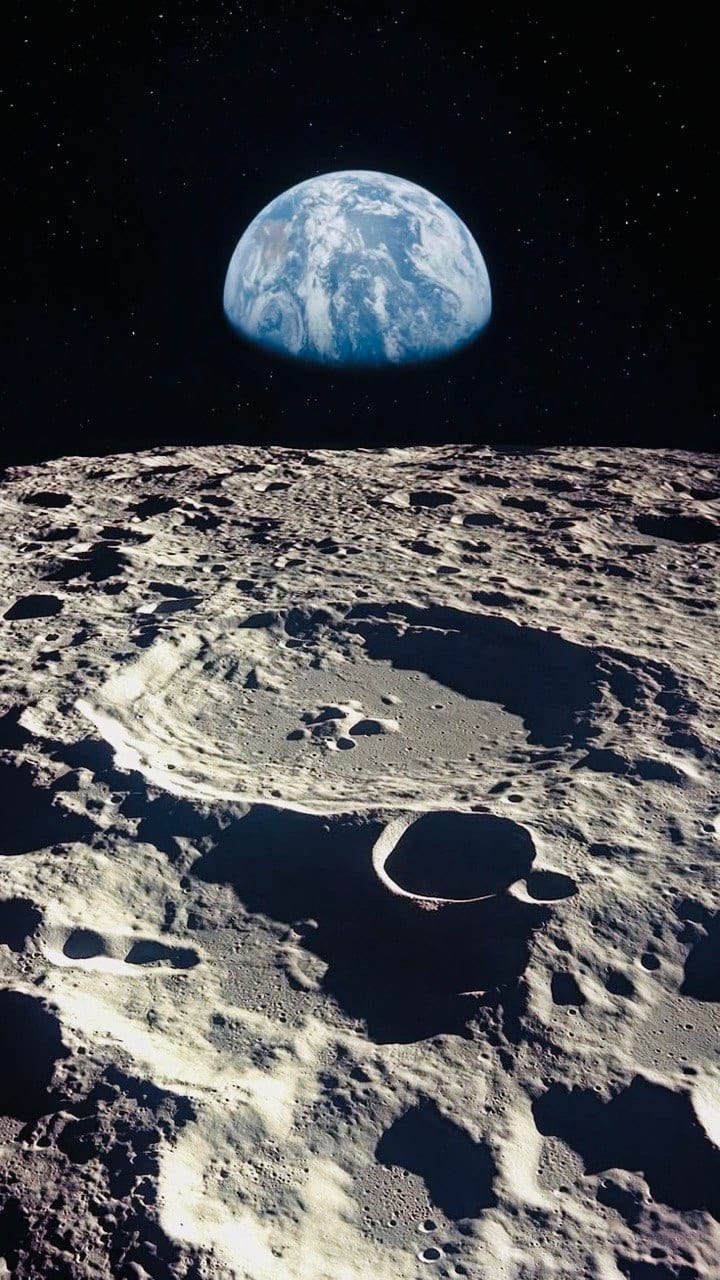
Communication returned. And with it came one of the most powerful sights in human history—the Earth rising into view.
That small, glowing blue sphere suspended in darkness.
It’s something we’ve seen in images before, but I don’t think it ever loses its impact. From that distance, everything we know—every city, every person, every story—exists within that tiny, fragile glow. There are no borders, no divisions, no noise. Just one shared home.
That perspective changes something.
It reminds us how small we are, but also how connected we are. When the mission came to an end, the return to Earth was anything but gentle. Re-entering the atmosphere at incredible speed, surrounded by intense heat, before finally splashing down safely in the ocean—it’s a dramatic conclusion to a journey that started in silence.
But what they brought back wasn’t just scientific data.
They brought back proof.
Proof that we can return to the Moon.
Proof that exploration is not behind us, but still ahead.
For me, that’s what makes this mission meaningful. It’s not just about technology or distance. It’s about possibility. It’s about reminding us that even in a world full of challenges, we are still capable of reaching beyond what feels comfortable or familiar.
And maybe that’s the most inspiring part.
This mission is not the final step—it’s the beginning. The next time humans travel this path, they won’t just pass by the Moon. They’ll land. They’ll stay. They’ll begin to build something lasting.
For the first time in a long time, the idea of humans living beyond Earth doesn’t feel like science fiction.
It feels real.
And when I look up at the Moon now, it no longer feels distant.
It feels like somewhere we’re on our way back to.
About the Creator
Enjoyed the story? Support the Creator.
Subscribe for free to receive all their stories in your feed.
Comments
There are no comments for this story
Be the first to respond and start the conversation.