
The Last Jasmine: A Love That Outlived Empire
A story of forbidden love, lost time, and a bloom that survived history.
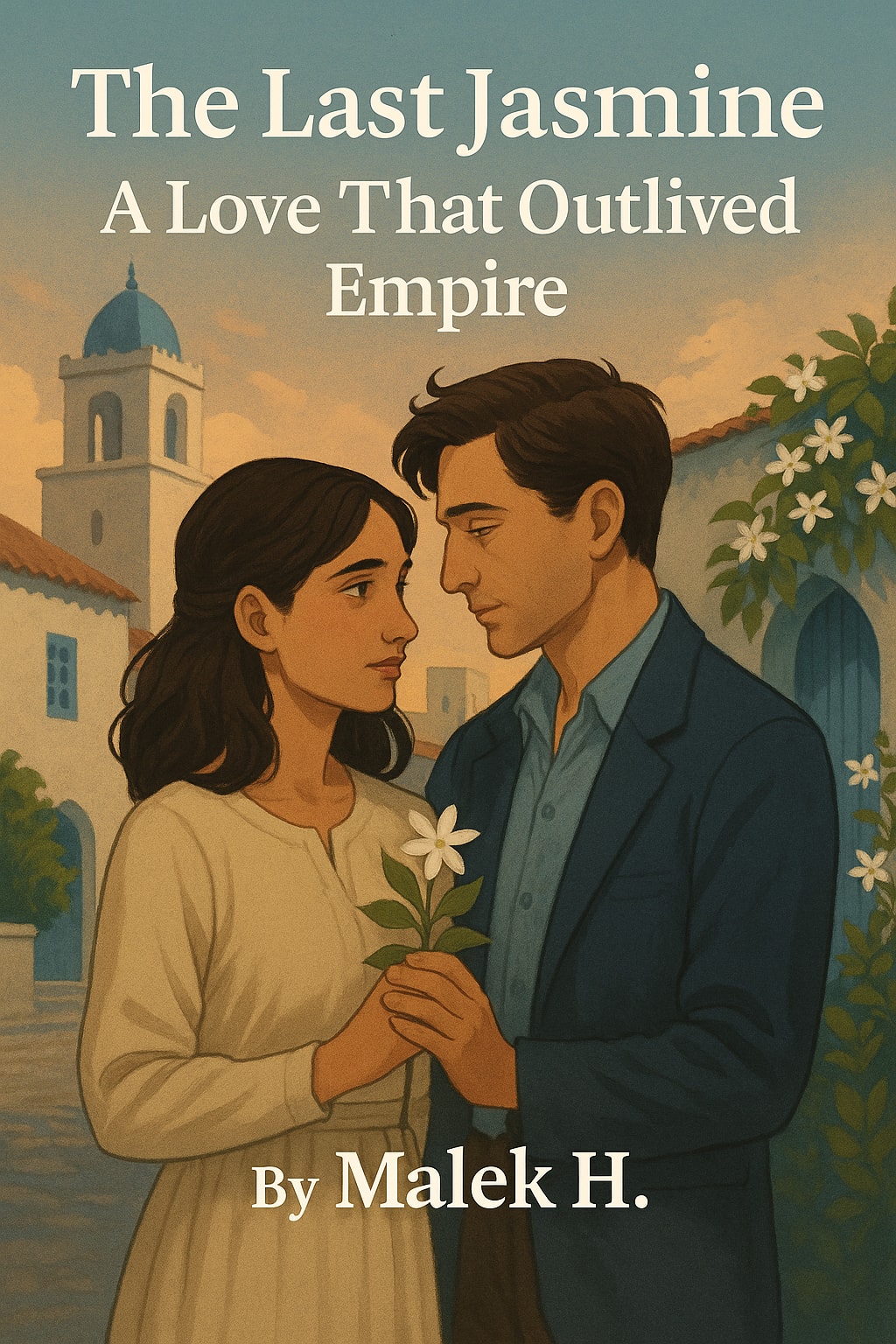
Tunis, 1942.
The streets of the medina smelled of spices and warm bread. Jasmine vines crawled across blue-painted doors. But behind the beauty, shadows lingered—French soldiers patrolled, curfews held the nights hostage, and whispers of rebellion filled alleyways.
Jamila was nineteen. Quiet, observant, with dark eyes that carried centuries of silence. Her days passed in the dim light of her uncle’s bookstore near Bab El Bhar, where she organized old volumes and secretly memorized banned poetry.
One afternoon, a young man stepped in.
He wore a French military jacket, but not the posture. His hands were ink-stained, not scarred by war.
“Do you have this… in Arabic?” he asked, holding a weathered translation of Baudelaire.
His name was Luc. Born in Marseille, sent to Tunisia by duty—but curious, restless, quietly rebellious.
They talked about books at first. Then about language, identity, memory.
She quoted Al-Shabi.
He countered with Rimbaud.
“Why do you love this place so much?” he asked.
“Because it remembers who it is,” she replied, “even when the world tries to forget.”
⸻
Days turned into weeks.
They began meeting after dusk. In corners of the souk, beneath fig trees, by the old city walls where the call to prayer echoed like a song of longing.
She taught him Arabic words—hurriya, sabr, qalb.
He brought her poetry, hidden inside baguette paper.
They never touched. But every word felt like a promise.
Their love grew in silence. It had to.
He was the occupier.
She was the daughter of a resistance fighter.
Her father warned her.
Her neighbors whispered.
But in the candlelit shadows of the bookstore, love bloomed like jasmine in winter.
“You are not like them,” she told him.
“I don’t want to be,” he answered. “I want to belong here… with you.”
⸻
But history does not ask for permission.
One night, her home was raided. Resistance flyers were found under the floorboards.
Her father was taken.
She was accused of betrayal.
Luc tried to defend her.
But he had no power.
No voice.
No time.
He was ordered to leave the country. Immediately.
The day before his departure, he returned to the bookstore, unnoticed, and slipped a letter between the pages of her favorite poetry book.
“You were never my colony.
You were my storm.
My stillness.
My home.
When Tunisia is free—look for me.
I’ll be waiting… under the jasmine tree.”
⸻
Paris, 1965.
Tunisia was now free.
Jamila taught literature at a girls’ school in La Marsa. Her hair had begun to gray, but her memory was sharper than ever.
That winter, she was invited to a cultural event in Paris.
The city was foreign. Cold. Loud.
On the second day, she wandered through a book fair in the Marais district. She didn’t expect anything—just paper and people.
Then she saw it.
A cover.
“Sous le Jasmin – Under the Jasmine Tree” by L.M.”
Her hands trembled.
She turned to the first page.
“In Tunisia, I met a homeland disguised as a woman.
Her voice was poetry, and her silence was revolution.
I left my heart under her jasmine tree.”
She looked up.
And there he was.
Luc.
Older. Thinner. Eyes wet with recognition.
He stepped forward, holding a single white jasmine bloom.
“You came,” he whispered.
“I never left,” she answered.
⸻
They married a year later in Sidi Bou Said, in a small ceremony with no guests but the sea and the wind.
They planted a jasmine tree in their courtyard.
They named their daughter Hurriya — Freedom.
⸻
Now, decades later, their home still smells of ink and jasmine.
Jamila still writes.
Luc still reads.
And Hurriya sings in two languages—
the daughter of a love the world once said was impossible.
⸻
And if you ever walk past their blue door,
you might smell the past blooming—
and hear the quiet echo of a love that outlived empire.
love
historical fiction
Tunisia
colonialism
forbidden love
About the Creator
Enjoyed the story? Support the Creator.
Subscribe for free to receive all their stories in your feed.
Comments
There are no comments for this story
Be the first to respond and start the conversation.