
The Courage to Be Seen in a World That Prefers You Quiet
Why authenticity, visibility, and self-expression remain acts of courage in societies that often reward conformity over individuality.

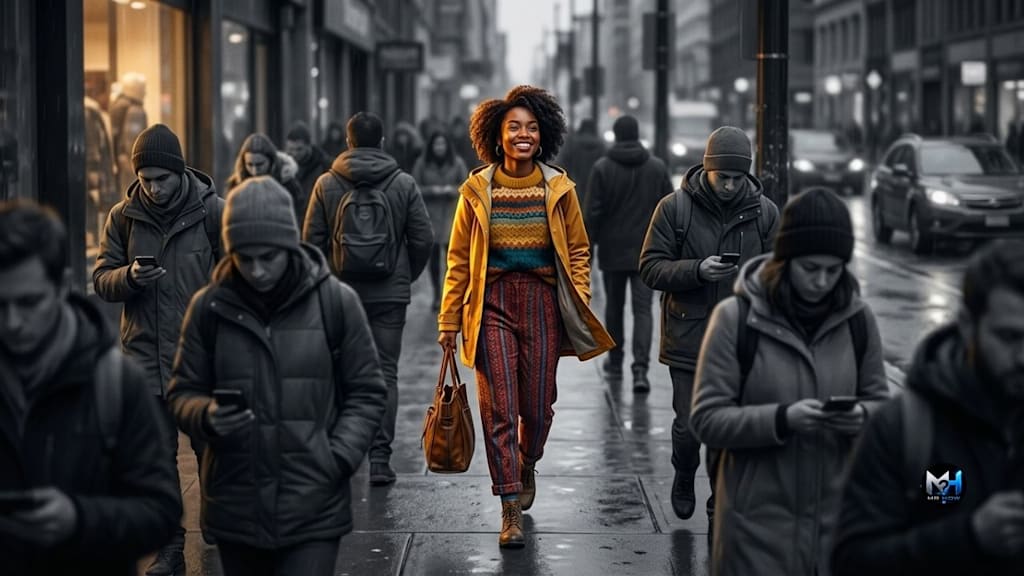
There is an unspoken rule in many societies: be yourself, but not too much. Express your personality, but only in ways that make other people comfortable. Stand out enough to be interesting, but not enough to attract criticism. It is a contradiction that many people spend their lives trying to navigate.
From childhood, we receive subtle messages about what is considered acceptable. We are taught when to speak and when to remain silent. We learn which interests are admired and which are mocked. We quickly discover that fitting in often brings rewards, while standing out can invite judgment. Over time, many people become experts at editing themselves.
The result is a world filled with individuals who are only partially visible.
Some people hide their creativity because they fear being labeled strange. Others suppress their enthusiasm because they do not want to appear childish. Some tone down their fashion, their opinions, or their ambitions because they worry about becoming targets of criticism. They learn to shrink themselves in small ways, often without realizing it.
Yet human beings have a natural desire to be seen.
Not merely looked at, but truly seen. We want our personalities, passions, and identities to be recognized. We want to share what excites us. We want to express ourselves honestly. This desire is not vanity. It is a fundamental part of being human.
The tension between authenticity and acceptance has existed for centuries. Every generation produces people who challenge expectations simply by being themselves. Artists, performers, writers, innovators, and dreamers often find themselves walking a difficult path because their visibility makes others uncomfortable.
What is fascinating is that the traits criticized in one era are frequently celebrated in another.
History is filled with examples of individuals who were considered excessive, eccentric, or dramatic during their lifetimes. Their ideas seemed impractical. Their personalities appeared too bold. Their style attracted ridicule. Yet many of these same people later became cultural icons. The qualities that once made them outsiders eventually became the very reasons they were remembered.
This raises an important question: why are people so often uncomfortable with those who stand out?
Part of the answer may lie in familiarity. Human beings tend to feel safer around what they understand. Someone who behaves differently can challenge assumptions about how people are supposed to act. Their existence reminds us that there are multiple ways to live, think, and express ourselves. For some, that realization is exciting. For others, it is unsettling.
Visibility also has a way of exposing social expectations.
When someone refuses to hide their individuality, they reveal the invisible rules that everyone else has been following. Suddenly those rules seem less natural and more like choices. This can create tension, especially in environments where conformity is highly valued.
Unfortunately, society often mistakes visibility for attention-seeking.
There is a difference between demanding attention and refusing to disappear. A person who dresses boldly, speaks passionately, or embraces their uniqueness is not necessarily asking for approval. Often they are simply choosing authenticity over camouflage. Yet the two are frequently confused.
This misunderstanding can have serious consequences.
Many people spend years suppressing important parts of themselves. They become experts at self-censorship. They calculate every interaction, wondering whether they are being too loud, too emotional, too enthusiastic, too creative, or simply too different. While this may provide temporary protection from criticism, it often comes at a personal cost.
Living behind a carefully edited version of yourself can be exhausting.
Authenticity requires vulnerability because it involves accepting that not everyone will approve. Some people will misunderstand you. Others may judge you. A few may even reject you entirely. Yet authenticity also creates opportunities for genuine connection. When people see the real person rather than a performance designed for acceptance, relationships become more meaningful.
The individuals who inspire us most are rarely the ones who perfectly blended into the background.
They are often the people who embraced their differences despite resistance. They pursued their interests with enthusiasm. They expressed their ideas without excessive concern for popularity. They understood that being memorable often requires a willingness to be misunderstood.
This does not mean that every form of self-expression should be immune from criticism. Respect, empathy, and responsibility still matter. Authenticity is not a license to disregard the feelings of others. However, there is an important distinction between encouraging responsible behavior and pressuring people to erase their individuality.
A healthy society makes room for different personalities.
It allows introverts and extroverts, traditionalists and innovators, quiet thinkers and dramatic performers to coexist. Diversity is not limited to culture, background, or belief. It also includes differences in expression, temperament, and style. A vibrant society depends on the contributions of people who approach the world in different ways.
Perhaps the greatest challenge is learning to appreciate visibility without automatically viewing it as a threat.
Someone else's confidence does not diminish our own. Another person's uniqueness does not invalidate our identity. A world filled with diverse voices is not weaker because of its differences. It is stronger because those differences create creativity, innovation, and cultural richness.
The next time someone is described as "too much," it may be worth asking what that phrase really means. Often it says more about society's comfort with individuality than it does about the person being criticized.
After all, many of the people who change the world are first accused of taking up too much space.
Sometimes the courage to be fully seen is not an act of rebellion. It is simply an act of honesty. And in a world that frequently encourages people to become smaller, honesty can be a remarkably powerful thing.
About the Creator
Enjoyed the story? Support the Creator.
Subscribe for free to receive all their stories in your feed.
Comments
There are no comments for this story
Be the first to respond and start the conversation.