

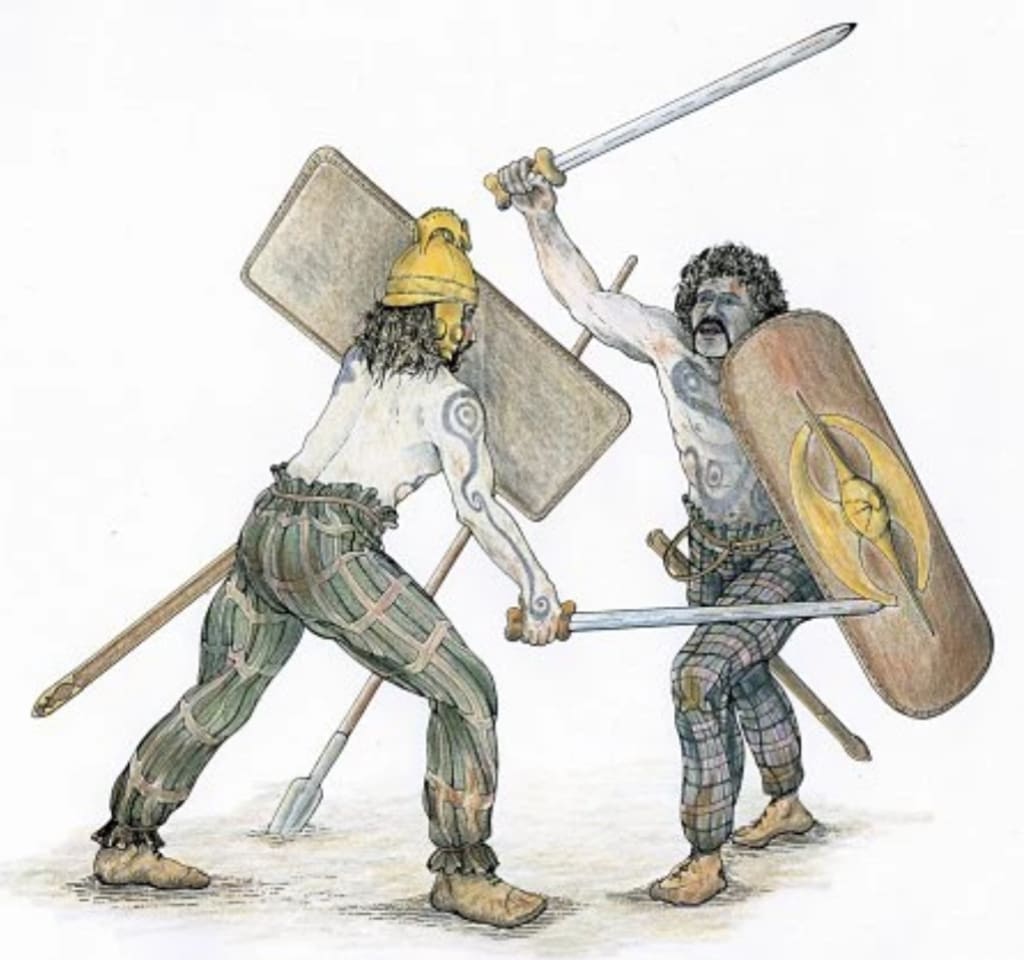
The Celts were a diverse collection of ancient and medieval tribal societies in Europe linked by shared languages (the Celtic language family), art styles, and cultural traditions. Originating around 1200 BCE in Central Europe, they eventually spread across regions stretching from Ireland to as far east as Turkey.History and OriginsThe Name: The ancient Celts never referred to themselves collectively as "Celts". The term comes from the ancient Greeks, who called the barbarian tribes they encountered Keltoi.Early Centers: The earliest recognized Celtic cultures (the Hallstatt and La Tène) thrived during the Iron Age in the Alps and along the Danube and Rhine rivers, fueled by valuable salt mines and long-distance trade.Tribal Society: They were never a single unified empire. Society was composed of hundreds of independent tribal chiefdoms led by warrior aristocracies and an educated intellectual class, including the revered priests known as Druids.Culture and LegacyCraftsmanship: They were renowned for their exquisite metalwork, creating intricately designed weapons, jewelry, and pottery using gold, silver, iron, and bronze.Conflict: Ancient records—particularly from the Romans, who referred to them as Galli—depict them as fierce, formidable warriors.Language Survival: As the Roman Empire expanded, most of continental Celtic culture was absorbed. However, Celtic languages and traditions survived in the more remote western fringes of Europe, evolving into the modern-day Celtic nations: Ireland, Scotland, Wales, Brittany (France), Cornwall, and the Isle of Man.
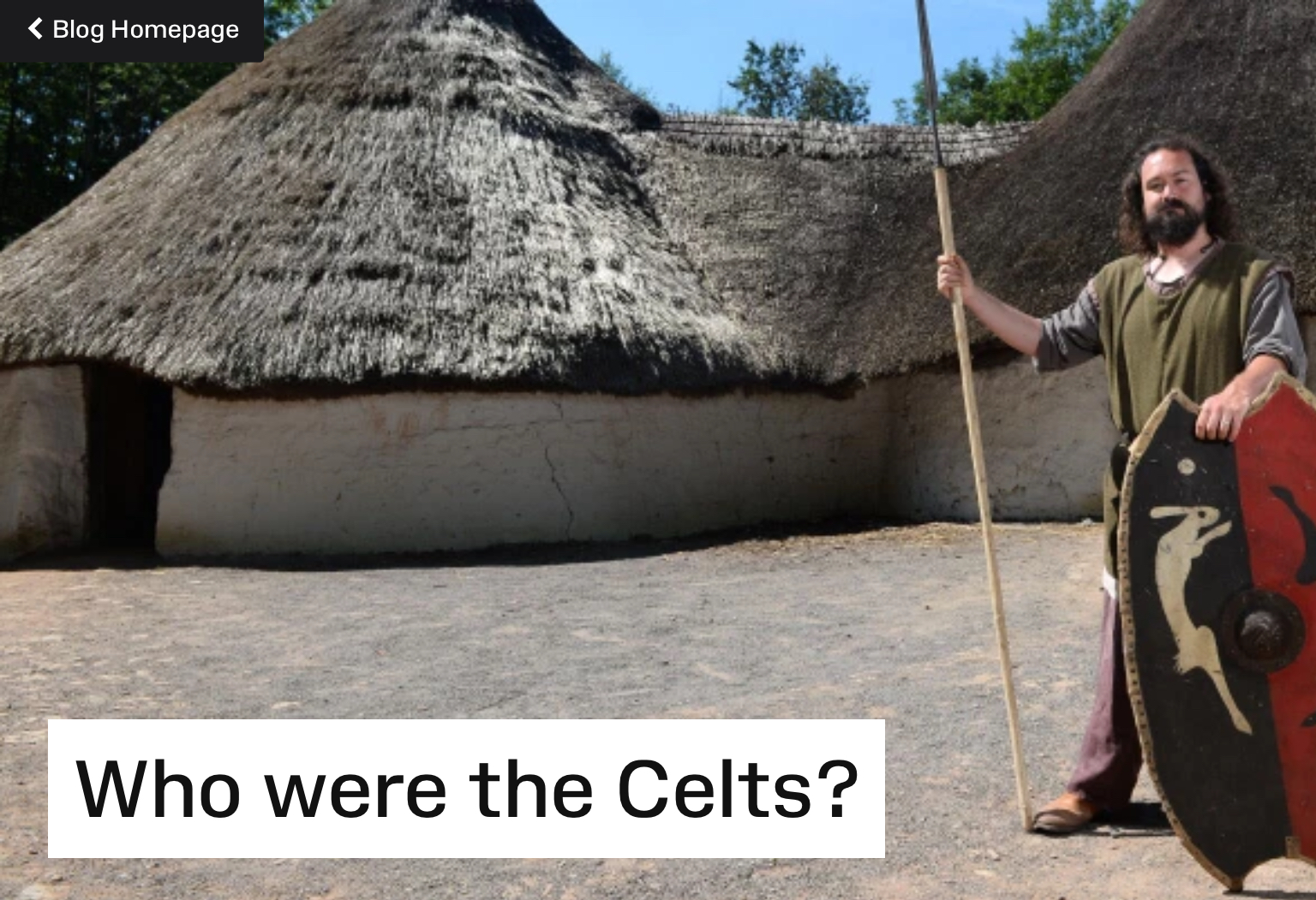
The early Celts rarely wrote about themselves. To the Greeks, they were known as Keltoi, Keltai or Galatai and to the Romans Celti, Celtae and Galli.
The first mention of the Celts was made by the Greeks authors between 540 and 424BC. But the most valuable insights are provided by Roman authors. As the Roman world was expanding, they came in direct contact with the Celts on their northern borders, however, these classical texts are incomplete as they were often copied long after the event. Therefore, the information we have provides, at best, an occasional 'snapshot' of the Celts.
It is believed that the Celts were a collection of tribes which originated in central Europe. Although separate tribes, they had similar culture, traditions, religious beliefs and language in common.
What did the Celts call themselves?
We don’t actually know what the Celts called themselves. The name ‘Celts’ is a modern name which is used to describe many tribes of people who lived during the Iron Age. None of the Classical texts refer to the peoples of Britain and Ireland as Celts. Therefore, as the Celts were a collection of tribes, they were more generally known by the name of those tribes or societies as opposed to a collective nation or empire.
Where did the Celts come from?
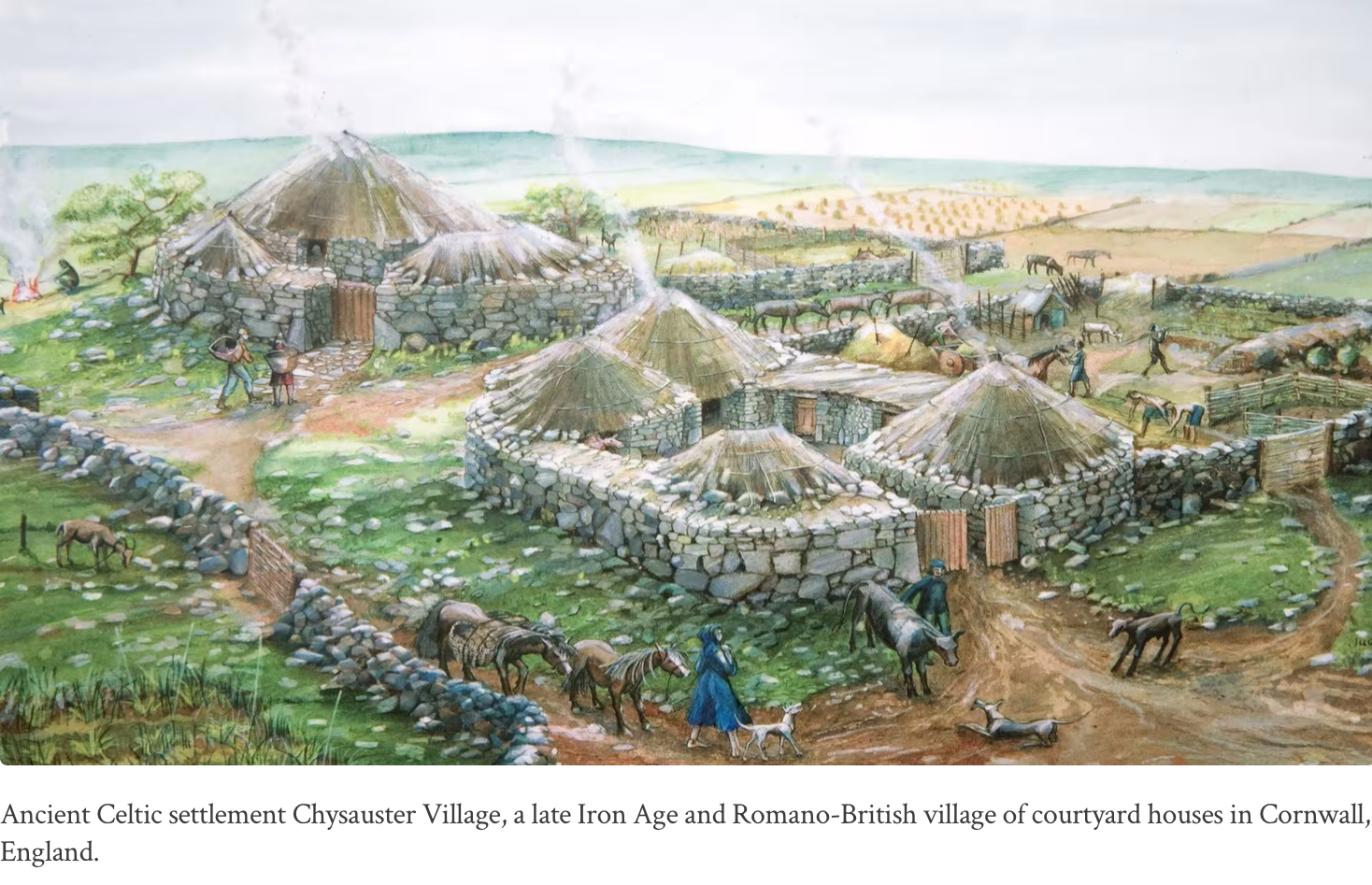
Early sources place Celts in western Europe and also occupying land near the headwaters of the Danube River. Their home territories have often been traced to central and eastern France, extending across southern Germany and into the Czech Republic.
In 279BC the Celts were known to have looted Delphi, the sacred Greek site. Strabo (Geographer) recorded a meeting between the Celts and Alexander the Great in 335BC in the Balkans. Classical writers had recorded a large-scale migration of Celts soon after 400BC, this migration took the Celts from central Europe into Northern Italy and Eastern Europe.
Celts in Britain
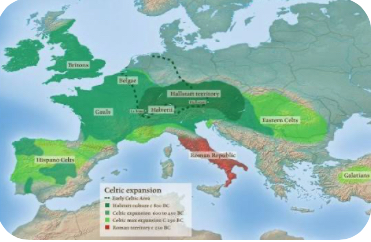
It is believed that the Celts arrived at the shores of Britain at approximately 1,000BC and lived there during the Iron Age, the Roman Age and the post Roman era. Their legacy continues today where examples of the language, culture and traditions continue to exist.
Welsh Celts
Today, Wales is seen as a Celtic nation. The Welsh Celtic identity is widely accepted and contributes to a wider modern national identity. During the 1st centuries BC and AD, however, it was specific tribes and leaders which were named. By the time of the Roman invasion of Britain, four tribal peoples occupied areas of modern day Wales:
Ordovices (north-west)
Deceangli (north-east)
Demetae (south-west)
Silures (south-east)
To understand how Celts first came to be associated with Wales, we must turn to the historical development of Celtic linguistics (the study of languages).
What languages did the Celts speak?
Tracing the beginnings of Celtic languages is difficult. Most agree that they derive from an earlier language known as 'proto-Indo-European'. This probably reached western Europe through the movement of peoples, possibly from Central Asia between 6000 and 2000BC. Unfortunately, there is little agreement over precisely when this occurred and when and how Celtic languages subsequently developed.
On current understanding, Celtic languages have their origins at some time between 6000 and 600BC, with the earliest known inscriptions in a Celtic language being found in Northern Italy and dating to the 6th century BC. George Buchanon, a 16th-century scholar, suggested that the peoples of continental Europe had once spoken a related group of Gallic languages. Since modern Welsh, Irish and Scots Gaelic were similar to these ancient languages, the people of Britain, it was argued, originally came from France and Spain.
A pioneering study by Edward Lhuyd in 1707 recognised two families of Celtic languages, P-Celtic or Brythonic (Welsh, Breton, Cornish) and Q-Celtic or Goidelic (Irish, Scots Gaelic, Manx). The Brythonic languages were assumed to have come from Gaul (France), whilst the Goidelic languages were given an Iberian (Spain, Portugal) origin.
During the 18th century, people who spoke Celtic languages were seen as Celts. The ancient inhabitants of Wales, were therefore increasingly known as Celts.
Celtic Languages
The native tongue of Wales (known as Cymru by the Celts), is Welsh. Welsh is a Celtic language and is still widely spoken in Wales and across the world. In Cornwall some (although very few) still speak Corning, which is from the same linguistic strand as Welsh and Breton.
In Scotland, the Scots Gaelic is also still spoken, although by not as many as Welsh speakers. The local affiliate to the BBC in Scotland is known as BBC Alba, which is the Celtic name for the region. It is also worth noting that the origin of the Bagpipes, a famous musical instrument from Scotland can be traced to Celtic times as well.
What did the Celts look like?
Looking again at the recordings by Roman literature, the Celts were described as wearing brightly coloured clothes, with some having used blue dye from the woad plant to paint patterns on their bodies.
What did the Celts wear?
They are known for their colourful wool clothing and later on the Scottish Tartan. The clothes the Celts would wear showed status and importance within the tribe. The usual Celtic attire would include a tunic and a belt, as well as a long cloak and trousers which were fastened by a ’fibuale’.
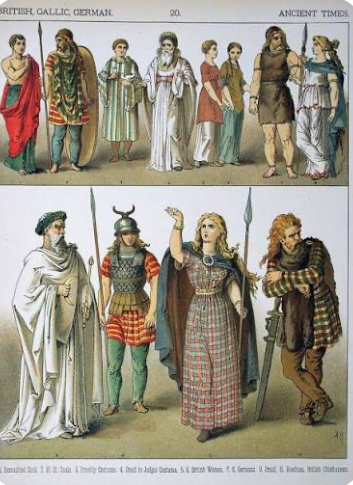
In fact, many historians have noted that the Celts were one of the first people in Europe to wear trousers, the ‘fibuale’ would be clasps, which were used to fasten their trousers.
What did the Celts eat?
There were obviously no supermarkets during the time of the Celts, they would grow their own plants, farm and hunt animals for food.
Their diet would include, wild foods such as mushrooms, berries, nettles, wild garlic and apples they would also eat spinach, onions, leeks, carrots and parsnips, blackberries, gooseberries and blueberries. Hazelnuts and walnuts as well as grains for bread and porridge would also feature in their diet.
As for meat, they would hunt deer, foxes, beavers, wild boars and bears as well as farm domesticated animals such as chickens, goats, sheep, pigs and cattle. They would also fish for Salmon, Trout or Mackerel. They would also eat eggs from hens and wild birds, along with insects and honey from bees.
Celtic Art and Archaeology
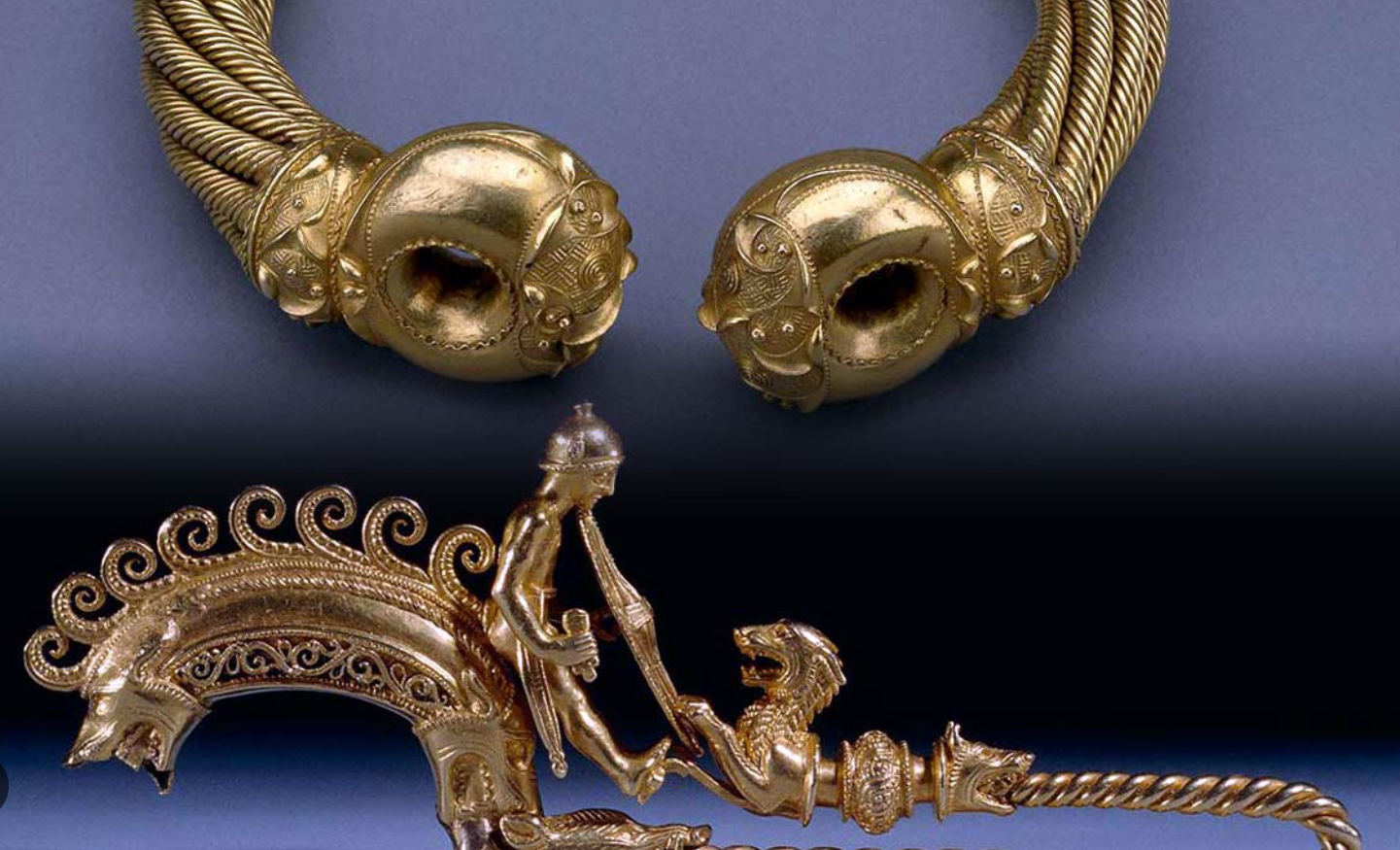
The appearance of a new style of art during the 5th century BC and its later spread across much of Europe has frequently been interpreted by archaeologists as evidence for a common Celtic culture or identity.
Celtic art was recognised and named by British scholars during the mid 19th century. However, it was not until 1910-14 that the earliest objects decorated in this style were traced to a common cultural area of north-east France, southern Germany and the Czech Republic.
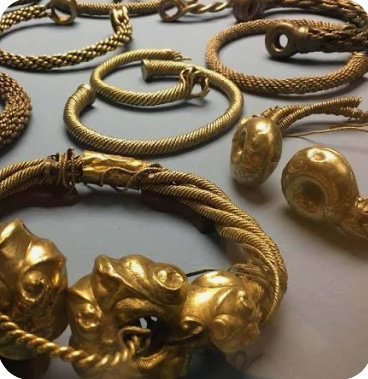
It was named the La Tène culture , after an important collection of decorated metalwork discovered at a site on the edge of Lake Neuchâtel in Switzerland. The spread of La Tène or Celtic art across Europe, including Britain and Ireland, was for a long time interpreted as invasions by Celtic people.
More recently, British archaeologists have become increasingly dissatisfied with the idea of Celts invading Britain and of a 'Celtic' society sharing language, art, religious belief and identity. There is little conclusive evidence amongst the archaeological remains for large-scale arrivals of a new people from the Continent.
The archaeology of the Iron Age in Britain is suggesting a mosaic of regional societies, each with their own distinctive identity. This is at considerable odds with a uniform Celtic culture.
Archaeologists have also become more critical of their own assumptions when interpreting Iron Age sites. The presence of La Tène art in Wales need not indicate invading Celts, it could equally show the spread of a fashion across many societies or suggest long-distance exchange contacts. At the same time, we now know that much of the later La Tène art is distinctively British in style and largely absent in Continental Europe.
Debate has surrounded the notion of the Celts since scholars first began to examine it, and this discussion is set to continue.
It is possible that future genetic studies of ancient and modern human DNA may help to inform our understanding of the subject. However, early studies have, so far, tended to produce implausible conclusions from very small numbers of people and using outdated assumptions about linguistics and archaeology
8 Facts About the Celts
To modern ears, the word “Celtic” evokes traditional art, literature and music from Ireland and Scotland. But the ancient Celts were a widespread group of people with origins in central Europe. See what historians have learned about this rich and complex collection of tribes.
1.
The Celts were the largest group in ancient Europe.
The ancient culture known as the Celts once extended far beyond the British Isles. With territory stretching from Spain to the Black Sea, the Celts were geographically the largest group of people to inhabit ancient Europe.
The difficulty of tracing Celtic history is that none of these ancient peoples living in Western or Central Europe would have called themselves Celts. That name came from the Greeks, who made their first contact with a “barbarian” people they called the Keltoi in 540 B.C. on the southern coast of France. The ancient Celts were never a single kingdom or an empire, but a collection of hundreds of tribal chiefdoms with a shared culture and distinctive language.
2.
The Celts were described as barbaric warriors.
Since the Celts themselves left no written histories, we’re left to rely on the admittedly biased accounts of their enemies in battle, the Greeks and later the Romans. Historians don’t know why the Greeks called them the Keltoi, but the name stuck, and the Celts developed a reputation in Greece as hard-drinking, hard-fighting savages. Celtic warriors often battled naked and were prized as mercenaries throughout the Mediterranean.
The Romans called the Celts Galli or Gallia and frequently clashed with Celtic tribes that invaded Roman outposts in Northern Italy. In 387 B.C, a fearless Celtic warlord named Brennus sealed the barbaric reputation of the Celts by violently sacking and pillaging Rome and putting most of the Roman Senate to the sword.
Centuries later, after the Roman Empire had conquered several Celtic tribes in the Iberian Peninsula (Portugal and Spain) that the Romans called the Gallaeci, Julius Caesar embarked on the nine-year Gallic Wars to defeat the Celts and various other tribal kingdoms in Gaul (modern France). Caesar wrote about the conquest of Gaul with a mix of disgust and respect for his Celtic enemies.
In the end, Caesar makes a clear distinction between the ‘civilized’ Mediterranean world of Rome and the great unwashed Celts in Gaul, so Romans are justified in colonizing them,” says Bettina Arnold, an anthropology professor at the University of Wisconsin-Milwaukee and the founding editor of e-Keltoi: Journal of Interdisciplinary Celtic Studies.
3.
Ancient Celtic burial mounds reveal a complex society.
The Celts were far from savages, as evidenced by the intricate metalwork and jewelry excavated from ancient Celtic hill forts and burial mounds across Europe. One such mound near Hochdorf, Germany, held the remains of a Celtic chieftain and a wealth of artifacts pointing to a complex and stratified Celtic society.
The Hochdorf chieftain’s mound dates from 530 B.C., what archeologists call the late Hallstatt period, when Celtic culture was concentrated in Central Europe. The chieftain was laid out on a long bronze couch with wheels and dressed in gold finery including a traditional Celtic neckband called a torc. He was surrounded by ornate drinking horns and a large bronze cauldron, which still held the remains of high-proof honey mead.
The wheeled couch was replaced in later Celtic burial mounds by two-wheeled chariots that carried the honored dead into the afterlife. The drinking equipment points to the critical role of feasting as a sociopolitical tool to the Celts. What the Greeks and Romans described as “excessive drinking” was actually a way for Celtic elites to strengthen ties with allies. And that continued in the great beyond.
“The Celts believed in a type of BYOB afterlife,”. “You had to bring alcohol with you and throw a big party when you got to the other side. A sign of a good leader was generosity.”
4.
The Celts may have been one of the first Europeans to wear pants.
The ancient Celts were famous for their colorful wool textiles, forerunners of the famous Scottish tartan. And, while only a few tantalizing scraps of these textiles survived the centuries, historians believe that the Celts were one of the first Europeans to wear pants. They didn’t have buttons, though, so they fastened their clothing with clasps called fibulae.
5.
Druids passed down histories and laws through the oral tradition.
The ancient Celts were “aliterate,” says Arnold, meaning that they actively chose not to write down their histories, sacred stories and laws, in order to safeguard the information. The Celtic religion, for example, required animal and human sacrifices to a pantheon of gods, but that esoteric knowledge was restricted to Celtic priests called Druids and passed on orally from generation to generation.
Druids were figures of great respect and honor in Celtic society and were among the few who could safely travel among warring tribes. Other “learned classes” of Celts included genealogists who memorized centuries of tribal relations, those responsible for memorizing the applying the law, and “bards” who were both storytellers and folk historians. Even though the Celtic tribes never unified politically under one kingdom, their oral traditions helped to create and maintain a cultural unity across great geographical distances. That explains why Celts were most easily identified by their shared language. Celtic languages are still spoken in parts of the UK and France, including Welsh, Irish, Scottish Gaelic, Cornish and Breton.
“Because all of the Celtic doctrines were orally transmitted, it helped to preserve linguistic uniformity,”. “The Druids and bards spoke the most prestigious version of the language and they carried it across tribal boundaries, so it didn’t fragment into a lot of different dialects.”
6.
The Romans conquered Britain in 43 A.C. under Claudius, and the Celts were slowly subjugated and Romanized. They didn’t go down without a fight, though. The legendary Celtic queen Boudicca led a bloody revolt against the Romans in 61 A.C. in which her forces destroyed the Roman stronghold of Londinium and massacred the inhabitants, according to Roman sources.
In Celtic culture, women could hold the highest position in the social hierarchy. Others were Druidesses who specialized in political prophecy and played important roles in Celtic military campaigns.
“Clearly Celtic women were occasionally allowed to take on the position of supreme authority, which was distinctly different from the Mediterranean world,”. “The Greeks and Romans found that extremely odd.”
7.
The Celts were eventually defeated by Romans, Slavs and Huns.
After the Roman conquest of most Celtic lands, Celtic culture was further trampled by Germanic tribes, Slavs and Huns during the Migration Period of roughly 300 to 600 A.C. As a result, few if any people living in Europe and the British Isles identified as Celts until the 1700s, when the Welsh linguist and scholar Edward Lhuyd recognized the similarities between languages like Welsh, Irish, Cornish and the now extinct Gaulish, and labeled them “Celtic.”
8.
The embrace of a Celtic identity is relatively recent and tied to opposition to British rule.
The 19th and 20th centuries witnessed a full-blown Celtic revival in the British Isles driven by political anger over British rule in places like Ireland, Scotland and Wales. Musicians, artists and authors like William Butler Yeats proudly embraced a pre-Christian Celtic identity. But because the Celts were so much more than an Irish or Scottish phenomenon, historians remain divided over the accuracy of modern claims to Celtic heritage.
“‘Celtic’ is a descriptive term—a ‘heuristic device’ in academic lingo—shorthand for something that we can see archeologically, and we can see in the place name record, and we can see in the linguistic evidence,” . “While it may not have actual meaning in terms of identity, it’s still useful as a descriptor.”
The history of the Celts (8 facts) was written by Dave Roos.(2025).
About the Creator
Guy lynn
I’m interested in history, space travel and the possibilities, Americana,( where I live now), Africa (Southern Africa, where I was born and raised), and I write about things that interest me ( bead history) and I hope will interest you.
Enjoyed the story? Support the Creator.
Subscribe for free to receive all their stories in your feed.
Comments
There are no comments for this story
Be the first to respond and start the conversation.