
“Paloma? That you?”
I click the door behind me and take the shopping into the kitchen. Then I call,
“It’s Paula Fletcher, Mrs Malin”
She is up today, much to my surprise. She is sitting in the armchair, wrapped in shawls and blankets, the swathes of fabric bulking out her tiny frame.
“I’ve brought your shopping” I say, “Cup of tea?”
I begin to gather the empty cups and plates that are strewn around; mostly they still contain the tea or biscuits and toast that they came from the kitchen with.
“No, sit and talk with me.” She flaps a thin, twisted hand towards the other fireside chair. Its grey cover has a faint, oily sheen. I regard it unenthusiastically.
“You know I only have an hour, Mrs M. I really ought to do some cleaning and put the shopping away.”
“Bugger that!” Her voice still has the faint lisp of a second language, long ago adopted. “Sit and talk Paloma. And take that bloody stupid mask off.”
“It’s for your protection. There’s a pandemic.”
“If I need protection I will tell you. I am old enough to choose how I die.”
She is in a difficult mood today. I put the dirty crockery on the table and perch, uncomfortably, on the edge of the slimy chair. Many of the agency carers won’t come here, they say she throws things and swears at them. But she has always tolerated me. In fact, I think she quite likes me coming, when she remembers me at all. We sit in silence for a moment and I glance round the room. It has papers and ornaments on every available surface and there are pictures crowded on all four walls. I wish I had the time to give the place a thorough clean, but she only gets an hour a morning and thirty minutes in the evening to get her to bed. She should have more time, but there doesn’t seem to be enough money. Meg in the office is always complaining that the bills are paid late. Whoever has her power of attorney is very inefficient.
“How’s your son, Mrs Malin?”
She has been scratching at the fringe on one of the shawls.
“Dead.”
‘What?” I gasp, ‘Oh, God I’m so sorry.”
“Bah, as good as dead. He has no soul. He’s taking my pictures.”
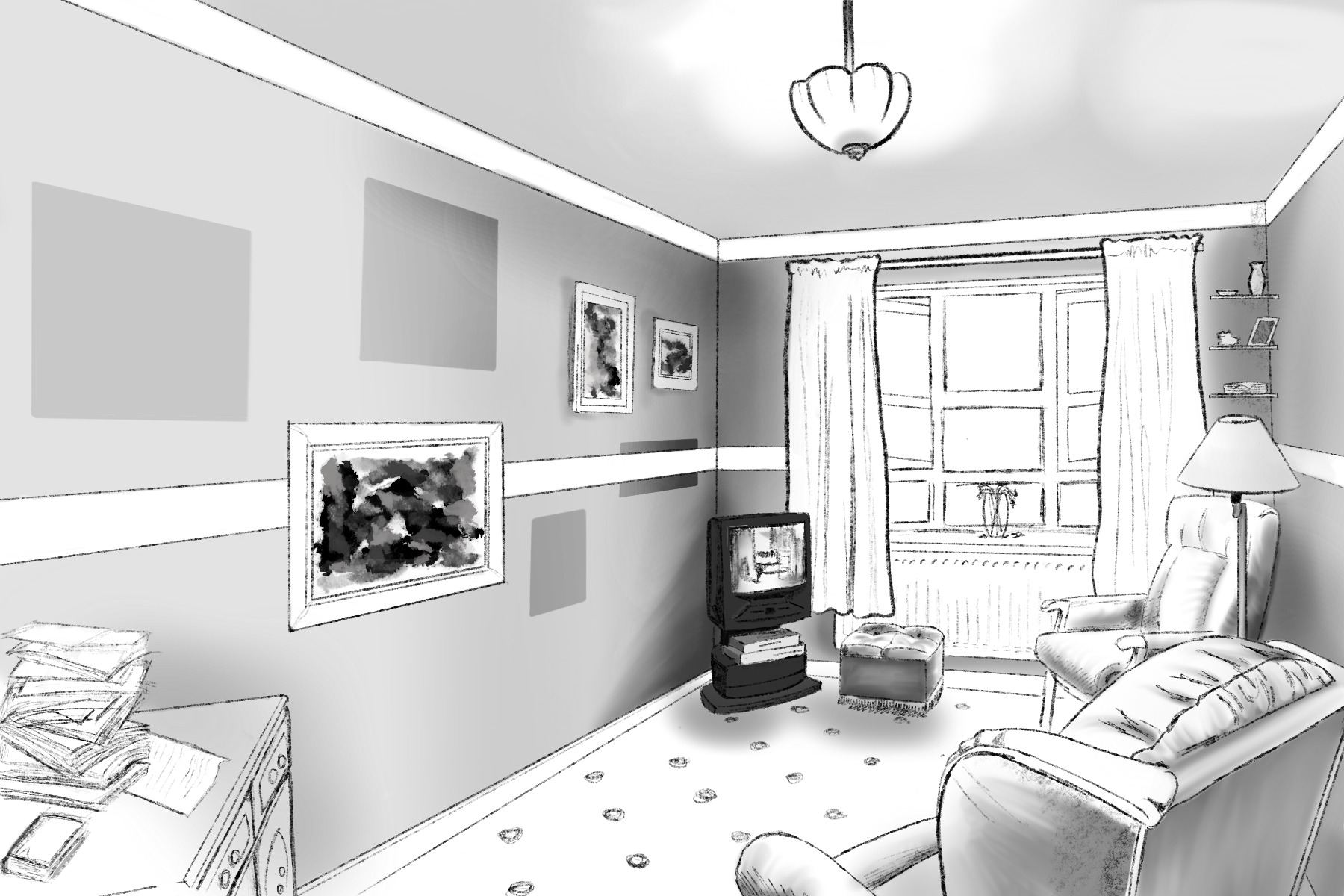
The claw hand waves at the walls and I notice for the first time that there are gaps where the wallpaper is a different colour; bright, rectangular outlines, the ghosts of pictures no longer there. There are still a lot left, however. I have never liked her pictures, they are modern, stark and angular. They do not seem to be of anything exactly and yet they feel angry. As if they know they are mis-formed and they resent their distortion. They are not the kind of pictures an old lady should own.
“Are they valuable?” I ask, thinking perhaps her son is selling them to pay for her care.
“They are mine.”
“Of course they are.”
‘I painted them.”
“Right.”
She has told me this before. Along with other little snippets that bubble up in her memory like the mud in a geyser. She was once an artist; she worked with Françoise Gilot, whoever that was, and she danced with Picasso. She has also told me that the Prime Minister, Mr Churchill, is going to buy her a new car and that she owns two houses in Paris but can’t remember where they are.
“How about that cup of tea? And maybe some toast.” I coax. I am on a tight schedule today. I have a meeting with a lawyer this afternoon and I mustn’t be late.
While the kettle is boiling, I take the opportunity to clean the kitchen and put away the shopping. Then I bring the tea and toast back into the living room.
Mrs Malin has been dozing, her head at an awkward angle against the wing of the chair. I put the tea and toast down quietly and have a quick flick of my duster round the room. Then I gently pat her elbow.
“Here you are, Mrs M. And I’ve got the receipt for your shopping - have you got the note book?”
This is the system we set up a few months ago, now that her memory is really starting to crumble. I write what housework I have done for her that day, and add any events, like the doctor being due to call or a neighbour promising to drop by. Anything that she might forget and be alarmed by. Then I note the shopping cost before I take the money from her purse. I tuck the receipt into the back of the neat little WH Smith’s A6 hard back book I bought her - bright blue so it would stand out. Or I would, but of course the second time I came she was using a different book.
“I do not like that shade of blue. It reminds me of him.”
“Who?” I’d asked.
‘You know Paloma!” she snapped. “Your father.”
“It’s Paula.” I said wearily.
The replacement note book is old and long-filled with tight writing and small, scratchy sketches. As if someone was catching fast, flickering thoughts before they melted forever. I often have difficulty finding space to write my information, and I see that she herself is crossing and re-crossing some pages as if she were a long-ago lady writing to her secret lover.
‘Why do you like this book?” I ask, retrieving it from amongst the jumbled shawls and cushions in the chair.
She gives me her sly smile, running her fingers across the stained, leather binding. Caressing it.
“It was my learning book.”
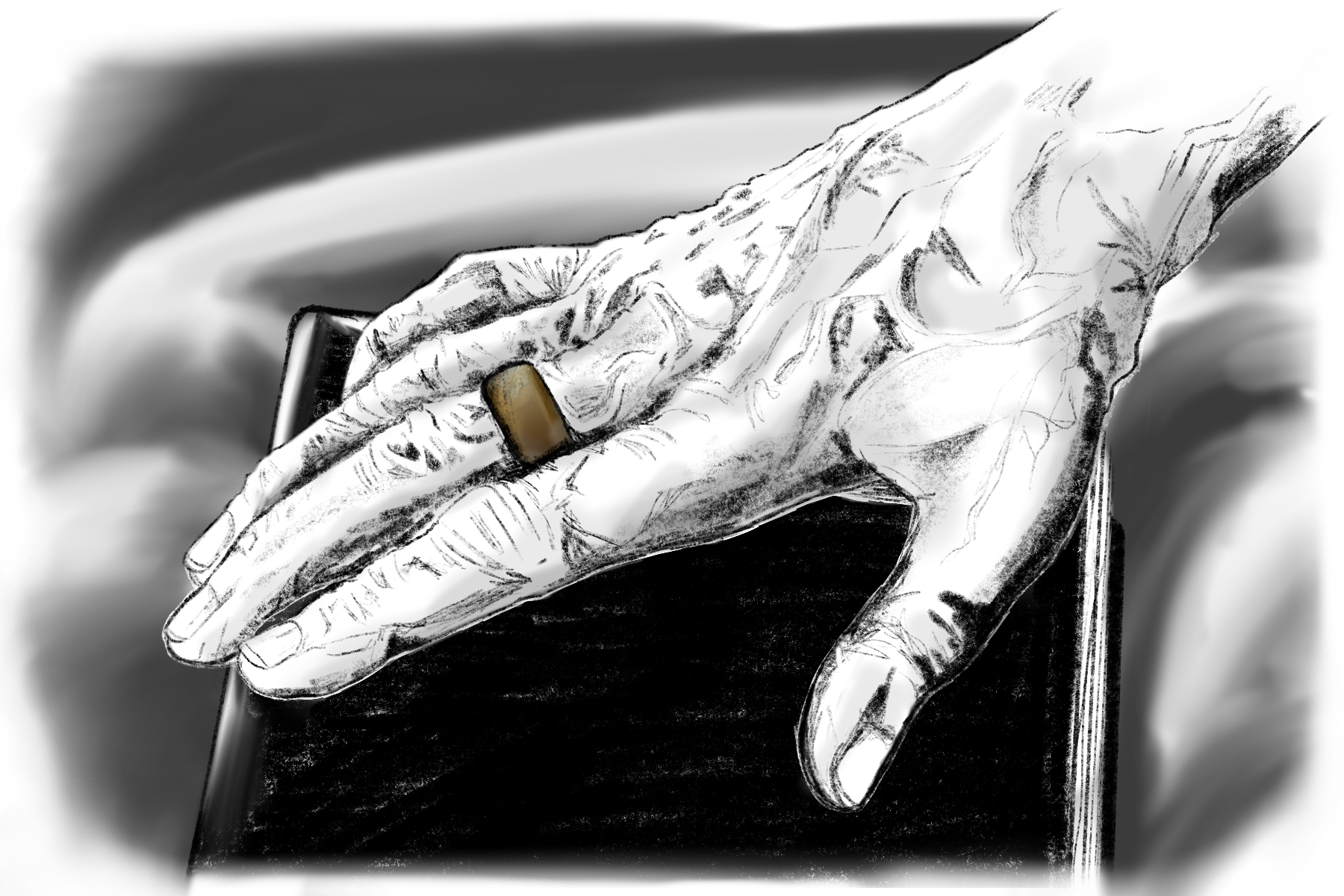
“Oh, what were you learning?" I squint at a page. Little figures of men. Dancing? Drunk? It’s hard to tell. A few words but none in a language I know.
“I was learning how to fake what I was not born with.” She leans forward and her black bead eyes suddenly focus. “You can learn to be an everyday artist but you must be born with a true talent to be a great artist. That is what Francoise said. But instead I believed him and I found a way around.”
“Oh, good. Who is Francoise?” I am casting around the room - where have I put my bag? I am going to be late.
“Françoise Gilot. She was Picasso’s muse. A brilliant artist in her own right, but when they split he tried to destroy her. Got galleries to blacklist her work. I was the children’s Nanny. In the early fifties; Paris was coming back to life - a kaleidoscope butterfly emerging from the Nazi chrysalis.”
The intelligence in her eyes fades.
“But you remember Paloma!’ she whines. "You were there.”
“You have had an exciting life, Mrs M! I have to go now. I am having landlord troubles and I’ve paid for a little legal advice. If the lawyer can’t help, I don’t know what I’ll do.”
I attempt a smile. It is money I can ill afford.
“Next time I come, perhaps you will have remembered where your houses in Paris are, then you can let me live there! We will drive there together in Mr Churchill’s car.”
I do not go back to Mrs Malin for nearly 10 days. My life slithers away from me and I have to take unpaid leave to try and sort it. I fail. The lawyer was no help. So now I am sofa surfing in a friend’s place. An old, lumpy sofa, which makes my back ache, but the alternative terrifies me. Plans I had begun to make about going back to college have faded into the shadows. The future is menacing and I can feel myself slipping out of control.
At first Mrs M does not recognise me. She is still in bed and the room stinks of urine. I soothe her, repeating my name and in desperation remove my mask in the hope she understands it is me. Eventually she lets me help her up, and I bathe and dress her. Once she is sitting in her armchair, nursing a mug of tea, I change the bedsheets and set the washing machine going. I am over-running my time, I know, but what choice do I have?
“Here.” I set a tray of scrambled eggs and toast on her lap. The food smells wonderful; I am not eating much, desperate to save money.
Whilst she chews, I tidy the room. There are fewer pictures on the wall, I realise.
“Why does your son take the pictures, Mrs M?”
“He sells them.”
“But you said that you painted them?” I say and then realise how rude that sounds. Mrs M chews her last mouthful loudly, swallows and grins at me.
“He doesn’t know that. They remind him of someone else’s paintings. Someone whose work sells for a lot of money. So he sells my pictures to other fools.
She shrugs.
“People see what they want to see; they choose to deceive themselves.”
“These pictures are forgeries?” There’s a squawk of amazement in my voice.
Her laugh is dry, like wind-chased autumn leaves.
“I was never a good artist, but I was a great copyist.”
“Who does he think painted them?”
Her eyes veil. She burps loudly and rubs the back of her hand across her mouth.
“Now he will spend some of the money.” she says, dreamily. “He wants me out of here then he can have all my pictures. I am going into a home. A nice retirement place. He’s paying.”
“More than he does the agency.” I say unthinkingly.
“He’s a good son!” she snaps. “He gives me money when I ask.”
"But it’s your money." I mutter.
Aloud, I say “I wish I had someone like that.”
“I know.” she says mysteriously. “You should go to college, bright girl like you.” She scratches around in her chair, re-arranging the pile of shawls that always bedeck it.
“I like being a carer.”
I hope I sound sincere, but my voice quivers a little.
“I am going tomorrow.” she says, “You won’t be bothered with me again.”
“Oh.”
I realise I how much I will miss her.
“I’m so sorry.”
“Don’t be. We should all take the chances when they come”
She scrabbles further into the chair.
“Here. A farewell present. You shouldn’t be spending your money on an old woman like me.”
She holds out a lumped bundle of shawls. I guess she is giving me the blue notebook back. I take it reluctantly. The fabric smells of mould and something even more unpleasant.
But, as I start to unwrap it, she slaps at me.
“No!”
“But don’t you want your shawls back?”
“Bah. Why would I want those old rags? Don’t look until you are in your car. Goodbye. Now bugger off!”
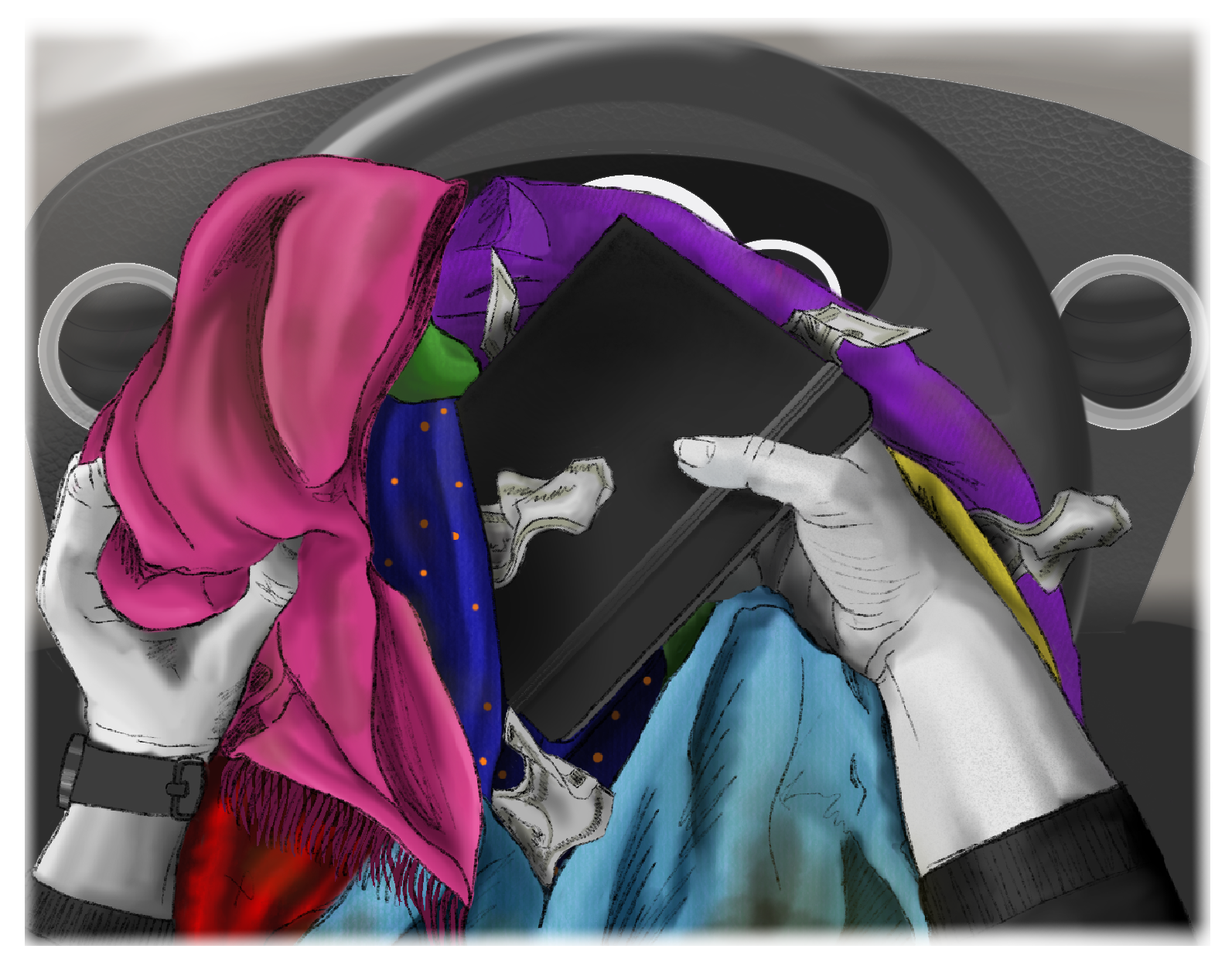
I sit quietly, her gift resting against the steering wheel. In the bright afternoon sun the bundle is even less appealing. Perhaps I should just drop it in the bin, although, that seems ungrateful. I rarely get presents, even ones I have, in fact, bought myself. I take a deep breath and tentatively begin to unscramble the shawl.
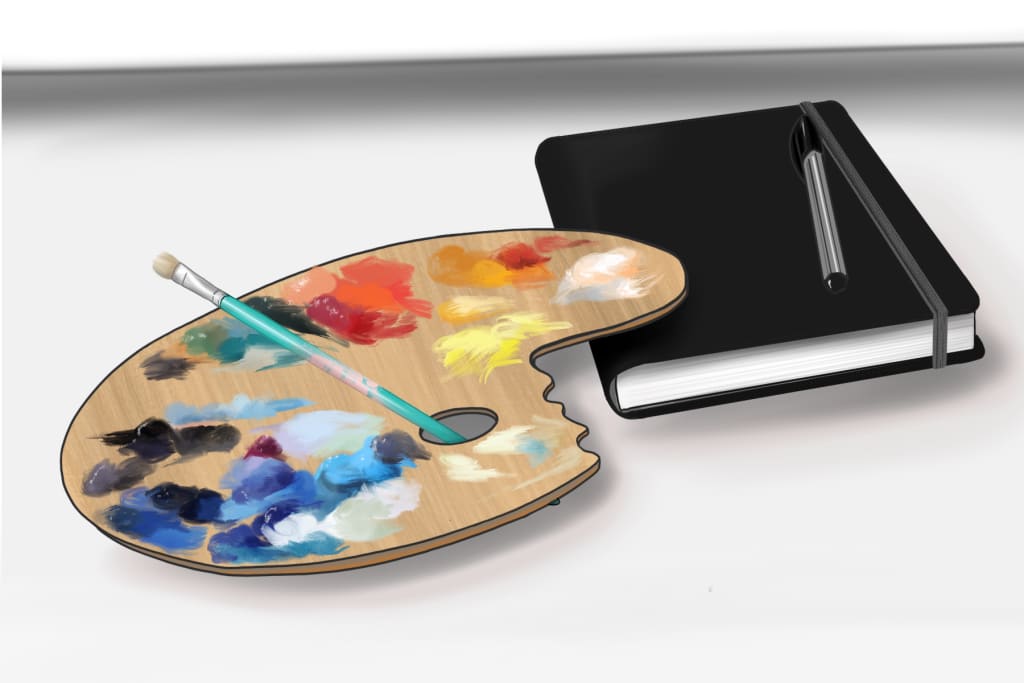
The first note I find, I think it must be a mistake. Then slowly, untwisting themselves from the dirty folds, more and more notes drift into my lap. As I count, I feel dizzy. It totals twenty thousand. Then, slithering from the last scrap of shawl, a small, black notebook. Smooth leather, with stiff white pages the colour of elderflowers. And inside the front cover, in her wiry, scratched handwriting:
“For Paula, from your friend Mrs Malin. So you may write your own future. And always remember, as a brilliant man once said:
Good artists copy, great artists steal.”
And she has signed it
Picasso
About the Creator
Enjoyed the story? Support the Creator.
Subscribe for free to receive all their stories in your feed.
Comments
There are no comments for this story
Be the first to respond and start the conversation.