
Taking health care for granted.
Compared to the third world.


Living in America, we take our lifestyle for granted. Jobs, money, lifestyle, food security, healthcare, access to doctors, dentists. In fact, any first world country. But having been born and raised in Africa I have seen first hand how the indigenous rural native people live. They don’t have jobs, money, food security, access to doctors and nurses or dentists, and their lives are hard. Almost no comfort. No electricity, no T.V. Or Wi-Fi/internet.
Just getting diarrhea could be life threatening in the bush, or desert, with no clean fresh water, no basic medicine like anti diarrhea medicine or emittrol for nausea, so dehydration occurs. And coupled with the unrelenting baking, scorching sun, death soon follows.
In the isolated district I was stationed in, Matabeleland North province, Zimbabwe, a traveling health clinic with a doctor and one nurse in attendance to see one or two hundred patients who would travel by bus or ox wagon or just walk for hours to see them to get diagnosed and dispense drugs for treatment That they needed. The clinic was funded by the government. They came twice, maybe three times a year. It was inadequate at best. They would treat malaria, sleeping sickness (tsetse fly), dysentery, and a myriad of diseases and injuries.
But the normal practice of the rural village life in the African bush was to put a sick and dying person, normally an elder, under a large central shade tree to live out their day but still be able to participate in village life Instead of being left inside a hut and ignored. At night they would be carried inside, and in the morning carried back outside to the tree. That’s the best comfort and support the villagers can offer to them.
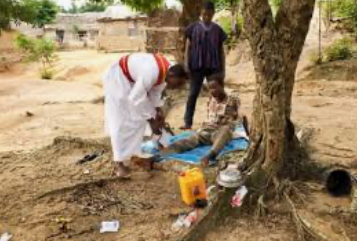
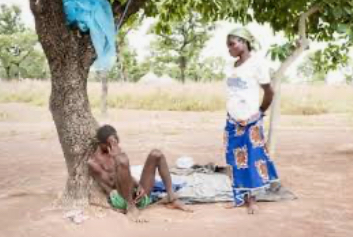
After they die , they would be carried away from the village into the forest for the wild animals to eat them, or sometimes cremated. Almost never buried. Unless the government came across them and got involved. Then the government buried them at government cost.
That is the extent of rural healthcare , at least in very isolated districts in Africa, and definitely in my country Rhodesia back in the 1970s during the bush war. I left in 1980 after the civil war when the country changed name s to Zimbabwe, and I don’t know if things have improved. But I doubt it. One friend I still am in contact with is Onasis Mutasa, a Shona tribesman, and when his wife was sick he walked her several miles to the closest town, then put her on a bus for a 6 hour drive into Harare to the hospital. They don’t live in an isolated district. And he has money, unlike most of the residents in his little rural village where he lives. I think he is the richest man there.
so next time you complain about how bad our healthcare system is, and it is bad, remember how inadequate and poor it is in most third world countries, especially rural Africa. It is abysmal. We have hospitals, that are well stocked with drugs and well equipped, with many nurses and technicians, and doctors. And yes, they are expensive, but we do have insurance, and yes, it is expensive. But at least we have it. It beats a shade tree in the forest. And we do have ambulances. Yes, they are expensive also, but aren’t you glad they are there in an emergency. I know I am.
What I have described is real life in Africa, not only seen and experienced by me, but it is documented in National Geographic movies and seen by many people. Be thankful for what we have.
About the Creator
Guy lynn
I’m interested in history, space travel and the possibilities, Americana,( where I live now), Africa (Southern Africa, where I was born and raised), and I write about things that interest me ( bead history) and I hope will interest you.
Enjoyed the story? Support the Creator.
Subscribe for free to receive all their stories in your feed.
Comments
There are no comments for this story
Be the first to respond and start the conversation.