travel
The ultimate test of a compatible relationship is whether you can stand to travel together.
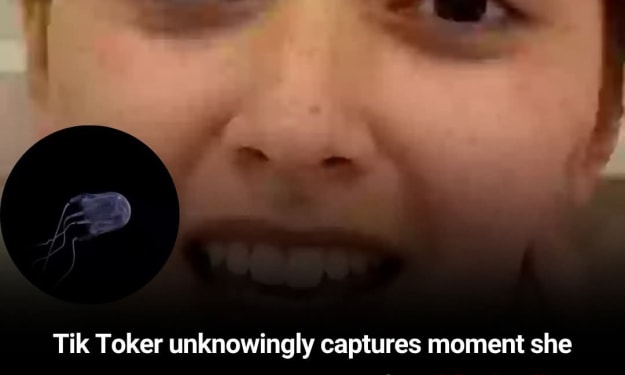
Brushed by Death: TikToker's Beach Day Turns Into a Life-Altering Encounter
It was supposed to be an ordinary day at the beach. For a young TikToker, whose videos typically feature fun seaside clips and travel adventures, that sunny afternoon was just another chance to create content for her followers. But what started as a playful dip in the ocean soon turned into a medical emergency and a brush with death—one she captured unknowingly on camera. The incident unfolded in northern Australia, where the turquoise waters are known for their beauty—and their hidden dangers. While filming a short underwater clip, she felt a sudden, sharp sting along her leg. Thinking it was a jellyfish or a stingray brush, she laughed it off and continued filming. It wasn’t until hours later, when symptoms rapidly worsened, that she realized she had come into contact with one of the world’s deadliest animals: the box jellyfish. Also known as Chironex fleckeri, the box jellyfish may look delicate and ghostlike, but it is responsible for more deaths in Australian waters than sharks or crocodiles. With tentacles that can reach up to 10 feet long, each lined with thousands of nematocysts—or venomous stingers—it can deliver an excruciating sting that affects the heart, nervous system, and skin simultaneously. In severe cases, victims can go into cardiac arrest within minutes. Shortly after returning home, the TikToker began experiencing intense burning pain, dizziness, nausea, and breathing difficulties. She was rushed to the emergency room where doctors quickly identified the telltale whip-like marks on her leg. The culprit: a box jellyfish. It was a miracle she survived. Doctors administered antivenom and kept her under close observation for several days. The venom’s effects lingered, and she described the experience as “like fire under the skin mixed with lightning in your veins.” Recovery was slow and included physical therapy for muscle spasms, nerve damage, and psychological trauma. Even weeks later, she continued to suffer from scars and phantom pain, a reminder of how close she came to tragedy. What makes this story more remarkable is that her entire encounter—including the exact moment the jellyfish made contact—was captured on video. When she reviewed the footage after her recovery, she saw a translucent blur move past the frame and brush against her leg. That ghostly image was the jellyfish, so faint it was almost invisible in the water. She later shared the clip on TikTok with a powerful message about ocean safety, which quickly went viral. The post has since been viewed millions of times, sparking conversations around the world about the dangers that can lurk in seemingly calm waters. Many viewers expressed shock at how close she came to dying and how little public awareness there is about creatures like the box jellyfish. Some viewers from coastal regions even commented that they had never heard of the jellyfish’s lethality, despite living near waters where it is common. Marine biologists have long warned beachgoers in tropical regions to be cautious between November and May—prime box jellyfish season. In many areas of Australia, stinger nets are placed in swimming zones, and beachgoers are encouraged to wear protective suits. Even with these precautions, incidents still happen, often because the jellyfish are nearly invisible and their tentacles float with the current, undetected until it’s too late. In an emotional follow-up post, the TikToker expressed deep gratitude to the medical staff who saved her life and called her survival “a second chance I won’t waste.” She is now using her platform to raise awareness about ocean safety and the importance of learning how to respond to jellyfish stings. Among her key messages: avoid swimming in unprotected waters during jellyfish season, always wear protective clothing, and carry vinegar—often used to neutralize stingers in an emergency. Her story serves as a sobering reminder that nature, while beautiful, can also be deadly. The ocean holds many wonders, but it also demands respect and caution. For this TikToker, a casual dip in the sea became a life-defining moment. Her message now is simple: stay informed, stay cautious, and never underestimate the invisible dangers beneath the surface. Thanks to quick medical intervention and a bit of luck, she survived an encounter that has ended lives. And now, her voice joins the growing chorus of survivors who are turning trauma into education, using their platforms to protect others from the silent killers of the sea.
By DigitalAddiabout a year ago in Humans
The Stranger on the 4:15 Train
The Stranger on the 4:15 Train I never believed in fate, or signs from the universe, or any of that poetic nonsense people write songs about. I believed in timetables, to-do lists, and the cold reliability of public transportation.
By noor ul aminabout a year ago in Humans
WANDERING ME
WANDERING ME ? On the day of summer ,when sun was warmly mocking the Earth . Me and my group of 5 friends decide to go on a summer camp like every person desires. Explaining , the camp excitement some of them were planning the destination , some of them were budgeting the funds , some of them were planning dress codes , some of them were planning about the hitting new cuisine , some of them were planning the activities to do on camping already .
By Roosie Roseabout a year ago in Humans
A DREAM WITH IN A DREAM. Content Warning. AI-Generated.
# A Dream Within a Dream The room was silent, save for the rhythmic ticking of the antique clock on the shelf. Its hands pointed to 3:17 a.m. when I woke up—suddenly, breathlessly—as if I had fallen from a great height. My sheets were tangled around my legs, sweat dampening the pillow beneath my head. I sat up and blinked, trying to steady my breath and reorient my mind.
By Amias yoursabout a year ago in Humans
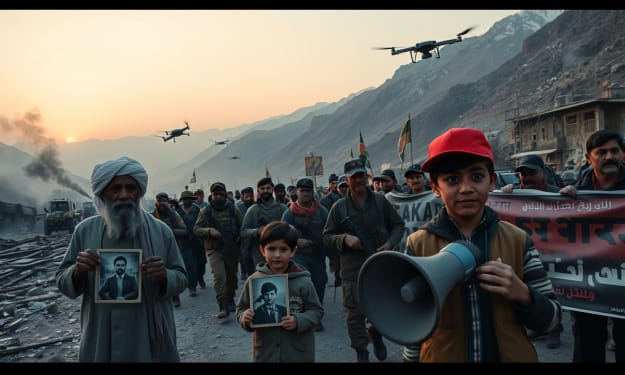
The Pashtun Tahafuz Movement
The Pashtun Tahafuz Movement: A Voice for Justice Amidst Enduring Challenges Introduction: A Movement Born from Injustice The Pashtun Tahafuz Movement (PTM) has emerged as one of the most prominent grassroots movements in Pakistan’s recent history. Focused on advocating for the human rights of the Pashtun community, PTM was launched in 2018 following the extrajudicial killing of Naqeebullah Mehsud, a young man from South Waziristan. The movement has since evolved into a broader call for dignity, justice, and accountability in regions long marred by conflict, displacement, and neglect.
By Zahir Ahmadabout a year ago in Humans
The Thirteenth Window
Once upon a time, in a small and peaceful village, there stood a big old house on the edge of a forest. Everyone in the village called it Willow House. It had twelve tall windows that sparkled in the sun, and it looked almost magical. But people said it had thirteen windows, not twelve. The thirteenth window was different.
By Mansoor Ahmadabout a year ago in Humans
World’s largest Legoland opens to tourists in Shanghai
**World’s Largest Legoland Opens to Tourists in Shanghai** Shanghai has officially become home to the world’s largest Legoland resort. The much-anticipated Legoland Shanghai Resort opened its gates to the public on July 5, 2025, marking a major milestone in China’s family entertainment industry. Located in Fengjing, Jinshan District, the park spans an impressive 318,000 square meters, making it the largest Legoland in the world.
By GLOBAL NEWSabout a year ago in Humans
The Man Who Survived the Mountains
It was January 2018, the heart of winter in Pakistan, when 29-year-old Shahbaz, a freelance photographer and nature enthusiast from Lahore, decided to travel to the northern areas for solitude and soul-searching. Recently heartbroken, disillusioned, and creatively burned out, Shahbaz was desperate for a change of scene. He chose the snow-covered valleys of Naran and Saif-ul-Muluk Lake—not for tourism, but for peace. For silence. For answers. "I needed to feel small again," he later said, "To remind myself that heartbreak wasn’t the end of the world." Armed with his Canon DSLR, a journal, a thermos, sleeping bag, power banks, and a few food rations, he planned a simple three-day trip. Everyone warned him—locals, shopkeepers, even a chaiwala in Balakot. The mountains were treacherous that season. Snowstorms came without warning. Visibility could drop to zero in seconds. But Shahbaz wasn’t looking for safety. He was looking to feel something—anything. --- Day One: Into the White Silence Shahbaz reached Naran around 10 AM on a Monday morning. It was eerily quiet, the streets half-buried in snow. Tourism was off-season, and only a few local families remained. By noon, Shahbaz began his hike toward Lake Saif-ul-Muluk, 8 km away and 10,578 feet above sea level. The trail was challenging but stunning—virgin snow, towering pines, and nothing but the sound of wind and his own footsteps. He clicked photos like a man possessed: frozen trees, icicles hanging from branches, footprints in the snow that led to nowhere. But at 3:30 PM, the sky changed. Dark clouds rolled in fast. A snowstorm—sudden and blinding—engulfed the entire valley. Within minutes, Shahbaz could no longer see the path. His phone had lost all signal. Panic settled in his chest like cold steel. “I wasn’t scared of dying,” he later wrote in his journal, “I was scared of disappearing—without a trace.” He kept moving, hoping to find shelter. Snow clung to his beard, his eyelashes, even his camera lens. Every direction looked the same: white, endless, empty. By 6 PM, he gave up. His hands were shaking uncontrollably. He found a rocky overhang and crawled underneath, wrapping himself in his sleeping bag. His last thought before sleep was simple: “Just survive till morning.” --- Day Two: Hunger, Cold, and Clarity Shahbaz woke up numb. Literally. His fingers were frostbitten, his lips cracked, and his water bottle had frozen solid. He had some nuts and dry biscuits but couldn’t feel his hands enough to open the pack. That morning, he yelled for help for the first time. His voice echoed back—mocking, hollow. He built a crude fire using a small emergency candle, melting snow for water. His sleeping bag was wet. His journal pages were crumpled and stained. Time felt warped. Daylight offered no warmth. That night, the silence felt heavier than the snow. He thought of his parents. He thought of the girl who had walked out of his life months ago. He thought of how many times he had ignored love for ambition. Alone in the wilderness, he finally cried. And then, he prayed. --- Day Three: The Eyes in the Dark He hadn’t slept. His face burned from wind exposure. At noon, he heard something—snow crunching behind the rocks. A pair of yellow eyes appeared. A Himalayan wolf. Tall, strong, and terrifyingly calm. It stared at him for what felt like an hour. Shahbaz held his breath, gripping a stick he knew would be useless. But the wolf didn’t attack. It stared, sniffed the air, and slowly walked away—disappearing into the trees. That moment changed him. “If even a wolf could show mercy,” he later said, “then maybe I should too—on myself.” He decided to follow the direction the wolf had come from. Maybe it came from somewhere lower… warmer. --- Day Four: The Shepherd’s Hut Hours passed. His legs were barely working. Blisters had burst inside his shoes. But by sunset, he saw something—smoke. Not from a person, but from an old chimney. It was a shepherd’s hut, abandoned for winter. The door creaked open. Inside, it smelled of ash and rot, but it was shelter. There were a few forgotten supplies: a rusted pot, a bottle of kerosene, and some dry lentils. He used the last of his energy to light a fire. That night, he wrote in his journal: "If I make it out of here, I’ll never take a single breath for granted." --- Day Five: Return from the Dead The next morning, he was discovered by a small group of villagers checking on their livestock. At first, they thought he was a thief or a ghost—his face was blackened with frostbite, his lips bloodied. When he spoke, barely above a whisper, they immediately carried him down on a mule. At the village clinic, the doctor said he was “minutes from death.” His first phone call was to his mother. She cried so hard she couldn’t speak. When she finally did, she said, "Beta, tu dobara kabhi akele nahi jayega." --- The Story Goes Viral A fellow traveler later shared Shahbaz’s story and some of his journal pages on Facebook. Within days, it went viral. TV channels called. A documentary crew contacted him. People called him "The Man Who Came Back from the Snow." But Shahbaz never chased the fame. Instead, he started a small survival school in Lahore. He teaches others how to survive the wilderness—but more importantly, how to listen to their inner silence. He still visits the mountains once a year—but never alone. And he never forgets the wolf who looked into his soul. --- Final Words from Shahbaz’s Journal: "I went to escape pain. But nature didn’t let me forget. It made me face it—completely. I found myself not when I was surrounded by people… …but when I was inches away from death and chose to fight back."
By Muhammad Usamaabout a year ago in Humans