science
The Science Behind Relationships; Humans Media explores the basis of our attraction, contempt, why we do what we do and to whom we do it.
Accident and emergency treatment in Veppampattu
Accident and emergency treatment is crucial for providing immediate medical care in critical situations. At MV Lifecare Multispeciality Hospital in Veppampattu, the focus is on offering timely and effective emergency treatment to patients in need. Whether it’s an accident, sudden illness, or life-threatening medical condition, quick response and professional care are vital in saving lives and minimizing complications. MV Lifecare Multispeciality Hospital ensures that individuals in Veppampattu and surrounding areas receive the highest standard of care during emergencies.
By DLK Technologies2 years ago in Humans
The Science of Sleep: Why Rest is Essential for Health and Survival
In 1965, 17-year-old high school student Randy Gardner decided to push the limits of human endurance by staying awake for an astonishing 264 hours—11 days straight. His experiment, conducted as part of a school science project, offered a rare glimpse into the effects of extreme sleep deprivation on the human mind and body. Initially, the consequences seemed relatively mild: by the second day, Gardner’s eyes lost their ability to focus. Soon after, he struggled to identify objects by touch. By the third day, his mood deteriorated, and his coordination worsened. As the experiment progressed, his cognitive abilities declined further—he had trouble concentrating, his short-term memory faltered, paranoia set in, and hallucinations took over. Miraculously, Gardner recovered without any long-term psychological or physical damage. But for many others, prolonged sleep deprivation has far more severe and lasting consequences, including hormonal imbalances, weakened immune function, and, in extreme cases, even death. Sleep is not merely a luxury; it is a biological necessity. Scientists are still working to fully understand why we sleep, but what we do know is clear—adequate rest is essential for maintaining both mental and physical health. How Much Sleep Do We Really Need? The amount of sleep required varies by age and individual needs. Most adults need between seven and eight hours of sleep per night, while adolescents require around ten hours. Sleepiness is triggered by a combination of internal and external cues. Our bodies send signals to the brain when we are tired, while external factors, such as darkness, reinforce these signals, encouraging rest. Two key chemicals play a crucial role in sleep regulation: adenosine and melatonin. Adenosine builds up in the brain throughout the day, creating sleep pressure, which makes us feel tired as the day progresses. Caffeine, one of the most commonly consumed stimulants in the world, works by blocking adenosine’s effects, temporarily delaying fatigue. Melatonin, on the other hand, is a hormone that responds to darkness, signaling to the body that it’s time to sleep. The Stages of Sleep: How Our Bodies Repair Themselves Once we fall asleep, our bodies go through different stages, beginning with non-REM (rapid eye movement) sleep. This stage is critical for cell repair, immune system function, and memory consolidation. During non-REM sleep, heart rate and breathing slow down, muscles relax, and DNA undergoes necessary repairs to help the body recover from daily wear and tear. Later in the night, we transition into REM sleep, the stage associated with vivid dreaming. REM sleep plays a crucial role in emotional regulation and cognitive function. Without enough REM sleep, we can experience mood swings, poor decision-making, and difficulty processing complex information. The Consequences of Sleep Deprivation Despite sleep’s well-documented importance, many people struggle to get enough rest. In the United States, 30% of adults and 66% of adolescents are estimated to be regularly sleep-deprived. This is not just a minor inconvenience—chronic sleep deprivation has profound effects on the body and mind. Even a single night of poor sleep can impact learning, memory retention, and reaction time. Prolonged sleep deprivation has been linked to increased inflammation, high blood pressure, hallucinations, and an elevated risk of developing chronic diseases like diabetes and obesity. The dangers of sleep deprivation can even be life-threatening. In 2014, a devoted soccer fan in China suffered a fatal stroke after staying awake for 48 hours to watch the World Cup. While his immediate cause of death was the stroke, research suggests that sleeping fewer than six hours per night increases stroke risk by 4.5 times compared to those who consistently get seven to eight hours of sleep. Fatal Familial Insomnia: A Life Without Sleep For most people, sleep deprivation is a temporary condition that can be remedied with rest. However, a rare genetic disorder known as Fatal Familial Insomnia (FFI) causes a permanent inability to sleep, leading to devastating consequences. This inherited condition keeps individuals in a nightmarish state of wakefulness, preventing them from achieving deep sleep. Over time, the lack of rest leads to cognitive decline, hallucinations, and ultimately death. The disease has no known cure, and those affected usually succumb within months or a few years of its onset. Why Does Sleep Deprivation Harm Us? Scientists believe that one of the primary reasons sleep deprivation is so harmful lies in the accumulation of waste products in the brain. As our brain cells work throughout the day, they generate metabolic byproducts, including adenosine. If these byproducts are not cleared away, they interfere with normal brain function, leading to the negative symptoms associated with sleep deprivation. So how does the brain clean itself? Researchers have discovered a system known as the glymphatic system, which serves as the brain’s cleaning mechanism. This system uses cerebrospinal fluid to flush out toxins that accumulate between brain cells. The glymphatic system is most active during sleep, which explains why rest is crucial for brain health. Recently, scientists have also identified lymphatic vessels in the brain, which serve as pathways for immune cells. These vessels likely play an additional role in clearing out waste products, further emphasizing the importance of sleep for maintaining a healthy brain. Prioritizing Sleep for Better Health Although research into the complexities of sleep is ongoing, one thing is certain: sleep is not optional. It is a fundamental biological process necessary for physical recovery, cognitive function, and emotional well-being. In today’s fast-paced world, many people sacrifice sleep for work, social obligations, or entertainment. However, chronic sleep deprivation carries serious risks. By prioritizing healthy sleep habits, such as maintaining a consistent bedtime, reducing screen time before bed, and creating a restful sleep environment, we can protect our health and well-being. The human body is remarkably resilient, but it cannot function indefinitely without rest. As we continue to uncover the mysteries of sleep, one truth remains clear—slipping into slumber is essential for both our sanity and survival.
By Lisa Ann Bastiaan2 years ago in Humans
Chappell Roan
Chappell Roan is a talented singer and songwriter who is gaining popularity for her unique music style, strong voice, and colorful personality. She has been making waves in the music industry with her bold fashion choices and emotional lyrics. In this article, we will explore her background, musical journey, and growing success.
By Farhan Sayed2 years ago in Humans
Bianca Censori at the Grammys
Bianca Censori is a well-known figure in the fashion and entertainment industry. Recently, she made headlines with her appearance at the Grammys, one of the biggest music award shows in the world. Her stunning outfit, confident presence, and connection to famous personalities made her a topic of discussion among fans and media.
By Farhan Sayed2 years ago in Humans
Domain Authority (DA) manipulation
Domain Authority (DA) is a commonly used metric by advertising agencies and marketers to assess a website’s potential in Google rankings. However, this score, calculated by platforms like Moz, can be manipulated using various techniques, creating a false sense of credibility. As a result, advertisers may invest in high-DA websites without analyzing real traffic or content quality. This raises serious concerns about the effectiveness of DA as a primary metric for selecting websites for advertising campaigns.
By Daniel Lacatus2 years ago in Humans
When Jokes Cut Deeper Than Expected
We’ve all been there. Sitting in a room, sharing a moment with others, when suddenly—someone makes a comment. A joke, a little jab, something meant to be lighthearted. The room laughs, but inside, something tightens. The air shifts. And before we know it, we’re retreating inward, arms crossed, heart racing, mind replaying that one sentence over and over. Why does this happen? Why do some words slip past us like a breeze while others cling to us like heavy chains? And why, when faced with a simple joke, do we sometimes feel the need to put up walls and prove just how much we didn’t appreciate it? The Armor We Wear Let’s start with something fundamental: people are not just flesh and bone. They are stories, memories, wounds, and victories. Every comment, every joke, lands on a foundation built over years of experiences. And for some, that foundation holds cracks—cracks from childhood teasing, from being misunderstood, from moments when their voice was silenced or dismissed. So when someone makes a remark, even in jest, it doesn’t land on an empty space. It lands on history. And history has weight. For many, humor is harmless. A passing comment rolls right off, forgotten before the next breath. But for others, that same comment presses on an old wound, a hidden insecurity, a moment they thought they had long buried. And suddenly, the laughter in the room feels like it’s aimed at them, not with them. The Fear of Being Misunderstood Few things cut deeper than the feeling of being misunderstood. When a joke touches a nerve, it’s often because, in that split second, there’s a fear that others don’t see the full picture of who we are. That they’re reducing us to something small, something untrue, something that doesn’t honor the depth of our experiences. And that’s when the instinct kicks in. The need to defend. To push back. To show that we are more than the joke suggests. This reaction isn’t about weakness—it’s about wanting to be seen for who we truly are. When Vulnerability Meets The Unexpected No one likes to feel exposed. And humor—especially the kind that catches us off guard—can make us feel just that. Unprotected. Vulnerable. And what do humans do when they feel vulnerable? They protect themselves. Some do it with silence, shutting down, turning away. Others do it with sharpness, snapping back, making sure no one mistakes them for someone who can be laughed at. And others still carry that moment long after it has passed, replaying it in their minds, wondering what they could have said, should have said, to shift the moment in their favor. But here’s the thing—feeling this way doesn’t mean someone is weak. It means they care. It means they have depth, layers, and emotions that run deep. Breaking Free From The Reflex So what can we do? How do we move through these moments without carrying them as burdens? It starts with recognition. With stepping back and asking ourselves—what did that comment really mean? Was it meant to harm, or was it simply a moment of casual humor? And more importantly, what does our reaction tell us? What wound, what insecurity, did that moment touch? Because if we can name it, if we can see it clearly, then we can choose how to respond—not from a place of pain, but from a place of understanding. This doesn’t mean swallowing our feelings. It doesn’t mean forcing a laugh when we don’t feel like laughing. It means knowing ourselves well enough to recognize when a joke is just a joke—and when it’s something more. The Power of Self-Compassion Here’s the truth: the world will keep spinning, and people will keep making jokes. Some will land gently, some will sting. But we are not powerless in how we receive them. The strongest thing we can do is give ourselves grace. To remind ourselves that we are not defined by a single comment, a single moment, a single laugh. We are defined by the fullness of who we are, and that fullness cannot be captured in a passing joke. So the next time words hit harder than expected, take a breath. Pause. Remember the weight of your own story. And then decide—not from instinct, not from hurt, but from the deep knowing that who you are is not up for debate. Because who you are is enough. Always has been. Always will be.
By Seymour Soza2 years ago in Humans
Pedicle Screw Fixation: A Comprehensive Solution for Spinal Stability and Deformity Correction
Pedicle screw fixation is a surgical technique used to stabilize the spine. By placing screws into the pedicles, the portion of the vertebrae that connects to the spinal column, surgeons can secure the vertebrae in a desired position. This stabilization is crucial for patients with spinal deformities such as scoliosis, fractures, or degenerative disc diseases. Pedicle screw fixation provides a solid framework that allows the spine to heal and reduces the risk of further damage.
By Vipin Morya2 years ago in Humans
The Chilling Science of Premonitions: Can We Really See the Future?
Premonitions, often described as a feeling or intuition about a future event, have fascinated humanity for centuries. From ancient prophecies to modern-day anecdotes, the idea that we can glimpse the future raises profound questions about the nature of time, consciousness, and the human experience. But what does science say about these eerie experiences?
By hiteshsinh solanki2 years ago in Humans
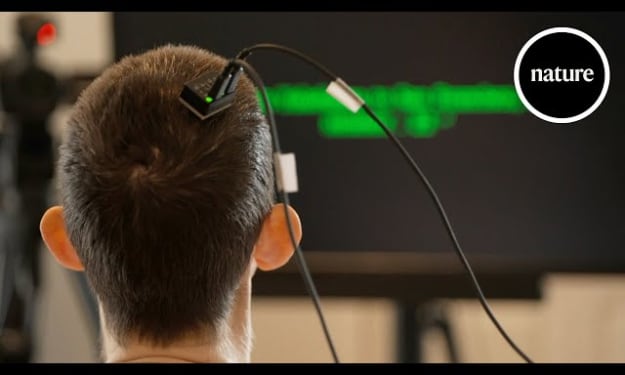
A device that lets people read thoughts.
The concept of a "thought-reading" device has been popularized in science fiction for years, but with recent advancements in brain-computer interface (BCI) technology, the dream of reading thoughts may not be as far-fetched as it once seemed.
By Badhan Sen2 years ago in Humans
Marianne Faithfull
Marianne Faithfull: A Life of Music and Resilience Marianne Faithfull is a famous British singer, songwriter, and actress. She became popular in the 1960s and is known for her unique voice, emotional songs, and dramatic life story. Over the years, she has faced many challenges, including health problems and personal struggles, but she always found a way to continue making music.
By Farhan Sayed2 years ago in Humans